Episodi

  • What does uncertainty have to do with the body? From fight-flight to flow states. (#38)
    Jan 1 2026

    In this episode of the FindingSustainia – Meyer & Meyer Podcast, Anna and Santa are joined by our lovely team member Ann Moradian – dancer, choreographer, and expert in embodiment, somatic intelligence, and decision-making under uncertainty. Find out more about her work via www.perspectivesinmotion.org


    Together, we explore a question that sits at the very core of change work:

    How do we relate to uncertainty without collapsing into stress, control, or burnout?


    Ann shares why uncertainty is not a mental problem but a deeply physical experience, how it shows up in the nervous system, breath, organs, and posture – and why many of our decisions suffer when we operate from fight, flight, or freeze. We talk about embodiment as a source of real-time information, how creativity and joy signal capacity, and why better decisions require safety in the body, not just clarity in the mind.


    The conversation moves from theory to practice: how to recognise when we are operating below our capacity, how small embodied practices can restore flow, and why movement, pauses, and attention to the body are essential for leaders, changemakers, and sustainability professionals navigating complexity.


    The episode also offers a preview of the New Year’s Reset (January 4, 2026), where Ann joins Anna and Santa to create a shared space for reflection, embodiment, visualisation, and intentional direction-setting for the year ahead.


    A thoughtful, practical, and deeply human conversation about uncertainty, embodiment, and staying grounded while working on the frontlines of change.

    Please register for the New Year’s Reset here: https://www.findingsustainia.com/new-year-s-reset

    Mostra di più Mostra meno
    33 min
  • Überraschender Jahresrückblick: AI Tooltime, Kooperationen und was wir uns für 2026 vornehmen (#37)
    Dec 23 2025

    In dieser Folge des Meyer & Meyer Podcasts sind Anna und Santa endlich wieder gemeinsam mit Scott zu hören – zu dritt, wie in guten alten Zeiten. Was als lockerer Rückblick gedacht war, wird zu einem ehrlichen, lebendigen Gespräch über Überraschungen, Learnings und Richtungswechsel.


    Wir sprechen darüber, warum Tooltime völlig unerwartet zu einem der stärksten Formate von FindingSustainia geworden ist. Warum „einfach machen“ oft wirksamer ist als Perfektion. Wie KI sich als starker, demokratisierender Hebel für Changemaker, Führungskräfte und Nachhaltigkeitsverantwortliche etablieren könnte – und warum ethische Fragen dabei von Anfang an mitgedacht werden müssen.


    Gleichzeitig geht es um das, was nicht funktioniert hat: begrenzte Reichweite, schwierige Kooperationen, gebrochene Versprechen – und die Erkenntnis, dass man nicht alles selbst machen kann. Wir teilen offen, was wir daraus gelernt haben, warum Partnerschaften auf Augenhöhe so entscheidend sind und weshalb komplementäre Zusammenarbeit mehr bringt als Gleichgesinnung.


    Zum Abschluss blicken wir nach vorn: auf den New Year’s Reset, neue Einstiegsformate wie den KI-Kompass und den Burn Bright Plan – und auf die Frage, wie wir auch in Zeiten von Unsicherheit wirksam bleiben, ohne auszubrennen.


    Ein persönliches, humorvolles und ehrliches Gespräch über Wirkung, Lernen, Community – und darüber, wie Veränderung wirklich entsteht.

    Mostra di più Mostra meno
    41 min
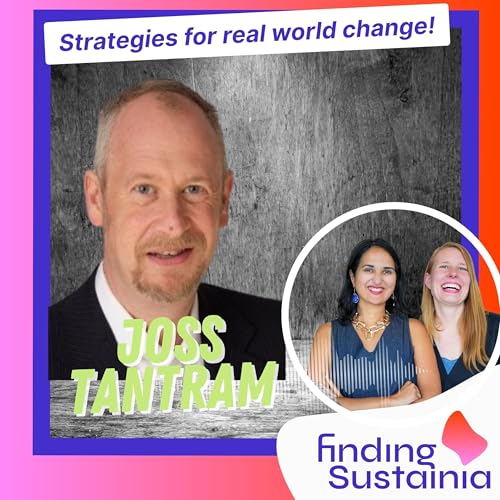
  • Sustainability as a Long Game: Making Uncertainty a Metric (#36)
    Dec 18 2025

    In this episode of the FindingSustainia podcast, we sit down with Joss Tantram, sustainability professional, writer, former WWF employee, and WBCSD contributor, to talk about the real terrain of change: uncertainty, momentum that comes and goes, and how to stay effective without burning out.


    We unpack Joss’s work on corporate disclosure and “uncertainty” in sustainability, why facts matter but never tell the whole story, and how young professionals can find their sphere of influence without getting overwhelmed. We also explore the power of networks, the loneliness many sustainability practitioners experience inside organisations, and why a clear vision can be motivating even if it’s never fully “achieved.”


    Joss closes with his vision of a future that works for 9–10 billion people—not by magic, but through systems that respect planetary limits and expand real human opportunity.

    • 00:03 Welcome and introduction to Joss Tantram

    • 02:09 How this conversation started: a report, a critique, and an unexpected reply

    • 04:36 The WBCSD project: why “uncertainty” became the core topic

    • 08:45 “Mr Uncertainty”: why sustainability work often means swimming against the tide

    • 11:35 Sustainability’s ebbs and flows—and managing expectations so you don’t burn out

    • 13:51 The fine line between realism and cynicism: “willful optimism”

    • 16:13 Individualism vs collectivism: where change actually happens

    • 19:42 A practical tool: spheres of concern, influence, and control

    • 25:04 Talking about influence with children—and what it reveals about adults

    • 29:50 Early-career tension: big ambition, small levers, and the value of small steps

    • 33:21 Knowledge, skills, networks, resources, reputation: what really matters, and when

    • 38:20 Why networks keep sustainability practitioners sane (and effective)

    • 42:48 The profession is still “forming”: learning from what works and what fails

    • 46:03 Why collaboration is hard: incentives, money, insecurity, and timing

    • 50:52 “Pre-competitive” collaboration: where companies can work together honestly

    • 54:50 Why sustainability isn’t “just uncertainty”: facts, systems, and the human factor

    • 59:09 Sustainia 2050: Joss’s vision for 9–10 billion people within planetary limits

    • 1:03:21 Where to find Joss’s work and the “9 Billion” idea

    • 1:04:11 Closing: staying “willfully optimistic” and keeping humour in the work

    • Uncertainty in sustainability reporting and decision-making

    • Staying motivated when momentum disappears

    • Avoiding burnout without becoming cynical

    • Networks as a survival and impact tool for practitioners

    • Vision as direction, not perfection

    • Systems change, incentives, and “pre-competitive” collaboration

    • Terrafinity: www.terrafinity.com

    • Search: Joss Tantram + “9 Billion” for essays and longer pieces

    Find more about us, upcoming formats, and new impulses at www.findingsustainia.com – or connect with us directly on LinkedIn (FindingSustainia) and Instagram (@findingsustainia).

    If you enjoyed this episode, please give us a good rating so more people can discover the podcast – and help amplify positive change in our society.

    What you’ll hear in this episodeKey themesLinks mentioned

    Mostra di più Mostra meno
    52 min
  • Everyday Ethical AI: What We Owe the Future (#35)
    Dec 11 2025

    In this Meyer & Meyer in English episode, we talk with Karen Smiley – data strategist, AI and product leader with 30+ years of practical experience, author of Everyday Ethical AI (everydayethicalai.com). Maybe just on the "author of Everyday Ethical AI" part in the first paragraph?and holder of 14 US patents – about what “everyday ethical AI” actually looks like in real life.
    We explore where AI is already shaping our lives far beyond chatbots: from recommendation systems and social media feeds to automated decisions at work. Karen breaks down the key risk zones – environmental impact, data and copyright misuse, hidden human labour behind AI, bias and discrimination, and the effects on jobs and mental health – and explains what we can realistically do about them without needing a computer science degree.
    Together we look at how changemakers and sustainability professionals can use AI as a force multiplier instead of a blind spot: when AI is truly useful, when a simple tool is better, and how to set a personal “AI use policy” that protects our values, our data and our brains.

    In this episode, we discuss:
    - What “everyday ethical AI” means at home, at work and in activism
    - The difference between generative AI and the “invisible” AI already all around us
    - Environmental and social costs of AI: data centres, minerals, and hidden data workers
    - How bias enters AI systems – and what we can do as users and decision-makers
    - AI companions, deepfakes and what this does to relationships, democracy and trust
    - How to define your own AI usage policy and keep your human judgement in the loop

    Anna was also invited to Karen's Podcast! Yeahy! Her first time as a guest in an American podcast. Listen to this episode here: https://sixpeas.substack.com/p/aisw-088-ai-software-wetware-dr-anna-katharina-meyer-germany
    And follow Karen's podcast for inspiring insights in the future.
    If you work in sustainability, social impact or any mission-driven field and want to use AI without betraying your values, this conversation is for you.
    Find more about our work at findingsustainia.com and connect with us on LinkedIn, Instagram and Facebook.

    Mostra di più Mostra meno
    48 min
  • Beyond Agreeing: How Culture, Conflict and Values shape Collaboration (#34)
    Dec 4 2025

    In this episode, we talk with Michael Brown, author of I Don’t Agree, about what happens when values, culture and conflict meet in real life – from a London soup kitchen to boardrooms and start-ups.

    Michael shares how his volunteer work at a soup kitchen led to a mental health drop-in model and what he has learned about teamwork, dignity and long-term collaboration with people on the margins. We explore the tension between individualism and collectivism, how cultural backgrounds shape the way we communicate and disagree, and why “winning” an argument can quietly destroy relationships and projects.

    Together we look at how to navigate criticism, conflict and strong egos in teams, why negotiations should be seen as the beginning of a partnership, and how personal rituals and self-awareness can help us show up more constructively – whether in social projects, climate work or creative industries.

    In this episode, we discuss:

    - What a soup kitchen can teach us about mental health, trust and teamwork

    - How individualism and collectivism shape communication, conflict and leadership

    - Why many promising projects and start-ups fail because of unresolved tensions, not bad ideas

    - The role of values, preparation and self-management in negotiations and feedback

    - How to create more “win–win” outcomes and less silent resentment

    - The power of small rituals to step out of ego and into real collaboration

    Listen in if you are working in social impact, climate, multicultural teams or simply want to handle disagreement with more clarity, empathy and impact.


    For more on us and our work, visit www.findingsustainia.com and connect with us on LinkedIn, Instagram and Facebook.

    Mostra di più Mostra meno
    1 ora e 18 min
  • Bubble Talk: Über Zugehörigkeit, Abgrenzung und echte Begegnung (#33)
    Sep 1 2025

    In dieser Episode sprechen wir über soziale Bubbles – also die Filterblasen, in denen wir uns oft bewegen, ohne es zu merken. Scott meldet sich aus seinem Urlaub in Holland und Santa aus dem Vorbereitungschaos vor der Abfahrt in die Berge – und trotzdem nehmen wir uns Zeit für ein ehrliches Gespräch: Wie erkennt man eigentlich, dass man in einer Bubble steckt? Wann wird sie toxisch? Und wie schaffen wir es, Brücken zu bauen, statt Mauern zu errichten?


    Wir sprechen offen über persönliche Erlebnisse, ideologische Spannungsfelder, und warum es manchmal befreiend ist, sich mit Menschen auszutauschen, die ganz anders denken. Und wir teilen, warum wir glauben, dass mehr Offenheit, Neugier und die Haltung „Ich bin okay, du bist okay“ entscheidend sind – gerade jetzt.


    Highlights der Episode:

    Warum Bubbles so natürlich wie gefährlich sind

    Persönliche Anekdoten aus Duisburg, Indien und Amsterdam

    Wie Social Media uns radikalisiert – und was wir dem entgegensetzen können


    Der Unterschied zwischen echter Vielfalt und bloßer Gruppenidentität


    Tipps, um die eigene Bubble sichtbar zu machen und bewusst zu weiten


    Hört jetzt rein und erfahrt, warum es sich lohnt, rauszuzoomen – und wie echte Begegnung entsteht, wenn wir Bubbles nicht nur bewohnen, sondern hinterfragen.


    Abonniert gerne unseren Podcast und bewertet uns auf Spotify!

    Mehr von uns gibt’s auf www.findingsustainia.com

    sowie auf LinkedIn, Instagram und Facebook. Wir freuen uns auf den Austausch mit euch!

    Mostra di più Mostra meno
    31 min
  • Alles NEU: Welchen Wert liefern wir Dir? (#32)
    Aug 22 2025

    Wir reden Tacheles!

    In dieser Folge kommt alles auf den Tisch. Was wir bisher gut fanden an unserem Podcast, was wir ändern wollen. Und vor allem warum!

    Der Meyer&Meyer Podcast wird neu! Für Euch. Aber auch für uns. Statt kurzer, durchgeplanter, informativer und inspirierender Sequenzen wird es von nun an um einen tieferen Austausch zu unseren Themen und Herausforderungen gehen. Immer mit dem Ziel: Dich in Deiner Wirkung zu stärken! Daran ändert sich nix!

    Sag uns gerne was Du davon denkst und in ein paar Wochen: Wie gefällt Dir das neue Format?

    Wir sind gespannt!

    Mehr zu uns, zu kommenden Formaten und Impulsen findest du auf unserer Website, auf LinkedIn unter FindingSustainia und bei Instagram unter @findingsustainia.


    Wenn dir unser Podcast gefällt, abonnier uns gern und hinterlass eine gute Bewertung – so hilfst du uns, noch mehr Menschen zu erreichen, die wirklich etwas bewegen wollen.

    Mostra di più Mostra meno
    25 min
  • Ich bin ein Zukunftsmensch - Gedanken über Mobilität mit Manisha Dietrich (#31)
    Aug 14 2025

    Wer von uns ist ein Mensch der Zukunft? Sind wir es vielleicht alle zwangsläufig? Gerade die Kinder und Jugendlichen unserer Gesellschaft. Im Meyer&Meyer Podcast haben wir uns mit Santas Tochter, Manisha Dietrich, darüber unterhalten, wie sie sich die Zukunft vorstellt und wünscht.

    Konkret festgemacht am Thema Mobilität sind ihre Worte ein poetischer Weckruf – ein Ruf danach, wie Mobilität sich anfühlen könnte, wenn wir sie nicht länger nur technisch, sondern auch menschlich denken würden. Manisha ist 13, in Paris und Augsburg ohne Auto aufgewachsen – und bringt einen klaren Blick auf die Zukunft mit, den wir in der Erwachsenenwelt oft verloren haben. Was passiert, wenn wir Kindern wirklich zuhören? Wenn wir Mobilität nicht als Infrastrukturproblem begreifen, sondern als Einladung, Räume zu schaffen – für Freiheit, Sicherheit, Begegnung?Manisha spricht über Swaxis statt Elterntaxis, über Trams, die Bäume streifen, und Busse, die verlässlich kommen. Sie zeigt: Mobilität verbindet nicht nur Orte – sie kann auch Menschen verbinden. Oder sie ausschließen. Wir reden über App-Zwänge, Unsicherheit im öffentlichen Raum – und warum es nicht nur um Strecken, sondern auch um Selbstwirksamkeit geht.Und zum Schluss beeindruckt uns Manisha mit ihrem Spoken Word „Ich bin ein Mensch der Zukunft“. Ein poetisches Plädoyer für Mobilität, die uns wirklich weiterbringt.

    Wie sieht Mobilität aus, wenn wir sie durch Kinderaugen sehen? Und was brauchen wir, um nicht nur schneller, sondern besser unterwegs zu sein? Wir freuen uns auf eure Gedanken!

    Mostra di più Mostra meno
    20 min