• Burton Cummings: The Voice That Defined Canadian Rock
    Feb 4 2026

    In this episode of A Breath of Fresh Air, Sandy Kaye explores the remarkable life and career of Burton Cummings, one of the most influential and recognisable voices in Canadian music history.

    From his beginnings in Winnipeg to international superstardom — and now a highly anticipated return to the stage with The Guess Who — Cummings’ story is one of talent, ambition, creative independence and enduring legacy.

    Born in Winnipeg, Manitoba, Burton Cummings showed an early passion for music, studying piano and developing a powerful, expressive voice that would later become instantly recognisable.

    His career took a defining turn in the mid-'60s when he joined The Guess Who, initially as a keyboard player before stepping into the role of lead vocalist and principal songwriter. What followed was one of the most successful chapters in Canadian rock history.

    With Cummings at the helm, The Guess Who achieved global success, delivering a string of iconic hits including These Eyes, Laughing, No Time, Share the Land and the chart-topping American Woman.

    His songwriting blended emotional depth, social commentary and unforgettable melodies, while his commanding vocal performances helped the band break through internationally — a rare achievement for Canadian artists at the time.

    The Guess Who became a defining soundtrack of the late '60s and early '70s, and Cummings emerged as a major creative force behind their success.

    At the height of the band’s popularity, Cummings made the bold decision to leave The Guess Who in '75, determined to follow his own artistic path.

    Launching a solo career, he quickly proved that his success was no accident. His solo work revealed a broader musical range, incorporating rock, pop, jazz influences and orchestral elements. Songs such as Stand Tall, My Own Way to Rock and You Saved My Soul became major hits, cementing his reputation as a formidable artist in his own right.

    Beyond studio recordings, Burton Cummings earned a reputation as a powerful and charismatic live performer.

    His rich voice and dynamic stage presence have remained remarkably consistent over the decades, allowing him to connect with audiences across generations.

    Even as musical trends shifted, Cummings continued to tour, record and evolve, keeping his catalogue alive while introducing fans to new material.

    In recent years, fans have been thrilled by the announcement that Burton Cummings has reunited with The Guess Who, bringing one of Canada’s most legendary rock line-ups back together.

    With plans to tour, the reunion offers audiences a rare opportunity to experience these timeless songs performed by the voice that helped make them iconic.

    For longtime fans and new listeners alike, the return of Cummings fronting The Guess Who is both nostalgic and celebratory — a full-circle moment in Canadian music history.

    Throughout his career, Cummings has received widespread recognition for his contribution to music. He has won multiple Juno Awards, been inducted into the Canadian Music Hall of Fame both as a member of The Guess Who and as a solo artist, honoured with a star on Canada’s Walk of Fame, and appointed an Officer of the Order of Canada, one of the nation’s highest civilian honours.

    In this episode, Sandy reflects on Burton Cummings’ extraordinary journey — a career defined by artistic courage, musical excellence and a voice that helped shape the sound of a nation.

    From classic hits to a long-awaited reunion and tour, Burton Cummings remains a living legend whose music continues to resonate across time.


    Mostra di più Mostra meno
    52 min
  • The Bee Gees from the Inside: Stephen Gibb Tells
    Jan 28 2026

    The Bee Gees are one of the most influential and enduring acts in popular music history, a band whose songs have soundtracked generations and transcended genres, eras and trends.

    Formed by brothers Barry, Robin and Maurice Gibb, the group’s journey began long before global fame, rooted in family, harmony and an almost instinctive musical bond.

    Born on the Isle of Man and raised between England and Australia, the Gibb brothers began performing together as kids.

    Music wasn’t just an interest — it was the family language. By the late '50s, the brothers were already writing songs, honing their harmonies and learning the discipline of performance.

    Their early success in Australia laid the groundwork for an international career that would soon explode.

    The Bee Gees’ first major breakthrough came in the late '60s with emotionally rich, melodic songs like “To Love Somebody,” “Massachusetts,” “Words,” and “I’ve Gotta Get a Message to You.”

    Their close, often aching harmonies and introspective songwriting set them apart.

    In the '70s, the Bee Gees achieved one of the most dramatic transformations in music history. With Barry’s soaring falsetto, the brothers became the undisputed kings of the disco era.

    Songs like “Stayin’ Alive,” “Night Fever,” “How Deep Is Your Love,” and “You Should Be Dancing” dominated charts worldwide, largely through their work on the Saturday Night Fever soundtrack — one of the best-selling albums of all time.

    Their songwriting partnership extended beyond their own recordings, producing hits for artists including Barbra Streisand, Diana Ross, Kenny Rogers and Dolly Parton.

    Yet behind the global phenomenon was a tight-knit family unit.

    It was within this world that Stephen Gibb, Barry’s eldest son, grew up. Raised surrounded by music, Stephen witnessed the Bee Gees at work from an unusually intimate vantage point.

    As a child, he watched his father and uncles write, rehearse and refine songs, often assuming that such musical brilliance was simply part of everyday life. Only later did he realise just how extraordinary that environment was.

    Stephen chose not to follow directly in his family's musical footsteps. Instead of pop harmonies, he gravitated toward hard rock and heavy metal, inspired by bands like Van Halen and Def Leppard.

    Determined to carve out his own identity, he built his own career. It was a conscious decision to step out of the Bee Gees’ long shadow while still deeply respecting it.

    Tragedy struck the Gibb family with the loss of Andy Gibb in 1988, followed by Maurice Gibb in 2003 and Robin Gibb in 2012.

    These losses marked the end of the Bee Gees as a performing group, but not the end of their music. Barry continued performing and recording, often with Stephen by his side.

    Over time, Stephen became a trusted musical collaborator and guitarist in Barry’s touring band, providing both musical and emotional support as his father carried the legacy forward alone.

    In 2021, Barry released Greenfields: The Gibb Brothers’ Songbook, a roots-influenced reimagining of classic Bee Gees songs, recorded with a stellar lineup of artists including Dolly Parton, Keith Urban and Alison Krauss.

    The album was widely praised and served as a poignant tribute to his brothers and their shared catalogue. It also marked the closing chapter of Barry’s recording career, as he has since stepped into a well-earned and contented retirement.

    Today, the Bee Gees’ legacy remains immense. Their songs continue to resonate because they speak to universal emotions — love, heartbreak, resilience and hope — delivered through melodies that feel both intimate and timeless.

    Through Barry, and through the respect and care shown by Stephen, that legacy is protected with dignity rather than spectacle.

    The Bee Gees were never just a band. They were a family, bound by blood, harmony and an extraordinary gift for songwriting — a gift that continues to echo across generations.

    Today Stephen Gibb joins us with the story of The Bee Gees.

    Mostra di più Mostra meno
    52 min
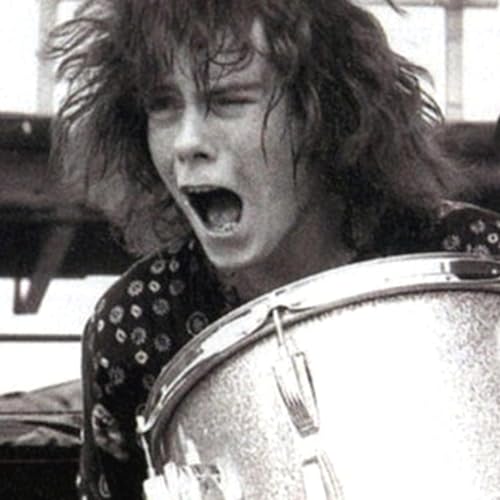
  • Michael Shrieve on Santana, Woodstock and a Lifetime Behind the Drums
    Jan 21 2026

    Drummer Michael Shrieve’s story reads like a rock-and-roll fairy tale — the kind of musical journey that blends youthful serendipity with restless creativity, and a lifelong appetite for pushing boundaries.

    Before he was a name on Santana’s classic albums or a Rock & Roll Hall of Famer, he was a kid with sticks and big dreams.

    Born in California, Shrieve grew up deeply drawn to music. As a teenager he played in his first serious band and gigged around backing rhythm and blues acts — even sitting in with seasoned performers like B.B. King and Etta James.

    At just 16, a pivotal moment came when he sat in during a jam at San Francisco’s famed Fillmore Auditorium. His playing caught someone's ear — Santana’s manager Stan Marcum — setting the stage for his astonishing ascent.

    At 19, Shrieve met Carlos Santana in a studio and was invited to join the band on the spot. It was a leap that would change his life.

    Almost immediately after joining, Shrieve found himself at the center of one of rock’s defining moments: Santana’s performance at Woodstock in August 1969.

    Barely 20 years old, his explosive drum solo on “Soul Sacrifice” became one of the enduring visual and sonic highlights of the event’s documentary.

    Between '69 and '74, Shrieve played on Santana’s first seven albums: Santana (1969), Abraxas (1970), Santana III (1971), Caravanserai (1972), Welcome (1973) and Borboletta (1974), plus the live album Lotus (1974).

    He wasn’t just a timekeeper. On Caravanserai he co-produced and co-wrote four tracks, helping guide the band into more experimental, jazz-infused territory. His work helped broaden the possibilities of rock percussion, drawing on influences from jazz greats and Latin rhythms alike.

    By the mid-'70s, Shrieve was ready to expand his musical palette beyond Santana. He left the band to pursue solo projects and relocated to London.

    One of his first ventures was Automatic Man , a group that blended rock with progressive and funk elements.

    He then joined the avant-garde fusion supergroup Go, alongside formidable musicians like Steve Winwood, Stomu Yamashta, Klaus Schulze and Al Di Meola. The band released multiple albums and toured, diving deep into jazz, electronic and world music textures.

    Throughout the late ’70s and ’80s Shrieve stayed busy, playing with Hagar Schon Aaronson Shrieve (with Neal Schon and Sammy Hagar) and contributing to albums by artists as diverse as The Rolling Stones (Emotional Rescue, 1980) and Roger Hodgson of Supertramp. He also collaborated on Richard Wahnfried projects with electronic composer Klaus Schulze and recorded his own electronic music.

    After leaving Santana, Shrieve didn’t slow down — he reinvented himself again and again. Beyond rock and fusion bands, he became a composer and session player whose credits include work with Mick Jagger, George Harrison, Pete Townshend, Andy Summers, Jaco Pastorius and many others.

    He also ventured into film music, composing scores for movies including Tempest and Apollo 13, and continued collaborations with musicians across genres.

    In 1997 he reunited with former Santana members — Neal Schon, Gregg Rolie, José Areas and Michael Carabello — in Abraxas Pool, a project that revisited and re-imagined elements of the classic Santana sound.

    Shrieve’s contributions were formally recognized when he was inducted into the Rock & Roll Hall of Fame in 1998 for his work with Santana, and later honored with Guitar Center’s Lifetime Achievement Award in 2005. He’s also been cited by Rolling Stone as one of rock’s greatest drummers.

    In 2016, he briefly reunited with the original Santana lineup for the album Santana IV, again marking his deep connection to the music that made his name.

    Today, Michael Shrieve remains a vibrant artist. His band Spellbinder, blends jazz and improvisatory rock; he works on ambitious solo projects like Drums of Compassion; and continues to collaborate with forward-thinking musicians across genres.

    Michael joins us today to share his story.


    Mostra di più Mostra meno
    52 min
  • Frankie Miller: The Scottish Singer Who Gave Rock Its Soul
    Jan 14 2026

    Frankie Miller has one of those voices that stops you mid-sentence — gritty, soulful, aching, and unmistakably real.

    It’s the sound of lived experience, shaped by smoky pubs, late nights, hard miles on the road, and a deep love of rhythm and blues.

    Born Francis Miller in 1949, in Glasgow, Scotland, Frankie grew up in a working-class environment where music wasn’t a luxury — it was a lifeline.

    As a teenager, Frankie was already soaking up American blues and soul records, falling hard for artists like Muddy Waters, Otis Redding, and Ray Charles.

    Those influences never left him. You can hear them in every rasp, every shout, every tender moment in his singing. By the late 1960s, he was fronting his own band, building a reputation as a formidable live performer around the UK. Long before the record deals and chart success, Frankie was earning his stripes the old-fashioned way — on stage, night after night.

    His big break came in the early '70s when he signed to Chrysalis Records. His debut album Once in a Blue Moon (1972) immediately showcased his emotional range and powerful voice.

    The album also revealed something else: Frankie wasn’t just a belter — he was a storyteller. Songs like “I’m Falling in Love” hinted at the soulful depth that would define his career.

    Over the next decade, Frankie Miller released a run of albums that firmly established him as one of the great blue-eyed soul singers of his generation. Records like High Life (1974), The Rock (1975), and Full House (1977) blended rock, soul, and blues with effortless confidence. The Rock in particular is often cited as a high point — raw, energetic, and brimming with personality. It also helped cement his reputation internationally, especially in the United States, where his sound resonated deeply.

    Frankie’s songwriting talent didn’t go unnoticed either. In fact, some of his most famous songs became hits for other artists. “I Can't Change It" was covered by artists like Ray Charles.

    Rod Stewart also became a close friend and champion, recording several Frankie Miller songs and helping introduce his music to an even wider audience. It was clear: musicians loved him as much as fans did.

    Despite the success, Frankie never chased trends or tried to polish away the rough edges that made him special. His voice remained raw and honest, often sounding like it might crack — and sometimes it did — but that vulnerability was exactly the point. He sang like someone who meant every word.

    Then, in 1994, everything changed. Frankie suffered a massive brain hemorrhage that left him unable to speak or sing, abruptly ending his performing career. It was a devastating blow, not just to fans, but to the music world as a whole. One of rock and soul’s most distinctive voices was suddenly silenced.

    In the years that followed, Frankie’s wife helped him through a long and difficult recovery. While he would never return to the stage, Frankie’s spirit — and his music — endured.

    Fellow musicians rallied around him, and albums like Frankie Millers Double Take where Elton, Rod, Willie Nelson and others duetted with him, helped reintroduce his catalogue to new listeners while honoring his immense influence.

    Today, Frankie Miller is remembered not just for his powerful voice, but for his authenticity. He was never a glossy superstar or a carefully manufactured rock icon. He was a singer’s singer — admired by peers, respected by critics, and adored by fans who recognised something deeply human in his music.

    Frankie Miller’s songs still feel alive because they come from a place of truth. Whether he was roaring through a blues rocker or whispering through a tender ballad, he sang like a man laying his heart on the line.

    Joining us this week is Scottish author, Davy Arthur who has recently penned a book to honour Frankie. You can pick up the book 'Long Way Home' - The Frankie MIller story here. It's published by New Haven

    Mostra di più Mostra meno
    52 min
  • Tommy James: Hits, Hustle & the Mob Behind the Music
    Jan 7 2026

    On this week’s A Breath of Fresh Air, Sandy welcomes a man whose songs have woven themselves into the fabric of several generations.

    Tommy James, the legendary frontman of Tommy James & The Shondells, joins us for a deep, revealing conversation about the highs, the heartbreaks and the astonishing twists behind one of the most successful hit-making careers of the 1960s and beyond.

    Tommy’s journey is the kind of story Hollywood couldn’t invent — though they’re certainly trying, with his bestselling memoir Me, the Mob and the Music currently being adapted for the big screen.

    He takes us right back to his childhood in Niles, Michigan, where loving rock ’n’ roll meant picking up a guitar, forming a band and hoping the magic would follow. It did — but not in any way Tommy expected.

    He talks us through the incredible moment when Hanky Panky, a forgotten B-side recorded years earlier, suddenly blew up in Pittsburgh after a bootlegger pressed tens of thousands of copies.

    One minute Tommy was playing small clubs; the next he and his band were national chart-toppers. That whirlwind success swept him straight into the arms of Roulette Records — a label run by the charming but notoriously dangerous Morris Levy, a man later revealed to have deep ties to the Genovese crime family.

    Tommy opens up about the complicated relationship that followed: the protection, the pressure, the creative freedom, and the financial exploitation that kept millions of dollars out of his hands.

    In this wonderfully open chat, Tommy revisits the creation of the monster hits that still light up dance floors today.

    He tells Sandy how I Think We’re Alone Now reinvented the band’s sound, how a flashing neon sign inspired the name for Mony Mony, and how Crimson and Clover marked a bold new chapter in studio experimentation — a leap that helped Tommy move from AM pop dominance to the era of FM album rock.

    He describes the excitement of breaking musical ground, the thrill of hearing his songs explode on radio, and the constant sense of danger swirling around Roulette’s offices.

    Sandy and Tommy also explore the cultural shifts that shaped his era: the rise of psychedelia, the breakup of The Shondells, and the changing landscape of the record business as artists were suddenly expected to deliver albums with artistic depth, not just hit singles. He recalls touring America in the late ’60s, his surprising involvement in Hubert Humphrey’s presidential campaign, and the little-known story of why he turned down Woodstock — a decision that has fascinated fans for decades.

    Today, Tommy remains as passionate and creative as ever. With new music, a thriving fan base, and an extraordinary life story headed for film adaptation, he’s enjoying a well-deserved renaissance.

    His music still pulses through movies, TV, commercials and global radio, connecting across generations and reminding listeners why these songs have never stopped mattering.

    This episode is a joyful, eye-opening, often jaw-dropping journey through one of the most colourful careers in rock ’n’ roll. If you love the artists who shaped the soundtrack of our lives — the stars of the ’60s, ’70s and ’80s — then settle in. Tommy James has stories you’ll be telling your friends for days.

    Mostra di più Mostra meno
    52 min
  • Liberty DeVitto: The Drummer Behind Billy Joel’s Biggest Hits
    Dec 31 2025

    In this deeply personal and wonderfully candid episode, we’re joined by one of rock’s most recognisable and influential drummers: Liberty DeVitto.

    For three decades, Liberty was the rhythmic engine behind Billy Joel — the man whose explosive, intuitive playing powered classics like “Only the Good Die Young,” “Movin’ Out,” “You May Be Right,” “Scenes from an Italian Restaurant,” and so many more. But as you’ll hear, his story is so much bigger than the music that made him famous.

    Liberty opens up about his Brooklyn upbringing, marked by a tough home life and a school system that didn’t quite know what to do with a kid like him.

    He talks about the teacher who dismissed his dreams outright, and the moment that changed everything: seeing the Beatles on television and suddenly realising what he wanted to do for the rest of his life.

    From there, Liberty takes us on a vivid journey through the early days — the basement rehearsals, the bar gigs, the scramble to get noticed — until fate put him in the same room as a young Billy Joel.

    The chemistry was instant, electric, and undeniable. Liberty reminisces about the early records where the band was still finding its voice, the Stranger sessions where everything clicked, and the whirlwind that followed as Billy Joel became one of the biggest artists on the planet.

    Of course, success rarely comes without friction.

    Liberty speaks honestly about life inside the Billy Joel band, the tight-knit camaraderie, the touring madness, the studio magic, and the growing tensions that eventually fractured the group.

    He doesn’t shy away from the painful parts — the confusion, hurt, and years of silence after he was let go. But he also shares the long path back toward healing, forgiveness, and ultimately reconciliation with Billy after fifteen years apart.

    Along the way, he talks about fatherhood, sobriety, personal growth, and the rediscovery of joy through new creative partnerships and projects — including his heartfelt work with the band The Slim Kings and his passion for mentoring young musicians.

    This conversation is full of humour, honesty, vulnerability, and wisdom, offering a rare, behind-the-scenes look at the life of a man who helped shape some of the most iconic songs of the ’70s, ’80s, and beyond.

    Whether you’re a longtime Billy Joel fan, a drummer, or simply someone who loves a good story of resilience and reinvention, this episode delivers in spades.

    Settle in — Liberty DeVitto’s journey is one you won’t forget.

    For more about Liberty head for his website https://libertydevitto.com/

    I hope you enjoy his story.

    Mostra di più Mostra meno
    52 min
  • Ian Gillan: The Legendary Voice of Deep Purple- His Story
    Dec 24 2025

    In this episode, I finally get to sit down with a man I’ve been chasing for more than four years — the incomparable Ian Gillan of Deep Purple.

    If you grew up on classic rock the way I did, you already know exactly what a monumental figure he is. Ian’s the powerhouse vocalist who helped define the sound of hard rock, pushed the limits of vocal technique, and gave us some of the most enduring songs in modern music history.

    But this isn’t your typical rock-star chat. Ian opens up about everything — from hearing Elvis for the first time and singing as a boy soprano to scraping by with half-broken instruments, makeshift drum kits, and a single pair of trousers he rotated with Roger Glover.

    He talks candidly about those early club days in Germany, the magic of the transistor radio, and how the surf-rock craze swept through London in the mid-60s.

    We dive right into the evolution of Episode Six, the songwriting partnership with Roger Glover, the birth of Deep Purple’s legendary hard-rock sound, and the incredible creative chemistry that powered albums like In Rock, Fireball, and Machine Head.

    Ian shares what it was really like inside the whirlwind of fame — the money, the mayhem, the distractions, the growing pains, and the moment he realised the band’s unity was starting to fracture.

    He also reflects on the pressures of success, the importance of staying true to your artistic identity, and why he ultimately walked away from one of the biggest bands in the world. It’s raw, honest, funny, nostalgic, and full of the kind of stories only Ian Gillan can tell.

    If you love Deep Purple, classic rock history, behind-the-scenes stories, or simply a great conversation with a remarkably self-aware and entertaining storyteller, this episode is going to be a treat.

    Tune in and step inside the life, the voice, and the unstoppable spirit of Ian Gillan.

    To learn more about Ian head to:

    Ian Gillan (official site) www.gillan.com

    Deep Purple – official band site deep-purple.com deep-purple.com

    Deep Purple – Ian Gillan’s page on band site deep-purple.com/band/ian-gillan/ deep-purple.com


    Mostra di più Mostra meno
    52 min
  • Patti LaBelle: The Untold Story of the Godmother of Soul
    Dec 17 2025
    Born Patricia Louise Holte in 1944 in Southwest Philadelphia, Pennsylvania, the woman we know as Patti LaBelle was raised in a large family as the second-youngest of five children. Her father worked on the railroad and performed in clubs, while her mother was a domestic worker. From a young age, Patti found solace and purpose in music — she joined her church choir at age 10 and by 12 was singing solo. Her early life wasn’t easy. The marriage of her parents was troubled, and after her parents separated when she was 12, she experienced deep personal trauma. Yet despite hardship, she held onto music — both for comfort and as an outlet — listening to jazz, R&B and gospel as she grew up.In her mid-teens Patti began dreaming of making music beyond the church. By 1960, she formed a girl group called The Ordettes with friends at school. The next year members changed and the group evolved into Patti LaBelle and the Bluebelles — soon to become simply Labelle in the '70s. The Bluebelles enjoyed moderate success: in '62 they scored a Top-20 hit. Later, they found acclaim covering classics like “Somewhere Over the Rainbow.” In the '70s Labelle’s sound evolved. The group embraced funk, soul, and rock — culminating in the '74 smash hit Lady Marmalade. The song and its style cemented their place in music history.But amidst growing fame, internal tensions and changing musical landscapes led to the group’s split in '77. That difficult moment became the launchpad for Patti’s solo journey. Patti’s debut solo album, simply titled Patti LaBelle, came out in '77. Her true breakthrough came mid-'80s. A string of hits turned Patti into a household name. 1986’s album Winner in You — featuring the duet On My Own with Michael McDonald — topped U.S. charts and solidified her commercial success.In the '90s Patti continued to release albums. She earned a second and sold tens of millions of records worldwide.Patti’s talents reach far beyond singing. Over the decades she’s dabbled in acting and is also a successful author. Her 1996 memoir Don't Block the Blessings: Revelations of a Lifetime gives insight into her hardships, faith and perseverance. She later penned cookbooks, launched a food brand with frozen comfort foods, and her signature sweet-potato pies.Today Patti LaBelle shows no signs of slowing down. In 2024, she marked her 80th birthday by announcing a brand new album titled 8065 — a tribute to her 80 years alive and 65 years in show business. She’s also hit the road with the “8065 Celebration Tour,” which will take her to audiences around the world — including stops planned for Australia and New Zealand early in 2026.At 81, Patti remains a powerhouse performer. Her message to fans? Age is just a number — and she’s proof. Reflecting on her decades-long career, she recently said she feels blessed to still be “standing” — able to sing, walk, and create. Her fans, across generations, couldn’t agree more.From “The Ordettes” to Stardom, this episode details the rise and rise of the legend we knowas Patti Labelle.Catch her on tour here:Jan 16 Rancho Mirage, CA, United StatesJan 17 Thunder Valley Casino Resort Lincoln, CA, Jan 20 Riverside Theatre Perth, AustraliaJan 22 Palais Theatre St Kilda, Jan 24 Adelaide Entertainment Centre Jan 25 Sydney Event Centre Jan 28 The Star Gold Coast Jan 30 The Civic Auckland, New ZealandFeb 12 Jacksonville, FL, Feb 13 Charlotte, NC, United StatesFeb 15 St Louis, MOFeb 19 New OrleansFeb 20 Houston, TXFeb 22 Fort Worth, TXMar 14 Westbury South, NY
    Mostra di più Mostra meno
    52 min