'60s '70s '80s - Warm, Candid, Classic, Rock Interviews with Music Legends - A BREATH OF FRESH AIR copertina

'60s '70s '80s - Warm, Candid, Classic, Rock Interviews with Music Legends - A BREATH OF FRESH AIR

'60s '70s '80s - Warm, Candid, Classic, Rock Interviews with Music Legends - A BREATH OF FRESH AIR

Di: Sandy Kaye
Ascolta gratuitamente

A proposito di questo titolo

Iconic artists? Music Legends? Sandy Kaye interviews them all on A Breath of Fresh Air - a multi award-winning podcast featuring in-depth interviews with the artists you love. Through compelling conversations, we gain a rare, behind-the-scenes and intimate look at the personal stories and inspirations that fueled the music that shaped entire generations. Explore the lives, struggles, and creative journeys of these legends and relive the timeless hits that defined the soundtrack of our youth. It's all about Their Lives. Their Stories. Their Music https://www.abreathoffreshair.com.auSandy Kaye Musica
  • Burton Cummings: The Voice That Defined Canadian Rock
    Feb 4 2026

    In this episode of A Breath of Fresh Air, Sandy Kaye explores the remarkable life and career of Burton Cummings, one of the most influential and recognisable voices in Canadian music history.

    From his beginnings in Winnipeg to international superstardom — and now a highly anticipated return to the stage with The Guess Who — Cummings’ story is one of talent, ambition, creative independence and enduring legacy.

    Born in Winnipeg, Manitoba, Burton Cummings showed an early passion for music, studying piano and developing a powerful, expressive voice that would later become instantly recognisable.

    His career took a defining turn in the mid-'60s when he joined The Guess Who, initially as a keyboard player before stepping into the role of lead vocalist and principal songwriter. What followed was one of the most successful chapters in Canadian rock history.

    With Cummings at the helm, The Guess Who achieved global success, delivering a string of iconic hits including These Eyes, Laughing, No Time, Share the Land and the chart-topping American Woman.

    His songwriting blended emotional depth, social commentary and unforgettable melodies, while his commanding vocal performances helped the band break through internationally — a rare achievement for Canadian artists at the time.

    The Guess Who became a defining soundtrack of the late '60s and early '70s, and Cummings emerged as a major creative force behind their success.

    At the height of the band’s popularity, Cummings made the bold decision to leave The Guess Who in '75, determined to follow his own artistic path.

    Launching a solo career, he quickly proved that his success was no accident. His solo work revealed a broader musical range, incorporating rock, pop, jazz influences and orchestral elements. Songs such as Stand Tall, My Own Way to Rock and You Saved My Soul became major hits, cementing his reputation as a formidable artist in his own right.

    Beyond studio recordings, Burton Cummings earned a reputation as a powerful and charismatic live performer.

    His rich voice and dynamic stage presence have remained remarkably consistent over the decades, allowing him to connect with audiences across generations.

    Even as musical trends shifted, Cummings continued to tour, record and evolve, keeping his catalogue alive while introducing fans to new material.

    In recent years, fans have been thrilled by the announcement that Burton Cummings has reunited with The Guess Who, bringing one of Canada’s most legendary rock line-ups back together.

    With plans to tour, the reunion offers audiences a rare opportunity to experience these timeless songs performed by the voice that helped make them iconic.

    For longtime fans and new listeners alike, the return of Cummings fronting The Guess Who is both nostalgic and celebratory — a full-circle moment in Canadian music history.

    Throughout his career, Cummings has received widespread recognition for his contribution to music. He has won multiple Juno Awards, been inducted into the Canadian Music Hall of Fame both as a member of The Guess Who and as a solo artist, honoured with a star on Canada’s Walk of Fame, and appointed an Officer of the Order of Canada, one of the nation’s highest civilian honours.

    In this episode, Sandy reflects on Burton Cummings’ extraordinary journey — a career defined by artistic courage, musical excellence and a voice that helped shape the sound of a nation.

    From classic hits to a long-awaited reunion and tour, Burton Cummings remains a living legend whose music continues to resonate across time.


    Mostra di più Mostra meno
    52 min
  • The Bee Gees from the Inside: Stephen Gibb Tells
    Jan 28 2026

    The Bee Gees are one of the most influential and enduring acts in popular music history, a band whose songs have soundtracked generations and transcended genres, eras and trends.

    Formed by brothers Barry, Robin and Maurice Gibb, the group’s journey began long before global fame, rooted in family, harmony and an almost instinctive musical bond.

    Born on the Isle of Man and raised between England and Australia, the Gibb brothers began performing together as kids.

    Music wasn’t just an interest — it was the family language. By the late '50s, the brothers were already writing songs, honing their harmonies and learning the discipline of performance.

    Their early success in Australia laid the groundwork for an international career that would soon explode.

    The Bee Gees’ first major breakthrough came in the late '60s with emotionally rich, melodic songs like “To Love Somebody,” “Massachusetts,” “Words,” and “I’ve Gotta Get a Message to You.”

    Their close, often aching harmonies and introspective songwriting set them apart.

    In the '70s, the Bee Gees achieved one of the most dramatic transformations in music history. With Barry’s soaring falsetto, the brothers became the undisputed kings of the disco era.

    Songs like “Stayin’ Alive,” “Night Fever,” “How Deep Is Your Love,” and “You Should Be Dancing” dominated charts worldwide, largely through their work on the Saturday Night Fever soundtrack — one of the best-selling albums of all time.

    Their songwriting partnership extended beyond their own recordings, producing hits for artists including Barbra Streisand, Diana Ross, Kenny Rogers and Dolly Parton.

    Yet behind the global phenomenon was a tight-knit family unit.

    It was within this world that Stephen Gibb, Barry’s eldest son, grew up. Raised surrounded by music, Stephen witnessed the Bee Gees at work from an unusually intimate vantage point.

    As a child, he watched his father and uncles write, rehearse and refine songs, often assuming that such musical brilliance was simply part of everyday life. Only later did he realise just how extraordinary that environment was.

    Stephen chose not to follow directly in his family's musical footsteps. Instead of pop harmonies, he gravitated toward hard rock and heavy metal, inspired by bands like Van Halen and Def Leppard.

    Determined to carve out his own identity, he built his own career. It was a conscious decision to step out of the Bee Gees’ long shadow while still deeply respecting it.

    Tragedy struck the Gibb family with the loss of Andy Gibb in 1988, followed by Maurice Gibb in 2003 and Robin Gibb in 2012.

    These losses marked the end of the Bee Gees as a performing group, but not the end of their music. Barry continued performing and recording, often with Stephen by his side.

    Over time, Stephen became a trusted musical collaborator and guitarist in Barry’s touring band, providing both musical and emotional support as his father carried the legacy forward alone.

    In 2021, Barry released Greenfields: The Gibb Brothers’ Songbook, a roots-influenced reimagining of classic Bee Gees songs, recorded with a stellar lineup of artists including Dolly Parton, Keith Urban and Alison Krauss.

    The album was widely praised and served as a poignant tribute to his brothers and their shared catalogue. It also marked the closing chapter of Barry’s recording career, as he has since stepped into a well-earned and contented retirement.

    Today, the Bee Gees’ legacy remains immense. Their songs continue to resonate because they speak to universal emotions — love, heartbreak, resilience and hope — delivered through melodies that feel both intimate and timeless.

    Through Barry, and through the respect and care shown by Stephen, that legacy is protected with dignity rather than spectacle.

    The Bee Gees were never just a band. They were a family, bound by blood, harmony and an extraordinary gift for songwriting — a gift that continues to echo across generations.

    Today Stephen Gibb joins us with the story of The Bee Gees.

    Mostra di più Mostra meno
    52 min
  • Michael Shrieve on Santana, Woodstock and a Lifetime Behind the Drums
    Jan 21 2026

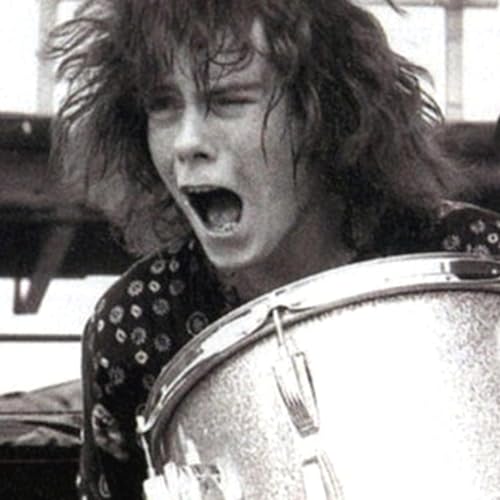
    Drummer Michael Shrieve’s story reads like a rock-and-roll fairy tale — the kind of musical journey that blends youthful serendipity with restless creativity, and a lifelong appetite for pushing boundaries.

    Before he was a name on Santana’s classic albums or a Rock & Roll Hall of Famer, he was a kid with sticks and big dreams.

    Born in California, Shrieve grew up deeply drawn to music. As a teenager he played in his first serious band and gigged around backing rhythm and blues acts — even sitting in with seasoned performers like B.B. King and Etta James.

    At just 16, a pivotal moment came when he sat in during a jam at San Francisco’s famed Fillmore Auditorium. His playing caught someone's ear — Santana’s manager Stan Marcum — setting the stage for his astonishing ascent.

    At 19, Shrieve met Carlos Santana in a studio and was invited to join the band on the spot. It was a leap that would change his life.

    Almost immediately after joining, Shrieve found himself at the center of one of rock’s defining moments: Santana’s performance at Woodstock in August 1969.

    Barely 20 years old, his explosive drum solo on “Soul Sacrifice” became one of the enduring visual and sonic highlights of the event’s documentary.

    Between '69 and '74, Shrieve played on Santana’s first seven albums: Santana (1969), Abraxas (1970), Santana III (1971), Caravanserai (1972), Welcome (1973) and Borboletta (1974), plus the live album Lotus (1974).

    He wasn’t just a timekeeper. On Caravanserai he co-produced and co-wrote four tracks, helping guide the band into more experimental, jazz-infused territory. His work helped broaden the possibilities of rock percussion, drawing on influences from jazz greats and Latin rhythms alike.

    By the mid-'70s, Shrieve was ready to expand his musical palette beyond Santana. He left the band to pursue solo projects and relocated to London.

    One of his first ventures was Automatic Man , a group that blended rock with progressive and funk elements.

    He then joined the avant-garde fusion supergroup Go, alongside formidable musicians like Steve Winwood, Stomu Yamashta, Klaus Schulze and Al Di Meola. The band released multiple albums and toured, diving deep into jazz, electronic and world music textures.

    Throughout the late ’70s and ’80s Shrieve stayed busy, playing with Hagar Schon Aaronson Shrieve (with Neal Schon and Sammy Hagar) and contributing to albums by artists as diverse as The Rolling Stones (Emotional Rescue, 1980) and Roger Hodgson of Supertramp. He also collaborated on Richard Wahnfried projects with electronic composer Klaus Schulze and recorded his own electronic music.

    After leaving Santana, Shrieve didn’t slow down — he reinvented himself again and again. Beyond rock and fusion bands, he became a composer and session player whose credits include work with Mick Jagger, George Harrison, Pete Townshend, Andy Summers, Jaco Pastorius and many others.

    He also ventured into film music, composing scores for movies including Tempest and Apollo 13, and continued collaborations with musicians across genres.

    In 1997 he reunited with former Santana members — Neal Schon, Gregg Rolie, José Areas and Michael Carabello — in Abraxas Pool, a project that revisited and re-imagined elements of the classic Santana sound.

    Shrieve’s contributions were formally recognized when he was inducted into the Rock & Roll Hall of Fame in 1998 for his work with Santana, and later honored with Guitar Center’s Lifetime Achievement Award in 2005. He’s also been cited by Rolling Stone as one of rock’s greatest drummers.

    In 2016, he briefly reunited with the original Santana lineup for the album Santana IV, again marking his deep connection to the music that made his name.

    Today, Michael Shrieve remains a vibrant artist. His band Spellbinder, blends jazz and improvisatory rock; he works on ambitious solo projects like Drums of Compassion; and continues to collaborate with forward-thinking musicians across genres.

    Michael joins us today to share his story.


    Mostra di più Mostra meno
    52 min
Ancora nessuna recensione