

Michael Shrieve on Santana, Woodstock and a Lifetime Behind the Drums
Impossibile aggiungere al carrello
Rimozione dalla Lista desideri non riuscita.
Non è stato possibile aggiungere il titolo alla Libreria
Non è stato possibile seguire il Podcast
Esecuzione del comando Non seguire più non riuscita

Michael Shrieve on Santana, Woodstock and a Lifetime Behind the Drums
-
Letto da:
-
Di:
A proposito di questo titolo
Drummer Michael Shrieve’s story reads like a rock-and-roll fairy tale — the kind of musical journey that blends youthful serendipity with restless creativity, and a lifelong appetite for pushing boundaries.
Before he was a name on Santana’s classic albums or a Rock & Roll Hall of Famer, he was a kid with sticks and big dreams.
Born in California, Shrieve grew up deeply drawn to music. As a teenager he played in his first serious band and gigged around backing rhythm and blues acts — even sitting in with seasoned performers like B.B. King and Etta James.
At just 16, a pivotal moment came when he sat in during a jam at San Francisco’s famed Fillmore Auditorium. His playing caught someone's ear — Santana’s manager Stan Marcum — setting the stage for his astonishing ascent.
At 19, Shrieve met Carlos Santana in a studio and was invited to join the band on the spot. It was a leap that would change his life.
Almost immediately after joining, Shrieve found himself at the center of one of rock’s defining moments: Santana’s performance at Woodstock in August 1969.
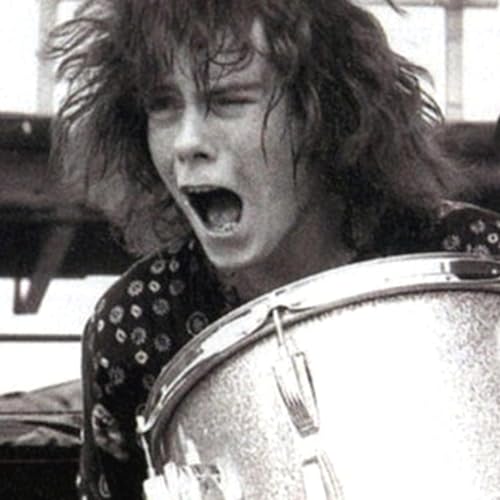
Barely 20 years old, his explosive drum solo on “Soul Sacrifice” became one of the enduring visual and sonic highlights of the event’s documentary.
Between '69 and '74, Shrieve played on Santana’s first seven albums: Santana (1969), Abraxas (1970), Santana III (1971), Caravanserai (1972), Welcome (1973) and Borboletta (1974), plus the live album Lotus (1974).
He wasn’t just a timekeeper. On Caravanserai he co-produced and co-wrote four tracks, helping guide the band into more experimental, jazz-infused territory. His work helped broaden the possibilities of rock percussion, drawing on influences from jazz greats and Latin rhythms alike.
By the mid-'70s, Shrieve was ready to expand his musical palette beyond Santana. He left the band to pursue solo projects and relocated to London.
One of his first ventures was Automatic Man , a group that blended rock with progressive and funk elements.
He then joined the avant-garde fusion supergroup Go, alongside formidable musicians like Steve Winwood, Stomu Yamashta, Klaus Schulze and Al Di Meola. The band released multiple albums and toured, diving deep into jazz, electronic and world music textures.
Throughout the late ’70s and ’80s Shrieve stayed busy, playing with Hagar Schon Aaronson Shrieve (with Neal Schon and Sammy Hagar) and contributing to albums by artists as diverse as The Rolling Stones (Emotional Rescue, 1980) and Roger Hodgson of Supertramp. He also collaborated on Richard Wahnfried projects with electronic composer Klaus Schulze and recorded his own electronic music.
After leaving Santana, Shrieve didn’t slow down — he reinvented himself again and again. Beyond rock and fusion bands, he became a composer and session player whose credits include work with Mick Jagger, George Harrison, Pete Townshend, Andy Summers, Jaco Pastorius and many others.
He also ventured into film music, composing scores for movies including Tempest and Apollo 13, and continued collaborations with musicians across genres.
In 1997 he reunited with former Santana members — Neal Schon, Gregg Rolie, José Areas and Michael Carabello — in Abraxas Pool, a project that revisited and re-imagined elements of the classic Santana sound.
Shrieve’s contributions were formally recognized when he was inducted into the Rock & Roll Hall of Fame in 1998 for his work with Santana, and later honored with Guitar Center’s Lifetime Achievement Award in 2005. He’s also been cited by Rolling Stone as one of rock’s greatest drummers.
In 2016, he briefly reunited with the original Santana lineup for the album Santana IV, again marking his deep connection to the music that made his name.
Today, Michael Shrieve remains a vibrant artist. His band Spellbinder, blends jazz and improvisatory rock; he works on ambitious solo projects like Drums of Compassion; and continues to collaborate with forward-thinking musicians across genres.
Michael joins us today to share his story.