
Risultati di "George Berkeley" in Tutte le categorie
-

-
Tratado sobre los principios del conocimiento humano (George Berkeley)
- Di: George Berkeley
- Versione originale
-
Generale0
-
Lettura0
-
Storia0
UNA PRODUCCIÓN DE PIGEON CASA EDITORIALAudiolibros Pigeon reúne las obras más influyentes de la historia —clásicos de finanzas, filosofía, desarrollo personal y más— narradas con calidad premium y pensadas para acompañarte mientras construyes una vida más fuerte y próspera. Contenido atemporal, accesible y diseñado para aprender en cualquier momento del día.Escucha nuestras colecciones:(Disponibles en español e inglés.)Audiolibros Pigeon: FinanzasAudiolibros Pigeon: Top 100 más vendidosAudiolibros Pigeon: FilosofíaAudiolibros Pigeon: ClásicosAudiolibros Pigeon: Edición ...
Impossibile aggiungere al carrello
Puoi avere soltanto 50 titoli nel carrello per il checkout.Riprova più tardiRiprova più tardiRimozione dalla Lista desideri non riuscita.
Riprova più tardiNon è stato possibile aggiungere il titolo alla Libreria
Per favore riprovaNon è stato possibile seguire il Podcast
Per favore riprovaEsecuzione del comando Non seguire più non riuscita
-
-
-
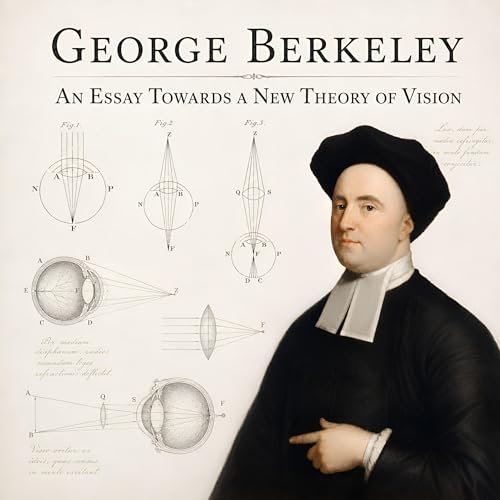
An Essay Towards A New Theory Of Vision
- Di: George Berkeley
- Letto da: AI Voice Daniel
- Durata: 3 ore e 14 min
- Versione integrale
-
Generale0
-
Lettura0
-
Storia0
This audiobook is narrated by an AI Voice. State-of-the-art voice generation technology, combined with careful human editing, has been employed in this production of "An Essay Towards A New Theory Of Vision" by George Berkeley in order to make this important text more widely accessible to modern...
Estratto voce virtuale -
An Essay Towards A New Theory Of Vision
- Letto da: AI Voice Daniel
- Durata: 3 ore e 14 min
- Data di pubblicazione: 06/06/2026
- Lingua: Inglese
Impossibile aggiungere al carrello
Puoi avere soltanto 50 titoli nel carrello per il checkout.Riprova più tardiRiprova più tardiRimozione dalla Lista desideri non riuscita.
Riprova più tardiNon è stato possibile aggiungere il titolo alla Libreria
Per favore riprovaNon è stato possibile seguire il Podcast
Per favore riprovaEsecuzione del comando Non seguire più non riuscita
7,04 € o gratis durante la prova. Il rinnovo è automatico a 9,99 € al mese dopo la prova. Verifica l'idoneità
Incluso nell'abbonamento -
-

-
A Treatise Concerning the Principles of Human Knowledge
- Di: George Berkeley
- Letto da: Jonathan Cowley
- Durata: 3 ore e 57 min
- Versione integrale
-
Generale0
-
Lettura0
-
Storia0
First published in 1710, George Berkeley's A Treatise Concerning the Principles of Human Knowledge is a seminal contribution to Empiricist philosophy. Making the bold assertion that the physical world consists only of ideas and thus does not exist outside the mind, this work establishes Berkeley as the founder of the immaterialist school of thought. A major influence on such later philosophers as David Hume and Immanuel Kant, Berkeley's ideas have played a role in such diverse fields as mathematics and metaphysics and continue to spark debate today.
Anteprima -
A Treatise Concerning the Principles of Human Knowledge
- Letto da: Jonathan Cowley
- Durata: 3 ore e 57 min
- Data di pubblicazione: 30/09/2011
- Lingua: Inglese
Impossibile aggiungere al carrello
Puoi avere soltanto 50 titoli nel carrello per il checkout.Riprova più tardiRiprova più tardiRimozione dalla Lista desideri non riuscita.
Riprova più tardiNon è stato possibile aggiungere il titolo alla Libreria
Per favore riprovaNon è stato possibile seguire il Podcast
Per favore riprovaEsecuzione del comando Non seguire più non riuscita
7,04 € o gratis durante la prova. Il rinnovo è automatico a 9,99 € al mese dopo la prova. Verifica l'idoneità
Incluso nell'abbonamento -
-

-
Treatise Concerning the Principles of Human Knowledge (Version 2)
- Di: George Berkeley
- Versione originale
-
Generale0
-
Lettura0
-
Storia0
A Treatise Concerning the Principles of Human Knowledge (commonly called Treatise when referring to Berkeley's works) is a 1710 work, in English, by Irish Empiricist philosopher George Berkeley. This book largely seeks to refute the claims made by Berkeley's contemporary John Locke about the nature of human perception. Whilst, like all the Empiricist philosophers, both Locke and Berkeley agreed that we are having experiences, regardless of whether material objects exist, Berkeley sought to prove that the outside world (the world which causes the ideas one has within one's mind) is also ...
Impossibile aggiungere al carrello
Puoi avere soltanto 50 titoli nel carrello per il checkout.Riprova più tardiRiprova più tardiRimozione dalla Lista desideri non riuscita.
Riprova più tardiNon è stato possibile aggiungere il titolo alla Libreria
Per favore riprovaNon è stato possibile seguire il Podcast
Per favore riprovaEsecuzione del comando Non seguire più non riuscita
-
-

-
The Gift of Friendship
- What the Wisest Minds Said About Our Deepest Bonds Across Two Thousand Years
- Di: Alfred H. Hyatt, Henry David Thoreau, Thomas Carlyle, e altri
- Letto da: Charles Featherstone
- Durata: 3 ore e 5 min
- Versione integrale
-
Generale0
-
Lettura0
-
Storia0
This beautifully curated anthology draws on major historical figures including Emerson, Thoreau, Carlyle, Oliver Goldsmith, Dr. Samuel Johnson, Francis Bacon, Montaigne, and Aristotle. The pieces range across themes such as the sentiment of friendship, its pleasures, and the art of choosing...
Anteprima -
The Gift of Friendship
- What the Wisest Minds Said About Our Deepest Bonds Across Two Thousand Years
- Letto da: Charles Featherstone
- Durata: 3 ore e 5 min
- Data di pubblicazione: 18/05/2026
- Lingua: Inglese
Impossibile aggiungere al carrello
Puoi avere soltanto 50 titoli nel carrello per il checkout.Riprova più tardiRiprova più tardiRimozione dalla Lista desideri non riuscita.
Riprova più tardiNon è stato possibile aggiungere il titolo alla Libreria
Per favore riprovaNon è stato possibile seguire il Podcast
Per favore riprovaEsecuzione del comando Non seguire più non riuscita
9,40 € o gratis durante la prova. Il rinnovo è automatico a 9,99 € al mese dopo la prova. Verifica l'idoneità
Incluso nell'abbonamento -
-

-
Berkeleys Treatise on Human Knowledge
- Di: George Berkeley
- Versione originale
-
Generale0
-
Lettura0
-
Storia0
In A Treatise Concerning the Principles of Human Knowledge, Irish philosopher George Berkeley challenges the views of his contemporary John Locke regarding human perception. Written in 1710, this influential work argues that the external world is not made of physical objects, as Locke suggests, but is instead composed solely of ideas. Berkeley asserts that Ideas can only resemble Ideas, meaning our mental concepts are reflections of other ideas rather than material forms. He further posits that this realm of ideas is governed by a divine force—God—who imbues it with structure and order. ...
Impossibile aggiungere al carrello
Puoi avere soltanto 50 titoli nel carrello per il checkout.Riprova più tardiRiprova più tardiRimozione dalla Lista desideri non riuscita.
Riprova più tardiNon è stato possibile aggiungere il titolo alla Libreria
Per favore riprovaNon è stato possibile seguire il Podcast
Per favore riprovaEsecuzione del comando Non seguire più non riuscita
-
-
-
Three Dialogues between Hylas and Philonous
- Di: George Berkeley
- Versione originale
-
Generale0
-
Lettura0
-
Storia0
In this engaging philosophical exchange, George Berkeley presents Hylas, a character embodying the views of his contemporary adversary, John Locke. The name Hylas, rooted in ancient Greek meaning matter, represents the materialist perspective that Hylas passionately defends. In contrast, Philonous, whose name translates to lover of mind, challenges this view in a spirited debate. The First Dialogue opens with Hylas expressing his disdain for skepticism, accusing Philonous of holding the most extravagant opinion—that material substance does not exist. However, Philonous deftly counters, ...
Impossibile aggiungere al carrello
Puoi avere soltanto 50 titoli nel carrello per il checkout.Riprova più tardiRiprova più tardiRimozione dalla Lista desideri non riuscita.
Riprova più tardiNon è stato possibile aggiungere il titolo alla Libreria
Per favore riprovaNon è stato possibile seguire il Podcast
Per favore riprovaEsecuzione del comando Non seguire più non riuscita
-
-

-
Treatise Concerning the Principles of Human Knowledge
- Di: George Berkeley
- Versione originale
-
Generale0
-
Lettura0
-
Storia0
In A Treatise Concerning the Principles of Human Knowledge, commonly referred to as the Treatise, Irish Empiricist philosopher George Berkeley presents a compelling challenge to the views of his contemporary John Locke regarding human perception. While both philosophers acknowledged the existence of an external world that influences our mental ideas, Berkeley boldly posits that this world is not made up of physical objects but is instead entirely composed of ideas. He famously argues that Ideas can only resemble Ideas, suggesting that our mental experiences are reflections of other ideas ...
Impossibile aggiungere al carrello
Puoi avere soltanto 50 titoli nel carrello per il checkout.Riprova più tardiRiprova più tardiRimozione dalla Lista desideri non riuscita.
Riprova più tardiNon è stato possibile aggiungere il titolo alla Libreria
Per favore riprovaNon è stato possibile seguire il Podcast
Per favore riprovaEsecuzione del comando Non seguire più non riuscita
-
-

-
Berkeley’s Three Dialogues between Hylas and Philonous
- Di: George Berkeley
- Letto da: Albert A. Anderson
- Durata: 4 ore e 36 min
- Versione integrale
-
Generale0
-
Lettura0
-
Storia0
Berkeley uses the Socratic mode of inquiry in "Three Dialogues between Hylas and Philonous" to question fundamental beliefs about knowledge and reality. These dialogues are between Hylas (whose name is derived from the ancient Greek word for matter) and Philonous, whose name means "lover of mind." The new physical sciences developed in the seventeenth century supported the materialism proposed by Thomas Hobbes and several other philosophers. This worldview proclaimed that all of reality consists of nothing but matter in motion, thus promoting atheism and ethical skepticism.
Anteprima -
Berkeley’s Three Dialogues between Hylas and Philonous
- Letto da: Albert A. Anderson
- Durata: 4 ore e 36 min
- Data di pubblicazione: 02/04/2020
- Lingua: Inglese
Impossibile aggiungere al carrello
Puoi avere soltanto 50 titoli nel carrello per il checkout.Riprova più tardiRiprova più tardiRimozione dalla Lista desideri non riuscita.
Riprova più tardiNon è stato possibile aggiungere il titolo alla Libreria
Per favore riprovaNon è stato possibile seguire il Podcast
Per favore riprovaEsecuzione del comando Non seguire più non riuscita
8,22 € o gratis durante la prova. Il rinnovo è automatico a 9,99 € al mese dopo la prova. Verifica l'idoneità
Incluso nell'abbonamento -
-

-
Three Dialogues Between Hylas and Philonous
- Di: George Berkeley
- Letto da: Jonathan Keeble, Peter Kenny
- Durata: 3 ore e 46 min
- Versione integrale
-
Generale0
-
Lettura0
-
Storia0
Three Dialogues between Hylas and Philonous was the final statement by the empiricist philosopher George Berkeley, Bishop of Coyne, (1685-1753) on his views concerning subjective idealism, couched in the famous statement ‘esse is percipi’ - to be is to be perceived (mixing Latin with a bit...
Anteprima -
Three Dialogues Between Hylas and Philonous
- Letto da: Jonathan Keeble, Peter Kenny
- Durata: 3 ore e 46 min
- Data di pubblicazione: 12/10/2018
- Lingua: Inglese
Impossibile aggiungere al carrello
Puoi avere soltanto 50 titoli nel carrello per il checkout.Riprova più tardiRiprova più tardiRimozione dalla Lista desideri non riuscita.
Riprova più tardiNon è stato possibile aggiungere il titolo alla Libreria
Per favore riprovaNon è stato possibile seguire il Podcast
Per favore riprovaEsecuzione del comando Non seguire più non riuscita
7,04 € o gratis durante la prova. Il rinnovo è automatico a 9,99 € al mese dopo la prova. Verifica l'idoneità
Incluso nell'abbonamento -