Episodi

  • 5 Things That Make People Want to Refer You
    Aug 26 2026
    How do you become the kind of person people trust enough to refer? How much does your reputation influence a sale before you ever have the chance to make your pitch? And in a world where AI can create the perfect sales message, what makes people trust the person behind it?In this episode of Sell by Being Human, Alex Smith sits down with Stephen Uman, a sales leader, coach, and speaker with more than 25 years of experience at companies including Microsoft, Outreach, and Accenture. Stephen's TEDx Talk on the 5 C's of referability has reached more than 300,000 views, but his message goes far beyond sales tactics.Stephen shares why selling by being human starts with remembering what it's like to be the buyer. They explore how every interaction shapes your reputation, why trust is something another person has to give you, and how transparency, authenticity, and intention influence the way people experience you.The conversation also breaks down Stephen's 5 C's of referability: character, conviction, clarity, competence, and credibility. They discuss the difference between principles and tactics, why AI can replicate tactics without replicating the person behind them, and how intimate communities can create genuine referral opportunities.Stephen ends with a simple challenge: ask three people why they would or wouldn't refer you, then have the vulnerability to listen to what they say.Ultimately, this is a conversation about building a reputation people can believe in, trust they can feel, and relationships strong enough to open doors.Key TakeawaysSelling by being human means remembering what it's like to be the buyerEvery interaction contributes to the reputation people build around youReputation is what others say about you when you're not in the roomEvery person has inherent value and something you can learn fromTransparency and authenticity create stronger, more sustainable trustTrust is ultimately given by another person, not something you can simply declarePersuasion and manipulation can use the same tactics, but intention separates themGood intentions don't matter if you fail to step into another person's worldPrinciples scale, while tactics don't always translate from one person to anotherCharacter, conviction, clarity, competence, and credibility are the foundation of referabilityAI can generate tactics, but the person behind the tactic is what creates trustStrong communities can create warm connections and accelerate referralsThe best way to improve your referability is to ask others for honest feedbackIn This Episode:[00:00] Intro[01:39] How Alex and Stephen connected through a referral[03:25] What “sell by being human” means to Stephen[04:42] Stepping into the buyer's world[06:16] Why human relationships create real value[08:39] Understanding the inherent value of every person[10:07] The connection between kindness and results[11:00] Why humans are at the center of marketplace value[12:45] Your reputation walks into the room before you do[14:09] Brand vs. reputation[15:31] Why every interaction builds your reputation[16:46] Transparency, authenticity, and protecting trust[17:47] The small moments that reveal character[18:54] Why trust is given, not earned[20:04] Persuasion vs. manipulation[22:07] Why sales has a reputation problem[24:10] A leadership mistake that eroded trust[25:02] When a Friday text message becomes a problem[26:52] Why principles scale but tactics don't[29:10] The danger of putting yourself first[29:49] Why intention matters more than technique[30:47] Showing people what's really in your heart[32:10] Transparency when you can't share everything[33:47] When a leader's good intentions weren't enough[35:04] Why character and trust can't be declared[36:38] When doing the right thing still gets misunderstood[38:08] Helping employees find roles where they can thrive[39:24] Grace, forgiveness, and the human side of sales[41:26] The 5 C's of referability[41:43] Principles vs. tactics[43:36] What makes someone trustworthy in front of a CEO[45:14] Why the person behind the tactic matters[46:36] Building credibility through other people[48:06] How communities create warm connections[50:08] Why intimate communities matter[50:51] How to self-audit your referability[51:06] Asking three people why they would refer you[52:07] How to ask for referrals without making it about you[53:26] What makes Stephen totally Stephen[54:19] Where to connect with Stephen[54:41] Closing Our GuestStephen Oomen is a sales leader with over 25 years of experience at companies including Microsoft, Outreach, and Accenture. His TEDx Talk, "The 5 C's of Referability," became an editor's pick and has been viewed over 300,000 times. He specializes in helping leaders and sales teams build reputations that drive revenue, teaching that trust, character, and human connection are the real foundations of sustainable success. He is also a leadership coach and keynote speaker who helps organizations scale through reputation, ...
    Mostra di più Mostra meno
    51 min
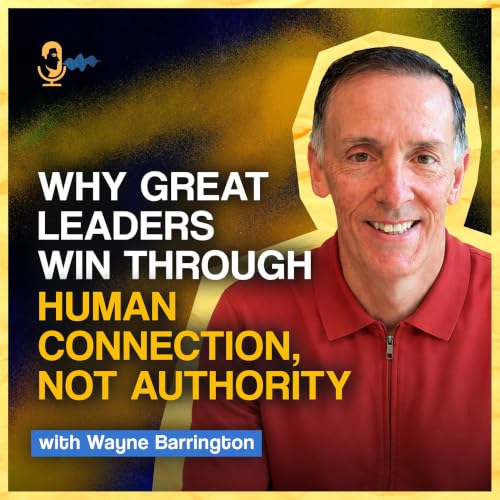
  • Why Great Leaders Win Through Human Connection, Not Authority with Wayne Barrington
    Jul 22 2026
    What if the biggest leadership advantage isn't experience, strategy, or authority—but your ability to genuinely connect with people?In this episode of Sell by Being Human, host Alex Smith sits down with Wayne Barrington, founder and CEO of The Jaro Group, executive coach, leadership consultant, and former Boeing executive who transformed one of the company's lowest-performing teams into one of its highest-rated.Wayne shares the leadership lessons that came from navigating organizational change inside Boeing, why most transformation efforts fail, and how influence always outperforms authority. Through stories from the boardroom, the mountains of Kilimanjaro, and years of coaching executives, he explains why lasting change begins by understanding people before trying to fix processes.You'll also hear why leaders often focus on the wrong problems, how removing judgment creates better performance, and why helping someone carry their "backpack" may be the greatest act of leadership you'll ever perform.If you're leading a team, managing change, or simply want to become someone others trust and willingly follow, this conversation offers a refreshing perspective on leadership that puts people first.Key TakeawaysWhy human connection is the foundation of effective leadershipThe difference between leading through authority and leading through influenceWhy most organizational change initiatives failHow Wayne transformed employee satisfaction from 52% to 90% at BoeingThe power of meeting people where they areWhy beliefs shape culture more than metrics doHow removing judgment creates better leaders and stronger teamsThe leadership lesson Wayne learned climbing Mount KilimanjaroIn This Episode:[00:00] Meet Wayne Barrington and today's conversation on leadership[02:09] What "Sell by Being Human" means to Wayne[04:19] How Wayne's consulting career began after transforming a Boeing team[06:29] The real reason employee satisfaction was so low at Boeing[09:18] The leadership mistake Wayne made early on[10:40] Why 70–90% of organizational change fails[12:08] Building culture through genuine human connection[14:21] Influence versus authority in leadership[17:05] The Mount Kilimanjaro story and the power of carrying someone else's backpack[19:13] Helping leaders define the person they want to become[21:11] How self-awareness transformed one executive's leadership[24:16] Creating trust so leaders feel safe being vulnerable[25:36] Why beliefs matter more than metrics[29:22] What helped skeptical executives embrace a new approach[31:20] Looking beyond employee surveys[33:20] Fun questions: Wayne's superpowers, kryptonite, and where to connectNotable Quotes[02:17] "If you're truly human and you truly lead with human connection, you don't have to sell as much." — Wayne Barrington[05:34] "The world doesn't need any more consultants, but it needs me." — Wayne Barrington[10:39] "You can't just pull people along. They've got to want to come along." — Wayne Barrington[11:41] "Culture eats strategy for breakfast every single time." — Wayne Barrington[18:16] "Just follow my footsteps." — Wayne Barrington[18:47] "If you can take someone's backpack and help them take the next step, it completely changes what's possible." — Wayne Barrington[22:33] "Self-awareness without judgment is the key." — Wayne Barrington[26:14] "Most leaders look at the metrics. The real work starts with people's beliefs." — Wayne Barrington[30:14] "My job is not to judge you. My job is to help you keep moving." — Wayne Barrington[33:13] "I've already taken the survey. Just do better as a leader." — Wayne BarringtonOur GuestWayne Barrington is the founder and CEO of The Jaro Group, where he coaches executives and leadership teams through organizational change, culture transformation, and leadership development. Before launching his consulting practice, Wayne led a major transformation at Boeing, improving employee satisfaction from 52% to 90% while turning a struggling organization into a strategic business partner. Today, he works with organizations including Boeing, NBC Peacock, Hilton, UKG, and the University of Colorado, helping leaders create lasting change through trust, influence, and human connection.Resources and LinksSell by Being HumanLinkAlex SmithWebsiteLinkedIn
    Mostra di più Mostra meno
    37 min
  • The Sales Principle That Built a $100 Million Company with Josh Mastel
    Jul 9 2026
    Do what is hard, and your life will be easy. Do what is easy, and your life will be hard. It's a simple idea, but for Josh Mastel, it became the philosophy that transformed every part of his life.In this episode of Sell by Being Human, host Alex Smith sits down with Josh Mastel, co-owner of Innovien Solutions, a tech solutions and staffing firm serving onshore and nearshore talent that's approaching $100 million in ARR and has landed on the Inc. 5000 list of fastest growing companies for six years running.Josh's story starts a long way from that success. Raised on the South Side of Chicago, he moved out at 16 with his older brother, working and paying rent on his own before he had even finished high school. Two years later, his brother, the closest thing he had to a father figure, died in a car accident. Josh spent the next seven years masking the pain behind a charismatic, "everything's great" exterior, until a first sales manager named Kirby Style saw something in him worth investing in and taught him a principle that still runs his company today: do what is hard, and your life will be easy.That lesson, paired with a hard won lesson in vulnerability, took Josh from a directionless 20 something to a record breaking sales career, and eventually to walking away from corporate to cash out his 401(k) and build Innovien Solutions with his wife. Along the way, he's learned that the best salespeople aren't the smoothest talkers in the room, they're the ones who actually care whether they can solve your problem, and are willing to say so when they can't.This conversation covers grief, mentorship, radical honesty as a leadership tool, why AI perfect emails are killing response rates, and why "useful delusions" might be the most underrated growth strategy there is. Let’s dive in!Key TakeawaysDoing hard things consistently creates an easier and more rewarding life over timeThe best mentors help people become better outside of work, not just better employeesVulnerability builds stronger relationships than pretending to have everything figured outGreat leaders admit mistakes and create environments where others feel safe to do the sameHuman connection creates more lasting success than persuasion aloneThe best salespeople focus on understanding problems before offering solutionsHelping people often creates greater business results than chasing commissionsInvesting in people produces returns that can't be measured by revenue aloneAsking for help is one of the fastest ways to accelerate personal and professional growthKnowing yourself is one of the most valuable skills any leader can developAuthenticity becomes even more valuable in an AI-driven worldSuccess becomes possible when you believe bigger than your current circumstancesIn This Episode:[00:00] Introduction[01:23] Meet Josh Mastel[03:00] What "Sell by Being Human" means[05:04] Leaving home at sixteen and finding a mentor[06:00] The sales manager who changed Josh's life[09:17] Why doing hard things makes life easier[11:24] Building discipline through uncomfortable habits[12:03] Losing his brother and learning vulnerability[14:02] How opening up created deeper human connection[16:30] Why great leaders admit when they're wrong[20:08] Vulnerability as a leadership advantage[21:12] Building a company by investing in people[22:10] Helping an employee become one of the company's top leaders[25:37] The biggest misconception about sales[27:16] Why the best salespeople solve problems instead of pushing products[28:58] Becoming the kind of salesperson people trust[30:26] Lessons learned from building a business with his wife[33:35] Leading yourself before leading others[34:45] Why asking for help changes everything[36:51] The power of using the word "help"[39:28] Why authenticity matters more than AI[40:58] Knowing yourself before chasing success[41:50] Building relationships that hold you accountable[42:42] Thinking bigger than your current reality[47:43] Where to connect with Josh Mastel[48:18] Closing Our GuestJosh Mastel is the co-owner of Innovien Solutions, a tech solutions firm specializing in project services and staffing for both onshore and nearshore talent. With his wife, he has built the company to scale close to $100 million in ARR and over a billion in transactions, earning a spot on the Inc. 5000 list for six consecutive years.Josh's personal journey from Chicago's South Side, moving out at 16, losing his brother, and overcoming self doubt, gives him a unique perspective on human potential. He believes that with vulnerability, discipline, and the willingness to do what is hard, anyone can create meaningful change in their life and career.Resources and LinksSell by Being HumanLinkJosh MastelLinkedIn Innovien SolutionsAlex SmithWebsiteLinkedIn
    Mostra di più Mostra meno
    42 min
  • The Most Important Sale You'll Ever Make Is Believing In Yourself
    Jun 24 2026
    What if the biggest obstacle standing between you and success isn't a lack of skill, talent, or opportunity but a story you've been telling yourself for years?In this episode of Sell by Being Human, Alex Smith sits down with Coach Monique DeMonaco, founder of EQ Wize, emotional intelligence expert, executive coach, and author of Most People Don't Need a Therapist, They Just Need Change. With more than two decades of experience helping leaders, teams, and individuals develop emotional intelligence, Monique has built a career around one powerful idea: awareness changes everything.But her journey began far from boardrooms and leadership retreats. Raised in rural poverty by parents struggling with mental illness, Monique spent much of her childhood believing she wasn't smart enough, capable enough, or destined for more. Diagnosed at fifteen with learning disabilities and epilepsy after years of being misunderstood, she faced a choice that would shape the rest of her life: accept the limitations others placed on her or begin questioning them.Monique shares the deeply personal story of how a single shift in self-awareness transformed her future, eventually leading her to become the first person in her family to graduate from college and build a thriving coaching practice. Along the way, she discovered that most behaviors people want to change aren't the real problem; they're coping mechanisms hiding deeper fears, beliefs, and emotional patterns.From overcoming self-doubt to helping leaders navigate change, Monique explains why emotional intelligence is one of the most valuable skills anyone can develop. Whether you're leading a company, building a business, raising a family, or simply trying to become a better version of yourself, this conversation offers a powerful reminder that growth starts with understanding yourself first.Because before you can influence others, you have to learn how to believe in your own potential.Key TakeawaysSelf-awareness is the foundation of emotional intelligence and lasting personal growthMany behaviors people want to change are symptoms of deeper emotional patternsResilience allows people to separate failure from their identityMost people are far more capable than they believe themselves to beAsking thoughtful questions creates more change than giving adviceEmotional intelligence helps people understand both themselves and others more effectivelyConnection is built through curiosity, empathy, and understandingPeople are always selling themselves through relationships, communication, and influenceStories and emotions create stronger connections than facts alonePersonal growth is a lifelong process, regardless of success or achievementConfidence grows through awareness, not perfectionThe most meaningful change begins when people challenge the beliefs they've inherited about themselves In This Episode:[00:00] Intro[01:14] Meet Coach Monique DeMonaco[02:22] What “sell by being human” means to Monique[03:33] Building connections through authentic relationships[05:17] Why emotional intelligence became her life’s work[06:27] Growing up with learning disabilities, epilepsy, and self-doubt[08:30] Discovering the Silva Method and the power of self-awareness[09:59] Turning personal transformation into a coaching career[11:53] Why awareness is the foundation of emotional intelligence[13:11] Resilience, identity, and overcoming limiting beliefs[14:50] The moment Monique began seeing herself differently[16:08] Being told she would never go to college[17:35] Becoming the first person in her family to graduate[19:12] Emotional intelligence as a tool for creating change[21:01] Understanding the emotions behind behavior[23:39] Why questions are more powerful than advice[24:53] Uncovering the hidden causes of problem behaviors[28:25] How emotionally intelligent selling creates trust[30:30] Why stories are more persuasive than statistics[31:58] Practical ways to strengthen emotional intelligence[33:34] Lifelong learning and self-awareness practices[35:08] Using past successes to build confidence[36:58] Sales, influence, and human connection[39:34] Why people often underestimate themselves[42:10] Raising children across two generations[43:07] What Gen Z is teaching leaders about communication[45:13] Why most people are better than they think they are[47:11] Imposter syndrome at every level of success[48:10] Where to find Coach Monique and EQ Wize[49:20] Closing Our GuestCoach Monique DeMonaco is the founder of EQ Wize, an education and training startup delivering emotional intelligence and brain science-based education. With over 20 years of experience as an internationally trained life, executive, and career coach, she has helped individuals, teams, and leaders develop core emotional intelligence skills including self-awareness, resilience, and critical thinking. She is also the author of Most People Don't Need a Therapist, They Just Need Change: An Easy Guide for Positive Sustainable ...
    Mostra di più Mostra meno
    48 min
  • The Recruiter Who Looked Beyond the Resume
    Jun 10 2026
    Could the most powerful sales skill have nothing to do with persuasion and everything to do with seeing someone's potential before they can see it themselves?In this episode of Sell by Being Human, Alex Smith sits down with Maximos Lih, a former Google recruiter, Google Ventures coach, and founder of Emboldened LLC. Maximos has helped scale everything from early-stage startups (including Uber in its 50-person days) to top executives navigating high-stakes change. But his most powerful lessons in connection didn't come from Silicon Valley. They came from his grandfather, a general in the Chinese army who took in orphans during a civil war and taught Maximos that success isn't about forcing change. It's about being the eyes and ears for someone else's potential.Maximos shares how he learned to look past résumés and "no's" to see what others missed, first as a recruiter, then as a coach to founders afraid of failing their teams. He talks about why anxiety is the real enemy of change, why unsolicited advice kills trust, and why the best salespeople don't try to change someone's mind. They change the emotional atmosphere in the room.From his grandfather's quiet acts of humanity to late-night conversations with strangers on airplanes, Maximos's story is a powerful reminder: sell by being human. Lower the anxiety first. The rest follows.Key TakeawaysPeople embrace change faster when anxiety is reduced firstGreat recruiters and coaches look beyond resumes and surface-level performanceHuman connection begins when people feel seen, heard, and understoodCuriosity creates stronger relationships than authority or expertise aloneThe best leaders collaborate with people instead of forcing decisions onto themUnsolicited advice often creates resistance, even when intentions are goodHelping someone clarify what they truly value leads to better decisionsTrust grows when people feel emotionally safe enough to be transparentLeadership is less about giving answers and more about asking better questionsReal influence comes from helping people arrive at their own conclusions In This Episode:[00:00] Intro[00:01] Meet Maximos Lee[01:00] From Google and Uber to executive coaching[01:34] Maximos ’ family story and his grandfather’s legacy[02:29] What “sell by being human” means to Maximos [05:11] Growing up surrounded by change and adaptation[09:42] Why people need others to become their “eyes and ears”[11:01] Looking beyond resumes and recognizing hidden potential[17:00] Hope, opportunity, and helping the next generation[18:10] Why people resist the idea of “selling”[19:01] Skills that help people connect and create change[20:48] Lowering anxiety before leading change[22:59] Why people need to feel seen and understood[23:25] Coaching versus advising: understanding what people truly need[24:41] Helping clients feel safe enough to be transparent[30:33] Asking values based questions instead of surface level questions[31:06] Coaching startup founders through identity and change[36:18] Interrupting patterns and helping leaders think differently[37:14] Helping founders make difficult decisions without fear[39:30] Fear, identity, and decision making under pressure[41:13] Collaborative leadership instead of forcing solutions[42:19] Helping people arrive at their own decisions[44:39] The danger of unsolicited advice[48:44] Why expertise alone does not build trust[50:44] What makes Maximos totally Maximos?[52:54] Connecting deeply with strangers and seeing humanity everywhere[56:01] Random conversations, empathy, and human connection[56:50] Where to find and connect with Maximos [56:54] Closing Our GuestMaximos Lih is the founder of Emboldened LLC, an executive coach who works with small teams and leaders to scale without losing their edge. He previously worked as a technical recruiter at Google, a coach at Google Ventures (helping founders scale from startup to scale-up), and watched Uber grow from 50 people to hundreds. His approach blends Silicon Valley pragmatism with a deeply human philosophy inherited from his grandfather — a Chinese general who taught him that real influence isn’t about control, but about seeing people fully.Resources and LinksSell by Being HumanLinkMaximos LihLinkedInEmboldened LLCAlex SmithWebsiteLinkedIn
    Mostra di più Mostra meno
    51 min
  • Why Professionalism Is Ruining Your Sales
    Apr 22 2026
    In sales, they always say: stay professional and never rock the boat, right? But think about it. Who do buyers actually remember? The professional who checks all the boxes or the real human with smiles, energy, and personality?In this episode of Sell by Being Human, host Alex Smith sits down with April Palmer, Account Executive at Duckbill, adjunct professor at VCU, and self-described "hot mess boss," to explore why showing up as your authentic self is not just good for your soul, it is good for sales.April's path started in unexpected places. From selling mistletoe door to door as a kid to closing multi-million dollar enterprise deals, she has learned that the real secret to sales is not better scripts or sharper rebuttals. It is genuine human connection. With 20,000 "weirdos" following her late-night LinkedIn chaos, April has proof that people buy from real people, not robots or talking heads.In this conversation, you will hear why she tells prospects not to buy from her, how a ruptured Achilles led to 12 job offers, and why the platinum rule beats the golden rule every time. She also shares her dad's most annoying and effective question, what hula hoops and cheesecake taught her about prospecting, and why showing up looking like a "cotton candy machine that turned into a human" is actually a calculated strategy.If you have ever felt pressure to dim your personality at work, wondered if you could be "too much" for corporate America, or suspected that vanilla ice cream is not your flavor, this conversation offers a different way forward.Key TakeawaysWhy "professionalism" is often just fear in beige clothingHow being authentically you attracts the right buyers and repels the wrong onesThe platinum rule: Treat others the way they want to be treatedWhy "help me understand" is the most powerful phrase in salesHow to know when to tell a prospect not to buy from youThe importance of systems and transparency in building trustWhy calculated risks (like wearing a hot pink suit to a tech conference) pay offHow being vulnerable creates safety for buyers to open upThe art of connecting people and why introductions reveal how you really feelIn This Episode:[00:00] Introduction to April Palmer[01:29] April's legendary outreach email[04:34] What "sell by being human" means to April[05:26] Why rebuttals give her the "ick"[07:58] The platinum rule vs. the golden rule[08:56] Growing up in the Bible Belt without TV[11:06] The seven-layer man: April's dad and the art of asking why[14:33] "Help me understand" and the power of shutting up[16:43] Professionalism is fear masquerading as beige[19:21] Being pistachio in a sea of vanilla[23:28] Surfing as a metaphor for life and sales[24:48] Posting about sexual assault and the connections it created[26:48] Getting fired while injured and the 12 offers that followed[29:45] Transparency in the sales process: Project plans and aligned expectations[32:28] Why April tells people not to buy from her[34:00] Hula hoops, cheesecake, and standing out[37:30] Fear in sales: Disappointing clients and handing off deals[42:43] Chaos with a purpose: The strategy behind the unhinged[47:37] How being yourself invites buyers to drop their armor[49:33] The story that's so April: How introductions reveal everything[52:53] Where to find AprilNotable Quotes[05:11] “When I hear sales tactics from someone else, I get the ick so hard that even if I love the thing, I hesitate to buy from them.” — April[06:17] “ If you’re super curious about someone’s needs, you don’t have to have a rebuttal; you just figure out if you’re the right solution for them.”— April[08:18] ” I go by the platinum rule: treat others the way they want to be treated.— April[11:44] ” I learned it’s okay to keep asking questions until you figure out what’s actually behind what people are asking you to do.”— April[18:20] ” In a sea of vanilla ice cream, people on LinkedIn be pistachio.”[21:40] “People come to me and buy from me because they love the energy I bring and know I’ll tell them the truth.” — April[28:50] “ I don’t want to sell you a lie about who I am. I could convince you I’m somebody else, but wouldn’t that be a horrible bait and switch?” — April[38:32] “I have a lot of anxiety around not providing the sales experience I want to give to other people.” — April[40:20] ”What happens if I build this level of trust and then I hand it over to a team and they don’t care about the customer as much as I do? That keeps me up at night.”— AprilOur GuestApril Palmer is an Account Executive at Duckbill, where she helps companies fix their AWS bills by making them "smaller and less horrifying." She is also an adjunct professor at VCU, teaching students how to network and land jobs. With a career spanning founder roles, VP of Sales positions, and enterprise sales, April has made a name for herself by showing up exactly as she is in hot pink suits, bedazzled boots, and ...
    Mostra di più Mostra meno
    49 min
  • Why Great Salespeople Focus on Decisions, Not Deals
    Apr 8 2026
    When was the last time a salesperson helped you make a truly confident decision? In this episode of the Sell by Being Human podcast, Alex Smith sits down with Mark Kosoglow, Chief Revenue Officer at Deutsche Bank and former CRO at Catalyst Software, to talk about what selling actually looks like when you strip away the scripts. From selling shoes as a teenager to helping scale Outreach to $250M, Mark’s journey is anything but typical, but his core idea has stayed the same: great salespeople help others make confident decisions.They get into what that looks like in practice. Mark shares why letting passion lead often creates better conversations than trying to sound polished, how his early experience with consultative selling shaped the way he works today, and why honesty and vulnerability matter more than most people think, especially when you’re asking teams or customers to embrace change.They also dive into storytelling, the role of metaphors in making ideas stick, and the problems that come from unclear expectations. Throughout the conversation, Mark makes a strong case for being yourself, not as a slogan, but as a real advantage in both sales and leadership.If you’ve ever felt like selling forces you to be someone you’re not, this episode will change how you approach every conversation.Key TakeawaysHelp people make confident decisions, not just hit numbersLet passion show instead of hiding behind professionalismTreat “no” as a step that moves you closer to yesFocus on understanding the problem before offering solutionsBuild trust by being transparent about intentions and mistakesGive direction, but avoid control to unlock creativityAct, learn, and adjust instead of over-planningPrioritize clarity and ask questions instead of assumingIn This Episode:[00:00] Mark’s core motivation for selling [01:00] Welcome & introduction to Mark Kosoglow[02:05] Dan Pink’s To Sell Is Human and personal connections[05:05] What “sell by being human” means to Mark[06:03] Helping people make confident decisions (the 2-out-of-3 rule)[08:15] Early days: Selling shoes at The Athlete’s Foot & learning consultative selling[11:45] Telemarketing lessons and embracing “no”[14:21] Leading through change and the weight of asking people to shift how they work[16:05] Balancing control with freedom and creativity[18:46] Admitting failures and iterating quickly (self-sourcing example)[22:28] Revenue Kickoff reflections and the power of in-person connection[25:32] Using metaphors and storytelling (the Boeing story)[29:38] What Mark looks for in a CEO/leader above him[33:29] Clear communication and avoiding misinterpretation[36:08] Lessons for his kids[39:06] Signature question: What makes Mark totally Mark?[40:36] Where to find Mark[40:59] ClosingNotable Quotes[05:11] “Let your passion overcome your professionalism.” — Mark Kosoglow[05:55] “My personal motivation and the motivation I like my sales teams to have is to help people make confident decisions.” — Mark Kosoglow[10:32] “People love learning about their problem enough to understand why you’re suggesting a solution, and then they’re super confident in making the decision of that solution.” — Mark Kosoglow[12:27] “The faster they say no, the more I can move on to the next call that could say yes.” — Mark Kosoglow[36:42] “Who you are is who you are, and it’s probably pretty awesome” — Mark Kosoglow[24:27] “ I just really want to have fun and I want to work hard and I want to kick ass and win. And I don’t think that I have to be an asshole to do that.” — Mark Kosoglow[36:54] “Work ethic is like a trump card for success.” — Mark Kosoglow[38:22] “Expectations are the number one thing that kill parent-child relationships.” — Mark KosoglowOur GuestMark Kosoglow is Chief Revenue Officer at Deutsche Bank and a seasoned sales leader with decades of experience scaling revenue organizations. Previously, as CRO at Outreach, he helped scale the company to $250 million in revenue. Mark's career began at a shoe store called The Athlete's Foot, where he learned consultative selling at 16 years old, a philosophy that has shaped his leadership style ever since. Known for his storytelling, metaphors, and unconventional communication style, Mark believes that great sales leadership comes down to trust, transparency, and helping people make confident decisions.Resources and LinksSell by Being HumanLinkMark KosoglowLinkedInAlex SmithWebsiteLinkedIn
    Mostra di più Mostra meno
    39 min
  • Selling Without Scripts, Pressure, or Manipulation
    Mar 25 2026
    Did you know the idea of closing might be the single worst thing to ever happen to sales? In this episode of Sell by Being Human, host Alex Smith sits down with Steve Heroux, founder of The Sales Collective, author of The Sales Contrarian, and former #1 Cutco salesperson in the country, to dismantle everything you thought you knew about selling.Steve’s journey started exactly where you might expect. He was a quiet kid who didn’t speak for the first 17 years of his life, needed to buy $1,600 worth of textbooks, and took the only job that would hire him, selling knives door to door. What happened next defied every sales script, every closing technique, and every “proven methodology” his training threw at him.With raw honesty and zero filter, think Larry David in the sales world, Steve explains why the desperate need to be liked is killing your deals, why assessments matter more than tactics, and how he went from ripping up his training script on his first demo to becoming the national sales leader, all by treating people like humans.You’ll also hear about his Million Veteran Mission, why Bob Ross is a better sales teacher than any guru, and the one mindset shift that separates the top 14% of performers from everyone else.If you’ve ever felt icky about sales, struggled with pricing conversations, or wondered why the “proven techniques” don’t feel right, this conversation is your permission slip to do it differently.Key TakeawaysWhy “closing” is unnecessary when selling is done wellHow detachment from outcomes improves trust and resultsThe real reason most sales scripts failWhy the need to be liked is one of the biggest sales blockersHow authenticity outperforms pressure and persuasionWhy sales training without self-awareness doesn’t workThe difference between selling hope and creating changeWhy mastery in sales is a long-term practice, not a quick fixIn This Episode:[00:00] Why “closing” is the worst thing in sales[00:46] Meet Steve Heroux[02:46] What "Sell by Being Human" means to Steve[04:53] Steve’s view of success in sales then vs now[08:11] The first demo that changed everything [09:28] Why Steve ripped up the script and never looked back[11:45] Simple themes: Authenticity, detachment, and loving what you sell[13:22] Shohei Ohtani and the power of process over outcomes[15:22] Teachers who shaped Steve's approach[16:09] What Bob Ross teaches us about sales[18:54] Sales Collective Today[19:34] Always Be Connecting: The new ABCs[20:14] Why frameworks fail without mindset[21:08] Discovering Sales DNA and the will to sell[23:06] The will to sell and the need to be liked[27:35] Fear of Failure Is Really Fear of Judgment (Daniel Pink Story)[30:33] The "hope dealers" and why quick fixes don't work[33:56] Why Steve doesn't prospect (and what he does instead)[34:57] The Million Veteran Mission[37:29] Legacy, impact, and what really matters[39:08] Why human-centered sales training is rare[43:17] Steve's Larry David moments[45:05] Where to find SteveNotable Quotes[00:00] “The single worst thing to ever happen to humanity is closing.” — Steve[03:08] “ There's a reason, right, that salespeople are hated. There's a reason that salespeople don't even want to call themselves what their vocation is.”— Steve[04:01] ”The three least trusted professions on the planet: Salesperson, Politician, Attorney.— Steve[07:39] ”Success to me was like someone actually another human talking to me.”— Steve[09:06] “If you do a good job, people will ask you what the next step is.” — Steve[12:23] “You have to detach from outcomes or you’ll never be satisfied.” — Steve[16:05] “ It's not what you teach, it's how you teach.” — Steve[17:52] “There are no bad students, only bad teachers.” — Steve[23:16] “The need to be liked will destroy your ability to sell.” — Steve[27:10] ” The second you stop giving a crap what strangers think about you, that's when you'll start to live.”— SteveOur GuestSteve Heroux is the founder of The Sales Collective, author of The Sales Contrarian, and a sales leader who spent 14 years at Aflac after starting his career as the #1 Cutco salesperson in the country. He's on a mission to elevate the sales profession through authenticity, human connection, and evidence-based assessment. His Million Veteran Mission aims to train one million veterans in sales for free.Resources and LinksSell by Being HumanLinkSteve HerouxThe Sales CollectiveLinkedInMillion Veteran MissionBook: The Sales ContrarianAlex SmithWebsiteLinkedIn
    Mostra di più Mostra meno
    42 min