• Ultralight Leadership: Carry Less, Lead Farther
    Jan 23 2026

    Northbound Approach Community - You are personnally invited.

    Ultralight Leadership: Carry Less, Lead Farther

    What if leadership worked the same way as ultralight backpacking?

    In this episode, Chris uses the trail to illustrate a powerful leadership truth: the more unnecessary weight we carry, the harder it is to go farther. From auditing your "pack" to navigating the ascent, summit, and descent, this episode explores how removing excess—old processes, emotional baggage, and unnecessary systems—allows leaders to care for people better, move with clarity, and stay healthy for the long haul.

    Because in leadership, just like on the trail, less weight means you can lead farther.

    Mostra di più Mostra meno
    10 min
  • Staying On The Trail - Leading Well at Home and at Work (With Guest Matt Hallock)
    Jan 21 2026

    Contact Chris Miser: chris@go-northbound.com

    Northbound Approach Community

    Contact Matt Hallock: mattbhallock@gmail.com

    DNA of a Man (Book on Amazon)

    Man Warrior King Website

    Man Warrior King Council

    Staying On The Trail - Leading Well At Home And At Work

    "We're like family here" sounds loyal and warm… until it quietly produces burnout, resentment, blurred boundaries, and leaders carrying emotional weight they were never meant to carry.

    In this episode of the Northbound Podcast, Chris continues a conversation about popular leadership ideas that sound healthy but create long-term damage. Joined by Matt Hallock (author of DNA of a Man and founder of the Man Warrior King Project), they unpack why work is not family—and why treating it like it is often reveals something deeper: unmet emotional needs at home, unresolved tension in marriage, and leaders using work as an escape.

    You'll hear a practical framework for examining your "inner world," leading yourself first, resetting your home leadership, and leading teams with clarity and purpose—without asking the workplace to carry what only family and faith can.

    Bottom line: healthy teams aren't built on guilt and obligation. They're built on clarity, respect, growth, shared purpose—and clear boundaries that create safety.

    Main points
    • Why the phrase "we're like family" can create unhealthy expectations and hidden damage over time

    • How blurred boundaries lead to burnout, resentment, misplaced loyalty, and heavier leadership

    • The common root issue: when home life feels unhealthy, work becomes emotionally attractive

    • "Inner world" self-examination:

      • Am I seeking identity, validation, belonging, respect primarily from work?

      • Am I emotionally neglecting my spouse/family because work feels safer or more affirming?

    • A two-step leadership progression:

      1. Lead yourself (spiritual health, habits, vision, values, discipline)

      2. Lead your family (boundaries, direction, encouragement, example)

    • The role of boundaries: boundaries aren't harsh—they can be loving and stabilizing

    • The difference between peacekeeping vs peacemaking (real peace may require hard conversations)

    • Practical "reset" steps: honesty, commitment, time with God, and a reset conversation with your spouse

    • Work and home both improve when emotional weight returns to where it belongs: home first, work second

    Key takeaways
    • Work is not family. Don't ask your job—or your team—to carry emotional needs meant for home.

    • If you aren't anchored internally, you'll look for external anchors. Work often becomes that anchor.

    • Leadership gets lighter when boundaries get clearer. Clarity reduces resentment and burnout.

    • Lead yourself before you lead others. Your home leadership starts with your inner life and discipline.

    • Boundaries are often love in action. They stop enabling destructive patterns and create safety.

    • Peacemaking beats peacekeeping. Avoiding conflict doesn't create health—it delays it.

    • Take ownership. Even if something isn't your fault, it may still be under your stewardship.

    Mostra di più Mostra meno
    32 min
  • Still On The Trail - Why Education Matters For Leaders
    Jan 19 2026

    Join the Northbound Community

    Still On The Trail - Why Education Matters For Leaders

    Many leaders will tell you that education doesn't matter once you've made it. But the truth is more nuanced—and far more important.

    In this episode of Northbound, Christopher Miser breaks down why continuing your education is critical for long-term leadership success. Using the metaphor of adventure and backpacking, he explains how leadership isn't a destination, but a long and changing trail—one where preparation, learning, and intentional growth make the difference between staying relevant or getting left behind.

    From senior leaders quietly watching how you invest in yourself, to choosing the right kind of education that actually builds capability, this episode challenges leaders to think differently about learning, preparation, and what it really means to be ready for the next climb.

    If you're serious about leadership longevity, adaptability, and impact—this episode is for you.

    🧭 Main Discussion Points 1. Leadership Is a Journey, Not a Destination

    Leadership is a long trail, not a finish line. Continuing education keeps leaders from becoming irrelevant, outdated, or lost as the terrain changes.

    2. The Terrain Changes as You Climb

    Early-career skills don't scale into senior leadership. As leaders rise, challenges shift from technical execution to strategic decision-making and organizational impact. Education helps leaders anticipate the terrain instead of reacting to it.

    3. Senior Leadership Is Watching (Even When They Say They Aren't)

    While some leaders claim degrees don't matter, most senior leaders do notice who is investing in themselves, stretching beyond minimum requirements, and preparing for future responsibility.

    4. Education Is Pack Weight—Choose It Wisely

    Not all education is equal. Overloading on credentials without purpose slows leaders down. The goal is capability, not collecting degrees or certifications.

    5. Leaders Who Keep Learning Go Farther—and Stay Longer

    Leaders who stop learning rely on outdated instincts, resist change, and lose relevance. Continued education keeps leaders curious, humble, adaptable, and effective over the long haul.

    🎯 Key Takeaways
    • Leadership requires continuous preparation, especially at higher levels

    • The higher the elevation, the more intentional learning matters

    • Senior leaders value those who demonstrate long-term thinking and discipline

    • Education alone won't guarantee promotion, but a lack of growth can limit trust and opportunity

    • Choose education that improves decision-making and prepares you for future roles

    • Learning isn't about proving intelligence—it's about staying capable

    • Leaders who keep learning stay relevant, adaptable, and effective longer

    Mostra di più Mostra meno
    9 min
  • Northbound Community Update
    Jan 16 2026

    This Is Your Personal Invitation:

    https://www.skool.com/northbound/about?ref=9276bb7a19304330b6d36f4384b55bf5

    I want to personally invite you into the Northbound Approach Community.

    This is a space built around leadership, faith, and adventure—created intentionally in a world where influence often matters more than integrity. Northbound is different on purpose. It's not about platforms, algorithms, or followers. It's about trust, humility, encouragement, and walking the leadership journey together.

    I created this community because leadership was never meant to be done alone. There's a small cost to join, not for exclusivity, but because commitment matters and shapes how we show up for one another.

    Whether you join the community or continue listening to the podcast, the mission stays the same: to encourage bold, humble, and confident leadership rooted in faith and purpose.

    This is an open invitation—to grow together, lead well, and keep climbing Northbound.

    -Chris

    Mostra di più Mostra meno
    3 min
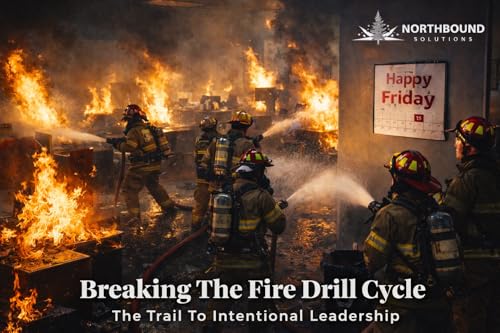
  • Breaking The Fire Drill Cycle - The Trail To Intentional Leadership
    Jan 15 2026

    Do you have a culture in crisis? Email me at Chris@Go-Northbound.com

    If your week feels like one long fire drill, it's not because you're busy — it's because leadership has become reactive. In this episode of the Northbound Podcast, Chris tackles why so many teams live in constant crisis mode and how leaders unknowingly train their organizations to wait until everything is on fire before acting.

    This conversation exposes the hidden cost of reactive leadership, why waiting until Friday feels normal, and how chaos becomes culture when clarity is missing. Chris explains why fire drills aren't accidental — they're built, rewarded, and reinforced — and what it takes to break the cycle. Instead of surviving crisis after crisis, leaders can reclaim control by front-loading discomfort, addressing hard issues early, and replacing urgency with ownership.

    If you're tired of putting out the same fires week after week, this episode lays out a clear path from crisis leadership to calm, intentional, proactive leadership — the Northbound way.

    🔥 Main Points Discussed
    • Why constant fire drills are a symptom, not the real problem

    • How avoided decisions, delayed conversations, and unclear ownership fuel crisis culture

    • Why waiting until Friday trains urgency instead of responsibility

    • How fire drills reward hustle and overwork while punishing planning and prevention

    • The danger of reactive leadership on long-term strategy and people development

    • Why proactive leadership requires front-loading discomfort

    • How ownership is the exit ramp from crisis mode

    • The role of calm, steady leadership in breaking the fire drill addiction

    • Why repeated fires point to weak systems, not bad luck

    🔥 Key Takeaways
    • Fire drills don't just happen — they are trained and reinforced

    • Crisis mode is often a leadership habit, not a season

    • Avoidance compounds difficulty and creates chaos

    • Waiting until problems are urgent makes leadership harder, not easier

    • Proactive leaders address hard issues early, even imperfectly

    • Ownership replaces urgency with responsibility

    • Calm leadership creates clarity, trust, and stability

    • Leadership isn't about performing well in crisis — it's about rarely needing one

    • Breaking the fire drill cycle requires leading early and choosing clarity over chaos

    🔥 Northbound Truth:
    Leadership isn't proven by how well you respond to emergencies — it's proven by how intentionally you prevent them.

    Mostra di più Mostra meno
    9 min
  • Climb the Hard Pass First - Courageous Leadership
    Jan 14 2026

    Contact me directly Chris@Go-Northbound.com

    In this episode of the Northbound Podcast, we explore why effective leadership requires front-loading difficulty instead of avoiding it. Drawing from a northbound journey through California's High Sierra, this conversation uses Forester Pass and Glen Pass—two of the most demanding climbs on the trail—as a metaphor for leadership. These passes don't eliminate future challenges, but they fundamentally change how the rest of the journey is experienced. Leadership works the same way.

    This episode challenges the tendency to delay hard conversations, decisions, and accountability in favor of "easy wins." Avoidance doesn't preserve energy—it compounds difficulty. Courage, on the other hand, compresses it. When leaders tackle the hardest issues first, confidence grows, clarity increases, and momentum follows. The terrain doesn't flatten, but leaders become more capable of carrying the weight.

    This is a practical, action-oriented conversation about building leadership capacity, earning trust, and creating speed by addressing reality head-on. Leadership is not a checklist—it's terrain. And how you navigate it determines how far you and your team can go.

    Main Points Discussed
    • Leadership is terrain, not a checklist

    • Forester Pass and Glen Pass as a metaphor for front-loading difficulty

    • Why avoidance compounds leadership challenges instead of reducing them

    • How hard leadership moments build confidence, judgment, and resilience

    • The psychological nature of momentum in leadership

    • Why starting with "easy wins" delays real progress

    • The difference between courageous leadership and reckless decision-making

    • How tackling hard issues immediately builds trust within teams

    • Why courage early creates speed later

    Key Takeaways
    • Tackle the hardest leadership issues first

    • Avoidance drains energy and grows problems

    • Hard conversations strengthen leaders rather than weaken them

    • Confidence follows action, not the other way around

    • Momentum shifts after the hardest climb

    • Easy-first leadership delays progress

    • Teams trust leaders who confront reality

    • Courage early creates clarity, trust, and long-term speed

    This episode is a call to leaders to stop avoiding the climb and start leading with courage. At Northbound, we don't avoid hard terrain—we take it head-on, and we help each other carry the load all the way to the summit.

    Mostra di più Mostra meno
    10 min
  • Choosing Comfort Over the Climb - When 'Protecting Your Peace' Goes Wrong
    Jan 13 2026

    Contact me directly at Chris@Go-Northbound.com

    In this episode of the Northbound Podcast, we confront a growing wave of leadership advice that sounds like peace but quietly gives permission to disengage. Much of today's popular leadership messaging prioritizes comfort, self-protection, and emotional relief over responsibility, service, and courage. While it may feel empowering in the moment, this mindset erodes trust, weakens culture, and shrinks leadership influence over time.

    This conversation draws a clear line between healthy boundaries and self-centered disengagement. Using the example of the Good Samaritan, we explore what leadership without convenience really looks like—choosing to stop, to care, and to take responsibility even when the problem wasn't yours to create. Northbound offers a different path to the summit: one rooted in moral courage, responsibility, and showing up even when it's inconvenient.

    This episode is raw, direct, and honest about the cost of "me-first" leadership and why real leadership often requires being the bigger person, fixing what you didn't break, and stepping toward problems rather than away from them. The summit matters—but how you get there matters more.

    Main Points Discussed
    • The rise of "leadership noise" and emotionally validating advice that removes obligation

    • Why not all leadership advice actually builds leaders

    • How comfort-based leadership leads to disengagement and weakened culture

    • The difference between healthy boundaries and self-centered disengagement

    • Why leadership often requires fixing problems you didn't cause

    • The Good Samaritan as a model of leadership without convenience

    • The cost of me-centered leadership on teams, culture, and influence

    • Northbound's belief that leadership is responsibility, not comfort

    Key Takeaways
    • Not all leadership advice is good leadership

    • Comfort-based leadership erodes responsibility and influence

    • Boundaries should sustain leadership, not excuse disengagement

    • Leadership often requires being the bigger person

    • Responsibility does not require blame

    • Influence grows when leaders step toward problems, not away from them

    • Peace is not the same as purpose

    • Leadership is not about you—it's about the people you lead

    This episode is a call to leaders who want to reject shallow advice and lead with courage, responsibility, and integrity. Northbound exists to help leaders reach the summit the right way—together, with purpose, and without abandoning the people along the path.

    Mostra di più Mostra meno
    8 min
  • Nothing Is Above Your Pay Grade - Courageous Leadership
    Jan 12 2026

    Need a Culture Change? Email me Chris@Go-Northbound.com

    Join the Northbound Approach Community: https://www.skool.com/northbound/about?ref=9276bb7a19304330b6d36f4384b55bf5

    In this episode of the Northbound Podcast, we challenge one of the most common—and most damaging—phrases in the workplace: "That's above my pay grade." While it sounds responsible and safe, this mindset quietly trains people to disengage, defer responsibility, and disconnect from outcomes. In an era where bureaucracy is shrinking and ideas can turn into action overnight, that excuse no longer protects organizations—it exposes them.

    This conversation is not about recklessness or bypassing leadership. It's about reclaiming responsibility and understanding why silence, disengagement, and "not my job" thinking are especially dangerous right now. As AI accelerates change and levels the playing field, the organizations that win will not be the most efficient—they will be the ones filled with people who care, think, speak up, and take ownership.

    We explore the difference between authority and responsibility, why leaders must eliminate disengaging language, and how people-centered leadership creates cultures of courage, clarity, and shared ownership. The future does not belong to those who optimize the most—it belongs to those who are willing to think, act, and lead with conviction.

    Main Points Discussed
    • Why "that's above my pay grade" trains disengagement rather than responsibility

    • The difference between decision-making authority and moral or professional responsibility

    • How silence is still a decision—and one that carries real consequences

    • Why leaders must eliminate language that rewards compliance over ownership

    • Lessons from the rise of human capital development during rapid technological change

    • Why AI and automation increase the value of people rather than replace them

    • The danger of efficiency-only cultures in a world where tools are universally available

    • Why courage, conviction, and ownership will determine who wins in the future

    • How modern leadership shifts from permission-based to ownership-based cultures

    • The importance of healthy boundaries that encourage responsibility without chaos

    Key Takeaways
    • Authority is not handed down by pay grade—it is exercised through responsibility

    • You may not make the final decision, but you always have the authority to notice, speak up, and care

    • Silence and disengagement are more dangerous than rebellion

    • AI eliminates bureaucracy, not the need for people or human judgment

    • Organizations obsessed only with efficiency will struggle in this era

    • The most effective leaders say "I don't know," invite insight, and create ownership

    • Healthy cultures reward people for caring, surfacing issues, and protecting the mission

    • Nothing is above your pay grade when it comes to people, truth, and the mission

    This episode is a call to courageous leadership in a time that demands it—where responsibility is shared, authority is multiplied, and people are empowered to think, act, and lead together.

    Mostra di più Mostra meno
    12 min