

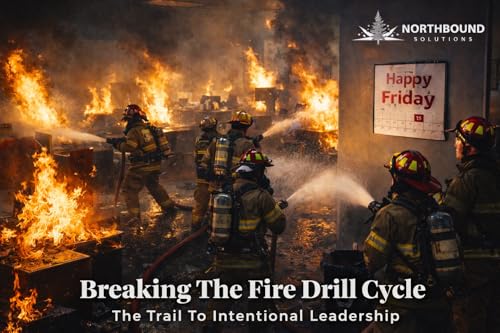
Breaking The Fire Drill Cycle - The Trail To Intentional Leadership
Impossibile aggiungere al carrello
Rimozione dalla Lista desideri non riuscita.
Non è stato possibile aggiungere il titolo alla Libreria
Non è stato possibile seguire il Podcast
Esecuzione del comando Non seguire più non riuscita

Breaking The Fire Drill Cycle - The Trail To Intentional Leadership
-
Letto da:
-
Di:
A proposito di questo titolo
Do you have a culture in crisis? Email me at Chris@Go-Northbound.com
If your week feels like one long fire drill, it's not because you're busy — it's because leadership has become reactive. In this episode of the Northbound Podcast, Chris tackles why so many teams live in constant crisis mode and how leaders unknowingly train their organizations to wait until everything is on fire before acting.
This conversation exposes the hidden cost of reactive leadership, why waiting until Friday feels normal, and how chaos becomes culture when clarity is missing. Chris explains why fire drills aren't accidental — they're built, rewarded, and reinforced — and what it takes to break the cycle. Instead of surviving crisis after crisis, leaders can reclaim control by front-loading discomfort, addressing hard issues early, and replacing urgency with ownership.
If you're tired of putting out the same fires week after week, this episode lays out a clear path from crisis leadership to calm, intentional, proactive leadership — the Northbound way.
🔥 Main Points Discussed-
Why constant fire drills are a symptom, not the real problem
-
How avoided decisions, delayed conversations, and unclear ownership fuel crisis culture
-
Why waiting until Friday trains urgency instead of responsibility
-
How fire drills reward hustle and overwork while punishing planning and prevention
-
The danger of reactive leadership on long-term strategy and people development
-
Why proactive leadership requires front-loading discomfort
-
How ownership is the exit ramp from crisis mode
-
The role of calm, steady leadership in breaking the fire drill addiction
-
Why repeated fires point to weak systems, not bad luck
-
Fire drills don't just happen — they are trained and reinforced
-
Crisis mode is often a leadership habit, not a season
-
Avoidance compounds difficulty and creates chaos
-
Waiting until problems are urgent makes leadership harder, not easier
-
Proactive leaders address hard issues early, even imperfectly
-
Ownership replaces urgency with responsibility
-
Calm leadership creates clarity, trust, and stability
-
Leadership isn't about performing well in crisis — it's about rarely needing one
-
Breaking the fire drill cycle requires leading early and choosing clarity over chaos
🔥 Northbound Truth:
Leadership isn't proven by how well you respond to emergencies — it's proven by how intentionally you prevent them.