Episodi

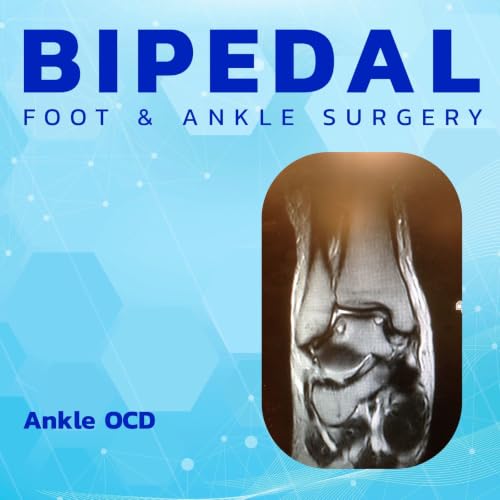
  • Ankle OCD
    Jun 27 2026

    Symptomatic OLTs represent one of the most common causes of persistent pain following ankle injury. The condition is often missed due to the volume of ankle sprains seen in clinics that are routinely imaged with plain film X-ray only. These lesions not only do not appear on xray unless there is obvious bone involvement but sometimes evolve over time after the initial insult. Therefore the foot and ankle surgeon must keep this pathology in mind when pain persists beyond a reasonable amount of time in recovery.

    Lesion patterns sometimes can correlate with the mechanism of injury. Inversion sprains which are the most common type of injury, tend to produce more shallow, anterior located lesions if there is a dorsiflexion component, while deeper posteromedial lesions occur if the foot is plantarflexed at the time of injury.

    Cartilage damage is particularly challenging in that the body does not have a capacity to heal hyaline cartilage. Thus when damage occurs it can lead to symptomatology that persists well beyond the bodies repair of the surrounding tissues. This is why careful attention to the timeline after injury is so important. There is no universal clinical presentation for these lesions. Therefore MRI is essential when OLT is suspected.

    Larger lesions almost always require some type of intervention, especially with cartilage or cartilage-bone displacement. These tend to be more challenging, both in the type of repair required and the access to the joint to repair properly. Malleolar osteotomy is occasionally performed for access since direct cartilage replacement is likely the procedure of choice.

    Smaller lesions can often be treated either arthroscopically or in retrograde manner, tunneling to the lesion from underneath and performing a repair in a way that does not introduce larger injury to the joint surface.

    The content of this podcast is for educational and informational purposes only and does not constitute medical advice. Always seek the advice of your physician or other qualified health provider with any questions you may have regarding a medical condition.

    Mostra di più Mostra meno
    16 min
  • Ankle Instability and Reconstruction
    Jun 23 2026

    The lateral collateral complex is made up of the ATFL, CFL and PTFL. The ATFL is probably one of the most commonly injured ligaments in the human body, due to the relative weak nature of the ligament and anatomic position on the outside of the ankle joint. Along with the CFL they are poor resistors of inversion since the torque of the body over these small structures can easily overwhelm their ability to contain movement beyond a certain point. Consider this an 'evolutionary weak point.'

    When inversion injuries occur, a square bone is turned or rotated inside of a square recess - not a good scenario. The shoulders of the ankle bone wedge the fibula outward, causing tension on the ligaments which will ultimately tear. In addition the cartilage and surrounding structures (capsule, tendons, and muscles) also sustain damage.

    Surgical repair involves inventory of all of these structures, including the syndesmosis that holds the tibia and fibula together. In this episode I focused on the direct repair or augmentation of the most common situations. In the next episode I will dive into more detail on osteochondral defects, and later on the high ankle sprain and more occult injuries that are commonly missed even by astute practitioners.

    The content of this podcast is for educational and informational purposes only and does not constitute medical advice. Always seek the advice of your physician or other qualified health provider with any questions you may have regarding a medical condition.

    Mostra di più Mostra meno
    17 min
  • Achilles Tendon Repair Rehabilitation
    Jun 14 2026

    Achilles tendon rupture is a potentially catastrophic injury. However modern repair methods can restore the integrity of the tendon complex regardless of age or extent of injury. It is the rehabilitation protocols afterwards that are the best predictors of complete recovery, not the ability to put the tendon back together.

    I have repaired tendons on relatively sedentary patients, weekend warriors, and elite athletes - and everything in between. The factor that is most important for all of these patients to succeed is understanding the quality of the repair and gearing post operative rehabilitation accordingly. No two injuries and no two repairs are identical. Each has its own nuance, from the mechanism of injury, the patient's functional demands, the patients ability to comply with rehab directions, and the social safety system (home assistance) they employ. This is why a "one size fits all" repair method or rehabilitation program is destined to produce erratic results.

    If you understand the biologic processes and their required time to progress, you can understand the length of time these tendons need to fully heal. And the tendon is only one factor - the calf muscle strength suffers tremendously as well. Rehab programs must be designed to improve tendon elasticity while not over lengthening and coupled with strengthening to limit atrophy. This is a delicate balance.

    One other factor clinicians often forget is the psychological recovery. First is prolonged guarding, which can lead to prolonged recovery. Surgeons should appreciate that the longer they immobilize a patient the longer they have to become apprehensive about return to function. This must be monitored since patient engagement with rehab is essential to successful functional recovery.

    The content of this podcast is for educational and informational purposes only and does not constitute medical advice. Always seek the advice of your physician or other qualified health provider with any questions you may have regarding a medical condition.

    Mostra di più Mostra meno
    15 min
  • Achilles Tendon Rupture Surgery
    Jun 11 2026

    There is debate among orthopedic and podiatric surgeons regarding operative and no operative repair of ruptured Achilles tendons. Why the debate? Because outcome studies have shown satisfactory results when comparing each treatment. These studies focus on strength restoration, pain scores, and quality of life. Unfortunately, we cannot directly compare individual patient outcomes, since a patient can only have been treated one way or the other.

    In my experience surgical repair is generally preferred for this injury unless there is compelling reasons to treat conservatively. This would include excessive smoking, uncontrolled systemic conditions like diabetes, demonstration of non compliance with physician direction, or extremes of age. Otherwise, this tendon can be repaired in a way that matches the contralateral limb in function and power and can be restored to its pre injury state predictably with surgical methods. That goes for chronic and delayed repairs as well.

    I trained in an era before percutaneous techniques emerged. Open repair is the gold standard for surgical treatment. This method allows complete visualization of the injury, direct reapproximation of the tendon ends, and the ability to match the injury to the mechanical construct required for repair. Without visualization, the surgeon cannot adequately assess the integrity of the ruptured ends, instead relying on the instrumentation that employs a "one size fits all" approach. Coupled with a higher incidence of sural nerve injury, there is little benefit in my mind to not simply opening the injury and fixing it.

    The content of this podcast is for educational and informational purposes only and does not constitute medical advice. Always seek the advice of your physician or other qualified health provider with any questions you may have regarding a medical condition.

    Mostra di più Mostra meno
    17 min
  • Hallux Limitus Surgery
    Jun 6 2026

    Hallux limitus and rigidus are a spectrum of a disease involving progressive degeneration of the first metatarsophalangeal joint (MTPJ). There are multiple causes known to cause this condition, from biomechanical (elevated first metatarsal, elongated first metatarsal, etc.) to medical (gout, rheumatoid arthritis, infections, etc.)

    As a surgeon, I have to determine the condition of the joint at the time of presentation and the symptoms patients relate. Not all radiographically destroyed joints are symptomatic, and not all radiographically normal joints have mild symptoms. There is a spectrum of disease that has to be carefully evaluated against the conservative and surgical options available.

    Simple procedures like cheilectomy can buy time. Decompression osteotomies can do the same thing. However, if the joint degeneration is fairly advanced, the only likely outcome is secondary procedures. This is because the surgeon chose a procedure that increases painful motion.

    If a joint has undergone degeneration 'past the point of no return,' joint destructive procedures must be employed. This includes arthroplasty and arthrodesis. The former involves removing part of the joint, the latter meaning fusion or permanent removal and stiffening of the joint.

    In my experience, preservation of sagittal plane dominant joints (first MTPJ, ankle, knee) is critical to undisturbed gait. Therefore all measures should be explored before fusing these joints. Many patient have been referred in because they were given the only option of fusing the great toe joint. This is often not necessary, as implant arthroplasty has excellent long term survival rates in the right population and if performed technically well.

    The content of this podcast is for educational and informational purposes only and does not constitute medical advice. Always seek the advice of your physician or other qualified health provider with any questions you may have regarding a medical condition.

    Mostra di più Mostra meno
    18 min
  • Internal Fixation Part 3 - When Fixation Fails
    May 30 2026

    Most fixation failures are not really implant failures. They are failures of the interaction between biology, mechanics and time.

    When assessing broken bones (or fusions, osteotomies, etc) we have to appreciate that achieving the result of bone healing is a balance between mechanical and biologic forces. Too much or too little of either is not beneficial, and occasionally is deleterious. Modern orthopedic approach is to control the influence of both. We do this with a deep reservoir of materials, implant choices, implant constructs, biologic augmentation materials, and careful assessment of critical points in the healing process.

    It is no longer acceptable to wonder why a bone did not heal or a fixation construct failed. With a keen understanding of fixation principles, the answer should be obvious. Then undertaking revision involves a strategy to reverse what plagued the initial attempt.

    The content of this podcast is for educational and informational purposes only and does not constitute medical advice. Always seek the advice of your physician or other qualified health provider with any questions you may have regarding a medical condition.

    Mostra di più Mostra meno
    16 min
  • Internal Fixation Part 2 - Fracture Biomechanics
    May 23 2026

    A fracture heals biologically. But biology is governed by mechanics.

    Bone cells are mechanosensitive. They respond to motion, strain, compression, shear, and tension.

    And that means one central truth: The surgeon is not simply fixing bone. The surgeon is engineering the conditions under which biology can succeed.

    Strain in terms of bone healing describes the amount of motion relative to the fracture gap. Too much strain, and the local biology will favor granulation tissue formation. Small amounts of strain will lead to cartilage or callous formation, and very little strain sets up the environment for bone formation. The surgeon is tasked with determining the fracture needs - sometimes absolute stability (low strain) is required and sometimes relative stability. For example, in deformity correction and reconstructive surgery, the desire is to create absolute stability. In certain fracture scenarios, such as comminution, relative stability is preferred to allow the multiple fragments to unite without excessive compression and without further devitalizing bone.

    The choice of fixation- the construct, the materials, and the placement - are all variables a surgeon puts together in the operating room depending on the specific circumstances.

    The content of this podcast is for educational and informational purposes only and does not constitute medical advice. Always seek the advice of your physician or other qualified health provider with any questions you may have regarding a medical condition.

    Mostra di più Mostra meno
    16 min
  • Internal Fixation
    May 16 2026

    Understanding internal fixation is critical to our later discussions on surgical techniques for a variety of conditions. We started in Episode 1 of Season 2 discussing bunion surgery. This was meant to be an introduction to how we approach realignment and repair of bone segments. Everything we have learned about fracture fixation in emergent conditions, we have refined and honed to use in our reconstructive efforts. Bunion surgery involves just about every surgical principle we will cover in this season - soft tissue envelopes, anatomically safe corridors, biomechanical tension and compression, deformity realignment, and bone fixation.

    Throughout human history we have suffered broken bones. Only until recently were broken bones stabilized with devices more complicated than a tree branch and leather straps. Once we had a grasp on aseptic techniques, metallurgy, and the biologic processes involved in bone healing, modern internal fixation of bone injury was achievable.

    The current methods and devices are essentially derivatives from the Swiss AO group, a collection of surgeons who outlined the important principles for the use of these devices: anatomic reduction, stable fixation, preservation of blood supply, and early mobilization of joints.

    Manufacturing has come a long way, with forging and machining of basic screws and plates being replaced with 3D printing and patient-specific prostheses generated from complex weight bearing CT scans.

    The content of this podcast is for educational and informational purposes only and does not constitute medical advice. Always seek the advice of your physician or other qualified health provider with any questions you may have regarding a medical condition.

    Mostra di più Mostra meno
    20 min