BIPEDAL copertina

BIPEDAL

BIPEDAL

Di: Robert Weinstein
Ascolta gratuitamente

Surgeon, Author, Educator and Inventor Dr. Robert Weinstein discusses all things foot and ankle health related. From common conditions and their conservative treatments to complex reconstructive surgical challenges, every topic will be explained in plain language for all audiences.2026, BIPEDAL foot and ankle surgery, Dr. Robert Weinstein Disturbo fisico e malattia Esercizio e fitness Fitness, dieta e nutrizione Igiene e vita sana
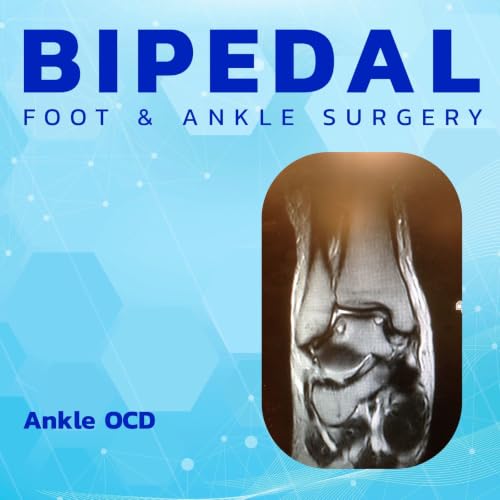
  • Ankle OCD
    Jun 27 2026

    Symptomatic OLTs represent one of the most common causes of persistent pain following ankle injury. The condition is often missed due to the volume of ankle sprains seen in clinics that are routinely imaged with plain film X-ray only. These lesions not only do not appear on xray unless there is obvious bone involvement but sometimes evolve over time after the initial insult. Therefore the foot and ankle surgeon must keep this pathology in mind when pain persists beyond a reasonable amount of time in recovery.

    Lesion patterns sometimes can correlate with the mechanism of injury. Inversion sprains which are the most common type of injury, tend to produce more shallow, anterior located lesions if there is a dorsiflexion component, while deeper posteromedial lesions occur if the foot is plantarflexed at the time of injury.

    Cartilage damage is particularly challenging in that the body does not have a capacity to heal hyaline cartilage. Thus when damage occurs it can lead to symptomatology that persists well beyond the bodies repair of the surrounding tissues. This is why careful attention to the timeline after injury is so important. There is no universal clinical presentation for these lesions. Therefore MRI is essential when OLT is suspected.

    Larger lesions almost always require some type of intervention, especially with cartilage or cartilage-bone displacement. These tend to be more challenging, both in the type of repair required and the access to the joint to repair properly. Malleolar osteotomy is occasionally performed for access since direct cartilage replacement is likely the procedure of choice.

    Smaller lesions can often be treated either arthroscopically or in retrograde manner, tunneling to the lesion from underneath and performing a repair in a way that does not introduce larger injury to the joint surface.

    The content of this podcast is for educational and informational purposes only and does not constitute medical advice. Always seek the advice of your physician or other qualified health provider with any questions you may have regarding a medical condition.

    Mostra di più Mostra meno
    16 min
  • Ankle Instability and Reconstruction
    Jun 23 2026

    The lateral collateral complex is made up of the ATFL, CFL and PTFL. The ATFL is probably one of the most commonly injured ligaments in the human body, due to the relative weak nature of the ligament and anatomic position on the outside of the ankle joint. Along with the CFL they are poor resistors of inversion since the torque of the body over these small structures can easily overwhelm their ability to contain movement beyond a certain point. Consider this an 'evolutionary weak point.'

    When inversion injuries occur, a square bone is turned or rotated inside of a square recess - not a good scenario. The shoulders of the ankle bone wedge the fibula outward, causing tension on the ligaments which will ultimately tear. In addition the cartilage and surrounding structures (capsule, tendons, and muscles) also sustain damage.

    Surgical repair involves inventory of all of these structures, including the syndesmosis that holds the tibia and fibula together. In this episode I focused on the direct repair or augmentation of the most common situations. In the next episode I will dive into more detail on osteochondral defects, and later on the high ankle sprain and more occult injuries that are commonly missed even by astute practitioners.

    The content of this podcast is for educational and informational purposes only and does not constitute medical advice. Always seek the advice of your physician or other qualified health provider with any questions you may have regarding a medical condition.

    Mostra di più Mostra meno
    17 min
  • Achilles Tendon Repair Rehabilitation
    Jun 14 2026

    Achilles tendon rupture is a potentially catastrophic injury. However modern repair methods can restore the integrity of the tendon complex regardless of age or extent of injury. It is the rehabilitation protocols afterwards that are the best predictors of complete recovery, not the ability to put the tendon back together.

    I have repaired tendons on relatively sedentary patients, weekend warriors, and elite athletes - and everything in between. The factor that is most important for all of these patients to succeed is understanding the quality of the repair and gearing post operative rehabilitation accordingly. No two injuries and no two repairs are identical. Each has its own nuance, from the mechanism of injury, the patient's functional demands, the patients ability to comply with rehab directions, and the social safety system (home assistance) they employ. This is why a "one size fits all" repair method or rehabilitation program is destined to produce erratic results.

    If you understand the biologic processes and their required time to progress, you can understand the length of time these tendons need to fully heal. And the tendon is only one factor - the calf muscle strength suffers tremendously as well. Rehab programs must be designed to improve tendon elasticity while not over lengthening and coupled with strengthening to limit atrophy. This is a delicate balance.

    One other factor clinicians often forget is the psychological recovery. First is prolonged guarding, which can lead to prolonged recovery. Surgeons should appreciate that the longer they immobilize a patient the longer they have to become apprehensive about return to function. This must be monitored since patient engagement with rehab is essential to successful functional recovery.

    The content of this podcast is for educational and informational purposes only and does not constitute medical advice. Always seek the advice of your physician or other qualified health provider with any questions you may have regarding a medical condition.

    Mostra di più Mostra meno
    15 min
adbl_web_anon_alc_button_suppression_t1
Ancora nessuna recensione