Episodi

  • Ep 91 - How AI Is Changing the Way Businesses Buy B2B Services | Tim Condon
    Oct 7 2026

    In this episode of Tales from the Pros, Michael Georgiou and Eric Lawrence sit down with Tim Condon, CRO at Clutch, to talk about how B2B buying is changing.


    Tim shares what he has learned from growing products, working closely with product and revenue teams, and listening to what customers actually want. He also talks about why good products still need strong distribution and why data matters when teams disagree.

    The conversation then shifts to AI. Tim explains how AI search and AI agents could change the way companies find and evaluate service providers. He also shares how Clutch is preparing for a future where buyers may start their search with AI instead of Google or a company website.

    If you work in software, B2B services, sales, marketing, or product, this episode gives you a practical look at where buyer behavior may be heading and what businesses can do to stay visible and trusted.

    🎯 Highlights You Won’t Want to Miss

    • Why product and revenue teams need to stay closely aligned
    • How data can help settle competing opinions and priorities
    • Why even a great product still needs the right distribution
    • How Clutch turned underused traffic into a meaningful revenue stream
    • Why AI could reshape the entire B2B buying journey
    • How AI agents may eventually help buyers scope projects and evaluate providers
    • Why reviews and third-party trust signals matter for AI visibility
    • What AI means for the future of software development and B2B services


    🎧 Listen and Subscribe


    Spotify:
    https://open.spotify.com/show/6QkUtrcNllUkqtq1fjlwnZ

    Apple Podcasts:
    https://podcasts.apple.com/us/podcast/tales-from-the-pros/id1371067192

    YouTube:
    https://www.youtube.com/@Imaginovation/podcasts

    SoundCloud:
    https://soundcloud.com/talesfromthepros


    💡 Key Takeaways

    • Strong product and revenue alignment starts with trust, communication, and shared goals
    • Customer feedback is more useful when teams understand which requests truly matter
    • Data works best when teams agree on the right metrics before seeing the results
    • Great products still need strong distribution to reach the right customers
    • AI is making B2B buyers more informed before they ever speak with a provider
    • Reviews, verification, and reputation are becoming important signals for AI recommendations
    • B2B service companies are unlikely to disappear, but how they deliver and price their expertise may change
    • Businesses need to actively build their reputation across the web, not just on their own websites

    Tim also notes that Clutch sees a strong relationship between reviews, verification, and how frequently companies are surfaced in AI-driven results.

    🗂 Topics We Cover

    • Product, sales, and revenue alignment
    • Customer feedback and data-driven decision-making
    • Product growth and distribution
    • B2B marketplaces and buyer behavior
    • AI search and AI agents
    • Reviews, reputation, and trust signals
    • The future of B2B services
    • AI and software development
    • Outcome-based pricing
    • Google, AI search, and the changing discovery landscape

    ⏱️ Chapters

    00:00 — Why product and revenue teams drift apart
    01:33 — Tim’s journey from The Washington Post to Homesnap and Clutch
    03:42 — Building alignment between product and revenue
    08:58 — Using data to make better product decisions
    14:04 — Why great products still need distribution
    17:49 — Joining Clutch and finding new growth opportunities
    24:02 — Building a marketplace around buyer trust
    26:01 — How revenue and product teams can work better together
    30:03 — Clutch’s AI project brief and the future of B2B buying
    35:36 — AI search, trust signals, and changing buyer behavior
    40:47 — What AI means for software development companies
    44:23 — How businesses can become more visible to AI
    47:15 — Google, AI competition, and the future of search


    Mostra di più Mostra meno
    49 min
  • Ep 90 - Building a Better Productivity App: The Story Behind MagicTask V3
    Sep 9 2026
    In this episode of Tales from the Pros, hosts Michael Georgiou and Eric Lawrence sit down with Imaginovation co-founder and creator of MagicTask, Pete Peranzo, for a candid, behind-the-scenes look at what it truly takes to build, launch, fail, and completely rebuild a digital product. While MagicTask just shipped its biggest release ever—Version 3—the journey to get there spanned more than six years of technical pivots, monetization mistakes, and fundamental breakthroughs in user psychology.Pete shares the raw origin story of MagicTask, starting back in 2019 when Imaginovation's leadership ran entire agency and development workflows out of Notepad++ text files. After building Version 1 as a web-based checklist and finding it too tedious to sustain long-term use, the team introduced gamification in Version 2. But despite acquiring thousands of users through paid campaigns, V2 fell into a punishing trap: an inverted difficulty curve where working harder resulted in months-long reward droughts, paired with a monetization model that failed to convert users.Rather than continuing to patch an architectural dead-end, the leadership team drew inspiration from Marty Cagan's product benchmark Inspired: How to Create Tech Products Customers Love and made the bold decision to scrap the codebase and rebuild from scratch. Version 3 completely reimagines gamification in SaaS product design with a proprietary Dynamic Difficulty Adjustment (DDA) engine that balances daily rewards to ~1 chest per day, a strict 2-minute daily interaction limit that prevents distraction, and intuitive gaming terminology centered on Realms, Dungeons, and Boss Chests.The conversation also explores how radical simplicity and gamification for ADHD users help maintain daily focus in high-churn environments, how daily task execution functions as an operational leading indicator driving business revenue, and Pete’s ambitious long-term vision of transforming task management into a competitive team arena where companies can battle asynchronously based on their daily work output.If you're a founder, product manager, or software engineer navigating product pivots, technical debt, or exploring enterprise gamification solutions to boost engagement and retention, this episode delivers a transparent, practical breakdown of how to build remarkable digital products that people genuinely love.🎯 Highlights You Won’t Want to MissThe origin story: Moving from Notepad++ to building an in-house agency task toolWhy Version 2 failed: 6-month reward droughts, monetization missteps, and technical debtThe decision to rebuild vs. patch: Applying Marty Cagan's Inspired philosophy to software developmentSolving the gamification paradox: Why productivity and gaming are like oil and vinegarThe 2-minute guardrail: How passive gamification delivers dopamine without disrupting deep workDynamic Difficulty Adjustment (DDA): Calibrating backend algorithms so every user earns ~1 reward chest per dayReplacing abstract "Themes" with intuitive mechanics: Realms, Dungeons, and Boss ChestsWhy radical minimalism makes MagicTask a game-changer for ADHD and neurodivergent professionalsLeading vs. lagging indicators: How daily task execution drives bottom-line revenueThe future of work: Pete's vision for company-vs-company arena battles (Imaginovation vs. Google)🎧 Listen and SubscribeSpotify: https://open.spotify.com/show/6QkUtrcNllUkqtq1fjlwnZApple Podcasts: https://podcasts.apple.com/us/podcast/tales-from-the-pros/id1371067192YouTube: https://www.youtube.com/@Imaginovation/podcastsSoundCloud: https://soundcloud.com/talesfromthepros💡 Key TakeawaysProductivity is defined by consistency, not sporadic bursts of high outputGamification must never compete with work—keep direct game interactions under two minutes dailyInverted progression curves kill user retention; systems must dynamically adapt to individual workloadsInternal dogfooding uncovers architectural and UX flaws faster than synthetic testingDon't patch broken fundamentals—when a product isn't remarkable, commit to a ground-up rebuildCluttered enterprise suites overwhelm users; austere simplicity empowers focus and neurodivergent mindsHigh-performing teams focus on leading indicators (daily completed actions) to ensure lagging results (revenue, growth)Effective gamification uses universally understood mental models (Dungeons, Chests) rather than abstract points🗂 Topics We CoverSoftware product evolution and complete rebuild strategyGamification psychology vs. workplace productivityDynamic Difficulty Adjustment (DDA) algorithmsMVP validation, user retention, and SaaS monetization lessonsOvercoming technical debt and modernizing software architectureCognitive overload in legacy enterprise project management toolsADHD-friendly product design and focus mechanicsWorkplace culture, camaraderie, and team-based competitionLeading vs. lagging business performance indicators⏱️ Chapters00:00 — Introduction: Why ...
    Mostra di più Mostra meno
    40 min
  • Ep 89 - Homeless to SaaS Exit: Draven McConville on Building Klipboard
    Aug 26 2026

    In this episode of Tales from the Pros, host Eric Lawrence sits down with Draven McConville, entrepreneur and former CEO of Klipboard, to discuss his journey from homelessness at 18 to building and successfully exiting two technology businesses.

    Draven shares how his early experiences shaped his resilience and approach to entrepreneurship, along with the lessons he learned building custom software before launching Klipboard, a field service management platform acquired in 2024.

    The conversation explores how he validated the market, identified the biggest customer pain points, built an MVP without unnecessary features, raised capital, scaled the business, and ultimately prepared for an exit. Draven also shares his perspective on the future of SaaS, AI, and why understanding your customers may matter more than ever.

    🎯 Highlights You Won't Want to Miss

    ● Draven's journey from homelessness to building and exiting successful tech companies
    ● How Klipboard was validated before the product was built
    ● Why focusing on core customer pain points beat building more features
    ● The product lesson Draven learned after ignoring customer feedback
    ● How Klipboard approached fundraising, growth, and its eventual exit
    ● Why SaaS isn't dead in the age of AI
    ● What Draven believes founders need to succeed

    🎧 Listen and Subscribe


    Spotify: https://open.spotify.com/show/6QkUtrcNllUkqtq1fjlwnZ


    Apple Podcasts: https://podcasts.apple.com/us/podcast/tales-from-the-pros/id1371067192


    YouTube: https://www.youtube.com/@Imaginovation/podcasts


    SoundCloud: https://soundcloud.com/talesfromthepros


    💡 Key Takeaways

    ● Validate the market and listen to customers before investing heavily in product development.

    ● Focus on solving the biggest pain points before adding more features.

    ● Founder ego can get in the way of product decisions. Sometimes the market is telling you exactly what to do.

    ● More features don't always create more value. Klipboard's earliest core features remained among its most heavily used.

    ● Building a SaaS company requires more than technology. Sales, support, infrastructure, talent, and customer trust all play a role.

    ● AI may change how software is built and delivered, but businesses will still need strong products, customer understanding, and execution.


    🗂 Topics We Cover

    ● Building resilience as an entrepreneur
    ● B2B software and product development
    ● SaaS idea and market validation
    ● Customer feedback and feature prioritization
    ● Product-market fit
    ● SaaS growth and go-to-market strategy
    ● Raising capital and scaling a business
    ● Preparing for a SaaS exit
    ● The future of SaaS and AI
    ● Advice for founders


    ⏱️ Chapters

    00:00 — Introduction to Draven McConville
    01:15 — From Homelessness to Entrepreneurship
    04:13 — Why Boring B2B Software Can Be Valuable
    05:27 — From Software Agency to SaaS Founder
    08:38 — Validating the Klipboard Opportunity
    11:32 — Building the MVP and Avoiding Feature Bloat
    14:46 — Customer Feedback and Founder Ego
    20:01 — The Challenge of Turning Internal Tools Into SaaS
    21:18 — Klipboard's Go-to-Market Strategy
    27:54 — The Future of SaaS and AI
    31:18 — Raising Capital and Scaling Klipboard
    34:53 — The Klipboard Exit
    35:25 — Life After Selling a Company
    41:55 — Final Advice for Founders

    Mostra di più Mostra meno
    46 min
  • Where the Smart Money in Tech is Going (feat. Jim Ferry)
    Aug 12 2026
    In this episode of Tales from the Pros, hosts Michael Georgiou and Eric Lawrence sit down with Jim Ferry, a partner at Volition Capital, to explore what investors are really looking for in AI and technology businesses in 2026.With experience evaluating thousands of companies and investing in high-growth, founder-owned businesses, Jim shares how investors assess startups, founders, technology, and market opportunities in a rapidly changing AI landscape. The conversation dives into what makes a technology business durable, why defensibility matters more than ever, and how AI and vibe coding are changing the way products are built and scaled.From technical debt and product validation to market fit, long-term vision, and the future of AI-powered automation, this episode offers practical insights for founders, entrepreneurs, and anyone building or investing in technology.🎯 Highlights You Won't Want to Miss What investors are really looking for in AI and tech businessesWhy durability and defensibility are critical in the AI eraHow investors evaluate founders and management, teamsThe impact of vibe coding and AI tools on product developmentWhen should startups move from prototypes to scalable technologyWhy technical debt matters when a company begins to scaleHow convenience can create lasting value even when technology is easy to replicateWhy niche markets and difficult-to-replicate products can become strong businessesWhat categories of technology are attracting investor attention in 2026Why founders need to think beyond short-term revenue goalsHow AI agents could transform the way we work and live 🎧 Listen and SubscribeSpotify:https://open.spotify.com/show/6QkUtrcNllUkqtq1fjlwnZApple Podcasts:https://podcasts.apple.com/us/podcast/tales-from-the-pros/id1371067192YouTube:https://www.youtube.com/@Imaginovation/podcastsSoundCloud:https://soundcloud.com/talesfromthepros💡 Key TakeawaysIn the AI era, durability may matter more than simply having an AI-powered product.Businesses need defensibility through factors such as proprietary data, distribution, integrations, network effects, or other durable advantages.Investors evaluate people and execution just as closely as the product and market.Vibe coding can accelerate product validation, but commercially scalable products still require strong technology, security, compliance, and infrastructure.Not every company needs to build everything in-house; convenience, cost, and maintenance can make third-party software the better choice.A large TAM does not automatically mean a large opportunity. The actual serviceable market and ideal customer profile matter.Founders need to balance short-term execution with a three-to-five-year vision.AI is likely to create new types of work as it automates existing tasks and workflows.The companies that stand out may be those that can use AI while maintaining a durable competitive advantage.Intellectual curiosity and a willingness to experiment with AI can become an important advantage for individuals and businesses.🗂 Topics We CoverAI investing and technology trends in 2026Startup investment criteria and growth equityBusiness durability and competitive defensibilityAI-native businesses and the AI transformationVibe coding, no-code tools, and product validationTechnical debt and scalable product developmentFounder evaluation and management teamsProduct-market fit and ideal customer profilesTAM, SAM, and market opportunityLong-term business strategy and growthAI agents and the future of workBuilding technology businesses that are difficult to replicate ⏱️ Chapters00:00 — Introduction to Investment Trends in Tech02:59 — Jim Ferry's Journey and Volition Capital's Strategy05:48 — Understanding the Importance of People in Investment08:26 — Evaluating Products in the Age of AI11:09 — The Durability Question in Tech Investments13:57 — Navigating Technical Debt and Product Development16:35 — The Role of No-Code Tools in Product Validation19:26 — Convenience vs. Custom Solutions in Software Development21:11 — The Niche of Pet Screening in Property Management23:37 — Investment Trends in AI and Technology27:03 — Navigating the Evolving Landscape of AI Solutions29:54 — Understanding Market Dynamics and Product Fit32:45 — Long-Term Vision vs. Short-Term Gains in Business35:46 — The Future of AI and Its Impact on Work
    Mostra di più Mostra meno
    42 min
  • Ep 87 - The Decisions That Turn Dreamers Into Tech Founders
    Jul 22 2026

    In this episode of Tales from the Pros, hosts Michael Georgiou and Eric Lawrence explore one of the biggest challenges aspiring entrepreneurs face: turning a great idea into a real business.

    Every day, countless people dream about launching the next successful app, SaaS platform, or startup—but very few ever take the leap. Michael and Eric discuss what separates dreamers from founders, why execution matters more than perfection, and how the decisions you make today determine whether your idea ever becomes reality.

    Drawing from Michael's own journey of building Imaginovation from the ground up, the conversation covers the sacrifices, setbacks, mindset shifts, and lessons learned over nearly 15 years of building a technology company.


    Whether you're launching your first startup, building a software product, or creating something new inside an existing business, this episode offers practical advice for moving beyond ideas and into execution.

    🎯 Highlights You Won't Want to Miss

    • Why great ideas fail without execution
    • The founder trap: overthinking instead of building
    • Michael's journey of starting Imaginovation at 23
    • The sacrifices founders often make before seeing success
    • Why waiting for the perfect product can hold you back
    • The "skateboard before the Ferrari" analogy for building products
    • Eric's Founder Decision Cycle: Decide → Move → Learn → Adapt → Repeat
    • Why resilience, optimism, and adaptability matter more than perfection

    🎧 Listen and Subscribe


    Spotify:
    https://open.spotify.com/show/6QkUtrcNllUkqtq1fjlwnZ


    Apple Podcasts:
    https://podcasts.apple.com/us/podcast/tales-from-the-pros/id1371067192


    YouTube:
    https://www.youtube.com/@Imaginovation/podcasts


    SoundCloud:
    https://soundcloud.com/talesfromthepros


    💡 Key Takeaways

    • Successful founders stop waiting and start building.
    • Progress comes from execution—not endless planning.
    • Every mistake provides valuable feedback for growth.
    • Great products evolve through continuous learning and iteration.
    • Resilience and the right mindset are essential during difficult times.
    • Building something meaningful requires intentional decisions and consistent action.
    • You don't need a perfect product to start—you need one that solves a real problem.
    • The only founder who truly fails is the one who stops.

    🗂 Topics We Cover

    • Startup mindset and entrepreneurship
    • Turning ideas into successful technology businesses
    • SaaS product development and MVPs
    • Founder psychology and decision-making
    • Overcoming fear, perfectionism, and analysis paralysis
    • Building resilient businesses through iteration
    • Leadership, execution, and long-term growth
    • Lessons from building a software company

    ⏱️ Chapters

    00:00 — Why most startup ideas never become reality
    01:30 — The difference between dreamers and founders
    04:20 — Michael's journey building Imaginovation from the ground up
    08:10 — The founder trap: planning versus execution
    11:50 — Sacrifice, resilience, and learning through failure
    17:30 — Why perfection delays progress
    22:20 — The skateboard vs. Ferrari product analogy
    25:15 — The Founder Decision Cycle
    29:00 — Final advice for aspiring founders and entrepreneurs

    Mostra di più Mostra meno
    30 min
  • Ep 86 - How to Scale Your Funded Startup App for Success
    Jul 8 2026

    In this episode of Tales from the Pros, hosts Michael Georgiou and Eric Lawrence sit down with Jonathan Maxim, founder of Viral App Launch, to discuss what it really takes to turn an app idea into a successful business.

    Drawing from hundreds of app launches and years of experience helping startups grow, Jonathan shares why most founders struggle after building their product and why success depends far more on mindset, patience, and execution than simply having a great idea.

    The conversation explores everything from validating product-market fit and optimizing onboarding to scaling user acquisition, raising capital, and building sustainable growth. Jonathan also explains why founders should focus on solving one problem exceptionally well instead of trying to build the next billion-dollar platform.

    If you're building a startup, launching a SaaS product, or trying to grow your mobile app, this episode is packed with practical advice you can apply immediately.

    🎯 Highlights You Won’t Want to Miss

    • Why most startup apps fail after launch
    • The biggest marketing mistakes first-time founders make
    • How to validate product-market fit before scaling
    • Why onboarding can make or break your app
    • The framework Jonathan uses to grow apps from 1,000 to 10,000 users
    • How to think about customer acquisition cost (CAC) and lifetime value (LTV)
    • Why niche products outperform broad "build everything" apps
    • The mindset every entrepreneur needs to overcome setbacks
    • How AI is changing app development—and what won't change
    • Why finding joy in the process is essential for long-term success


    🎧 Listen and Subscribe


    Spotify:
    https://open.spotify.com/show/6QkUtrcNllUkqtq1fjlwnZ


    Apple Podcasts:
    https://podcasts.apple.com/us/podcast/tales-from-the-pros/id1371067192


    YouTube:
    https://www.youtube.com/@Imaginovation/podcasts


    SoundCloud:
    https://soundcloud.com/talesfromthepros


    💡 Key Takeaways

    • Great products don't guarantee successful businesses—execution does.
    • Validate your product before investing heavily in growth.
    • Optimize your onboarding experience before increasing marketing spend.
    • Focus on solving one problem exceptionally well.
    • Patience, resilience, and persistence matter more than overnight success.
    • Founders should use customer feedback as data, not as personal criticism.
    • AI is a powerful tool, but vision and strategy still belong to entrepreneurs.
    • The businesses that endure are built by founders who enjoy the journey, not just the destination.


    🗂 Topics We Cover

    • Startup app development and growth
    • Product-market fit validation
    • App marketing and user acquisition
    • Customer onboarding optimization
    • Customer acquisition cost (CAC) and lifetime value (LTV)
    • Startup funding and scaling strategies
    • AI and the future of app development
    • Entrepreneurship, mindset, and resilience


    ⏱️ Chapters

    00:00 — Why scaling an app is harder than building one
    02:30 — Jonathan's startup journey and lessons from Viral App Launch
    06:30 — Why startups succeed or fail
    13:20 — Common app marketing mistakes founders make
    18:20 — The framework for scaling from 1,000 to 10,000 users
    25:30 — Startup funding, risk, and founder mindset
    36:10 — Where AI is taking app development
    45:40 — Why finding joy in your work matters
    47:50 — Final advice for founders and entrepreneurs

    Mostra di più Mostra meno
    50 min
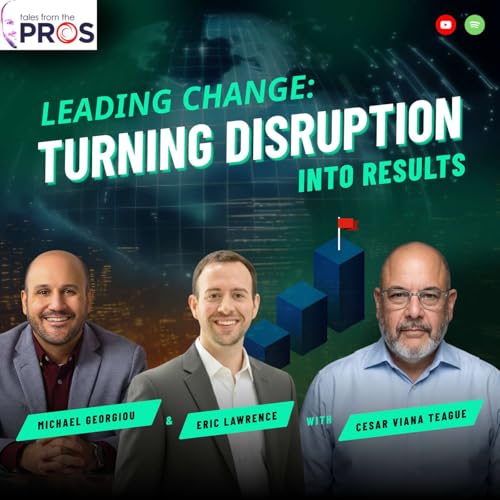
  • Ep 85 - Leading Change: Turning Disruption Into Results
    Jun 3 2026

    In this episode of Tales from the Pros, hosts Michael Georgiou and Eric Lawrence sit down with change management and enablement leader Cesar Viana Teague to explore one of the biggest challenges organizations face today: leading people through change.

    From ERP rollouts and CRM adoption to AI-driven transformation, Cesar explains why successful change is about more than new systems or training. It’s about people.


    Drawing on decades of experience in sales, enablement, and organizational leadership, Cesar explains why resistance occurs, how leaders can build buy-in, and what it takes to guide teams through disruption.

    The conversation covers his APEEE framework for managing change, the importance of communication and stakeholder alignment, and how AI is reshaping the way organizations work.

    If you're implementing new technology, navigating organizational change, or preparing your team for an AI-powered future, this episode delivers practical insights you can apply immediately.

    🎯 Highlights You Won’t Want to Miss

    • Why most change initiatives struggle with adoption
    • The difference between technical change and people-focused change management
    • Why communication and alignment matter during transformation
    • Cesar’s APEEE framework for leading successful change
    • The biggest reasons employees resist change
    • How leaders can build buy-in before implementation begins
    • Why ERP and enterprise systems create complex organizational challenges
    • How AI is driving both automation and augmentation in business

    🎧 Listen and Subscribe

    Spotify:
    https://open.spotify.com/show/6QkUtrcNllUkqtq1fjlwnZ

    Apple Podcasts:
    https://podcasts.apple.com/us/podcast/tales-from-the-pros/id1371067192

    YouTube:
    https://www.youtube.com/@Imaginovation/podcasts

    SoundCloud:
    https://soundcloud.com/talesfromthepros


    💡 Key Takeaways

    • Change management starts with explaining the “why” behind the change
    • Technology adoption depends on people—not just systems and training
    • Clear communication helps reduce resistance and confusion
    • Leaders must address how change impacts employees directly
    • Innovation requires cultures that support experimentation and risk
    • AI can free teams from low-value tasks and enable higher-value work
    • Strong leadership depends on trust, transparency, and emotional intelligence
    • Change is a continuous process, not a one-time initiative

    🗂 Topics We Cover

    • Change management and organizational transformation
    • Leadership communication and stakeholder alignment
    • ERP, CRM, and enterprise technology adoption
    • Employee resistance and change readiness
    • The APEEE change management framework
    • AI, automation, and augmentation
    • Organizational culture and innovation
    • Leadership, trust, and employee buy-in

    ⏱️ Chapters

    00:00 — Why leading change is harder than implementing technology
    01:05 — Cesar’s background in enablement and change management
    04:30 — Early lessons from solving people challenges
    08:00 — ERP systems, disruption, and adoption challenges
    11:00 — Scope explosion, communication, and alignment
    13:00 — Understanding the APEEE framework
    16:30 — Why people resist change and how leaders create buy-in
    20:10 — AI, automation, and the future of organizational change

    Mostra di più Mostra meno
    23 min
  • Ep 84 - Discovery First: How Great Digital Products Get It Right Early
    May 20 2026


    In this episode of Tales from the Pros, hosts Eric Lawrence and Zach Bruno dive into one of the most overlooked yet critical stages of product development—the discovery phase. While many founders rush straight into design and development, skipping discovery often leads to wasted budgets, overbuilt products, and solutions users never actually wanted.


    Zach shares insights from leading discovery for hundreds of digital products, from startups to enterprise applications, explaining why validation matters more than speed, how teams can avoid costly product mistakes, and why discovery should never be treated as “just paperwork.”

    The conversation explores how AI tools and rapid prototyping are changing the way teams validate ideas, why user feedback must be balanced with product vision, and how discovery creates alignment across stakeholders before a single line of code is written.


    If you're building a digital product, validating an MVP, or trying to avoid expensive development mistakes, this episode offers a practical breakdown of how successful teams approach product discovery in today’s AI-driven world.


    🎯 Highlights You Won’t Want to Miss

    • Why skipping discovery leads to wasted development budgets
    • The biggest misconceptions founders have about product discovery
    • Why validation matters more than building fast
    • The balance between user feedback and product vision
    • How AI is changing MVP development and rapid prototyping
    • The difference between solving your own problem vs solving a market need
    • Why overbuilding products hurts startups
    • How discovery helps teams align before development starts

    🎧 Listen and Subscribe

    Spotify:
    https://open.spotify.com/show/6QkUtrcNllUkqtq1fjlwnZ


    Apple Podcasts:
    https://podcasts.apple.com/us/podcast/tales-from-the-pros/id1371067192

    YouTube:
    https://www.youtube.com/@Imaginovation/podcasts


    SoundCloud:
    https://soundcloud.com/talesfromthepros


    💡 Key Takeaways

    • Discovery is about validating ideas before investing heavily in development
    • Great products solve real user problems, not just “cool ideas”
    • Rapid prototyping helps teams gather feedback earlier and reduce risk
    • AI tools are making MVP creation faster and more accessible
    • User feedback should guide product direction, but vision still matters
    • Strong discovery creates alignment between stakeholders, designers, and developers
    • Overbuilding products too early creates unnecessary complexity and cost
    • Discovery is not a one-time step—it’s an ongoing product process

    🗂 Topics We Cover

    • Product discovery and validation
    • MVP strategy and rapid prototyping
    • User feedback and product-market fit
    • AI tools and vibe coding
    • Discovery workshops and stakeholder alignment
    • Product planning and development strategy
    • Scalable product development
    • The future of AI-driven product discovery


    ⏱️ Chapters

    00:00 — Why skipping discovery kills products
    03:00 — The biggest mistakes founders make early
    08:00 — Validation vs building fast
    12:30 — User feedback and product vision
    17:20 — Discovery deliverables that actually matter
    22:00 — AI tools and rapid MVP creation
    28:00 — When to move from prototype to scalable product
    33:00 — Solving your own problem vs market needs
    38:00 — The future of AI-driven product discovery

    Mostra di più Mostra meno
    24 min