Episodi

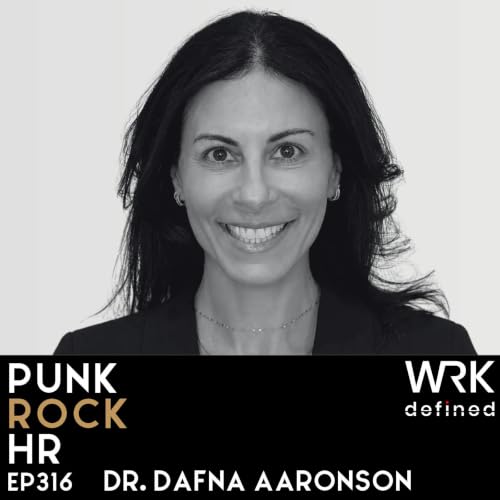
  • 316: Be Sports Minded About AI with Dr. Dafna Aaronson
    Nov 2 2026
    Dr. Dafna Aaronson says coaches and general managers are already mini data scientists, and AI can give them a gut check before they make the call. At work, Laurie has seen it used as a rip and replace for human judgment instead. In this episode of Punk Rock HR, Laurie Ruettimann sits down with Dafna, who pairs a PhD in AI and machine learning with a master’s in sports psychology. They get into how AI handles performance versus potential, and why the first question for any organization is whether it wants AI at all. Laurie also tests the sports analogy against her Chicago Bears and a Lou Holtz video from early in her HR career. Topics covered: How AI handles performance differently from potential Using AI to narrow a pool of 1,200 athletes Why coaches and GMs work like mini data scientists What builds trust in an AI tool Asking whether your organization can absorb AI Where sports and business overlap, and where they don’t Visit Dafna Aaronson’s website: http://dafna-aaronson.com/Connect with Dafna Aaronson on LinkedIn: https://www.linkedin.com/in/dafna-aaronson/ 00:00 - Intro 02:41 - Two stories about AI at work 03:21 - Performance vs. potential 04:43 - How AI helps scout talent 09:26 - Trusting AI tools 12:44 - The HR tech industrial complex 16:02 - AI and the Bears’ third-string quarterback 18:01 - Coaches as mini data scientists 19:35 - Rushing to adopt new HR tech 20:58 - Deciding whether you want AI 23:22 - Where sports and business overlap 28:24 - Lou Holtz and the limits of sports metaphors 31:39 - Letting AI advise instead of decide 34:41 - AI and company self-actualization
    Mostra di più Mostra meno
    42 min
  • 315: Reference Checking with James Lord
    Oct 19 2026
    James Lord says a background check tells you whether someone has been convicted of a crime, but a reference tells you about their character. He has spent nearly 20 years in HR tech, and the last decade of it focused on references. In 2025 he joined Refapp, a Swedish platform bringing structured, evidence-based reference checks to North America. Plenty of companies skip references or treat them like a box to tick. James says that’s a risk, especially when you’re hiring for roles that come with trust and access. With AI-polished resumes and teams that are only in the office part of the week, he argues that a real reference is how you learn how someone behaves when you aren’t watching. If you’ve ever skipped references to close a req faster, or called a candidate’s friend and learned nothing, this conversation is for you. In this episode, you’ll hear: How reference checking differs from background checking, and why people mix them up Why letting candidates pick any reference they want gets you nothing useful The 180% ROI James calculates for structured reference checks How to get references from people whose companies forbid giving them Why interviews miss counterproductive work behaviors like bullying How one reference turned into a brand-new candidate Why James’s upcoming DisruptHR talk is called “The Reference Check Is a Lie” Start your extended free trial of Refapp: https://www.refapp.com/hey-laurie-friend 00:00 - Intro 02:33 - References vs. background checks 03:53 - Taking the subjectivity out of references 06:38 - The ROI of checking references 08:40 - How Refapp works inside the ATS 09:54 - Who writes the reference questions 11:46 - Keeping reference answers confidential 13:09 - Getting around no-reference company policies 15:50 - The risks of skipping reference checks 19:01 - Making the need-to-have case 21:04 - Winning over reference check skeptics 22:19 - How Refapp differs from competitors 24:29 - Marathons and life outside work 26:33 - James’s upcoming DisruptHR talk
    Mostra di più Mostra meno
    34 min
  • 314: Job Searching with Stefanie Fackrell
    Oct 6 2026
    Stefanie Fackrell was laid off in 2023 and decided to bet on herself. The next two years tested that bet hard. Her brother, who was also her best friend, was killed by a drunk driver in 2024, and a year later she was diagnosed with breast cancer. She kept building her business through all of it, and she kept showing up online to help people find work. She's now head of talent for two venture-backed startups through her firm, dysruptiveHR, and she isn't sugarcoating the market. Many white-collar tech jobs aren't coming back, and most of the job search advice flooding your feed is wrong. If you've been laid off or think you might be next, this conversation is for you. In this episode, you'll hear: Why two hours a day on job boards beats eight Using AI to tighten your resume, not write it Five solid resumes vs. a custom one for every job What actually gets people hired at the startups she recruits for The thank-you note myth Why your ego shouldn't keep you from a bridge job Chapters: 00:00 - The jobs that aren't coming back 01:58 - Who Stefanie is and why she gives job search advice 04:32 - Grief, cancer, and posting the personal on LinkedIn 08:04 - The job market in 2026 09:36 - Why two hours on job boards is enough 12:22 - AI, resumes, and the customization trap 15:34 - What actually gets people hired 18:09 - Bad advice: follow-up emails and thank-you notes 22:05 - The case for a bridge job 29:36 - Laurie's three takeaways
    Mostra di più Mostra meno
    35 min
  • 313: You're Not Broken. The System Is.
    Aug 4 2026
    Laurie sat down with Meg Bear and Amy Wilson on their podcast, the Meg & Amy Show, and the conversation was good enough that she wanted to share it with Punk Rock HR listeners too. They talk about financial freedom and what it actually buys you, and why Laurie thinks AI is taking the blame for problems that are really about childcare, housing, and a missing safety net. If you want Laurie's honest take on work, money, and what's really breaking people right now, this is the conversation. In this episode, you'll hear: Why most career advice is projection, and what people actually need instead How Laurie came to realize how much control she actually had over her own life and career Why financial freedom changes how you can show up at work Laurie's case for why childcare and housing, not AI, are the real source of workplace anxiety Laurie's answer to a listener dilemma about accepting a lesser role vs. pushing for severance An honest moment where Laurie asks herself whether the work has been worth it
    Mostra di più Mostra meno
    1 ora e 8 min
  • 311: The Business Case for Caring with David Barrett
    Jun 15 2026
    Most companies have no idea how their employee experience actually compares to their competitors. Not because the data doesn't exist. Because nobody's looked at it. David Barrett, founder and CEO of Welliba, built a platform that does exactly that, using publicly available information to measure workforce sentiment across hundreds of thousands of organizations. The companies that treat their people well are outperforming the ones that don't. That's the short version. The longer version is more interesting, and a little harder to sit with. If you work in HR and you've ever been asked to justify a people investment with hard numbers, this conversation is the one you've been waiting for. In this episode, you'll hear: What six years of S&P 500 data shows about employee experience and business performance Why the strongest predictor of high performance isn't technology, pay, or flexibility What companies that are profitable but burning people out actually look like in the data Why most pandemic-era people investments never got properly validated Why the manager and coworker relationship still outpredicts perks and programs What Unhappy Performers are, and why the term might be more optimistic than it sounds
    Mostra di più Mostra meno
    37 min
  • 309: Closing the AI Confidence Gap with Gemma Versace
    Jun 1 2026
    The CEO is pumped. The engineers are burnt out. And HR is the last to know. Gemma Versace is Chief Client Officer at X-Team, and her company's research on AI talent strategy should be required reading for every HR leader. The confidence gap between executives and the people actually doing the work is wide, and the organizations that ignore it are losing their best people. If you work in HR and you've ever felt like AI strategy happens around you instead of with you, this conversation is for you. In this episode, you'll hear: The gap between executive confidence and practitioner reality on AI talent What that disconnect looks like inside a real organization Why HR reports the lowest AI confidence of any function Why job description clarity predicts AI maturity more than budget The difference between naming governance as a problem and fixing it Why most organizations can't prove AI ROI to finance Why long-term embedded partners outperform short-term contractors
    Mostra di più Mostra meno
    35 min