Episodi

  • Robert Breedlove: Can peptides help your gut issues?
    Nov 24 2026

    Imagine if even a gummy bear made you ill.

    Robert spent a decade looking for answers to persistent gut problems. His first trial of oral BPC-157 didn’t resolve his symptoms. Years later, he combined a peptide stack with a microbiome rehabilitation program and says he could eat carbs again within three months. Because he tried both together, he cannot separate their effects.

    Robert is a writer, former hedge fund manager, and host of The “What is Money?” Show.

    He joins Richard Skaife to talk about what changed, why he stopped assuming natural treatments were better, and how he uses practitioners, AI, and independent testing to decide what to trust.

    He explains

    ■ Why he tried BPC-157, TB-500, GHK-Cu, and KPV together
    ■ What happened when he cycled off the peptide stack
    ■ Why he stopped assuming natural treatments were better
    ■ How he uses AI as one advisor among many
    ■ Why he sent research-use-only tirzepatide for independent testing

    Chapters

    • (00:00) - Intro
    • (00:55) - Meet Robert Breedlove
    • (02:01) - Ten years of gut problems
    • (06:40) - Trying peptides alongside microbiome rehab
    • (09:28) - Inside the KLOW peptide stack
    • (12:20) - What happened when he stopped?
    • (13:19) - When doctors don’t have answers
    • (15:05) - Is “natural” always better?
    • (18:35) - Second opinions, AI, and who to trust
    • (20:21) - Are peptides going mainstream?
    • (22:30) - Testing research-use-only tirzepatide

    Watch the full episode on YouTube

    Further reading

    Robert Breedlove. His own account of using a peptide stack alongside microbiome rehabilitation. Read Robert’s post

    FDA. Safety concerns and gaps in human data for compounds discussed in the episode, including BPC-157, KPV, injectable GHK-Cu, and TB-500. Read the FDA assessment

    FDA. Quality and dosing concerns around unapproved GLP-1 products, including tirzepatide and products sold under research-use labels. Read the FDA overview

    Read the full transcript

    Follow Robert Breedlove

    Instagram: @breedlove_22
    X: @Breedlove22
    Podcast: The “What is Money?” Show

    Follow Richard Skaife

    LinkedIn: linkedin.com/in/richardskaife/

    Peptide Show

    Website: Peptide.Show
    Instagram: @Peptide.Show
    TikTok: @peptide.show
    Facebook: Peptide Show
    X: @peptideshow
    YouTube: @PeptideShow

    Peptide Show explores the science, medicine, business, and people shaping the rapidly evolving world of peptides.

    Presented by Longr: longr.io

    Follow Peptide Show for new episodes every Tuesday.

    This podcast is for informational and educational purposes only. Some compounds discussed in this episode are investigational, unapproved for the uses discussed, or subject to changing regulatory requirements.

    Mostra di più Mostra meno
    26 min
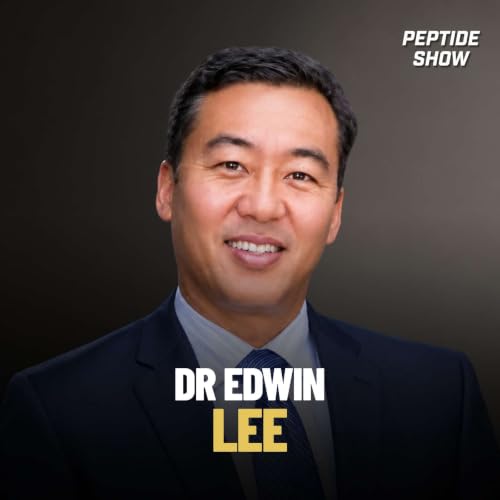
  • Dr Edwin Lee: Do you know peptides better than your doctor?
    Nov 17 2026
    Ten peptide vials in a Ziploc bag. No labels. One of Dr Edwin Lee’s sons took the photo at college. The vials belonged to his roommate, who was into peptides. There was no way to tell what was in them. At a swimming pool, a 22-year-old lifeguard told Edwin he was using peptides too. Edwin reckoned the lifeguard knew more about them than many doctors. Edwin is an endocrinologist and co-founder of the Clinical Peptide Society, where he teaches clinicians about peptides. He joins Richard Skaife to talk about what patients are already trying, what doctors are being asked to prescribe, and what happens when someone has a side effect and nobody records it. He explains■ What a “yes” from FDA advisers means for peptides such as BPC-157 and Epitalon■ Why he wants a registry that makes peptide side effects visible■ Why he starts with sleep, nutrition, and hormones before introducing peptides in his own practice■ What he’d want a larger human trial to answer about SS-31 and diabetic kidney disease■ How he’d test BPC-157 and thymosin beta 4 for knee injuries to see whether either works alone, whether the combination works better, or whether placebo tells a different storyChapters(00:00) - Intro(00:40) - Meet Dr Edwin Lee(02:01) - How Edwin got into peptides(04:25) - How the peptide gray market took off(05:58) - What does a “yes” from FDA advisers mean?(09:18) - Are doctors keeping up with peptides?(14:22) - Who’s tracking peptide side effects?(17:03) - Sleep, hormones, and Edwin’s approach(20:55) - When patients ask for peptides by name(22:07) - The human trials Edwin would run(24:19) - Could peptides become a $100 billion market?Watch the full episode on YouTube Further readingFDA. The July 2026 advisory meeting materials name the seven peptide groups under consideration and the uses the FDA reviewed for each. Read the FDA meeting materialsDinetz and Lee. Edwin co-authored a narrative review of human studies on thymosin alpha 1, the peptide he discusses from an earlier FDA advisory meeting. Read the review on PubMedFDA MedWatch. The FDA’s existing reporting program accepts reports from patients and health professionals about suspected serious reactions and product quality problems. See how MedWatch worksRead the full transcript Follow Dr Edwin LeeClinical Peptide Society: Edwin Lee’s profileFollow Richard SkaifeLinkedIn: linkedin.com/in/richardskaife/Peptide ShowWebsite: Peptide.ShowInstagram: @Peptide.ShowTikTok: @peptide.showFacebook: Peptide ShowX: @peptideshowYouTube: @PeptideShowPeptide Show explores the science, medicine, business, and people shaping the rapidly evolving world of peptides.Presented by Longr: longr.ioFollow Peptide Show for new episodes every Tuesday.This podcast is for informational and educational purposes only. Some compounds discussed in this episode are investigational, unapproved for the uses discussed, or subject to changing regulatory requirements.
    Mostra di più Mostra meno
    28 min
  • Dr Karsten Eastman: Can peptides treat inflammation?
    Nov 10 2026
    Could peptides for inflammation be bigger than GLP-1s? Dr Karsten Eastman thinks they could be. His team is exploring whether a peptide can reduce inflammation while allowing tissue repair to continue. Karsten is the co-founder and CEO of Sethera Therapeutics. The company grew out of his PhD research at the University of Utah, where he and his supervisor used an enzyme from bacteria to reshape peptides they’d made in the lab. He joins Richard Skaife to discuss why he thinks some grey-market peptides may be expensive placebos, what it takes to make a peptide work as a pill, and where he’d put a couple of hundred million dollars to test new ideas in people. He explains:■ Why some peptides break down before they get a chance to work■ How an enzyme from bacteria can tie peptides into rings■ What it takes to make a peptide medicine work as a pill■ Why he’d prioritise cancer and inflammation for research■ What would persuade drug companies to invest in new peptide medicinesChapters(00:00) - Intro with Dr Karsten Eastman(02:44) - Designing peptides from scratch(07:41) - Do grey-market peptides work?(10:27) - How long do peptides last in the body?(12:28) - Can peptides work as pills?(14:19) - The $200m question: What would you test first?(15:36) - Bigger than GLP-1s? The inflammation bet(16:36) - Does peptide hype help or hurt?(20:05) - The future of peptide manufacturing and AI(22:00) - What does Big Pharma want from peptides?(23:39) - Can you patent a peptide?Watch the full episode on YouTube Further readingPNAS. Karsten and his colleagues show how a bacterial enzyme called PapB can tie a range of peptides into rings. Read the study on reshaping peptides with PapBACS Bio & Med Chem Au. The team used the same enzyme to make ringed versions of three GLP-1-like peptides in the lab. Read the study on ring-shaped GLP-1-like peptidesSethera Therapeutics. The company announced funding for a research collaboration with Roswell Park Comprehensive Cancer Center to target mutant p53 in breast cancer. Read the research announcementImage credit. University of Utah Presidents Circle, photographed by MrSchmidt. View the campus photo · CC BY-SA 4.0Read the full transcript Follow Dr Karsten EastmanLinkedIn: linkedin.com/in/karsten-eastman/Website: setheratx.comFollow Richard SkaifeLinkedIn: linkedin.com/in/richardskaife/Peptide ShowWebsite: Peptide.ShowInstagram: @Peptide.ShowTikTok: @peptide.showFacebook: Peptide ShowX: @peptideshowYouTube: @PeptideShowPeptide Show explores the science, medicine, business, and people shaping the rapidly evolving world of peptides.Presented by Longr: longr.ioFollow Peptide Show for new episodes every Tuesday.This podcast is for informational and educational purposes only and does not constitute medical advice. Some compounds discussed in this episode are investigational, unapproved for the uses discussed, or subject to changing regulatory requirements.
    Mostra di più Mostra meno
    26 min
  • Dr Chris Raynor: Why don't athletes take peptides?
    Nov 3 2026
    Can peptides help athletes recover faster from injury? When an injury keeps you out of training, the promise of a quicker recovery is hard to ignore. Some of Dr Chris Raynor’s patients are already using peptides by the time they see him. Some even believe a peptide injection reattached a torn tendon. Before he became an orthopaedic surgeon, Chris was drafted by the Winnipeg Blue Bombers of the Canadian Football League. Today, he specialises in knee and shoulder reconstruction and breaks down sports injuries for more than 700,000 subscribers on YouTube. He joins Richard Skaife to discuss why he doesn’t use BPC-157 in his practice, what athletes risk when they skip rehab, and what evidence would persuade him to recommend it. He explains: ■ What animal studies suggest about BPC-157■ Partial versus full-thickness tendon tears■ Why an injection can’t replace physio■ What’s unknown about dosing and long-term safety■ Who might fund human trialsChapters(00:00) - Intro with Dr Chris Raynor(01:51) - Why Chris holds off on recovery peptides(04:18) - What would prove BPC-157 works?(06:28) - Peptide access in Canada and the US(09:33) - “I’m already using it, Doc”(10:28) - Can peptides replace physio?(13:10) - Why so many of Chris’s peers are sceptical(16:39) - Can peptides repair a torn rotator cuff?(18:46) - Will peptides become routine treatment?(20:50) - Who will pay for the human trials?Watch the full episode on YouTube Further readingPubMed. An October 2026 review identified three human studies of BPC-157 involving 30 participants. The authors rated the overall certainty of the evidence as very low. Human evidence for BPC-157 in orthopaedic and regenerative medicineClinicalTrials.gov. A registered trial compares BPC-157 with placebo after a hamstring strain. Both groups follow the same rehab programme. One of the main outcomes is how soon participants return to unrestricted sport. BPC 157 for Acute Hamstring Muscle Strain RepairClinicalTrials.gov. A University of Arkansas trial is designed to test whether BPC-157 improves shoulder strength after rotator cuff repair surgery. No results have been posted. Impact of BPC-157 on Recovery Following Rotator Cuff Repair SurgeryInsights into Imaging. The arrow in Figure 13B shows where a torn rotator cuff tendon has pulled back. Image credit: Yubran et al. (2024), panel B cropped from Figure 13. View the shoulder MRI · CC BY 4.0Health Canada. A public advisory on unauthorised injectable peptides sold online, including products labelled BPC-157 and TB-500. Think twice before injecting peptides bought onlineRead the full transcript Follow Dr Chris RaynorYouTube: @ChrisRaynorMDInstagram: @drchrisraynorWebsite: drchrisraynor.comFollow Richard SkaifeLinkedIn: linkedin.com/in/richardskaife/Peptide ShowWebsite: Peptide.ShowInstagram: @Peptide.ShowTikTok: @peptide.showFacebook: Peptide ShowX: @peptideshowYouTube: @PeptideShowPeptide Show explores the science, medicine, business, and people shaping the rapidly evolving world of peptides.Presented by Longr: longr.ioFollow Peptide Show for new episodes every Tuesday.This podcast is for informational and educational purposes only and does not constitute medical advice. Some compounds discussed in this episode are investigational, unapproved for the uses discussed, or subject to changing regulatory requirements.
    Mostra di più Mostra meno
    24 min
  • Michael Blyumin: Can you trust compounded GLP-1s?
    Oct 27 2026

    Are you getting the GLP-1 you were expecting?

    The promise of weight loss can make starting a GLP-1 sound straightforward. Michael Blyumin wants patients to understand what they’re taking, what they can realistically expect, and what happens when they stop.

    A clinical pharmacist at Stanford Health Care, Michael works with patients managing diabetes and other long-term conditions. He has also co-authored research on medication costs and access.

    He joins Richard Skaife to discuss the business behind compounded GLP-1s, his concerns about untested formulations, and why successful treatment involves more than the number on the scales.

    He explains:

    ■ Compounded GLP-1s versus FDA-approved medicines
    ■ The costs and incentives behind the market
    ■ Muscle loss, protein and resistance training
    ■ Weight regain after stopping treatment
    ■ What newer dual and triple agonists could offer

    Chapters

    • (00:00) - Intro
    • (01:42) - Compounded vs. approved GLP-1s
    • (03:35) - Cost, access and profit
    • (07:08) - Marketing and untested formulations
    • (09:18) - What the media gets wrong
    • (13:16) - What happens when you stop?
    • (14:09) - Protecting muscle on GLP-1s
    • (16:41) - Dual and triple agonists
    • (20:42) - The future of GLP-1s
    • (22:46) - Changing lives with diabetes

    Watch the full episode on YouTube

    Further reading

    FDA: Information on compounded GLP-1 products, dosing errors and unapproved formulations: FDA’s Concerns with Unapproved GLP-1 Drugs Used for Weight Loss

    PubMed Central: Conference abstract examining changes in fat and lean mass in a 140-person STEP 1 substudy. Lean mass includes more than skeletal muscle: Impact of Semaglutide on Body Composition in Adults With Overweight or Obesity: Exploratory Analysis of the STEP 1 Study

    PubMed: The STEP 1 extension, following participants for a year after semaglutide and the trial’s lifestyle intervention ended: Weight regain and cardiometabolic effects after withdrawal of semaglutide: The STEP 1 trial extension

    PubMed: Research co-authored by Michael Blyumin examining changes to Medicare prescription coverage and the cost of GLP-1 medicines: Assessing the impact of the Inflation Reduction Act on Medicare prescription drug coverage

    Read the full transcript

    Follow Michael Blyumin

    LinkedIn: linkedin.com/in/mgblyumin/

    Follow Richard Skaife

    LinkedIn: linkedin.com/in/richardskaife/

    Peptide Show

    Website: Peptide.Show
    Instagram: @Peptide.Show
    TikTok: @peptide.show
    Facebook: Peptide Show
    X: @peptideshow
    YouTube: @PeptideShow

    Peptide Show explores the science, medicine, business, and people shaping the rapidly evolving world of peptides.

    Presented by Longr: longr.io

    Follow Peptide Show for new episodes every Tuesday.

    This podcast is for informational and educational purposes only and does not constitute medical advice. Some compounds discussed in this episode are investigational, unapproved for the uses discussed, or subject to changing regulatory requirements.

    Mostra di più Mostra meno
    25 min
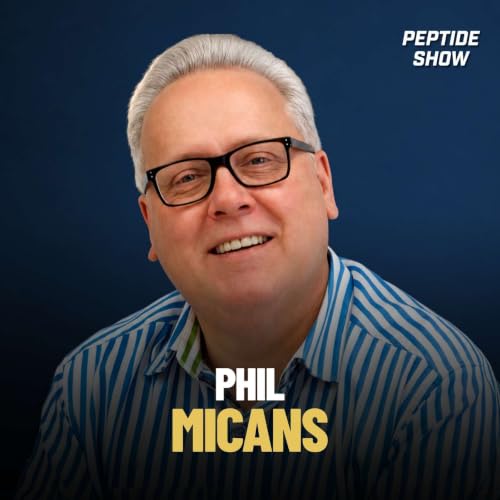
  • Phil Micans: What does Putin know about peptides?
    Oct 20 2026

    What did the Soviets discover about peptides?

    Soviet researchers were studying peptide bioregulators decades before today’s longevity boom. Their work helped reshape Phil Micans’ thinking about food, gene activity and aging.

    A co-founder of International Antiaging Systems and editor of Aging Matters magazine, Phil was drawn into bioregulators by a 2010 lecture in Istanbul. The speaker was Professor Vladimir Khavinson, with whom he would later coauthor a book.

    He joins Richard Skaife to discuss what he observed in Russian clinics, the research involving gas workers in Siberia, and Khavinson’s hypothesis that these compounds could activate a “biological reserve.”

    He explains:

    ■ How bioregulators differ from other peptides
    ■ Natural versus synthetic forms
    ■ The three bioregulators he prioritizes
    ■ The Gazprom studies and “biological reserve”
    ■ Conquering aging versus conquering death

    Chapters

    • (00:00) - Intro
    • (02:17) - What are bioregulators?
    • (04:37) - Food, genes and Soviet science
    • (11:47) - Natural vs. synthetic
    • (13:35) - Sourcing and quality
    • (16:14) - What does Putin know?
    • (18:55) - Can peptides extend lifespan?
    • (23:31) - Conquering aging

    Watch the full episode on YouTube

    Further reading

    PubMed: Review co-authored by Professor Vladimir Khavinson examining short peptides and gene regulation: Peptide Regulation of Gene Expression: A Systematic Review

    PubMed: A 2003 study of thymus and pineal peptide preparations in 266 older adults followed for six to eight years, separate from the Gazprom research: Peptides of pineal gland and thymus prolong human life

    Vrach: Related 2016 research on personalized prevention and peptide bioregulation among Gazprom workers. English abstract; full article in Russian: Personified Prevention of Diseases Under the Conditions of the Far North

    PubMed: Phil Micans’ paper on aging populations, healthcare costs and preventive medicine: The Need for Anti-aging Medicine

    Read the full transcript

    Follow Phil Micans

    Website: International Antiaging Systems
    Publication: Aging Matters magazine
    Book: Peptides in the Epigenetic Control of Ageing

    Follow Richard Skaife

    LinkedIn: linkedin.com/in/richardskaife/

    Peptide Show

    Website: Peptide.Show
    Instagram: @Peptide.Show
    TikTok: @peptide.show
    Facebook: Peptide Show
    X: @peptideshow
    YouTube: @PeptideShow

    Peptide Show explores the science, medicine, business, and people shaping the rapidly evolving world of peptides.

    Presented by Longr: longr.io

    Follow Peptide Show for new episodes every Tuesday.

    This podcast is for informational and educational purposes only and does not constitute medical advice. Some compounds discussed in this episode are investigational, unapproved for the uses discussed, or subject to changing regulatory requirements.

    Mostra di più Mostra meno
    26 min
  • Dean Henry: What are the most common peptide mistakes?
    Oct 13 2026
    Before you optimize your health, are you actually healthy? Dean Henry has spent more than a decade working with peptides. He has also had enough of everyone calling themselves a biohacker. As founder of UAE Peptides and Dn Research, and co-founder of Bioniq Lab, he works with individuals and practitioners navigating peptide protocols across Europe and the Middle East. His interest in health began long before peptides. A knee injury ended his football ambitions before his 16th birthday. Around the same time, he developed difficulty swallowing, with no clear explanation. Years later, he came to understand it as a stress response. That experience still shapes his approach: understand the person before choosing the protocol. Today, he sees people comparing stacks before understanding their own health, and questions how much experience some practitioners have with the compounds they recommend. Dean believes peptides could change medicine. But he wants people to get the basics right first, and a field full of personal success stories to invest in the human trials that can put those stories to the test. He explains:■ The three mistakes he sees most often when people start using peptides■ Why he puts gut health and bloodwork before copying someone else’s stack■ How he distinguishes peptide bioregulators from other peptides■ Why a medical qualification does not automatically mean peptide expertise■ Why he believes the gray market will survive, even as regulated access expandsChapters(00:00) - Intro(01:35) - Dean’s story(04:18) - Stress and the body(06:10) - Peptides vs. bioregulators(07:37) - The $100 million question(09:34) - Three peptide mistakes(11:14) - Gut health and peptides(13:56) - Are you actually healthy?(15:07) - Peptide access and regulation(18:51) - Can doctors keep up?(23:05) - The future of peptidesWatch the full episode on YouTube Further readingFDA: Safety concerns and gaps in human data for compounds discussed in the episode, including BPC-157, KPV, injectable GHK-Cu, and TB-500: FDA: Compounding substances with potential safety risksPubMed: 2026 review of the animal and human evidence for peptides promoted for recovery and performance, including BPC-157, TB-500, and GHK-Cu: Peptide Supplements and Their Therapeutic Applications in Sports MedicinePubMed: Review co-authored by Professor Vladimir Khavinson examining short peptides and gene regulation, providing mechanistic background to the bioregulator discussion: Peptide Regulation of Gene Expression: A Systematic ReviewNHS: Practical guidance on bowel health, including the Bristol Stool Chart mentioned in the episode: Maintaining a Healthy BowelRead the full transcript Follow Dean HenryInstagram: @dean.e.henryWebsite: Bioniq LabWebsite: Dn ResearchWebsite: UAE PeptidesEducation and coaching: The Peptides AcademyFollow Richard SkaifeLinkedIn: linkedin.com/in/richardskaife/Peptide ShowWebsite: Peptide.ShowInstagram: @Peptide.ShowTikTok: @peptide.showFacebook: Peptide ShowX: @peptideshowYouTube: @PeptideShowPeptide Show explores the science, medicine, business, and people shaping the rapidly evolving world of peptides.Presented by Longr: longr.ioFollow Peptide Show for new episodes every Tuesday.This podcast is for informational and educational purposes only and does not constitute medical advice. Some compounds discussed in this episode are investigational, unapproved for the uses discussed, or subject to changing regulatory requirements.
    Mostra di più Mostra meno
    24 min
  • Dr Felice Gersh: Could peptides help women through menopause?
    Oct 6 2026
    Could peptides work alongside hormone therapy to help women through menopause? Dr. Felice Gersh is an award-winning gynecologist, integrative medicine physician and bestselling author of PCOS SOS and Menopause: 50 Things You Need to Know. Estrogen is central to her thinking. It influences appetite, metabolism and many of the peptides your body makes. She explains why a GLP-1 injection differs from the hormone made in your gut, and why a peptide’s effects can reach beyond the problem you’re trying to solve. She also describes reports of peptide drugs being sold from coolers at gyms. Powerful medicines, treated like supplements. Her concern is what people are injecting, and what repeated use might mean. Her hopes for the future are clear: preserving muscle, supporting metabolism and controlling inflammation. She sees properly researched peptides working alongside hormone therapy to help women stay stronger as they age.She explains:■ Menopause, metabolism and a changing waistline■ How estrogen influences your body’s own peptides■ Why GLP-1 drugs differ from natural GLP-1■ The unknowns of self-prescribed peptides■ Where peptides could work alongside hormone therapyChapters(00:00) - Intro(02:25) - Why Dr. Gersh is cautious about peptides(04:14) - Peptides, supplements and GLP-1 drugs(07:26) - How peptides work in the body(09:25) - The risks of self-prescribing peptides(12:19) - The FDA and compounding pharmacies(15:45) - Supporting natural peptide production(17:19) - How estrogen regulates peptides(19:59) - Preserving muscle as we age(21:28) - Metabolism, inflammation and hormone therapyWatch the full episode on YouTube Further readingResearch: A longitudinal study tracking fat mass, lean mass and weight through menopause: Changes in body composition and weight during the menopause transition.Research: A study in mice and human cells and tissues examining estrogen’s influence on GLP-1 secretion: 17-β Estradiol regulates proglucagon-derived peptide secretion in mouse and human α- and L cells.The Menopause Society: Hormone therapy, its benefits and risks, and why treatment should be individualized: Hormone Therapy.NIH: Why muscle loss matters for strength, mobility and independence as we age: Slowing Sarcopenia.FDA: The role and risks of compounded drugs, and how they differ from FDA-approved medicines: Understanding the Risks of Compounded Drugs.Read the full transcript Books by Dr. Felice GershMenopause: 50 Things You Need to KnowPCOS SOSPCOS SOS Fertility Fast TrackFollow Dr. Felice GershYouTube: @FeliceGershMDInstagram: @dr.felicegershFacebook: @felicegershmdLinkedIn: linkedin.com/in/felicegershmd/Follow Richard SkaifeLinkedIn: linkedin.com/in/richardskaife/Follow Peptide ShowWebsite: Peptide.ShowInstagram: @Peptide.ShowTikTok: @peptide.showFacebook: Peptide ShowX: @peptideshowYouTube: @PeptideShowPeptide Show explores the science, medicine, business, and people shaping the rapidly evolving world of peptides.Presented by Longr: longr.ioFollow Peptide Show for new episodes every Tuesday.This podcast is for informational and educational purposes only and does not constitute medical advice. Some compounds discussed in this episode are investigational, unapproved for the uses discussed, or subject to changing regulatory requirements.
    Mostra di più Mostra meno
    23 min