Episodi

  • Why Cutting Headcount Can Cost More Than Keeping It | Sunaina Lobo
    Nov 10 2026
    What happens when a company chooses to protect its workforce instead of cutting costs, and how can that decision ultimately influence its exit valuation?In this episode of People Multiple, host Gia Ganesh sits down with Sunaina Lobo, Chief People Officer at KKR-backed Omnissa and former Chief People Officer at Gong, to explore how talent strategy, AI transformation, and leadership decisions shape business performance and long-term enterprise value.Drawing on her experience leading people strategy across global technology organizations, Sunaina shares a pivotal moment at Navis when she challenged a proposed 20% workforce reduction during the COVID-19 pandemic. Rather than making reactive layoffs, the company retained its employees, protected critical capabilities, and ultimately benefited from a surge in demand that contributed to a successful business exit.The conversation also examines the evolving relationship between private equity investors and people leaders, including why talent strategy must be directly connected to business strategy and how leadership misalignment creates hidden financial costs.Learn more about Sunaina Lobo: https://www.linkedin.com/in/sunaina-lobo-4b0a2319/ The discussion also tackles questions…- How does people strategy influence enterprise value and private equity returns?- Why can workforce reductions and mass layoffs negatively affect long-term business performance?- How should Chief People Officers partner with CEOs, CFOs, and private equity investors?- What role does talent strategy play in successful mergers, acquisitions, and business exits?- How can companies measure the financial impact of leadership misalignment?- Will AI automate 70% of HR work within the next three years?- Why is successful AI transformation more about people than technology?- How will AI agents change organizational design, workforce planning, and performance management?- What talent metrics should CHROs and CPOs present to the board of directors?- How can organizations measure the ROI of artificial intelligence investments?- Why are smaller, flatter, AI-enabled teams becoming increasingly important?- How does ruthless prioritization improve capital allocation and business growth?- What should investors evaluate about talent and culture during acquisition due diligence?- How can organizations retain top talent during leadership transitions and strategic change?- How can people leaders demonstrate their strategic value in the boardroom?Key takeaways:1. People strategy must accelerate business strategy to drive enterprise value.2. Short-term layoffs can create long-term financial consequences.3. Successful AI transformation depends more on people than technology.4. AI could automate 70% of traditional HR work within three years.5. Leadership misalignment creates hidden costs that undermine business performance.6. Private equity investors should evaluate talent as a strategic driver of company valuation.7. AI-driven organizational design will favor smaller, flatter, and more agile teams.8. Ruthless prioritization helps organizations allocate resources toward their highest-value opportunities.9. Talent metrics should be central to boardroom discussions about business performance.10. AI investments should be measured by business outcomes, not technology adoption.Similar episodes: How to Choose the Right HR Technology for Your Business: https://youtu.be/_RAkmJIJAwoHow to Redesign Work for AI Without Losing the Human Advantage: https://youtu.be/il1i_th6J3Q70% of Your Work Could Be Automated. What Happens Next?: https://youtu.be/DxJbWCHm2f4 ProductionProduced by: The AGN GroupHost: Gia Ganesh Producer: Katie HartWebsites: https://peoplemultiple.com/ Social Media Channels:Instagram: https://www.instagram.com/thepeoplemultiple/ YouTube: https://www.youtube.com/@thepeoplemultiple LinkedIn: https://www.linkedin.com/company/people-multiple TikTok: https://www.tiktok.com/@people.multiple Want to be a Podcast Guest?If you are interested in being a guest on the podcast, email us at gia@peoplemultiple.com
    Mostra di più Mostra meno
    59 min
  • How to Choose the Right HR Technology for Your Business | Melanie Lougee
    Nov 3 2026
    In this episode of People Multiple, host Gia Ganesh sits down with Melanie Lougee, Chief Product Officer at NovaWorks, to explore how AI-native HR technology is reshaping workforce management, business operations, and the future of human capital strategy.With more than 25 years of experience in HR technology, including leadership roles at Gartner, ServiceNow, and Workday, Melanie has witnessed the evolution of HR systems from traditional enterprise software to cloud-based platforms. Now, at NovaWorks, she is helping build a new generation of core HR technology designed around AI agents, intelligent automation, and the changing needs of businesses.Melanie explains what it means to manage employees, contractors, and AI agents within a unified workforce system. While AI agents are not employees, they increasingly perform tasks that affect business operations. This raises important questions about accountability, governance, data access, compliance, and the responsibilities of HR and technology leaders.Learn more about Melanie Lougee:LinkedIn: https://www.linkedin.com/in/melanielougeeThe discussion also tackles questions…-How is artificial intelligence transforming HR technology and workforce management?-What is an AI-native HR system, and how does it differ from traditional HR software?-How can organizations manage employees, contractors, and AI agents within one workforce management platform?-What does it mean to onboard an AI agent into an organization's workforce system?-Should AI agents be treated as employees, digital workers, or business tools?How should companies establish accountability and governance for AI agents?-Who should be responsible for managing AI agents: HR, IT, or individual business departments?-How can organizations maintain human oversight when AI agents recommend or automate business processes?-What security and data privacy considerations should companies evaluate before deploying AI agents?-How can AI agents improve HR compliance and identify potential policy violations?-How can AI technology help organizations manage complex employment laws and workplace policies?-What are the benefits of integrating AI agents into existing HR workflows?-How can AI-powered HR systems improve visibility into how work gets done?-How should businesses evaluate the costs and return on investment of AI agents?-When should organizations use traditional workflow automation instead of AI agents?-What organizational changes are necessary before implementing AI-native HR technology?Key takeaways:AI-Native HR Technology Is Transforming Workforce Management by Integrating Employees, Contractors, and AI Agents Into Unified Systems.AI Agents Should Support Human Decision-Making Rather Than Replace Human Accountability and Oversight.Successful AI Adoption Requires Organizations to Rethink Workflows, Responsibilities, and Business Processes Before Scaling Automation.AI Governance, Data Security, and Policy Compliance Are Essential for Managing AI Agents Responsibly in the Workplace.HR Technology Investments Deliver Greater ROI When Companies Prioritize Implementation, User Adoption, and Measurable Business Outcomes.Organizations Can Accelerate AI Transformation by Starting With Small Experiments, Evaluating Results, and Expanding Successful Use Cases.AI-Powered HR Systems Can Improve Workforce Visibility, Streamline Cross-Departmental Workflows, and Identify Opportunities for Automation.Successful HR Technology Integration After Mergers and Acquisitions Requires Speed, Flexibility, and Proactive Workforce Alignment.AI Has the Potential to Make HR More Strategic by Improving Workforce Planning, Performance Management, and Business Decision-Making.Every HR Technology Investment Is Ultimately a People Decision That Influences How Work Gets Done and How Organizations Create Business Value.Similar episodes: 70% of Your Work Could Be Automated. What Happens Next?: https://youtu.be/DxJbWCHm2f4?si=lpyyK9CSm2BpIJzxHow to Redesign Work for AI Without Losing the Human Advantage: https://youtu.be/il1i_th6J3Q?si=dWGMG2so-lunoaLiThe Hiring Mistakes That Ruin Company Growth: https://youtu.be/Npz802nzmYQ?si=K-DF1jQW_-qlwntm ProductionProduced by: The AGN GroupHost: Gia Ganesh Producer: Katie HartWebsites: https://peoplemultiple.com/ Social Media Channels:Instagram: https://www.instagram.com/thepeoplemultiple/ YouTube: https://www.youtube.com/@thepeoplemultiple LinkedIn: https://www.linkedin.com/company/people-multiple TikTok: https://www.tiktok.com/@people.multiple Want to be a Podcast Guest?If you are interested in being a guest on the podcast, email us at gia@peoplemultiple.com
    Mostra di più Mostra meno
    46 min
  • Stop Promoting Your Best Talent Into the Wrong Roles! | Hein Knaapen
    Oct 27 2026
    In this episode of People Multiple, host Gia Ganesh sits down with Hein Knaapen, a seasoned HR executive with more than 40 years of experience, to explore why organizations struggle to turn ambitious strategies into measurable business results and how leaders can close the gap between talent strategy and value creation.Drawing from his experience at ING, where he led the people agenda for more than 53,000 employees across 45 countries, and decades of working with executive teams and boards, Hein challenges conventional thinking about leadership effectiveness, organizational transformation, and human capital management.Hein explains why focus is often more about deciding what to stop than deciding what to start. From organizations juggling hundreds of strategic initiatives to leadership teams unable to agree on their most critical priorities, he reveals how complexity, competing demands, and unclear accountability can undermine even the strongest value creation plans.Learn more about Hein Knaapen:LinkedIn: linkedin.com/in/hein-j-m-knaapen-a879289Website: https://www.heinknaapen.com/YouTube: @HeinJ.M.KnaapenThe discussion also tackles questions…Why do so many organizational transformations fail to achieve their intended business outcomes?How can CEOs and CHROs identify the most critical priorities in a value creation plan?Why is strategic focus more about stopping initiatives than starting new ones?How can leadership teams recognize the early warning signs of a failing business transformation?Why do organizations struggle to identify the roles that create the greatest business value?How can companies identify and prioritize critical talent beyond the executive leadership team?Why does top talent often move toward organizational hierarchy instead of business opportunity?How should organizations allocate talent to maximize business performance and value creation?What role should boards play in CEO appointments and strategy execution?How can boards stress-test CEO appointments with the same rigor used for capital investments?What is a CEO mobilization plan, and how can it reduce leadership appointment risks?Why do leadership appointments fail despite a candidate's strong track record?How can private equity firms improve talent due diligence during acquisitions?What are the risks of relying on intuition when making critical executive hiring decisions?How does delaying difficult talent decisions affect business performance?Why do organizations struggle to translate strategic priorities into measurable employee performance?How should performance management evolve from retrospective evaluations to continuous performance improvement?What makes leadership development programs effective at improving organizational performance?Key takeaways:Successful Business Transformation Requires Strategic Focus on the Few Priorities That Create the Most ValueTalent Allocation Should Be Driven by Business Opportunities, Not Organizational HierarchyCritical Roles Outside the Executive Team Often Have the Greatest Impact on Business Value CreationCEO Appointments and Executive Hiring Decisions Deserve the Same Rigorous Risk Assessment as Capital InvestmentsEffective Strategy Execution Depends on Clear Accountability, Measurable Deliverables, and Fewer Competing PrioritiesBoards Must Identify Critical Talent Risks and Establish CEO Mobilization Plans to Support Business PerformanceLeadership Development Programs Deliver Greater Value When They Build Practical Management Skills Aligned With Business StrategyFrontline Manager Effectiveness Plays a Critical Role in Employee Engagement and Organizational PerformanceCEOs, CFOs, and CHROs Must Align Human Capital and Financial Resources With Strategic Business PrioritiesDelaying Difficult Talent Decisions and Overlooking Leadership Risks Can Undermine Long-Term Business SuccessSimilar episodes: Why Great Founders Struggle to Become Great CEOs: https://youtu.be/9nVND7lLGCU?si=D429cHBprFxdJQm5 The Recruiting Engine Every Growth Company Needs: https://youtu.be/s5VW1vR69Qo?si=CzC3DZTwlXOSVhdP The People Strategy Behind a $24 Billion Integration: https://youtu.be/X-friEXJQbA?si=ctRVcVBHwMCNtPv_ ProductionProduced by: The AGN GroupHost: Gia Ganesh Producer: Katie HartWebsites: https://peoplemultiple.com/ Social Media Channels:Instagram: https://www.instagram.com/thepeoplemultiple/ YouTube: https://www.youtube.com/@thepeoplemultiple LinkedIn: https://www.linkedin.com/company/people-multiple TikTok: https://www.tiktok.com/@people.multiple Want to be a Podcast Guest?If you are interested in being a guest on the podcast, email us at gia@peoplemultiple.com
    Mostra di più Mostra meno
    46 min
  • The Hidden People Risks Behind Failed Acquisitions
    Oct 20 2026

    What makes a merger or acquisition successful? The financials may justify the deal, but leadership decisions, cultural alignment, and talent retention often determine whether the expected value is realized.

    In this episode of People Multiple, host Gia Ganesh sits down with Jillian Moulton, Chief People Officer at Fabric, to explore the hidden people risks behind mergers and acquisitions and why even promising deals can struggle after closing.

    With experience navigating multiple acquisitions, organizational integrations, and rapid business growth, Jillian shares how strategic talent decisions influence acquisition outcomes. From identifying leadership risks during M&A due diligence to integrating company cultures and retaining high-performing employees, she explains why the people side of an acquisition deserves the same rigor as financial and operational planning.

    Connect with Jillian Moulton:
    LinkedIn:https://www.linkedin.com/in/jillianmoulton/


    The discussion also tackles questions…

    • What are the biggest people risks in mergers and acquisitions?
    • Why do some acquisitions fail to deliver their expected business value?
    • How can leadership decisions make or break an acquisition?
    • What should companies evaluate during HR and people due diligence?
    • How can companies successfully integrate different organizational cultures after a merger?
    • Why is the first six months after an acquisition so critical for employee retention?
    • How can high employee retention rates hide problems with post-merger integration?
    • Why do high-performing employees sometimes leave after an acquisition?
    • How can compensation structures reveal cultural differences between merging companies?
    • Which leadership decisions must be finalized before an acquisition closes?


    Key takeaways:

    1. Leadership Decisions Can Make or Break an Acquisition

    2. Talent Retention Doesn't Always Equal Acquisition Success

    3. The First Six Months After an Acquisition Are Critical for Employee Retention

    4. Company Culture Should Be Evaluated During M&A Due Diligence

    5. Successful Post-Merger Integration Doesn't Require Every Company to Operate Identically

    6. Compensation Structures Reveal More About Company Culture Than Leaders Realize

    7. Historical Employee Performance Doesn't Guarantee Future Success After an Acquisition

    8. AI Adoption Should Be Measured by Business Outcomes, Not Just Usage

    9. Leadership Development Is a Long-Term Investment in Organizational Performance

    10. Consistent Leadership Communication Builds Trust During Organizational Change


    Similar episodes:

    The People Decisions That Make or Break M&A: https://youtu.be/wdzKjihV8BI?si=a6yGp2fyt4fAi6uk

    From Employee #16 to IPO: Lessons Every Growth Leader Should Know: https://youtu.be/4ZVvZpCgEzs?si=gw5vTSyVTrB4h8N6

    How One People Leader Increased Employee Retention from 30% to 80%: https://youtu.be/McDXzlcptN8?si=HInmmuhckmXI6wzr


    Production

    Produced by: The AGN Group

    Host: Gia Ganesh

    Producer: Katie Hart

    Websites: https://peoplemultiple.com/


    Social Media Channels:

    Instagram: https://www.instagram.com/thepeoplemultiple/

    YouTube: https://www.youtube.com/@thepeoplemultiple

    LinkedIn: https://www.linkedin.com/company/people-multiple

    TikTok: https://www.tiktok.com/@people.multiple


    Want to be a Podcast Guest?

    If you are interested in being a guest on the podcast, email us at gia@peoplemultiple.com

    Mostra di più Mostra meno
    45 min
  • The Business Case for Investing in Employee Well-Being | Jeri Hawthorne
    Oct 13 2026
    In this episode of People Multiple, Gia Ganesh sits down with seasoned HR executive Jeri Hawthorne to explore why human capital decisions are often harder to connect directly to business performance and how people leaders can build a stronger case for the investments they know matter.Drawing from her experience as CHRO of Aflac and across financial services, energy, insurance, and private equity-backed organizations, Jeri explains why the impact of people decisions often has a long tail. The challenge is not simply proving that people matter. It is identifying the business problem, defining success metrics, understanding the investment, and demonstrating how a human capital solution can improve business outcomes.Jeri shares real examples of turning people initiatives into business solutions. At Aflac, employee wellness programs, on-site healthcare services, childcare, and career development resources helped address challenges such as absenteeism, turnover, employee engagement, and workforce availability. In another organization, a recruiting technology pilot designed to solve hiring bottlenecks ultimately generated nearly half a million dollars in savings while improving time to fill and candidate quality.Learn more about Jeri Hawthorne:LinkedIn: https://www.linkedin.com/in/jerihawthorneThe discussion also tackles questions…How can HR leaders use low-cost pilots to prove the value of larger people investments?How can HR identify the right business champion for a new people initiative?Why should companies treat employees as a strategic business investment?How can employee retention create a competitive advantage?How can recruiting technology improve time to hire and reduce costs?How should HR measure the ROI of recruiting technology?How is AI changing the way organizations define work?Should companies use AI to replace work or enable employees to work differently?How will AI affect entry-level jobs and early-career development?What is AI-driven skill atrophy, and why should business leaders care about it?Should employee performance be measured by AI adoption as well as output?What human skills will remain important as AI becomes more capable?How should organizations redesign jobs and performance metrics for the age of AI?How should leadership assessments influence executive hiring decisions?Why do companies invest in employee assessments but fail to use the results effectively?How can organizations build stronger internal leadership pipelines?What are the risks of relying too heavily on external executive hiring?What people metrics should CEOs monitor most closely?Why should CEOs focus on turnover among critical talent rather than overall turnover?How should employers evaluate rising healthcare costs and their impact on employees?Should CHROs own AI transformation?How should HR and technology leaders collaborate on AI transformation?How can people decisions influence the success of mergers and acquisitions?How can companies preserve the right culture and talent during an acquisition?Key takeaways:Human Capital Investments Should Be Evaluated With the Same Rigor as Other Business InvestmentsHR Leaders Must Connect People Decisions to Measurable Business OutcomesEmployee Well-Being Investments Can Reduce Absenteeism and Strengthen Workforce PerformanceSmall HR Pilots Can Build the Business Case for Larger Strategic InvestmentsRetaining Critical Talent Creates a Long-Term Competitive AdvantageRecruiting Technology Can Improve Hiring Efficiency, Candidate Quality, and Return on InvestmentAI Should Enable Human Work, Not Simply Replace ItAI Adoption Requires Organizations to Rethink Performance Metrics and Employee DevelopmentPreventing Skill Atrophy Will Become Critical as AI Takes Over Foundational TasksSuccessful Mergers and Acquisitions Require Deliberate Decisions About Talent, Leadership, and CultureSimilar episodes: The People Decisions That Make or Break M&A: https://youtu.be/wdzKjihV8BI?si=rPwpZDQcLdpBtkfsHow One People Leader Increased Employee Retention from 30% to 80%: https://youtu.be/McDXzlcptN8?si=2W-WZkuBrnUxlekO After 45 Acquisitions, These Are the Leadership Red Flags She Never Ignores: https://youtu.be/zRdL7itzrVc?si=KbXjpC9Hta6dcZXs ProductionProduced by: The AGN GroupHost: Gia Ganesh Producer: Katie HartWebsites: https://peoplemultiple.com/ Social Media Channels:Instagram: https://www.instagram.com/thepeoplemultiple/ YouTube: https://www.youtube.com/@thepeoplemultiple LinkedIn: https://www.linkedin.com/company/people-multiple TikTok: https://www.tiktok.com/@people.multiple Want to be a Podcast Guest?If you are interested in being a guest on the podcast, email us at gia@peoplemultiple.com
    Mostra di più Mostra meno
    Non ancora noto
  • The People Decisions Nobody Recognizes Until Later
    Sep 29 2026
    In this special compilation episode of People Multiple, Gia Ganesh revisits answers to the show’s signature question: What’s a talent decision that changed a business outcome, but no one in the room recognized it as a talent decision at the time?Leaders including Lynee Luque, Steve Schloss, Marty Reaume, Payal Maheswari, Stephanie Bonnet, Michelle Byrd Robinson, Kaja Odegard, and Lynn Herrick reveal how seemingly operational and strategic choices can carry significant talent implications.Together, these stories challenge the artificial divide between people strategy and business strategy. They demonstrate how leadership, organizational design, hiring, talent management, and culture can influence execution and company performance long before the impact becomes obvious in the numbers.Watch the full interviews here:Lynee Luque: https://youtu.be/yXB7-GS0ahE?si=1mXYgYIwIX6d_rKB Steve Schloss: https://youtu.be/9nVND7lLGCU?si=mzsQgtQ0VzIH9_-B Marty Reaume: https://youtu.be/zRdL7itzrVc?si=UqWyBkYjexXAXxpn Payal Maheswari: https://youtu.be/Wx35nZdJSXc?si=yOkKm-nYzNFs3K35 Stephanie Bonnet: https://youtu.be/McDXzlcptN8?si=wvhUjqAtg8E2qbGt Michelle Byrd Robinson: https://youtu.be/s5VW1vR69Qo?si=R9sIJFqHbbakZ1XS Kaja Odegard: https://youtu.be/4ZVvZpCgEzs?si=rATsohc9ed0wwZJi Lynn Herricks: https://youtu.be/wdzKjihV8BI?si=dEhjc7AeRbzuYvvJ The discussion also tackles questions…What talent decisions have the greatest impact on business performance?How can an operational decision become a talent strategy decision?How do decision rights and ownership affect organizational speed?Are talent outcomes and business outcomes really separate?How do you decide who should lead the next stage of company growth?When should a founder or early employee transition out of a growing company?How can leaders handle an employee who is no longer the right fit for the company’s stage?How does remote work affect a company’s ability to recruit talent?What happens when leaders trust someone without traditional subject-matter expertise to lead a critical initiative?How can one strategic hire influence company culture beyond the role itself?How do hiring decisions affect representation and leadership opportunities?How can people strategy serve as an early indicator of business performance?Key takeaways:Talent decisions are business decisions, even when they are not labeled that way. Choices involving leadership, organizational structure, workplace strategy, hiring, and decision-making authority can have lasting effects on business performance.Operational decisions can quietly reshape a company’s talent strategy. Lynee Luque’s experience shows how a real estate decision ultimately expanded access to talent beyond San Francisco and enabled a distributed workforce.Clear decision rights can improve organizational speed and execution. Kaja Odegard explains how clarifying ownership and involvement helped unlock greater velocity, even though the underlying challenge was not initially viewed as a people issue.People strategy and business strategy should not operate as separate functions. Michelle Byrd Robinson argues that talent outcomes and business outcomes are interconnected, with major people initiatives aligned directly to organizational objectives.Choosing who leads the next stage of growth is one of a company’s most consequential talent decisions. Marty Reaume highlights leadership selection during scaling, transformation, and M&A integration as a people decision with significant business implications.Leadership potential is not always defined by subject-matter expertise. Steve Schloss’s experience with the U.S. Open demonstrates how organizations may create better outcomes by identifying the person with the right skills to facilitate a critical process, rather than simply choosing the obvious expert.The talent that helps build a startup may not always be the talent it needs to scale. Payal Maheswari discusses the difficult reality that an early employee’s skills or working style may no longer fit as the organization evolves.Managing employee transitions with respect can protect both people and the business. When someone no longer fits the company’s stage, leaders can acknowledge that person’s contribution while helping them separate their identity from the organization and move toward what comes next.One strategic hire can influence company culture far beyond a single role. Stephanie Bonnet describes how hiring a woman into a male-dominated engineering environment generated greater excitement around representation and influenced leadership’s approach to future hiring.The full impact of a hiring decision may not be measurable on a spreadsheet. Lynn Herrick’s decision to hire the best candidate while she was eight months pregnant ultimately changed how women within the company viewed leadership, family, and their own opportunities, even though Lynn could not draw a direct line from that decision to financial ...
    Mostra di più Mostra meno
    19 min
  • How to Measure the Business Impact of People Strategy | Priti Patel
    Sep 22 2026
    In this episode of People Multiple, Gia Ganesh sits down with Priti Patel, a people executive at G2 with a background in finance and conscious leadership coaching, to explore how people strategy, financial thinking, and AI transformation come together to shape business performance.Priti challenges the idea that HR's primary responsibility is simply to represent the employee voice. Instead, she argues that people leaders must understand the business intimately and evaluate decisions through both a human and financial lens. From performance decisions and talent investments to compensation and organizational design, the goal is to create outcomes that work for employees while strengthening enterprise value.The conversation explores G2's integration following its acquisition of Gartner Digital Markets, which nearly doubled the company's headcount and almost tripled its revenue. Priti explains why cultural integration deserves the same strategic attention as financial, legal, product, and sales integration, and why differences in language, leadership, and decision-making can create significant business costs when they are ignored.Learn more about Priti Patel:LinkedIn: https://www.linkedin.com/in/pritipatel1/Mentioned in this episode: G2 – Priti discusses G2's business, culture, AI transformation, talent strategy, organizational design, performance practices, and integration following the acquisition of Gartner Digital Markets.Peak by Chip Conley – The book that inspired G2's PEAK values: Performance, Entrepreneurial Spirit, Authenticity, and Kindness.Conscious Leadership – A leadership framework central to Priti's coaching background and G2's culture, focused in the conversation on presence, authenticity, self-awareness, and separating facts from personal interpretations.eNPS (Employee Net Promoter Score) – Used by G2 as a recurring measure of employee experience.INPS (Inclusiveness Net Promoter Score) – A metric Priti discusses using alongside eNPS to better understand whether employees feel that they belong and can be their authentic selves at G2.The discussion also tackles questions…How can HR leaders connect people decisions to enterprise value?Why should people leaders understand financial statements and business economics?Can HR leaders balance empathy for employees with financial accountability?How can transparency make difficult performance and talent decisions more effective?Why is cultural integration critical to the success of mergers and acquisitions?How can companies successfully integrate two different organizational cultures after an acquisition?What does AI transformation look like inside the people function?How can companies measure AI fluency across their workforce?What AI skills should organizations look for when hiring talent?Do companies need full-time employees for every AI role?How can college students and apprentices become part of an organization's AI talent strategy?How should companies move from AI experimentation to measurable AI impact?How is AI changing organizational design and traditional career paths?What is a "super IC" career track, and why does it matter in the age of AI?Should AI talent be centralized or decentralized across an organization?Why does business context matter when deploying AI builders across teams?How can AI change the role of managers and individual contributors?What is the Inclusiveness Net Promoter Score (INPS), and how is it different from eNPS?How can organizations measure whether employees genuinely feel that they belong?Key takeaways:HR Leaders Must Connect People Decisions to Enterprise ValueFinancial Acumen Helps People Leaders Balance Empathy With Business PerformanceTransparency Makes Difficult People Decisions More Effective and Less SurprisingCultural Integration Is a Critical Investment in Mergers and AcquisitionsAI Fluency Is Becoming a Core Workforce Competency Across Every Business FunctionAI Talent Strategy Should Look Beyond Traditional Full-Time Hiring ModelsAI Is Creating New Career Paths for High-Impact Individual ContributorsDecentralized AI Talent Can Accelerate Transformation by Combining Technical Skills With Business ContextEmployee Belonging Should Be Measured Separately From Traditional Employee EngagementRevenue per Employee Helps People Leaders Connect Workforce Strategy to Business ValueSimilar episodes: 70% of Your Work Could Be Automated. What Happens Next?: https://www.youtube.com/watch?v=DxJbWCHm2f4From Employee #16 to IPO: Lessons Every Growth Leader Should Know: https://www.youtube.com/watch?v=4ZVvZpCgEzs&t=2sHow to Redesign Work for AI Without Losing the Human Advantage: https://www.youtube.com/watch?v=il1i_th6J3Q ProductionProduced by: The AGN GroupHost: Gia Ganesh Producer: Katie HartWebsites: https://peoplemultiple.com/ Social Media Channels:Instagram: https://www.instagram.com/thepeoplemultiple/ YouTube: https://www.youtube.com/@thepeoplemultiple LinkedIn: https://www.linkedin.com/company/...
    Mostra di più Mostra meno
    46 min
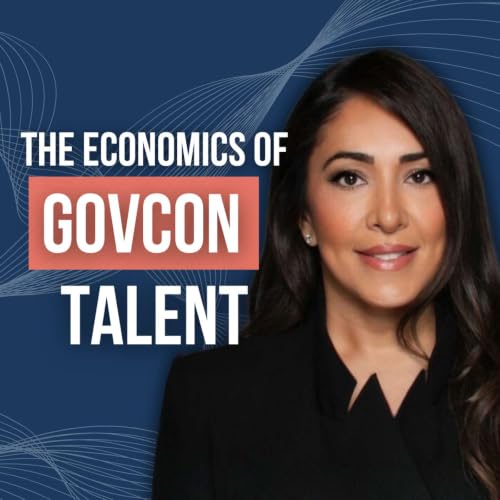
  • What GovCon Leaders Get Wrong About Talent Strategy | Halai Shukran
    Sep 15 2026
    In this episode of People Multiple, Gia Ganesh sits down with Halai Shukran, an HR executive and COO whose career journey took her from broadcast journalism to talent management, people leadership, and ultimately business operations. Drawing from her experience in commercial technology, venture-backed companies, and government contracting, Halai explains why people leaders create greater business impact when they understand how talent decisions connect to revenue, delivery, margin, client risk, and growth.Halai shares how developing systems thinking and business fluency helped her expand beyond traditional HR responsibilities into IT, quality, marketing, contracting, and operations. Rather than bringing HR activity to the executive team, she argues that people leaders should translate workforce issues into business choices and clearly articulate the trade-offs behind those decisions.The conversation explores the unique economics of talent strategy in government contracting, where people are the product, recruiting capacity can protect revenue, and long procurement cycles require leaders to balance retention, overhead investment, delivery risk, and future growth. Halai also explains why employer brand matters even when employees leave, and how transparency can create alumni who refer talent, return to the organization, and strengthen its reputation.Learn more about Halai Shukran:Halai’s LinkedIn: https://www.linkedin.com/in/halai-shukran/Pluribus Digital’s LinkedIn: https://www.linkedin.com/company/pluribusdigital/Pluribus Digital’s Website: https://pluribusdigital.com/The discussion also tackles questions…How can HR leaders transition from people leadership into broader business operations and COO roles?What skills do HR leaders need to become effective business operators?How can people leaders translate HR decisions into revenue, margin, delivery, and business outcomes?Why is systems thinking an important skill for HR and people leaders?What business and financial knowledge should HR leaders develop to earn greater influence in the C-suite?How should people leaders communicate workforce risks and opportunities to CEOs and executive teams?How can companies effectively cascade business strategy as they scale?Why does clarity become increasingly important during organizational growth?How does talent strategy differ between venture-backed companies and government contractors?How do long government contracting procurement cycles affect hiring and workforce planning?How can government contractors manage employees who are temporarily on the bench?How do employee retention and employer brand affect business performance?Why can recruiting capacity be considered revenue protection rather than simply an HR cost?When should a growing CEO begin delegating people and operational responsibilities?Why do early managers become a company's operating system before a formal HR function exists?Key takeaways:HR Leaders Create More Business Value When They Translate People Problems Into Business OutcomesSystems Thinking Is a Critical Skill for HR Leaders Moving Into Business OperationsBusiness Acumen Helps HR Leaders Earn Greater Influence in the C-SuiteClarity Is One of the Most Important Principles for Scaling an OrganizationEarly Managers Become a Company's Operating System Before a Formal HR Function ExistsTalent Strategy Must Reflect the Economics of the Business ModelRecruiting Capacity Can Be Revenue Protection, Not Just an HR CostEmployer Brand Is Built Through Transparency, Including When Employees LeaveAI Can Strengthen People Strategy, but It Cannot Replace Human JudgmentCuriosity Is One of the Most Undervalued Leadership CompetenciesSimilar episodes: 70% of Your Work Could Be Automated. What Happens Next?: https://youtu.be/DxJbWCHm2f4 How to Redesign Work for AI Without Losing the Human Advantage: https://youtu.be/il1i_th6J3Q Startup Hiring Lessons from Google: https://youtu.be/28bkrOkZU7w ProductionProduced by: The AGN GroupHost: Gia Ganesh Producer: Katie HartWebsites: https://peoplemultiple.com/ Social Media Channels:Instagram: https://www.instagram.com/thepeoplemultiple/ YouTube: https://www.youtube.com/@thepeoplemultiple LinkedIn: https://www.linkedin.com/company/people-multiple TikTok: https://www.tiktok.com/@people.multiple Want to be a Podcast Guest?If you are interested in being a guest on the podcast, email us at gia@peoplemultiple.com
    Mostra di più Mostra meno
    55 min