Episodi

  • Negroni Talks #55 - Architecture As Algorithm: The Demise of Design?
    Oct 17 2025

    Architecture As Algorithm: The Demise of Design?

    As AI storms the gates of the architectural profession, building designers like many other creatives are rightfully asking: “are we already halfway to being replaced?” If intelligence is artificial and algorithms are filtering and fucking with our view of reality, then what is the truth about the future of architects and architecture?

    With computers now used to quickly generate fantastical buildings with multiple options and easily made mashups of any ‘style’, there are the obvious questions of authenticity, authorship and surface imagery over core ideology. In a more prosaic manner, AI soon may well be able to ‘create’ buildings based on a whole range of criteria, be that the constraints imposed by planning policies, building regulations, lowering build costs, meeting performance accreditation and ensuring the basic practicalities of use. However, is there really much difference between the novelty of neural networks and the long-standing systemisation of the design process through Building Information Modelling (BIM) software used by the profession? And is this rules-based order where a problem lies?

    Architects find themselves cornered not only by the machines that threaten to replace them, but by their fellow human beings, who upon looking around at the anonymous sameness within the contemporary built environment, could be forgiven for asking whether the profession has opened the door to its own obsolescence?

    When investment driven metrics deem that the ideal building form is that of extruding the site footprint skyward into as many stories as possible, then does a culture of repetitious templating and unitised, risk-adverse design feed a crisis of confidence/courage in Architects and The Public alike? Does anyone believe that the profession will be able to deliver truly humane and inspiring places for a future world?

    In providing a service do architects end up in servitude? Many will see their main utility as an enabler, but in looking to ‘be as useful as possible’ have they in turn become a tool and a means to an end - and if so, to what end? They maybe all tooled up, but are they able to use their full imagination and skill-set?

    At a time when, more than ever, we desperately need alternatives and lateral thinking to bring about change, is the revitalisation of the more romantic role of architect as a principled visionary and revolutionary increasingly necessary to advance and progress building design in a meaningful way? And will AI be put to work on this task?

    At the heart of these questions is something seen throughout the history of technological progress since ‘the inventions’ of fire and the wheel. Humankind has continually created new tools and techniques to open-up the field of possibility. Technology is about achieving practical goals. If AI can do things quicker, more calculatingly and uncompromised by the human element, then does this suggest that we humans should be concentrating more on what the goals should be, if we are to ensure we better address the issues and concerns manifest in our built environment?

    Featuring:

    Rob Fiehn & Huw Williams, Fourthspace (chair)
    Jay Morton, Bell Phillips
    William Mann, Witherford Watson Mann
    Adrienne Lau, Heatherwick Studio
    Eva Magnisali, DataForm Lab
    Fernando Ruiz, Arup (replacement of Giulio Antonutto) and all others who want to contribute…..

    Mostra di più Mostra meno
    1 ora e 29 min
  • Negroni Talks #S19 - Keepin’ It Up: What Does It Actually Mean For A Building To Perform?
    Sep 30 2025

    The building industry has a huge impact in the context of carbon emissions, energy consumption and climate change. Whilst ‘adaptive reuse’ has become a buzzword with louder calls for upgrading, renovating and converting existing buildings instead of creating more new buildings, a culture of demolition persists.

    With new-build being seen as an easier way to meet increasingly demanding requirements, how can we really improve the overall performance of our built environment if we don’t address the inefficiencies and wastage associated with the dated fabric of our existing building stock throughout the nation? Equally, do we truly value the qualities that existing buildings offer: embodied energy, cultural memory, material richness, spatial character and social continuity?

    With the architecture and construction industries consumed by chasing accreditation, tick-box targets and marketable metrics, we should ask ourselves whether we remain clear-eyed and focused on empirical data? Are we in danger of over-complicating things and losing sight of those first principles found within indigenous buildings over millennia? Additionally, are the very criteria by which we measure how well a building performs too narrow in scope?

    Understandably there is a great deal of importance placed upon ‘being green’ and being good on (that other curious term) ‘sustainability’. But what if a high-performance building with progressive material credentials, also creates problems in other areas such as furthering social inequality? What happens if we consider that causing environmental harm is more nuanced than the notion of artificial buildings sat within a natural world?

    A building’s very existence has implications and consequences. Whilst some will benefit others can become disadvantaged. Should its performance then be deemed to be purely a technical issue, or do we need to consider what else it is doing be that locally, communally, socially, economically, politically, culturally, historically, naturally, emotionally, psychologically, metaphysically?

    How Performative is Building Performance?

    Featuring:

    Rob Fiehn & Huw Williams (chair)
    Wolf Mangelsdorf, Buro Happold
    Becci Taylor, Arup
    Rod Heyes, Architectural Association
    Neal Shasore, Architectural Heritage Fund and all others who want to contribute…..

    Mostra di più Mostra meno
    49 min
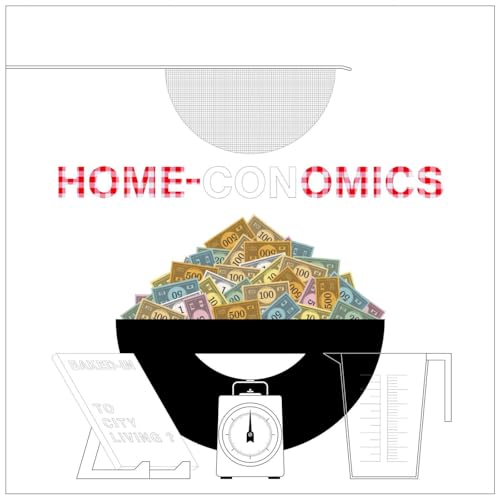
  • Negroni Talks #54 - HOME ECONOMICS: Short Term Gain or Longer Term Pain?
    Aug 28 2025


    HOME ECONOMICS: Short Term Gain or Longer Term Pain?

    The City has always maintained a duality as a permanent place of impermanence, with the perpetual comings and goings of buildings, people and concerns. Yet within this state of flux individuals of all backgrounds have consistently managed to find for themselves a sense of rootedness and community, despite the anonymity of strangers or how temporal the environment may be.

    However, there is an increasing sense that the modern city is failing to provide for many of its residents and that in the competitive global marketplace, it has concentrated more on making itself attractive for the foreign investor and the tourist dollar. With regulation and restriction seen for decades as detrimental to economic prosperity, has civic governance around the world ignored the costs of living in the city for its own citizens?

    We’re witnessing a profound shift in how urban housing is conceived, valued and occupied, which is raising urgent questions about equity, belonging and the future of neighbourhood. Airbnb exemplifies how much homes have been turned into a highly profitable commodity, whereby the urban realm is being reshaped to suit the needs of the temporary occupier on a permanent vacation. As landlords, investors and developers chase commitment free and easier made profits, the traditional notion of the home as a stable, secure and private sanctuary is giving way to something far more precarious. This model of housing is no longer seen as good for business, so build to rent, short-term tenancy’s, co-living and student housing abound.

    Recently, in reaction to these trends, cities such as Barcelona have begun to fight back, phasing out short-term lets by 2028 in a bid to rescue housing from the grip of tourism. In New York, a de facto ban on most Airbnb’s has led to a dramatic drop in listings, but with little sign that general housing affordability has improved, prompting a deeper reckoning with the structural forces at play. Meanwhile, in the UK and beyond, housing benefit claimants and asylum seekers are expensively warehoused in hotels and B&B’s – the extreme end of a system built around temporary occupation.

    What does it mean when our built environment is designed as an asset that needs to extract as much money from people as possible? Can we create neighbourhoods that are affordable and truly lived-in when homes are treated first and foremost as revenue streams? And how has this shift altered the role of the architect, planner and policymaker; forced to design for churn rather than community?

    The lifeblood of a city relies on all demographics of society and those millions of day-to-day transactions that people make through organisations, professions, services, institutions and the arts, in which everyone offers their contribution toward the culture of a place. So where is the offer of ‘the fairly-priced’ in today’s housing system? And what kind of city are we really building when no one can afford to stay?

    Featuring:

    Rob Fiehn & Huw Williams (chair)
    Yolande Barnes, University College London
    Riëtte Oosthuizen, HTA Desig
    David Perez, Ackroyd Lowrie
    Stephen Porter, Here Residential
    Chris Bailey, Action on Empty Homes
    and all others who want to contribute…..

    Mostra di più Mostra meno
    1 ora e 40 min
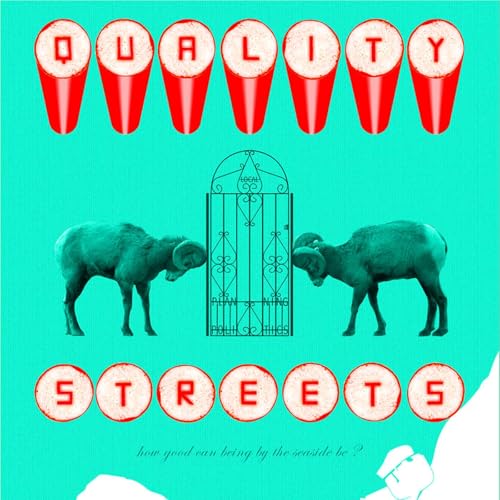
  • Negroni Talks #S18 - Quality Streets: How To Ensure That Ramsgate’s Future Is Sweet?
    Jul 16 2025

    Negroni Talks #S18 - Quality Streets: How To Ensure That Ramsgate’s Future Is Sweet?

    Ramsgate is a place on the edge, full of potential and opportunity, but does this really show up in terms of the character of its built environment? Entrepreneurial thinking, initiatives and campaigns from both individuals and groups frequently set sail against the wind of an unstable economy and funding cuts.

    So is there a disconnect between Ramsgate’s creative communities and the quality of the spaces that its local population inhabits? Despite a town alive with the explorations and investigations of makers, thinkers and designers, planning decisions seem to reflect anything but this pioneering spirit. What is standing in the way of better-quality buildings and better-quality place-making that would help the towns heritage break free from past failures and a faded former glory? Who makes the decisions that result in things being the way that they are? Is there a bold vision for the future and a meaningful design review process that interrogates and raises the standard of what is going to be built? Like so many other places throughout Britain, questions about the role of absentee landlords and the induced melancholy of vacant high street units abound. Is the local council with its planning process working against the town it claims to serve? With retrograde moves that look towards reopening Manston Airport and cross channel ferry services from some political quarters, it seems it is time to talk of progressive politics, accountability or maybe worse still corruption?

    As a Royal Port with a rich cultural history apparent in its grand Regency and Victorian architecture, as well as its association with Roman and Viking invasion, Pugin, Van Gogh and St Augustine, how can those intangible but essential values of care, craft and imagination become a central part of Ramsgate’s political and planning agenda? This is about more than aesthetics. It’s about the future of our very being by the seaside and the environment we create for ourselves along the elemental line where land meets water. Rather than seeming to be “coastal towns that they forgot to close down” how we can further reinvigorate them as newly defined places from within?

    Featuring:

    Steve Sinclair & Huw Williams, Fourthspace (chair)
    Councillor Jane Hetherington, Ramsgate Town Council (Newington)
    Scott Grady, Haptic Architects
    Louise Brooks, Ramsgate Space CIC
    Duarte Lobo Antunes, A IS FOR ARCHITECTURE and all others who want to contribute…..

    Mostra di più Mostra meno
    1 ora e 31 min
  • Negroni Talks #53 - Mean-while…. cyclical change or cynical claims in the city?
    Apr 30 2025

    The city continually changes despite its perceived permanence as a place; centuries of temporary inhabitation by all kinds of people passing through a built environment seemingly fixed, yet in continual flux. Buildings go up, buildings come down, buildings get repurposed for different uses and short-lived gaps appear in the landscape, whilst a more persistent emptiness can sometimes inexplicably lie dormant behind hoarding for years on end.

    Vacancy has long been an opportunity to take advantage of disused space and the on-going trend is for “meanwhile use”. The familiar cycle unfolds: pop-ups, creatives and artisans briefly occupy spaces, ticking policy boxes for local councils while property investment waits in the wings. But, for how long and on what terms? Is “meanwhile” itself just more gentrification; profiting from land that’s in limbo while bigger plans take shape? When a site is always considered valuable, no matter its size or state, as a stopgap before inevitable redevelopment, is there an inherent meanness behind meanwhile?

    When every square foot of the city seems to be in the service of finance, what of ‘the subversive’ ever-present throughout its history? Street markets disrupting standard retail prices, hidden workshops, cash-in-hand services in railway arches, squatted buildings, which have been the urban lifeblood. What are we to make of today’s craft beer under-crofts, the colourful timber boxes of the instagram-able food fair, the sameness of the stalls and the converted workplace shipping containers? Do they offer genuine alternatives to the business of property development and architecture? Do they foster a genuine diversity of people, incomes, pursuits, interests and culture or simply repackage consumerism to further boost land value?

    Across Europe, temporary use seems more deeply woven into civic life; it appears to respond to historical, cultural and social fractures in ways that feel organic and community-driven. In the UK, it’s often a strategic tool of economic cycles. But what if we flipped the script? What if slowing down regeneration could lead to a richer, more diverse landscape for not only working or eating out, but also living? Could we see new forms of dwelling and tenure emerge from this liminal state? Could more transient living solutions offer something more radical that addresses our most pressing problems like homelessness and temporary accommodation and in doing so develop a more worthwhile meanwhile?

    There exists a tension between fast and slow, permanent and transient. How might we reclaim the use of the ‘empty’ urban space as something more than just a prelude to profit? How might culture (not capital) shape the city of the future?

    Speakers:

    Steve Sinclair & Rob Fiehn (chair)
    Jan Kattein, Jan Kattein Architects
    Rumi Bose, Urban Design and Placeshaping Consultant
    Eric Reynolds, Urban Space Management
    Tim Lowe, The Lowe Group and all others who want to contribute…..

    Mostra di più Mostra meno
    1 ora e 25 min
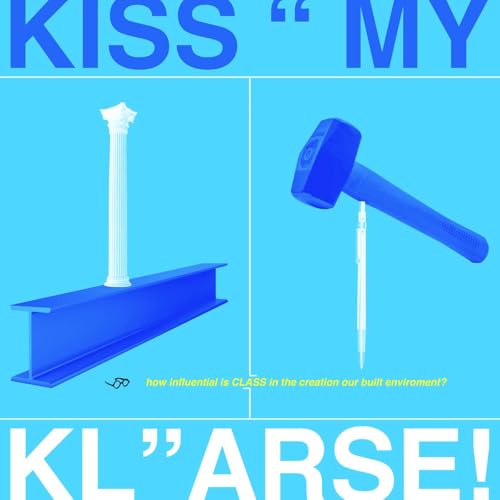
  • Negroni Talks #52 - “Kiss My Kl-arse” : how influential is CLASS in the creation our built environment?
    Mar 17 2025

    As Robert Hughes stated in The Shock Of The New, “In the C19th, Architecture built palaces for the rich, villas for the upper bourgoise, and ceremonial structures for the state.” and “the poor, the invisible ones, they had no architecture. They had slums.”

    Whilst architects in the C20th sought to address this inequality through utopian ideals and design manifestos and often working within the state aparatus, do we find ourselves in a C21st world in which CLASS still remains a prevalent factor in our built environment and if so, what effect does this have on what gets built?

    There seem to be 3 factors at play; the DESIGN of buildings, spaces and places, the DELIVERY of that design and then the question of WHO those designs are actually for, who benefits from them?

    The old argument goes that you can’t design anything by committee. However, DESIGN as a process does raise questions about dialogue, openness and collaboration, and about who is involved, how egalitarian it is and who ultimately decides. What design is and who designers are, puts a spotlight on accessibility and education, from the level of design awareness fostered in children of all ages, to the system of fee-paying university education, the resulting qualifications and how necessary/useful this actually is. One may ask ‘are people from all classes equally represented within the spatial design professions?’ Conversely, one can also ask ‘why would any self respecting person, irrespective of background, choose to go into these professions?’ and finally, do these professions have the imagined controlling influence over what design is anyway?

    The DELIVERY of buildings and our built environment can be characterised as being highly collaborative, but also frequently combative. So what are we to make of a battleground where antagonism can arise from the conflicting agendas of middle class professional, the working class trades, the monied clients and institutions ranging from corporate finance through to the public sector. Who really defines the value, quality and suitability of what gets built? If the traditional view of class is based on income, who makes the money out of building buildings, and are class stereotypes within the Building Industry even accurate or relevant anymore?

    The final question of WHO we are building for, returns us to Robert Hughes and what is the purpose of Architecture if not to serve the interests of people from all sections of society? Does it? The power to shape our cities seems to rest disproportionately in the hands of those whose priorities and lived experiences often differ vastly from the people it impacts. So why don’t we talk more about the ways in which class structures influence not just what gets built, but who gets to make those decisions in the first place?

    This discussion will interrogate whether our current built environment is simply a reflection of the UK’s deeply entrenched class hierarchy, and whether this even exists in the way that we think?

    Speakers: TBC

    Steve Sinclair & Huw Williams, fourth_space (chair)
    Faith Locken, We Rise In
    Leanne Cloudsdale, Concrete Communities
    Neil Murphy, TOWN
    Steve Drury, Rooff and all others who want to contribute…..

    Mostra di più Mostra meno
    1 ora e 39 min
  • Negroni Talks #51 - New Towns: (Any) New Ideas?
    Feb 20 2025

    [NOTE: In the opening 18 minutes the recording contains background noise due to technical issues on the night]

    New Towns: (Any) New Ideas?

    The New Town is now old - about a hundred years old. From their roots in the visionary Garden City Movement of Ebenezer Howard, to their mid-20th century iterations like Milton Keynes, they have long been touted as a solution to relieve urban overcrowding and housing shortages. It was hoped they would usher in an era of improved health and prosperity, as these newly-constructed places would combine the best of rural and city life. Their creation was seen as a way to better organise the planning and development of the built envrionment, when compared to the historical nature of cities that grow organically over time, whilst also stimulating economic growth in areas that urgently needed support.

    But as the Labour government revisits the idea of New Towns to tackle today’s housing crisis, we must ask whether they provide the answer to our modern housing needs, or are they destined to become overspill hubs for nearby cities? Can we re-envison them as amazing places to live, complete with schools, hospitals, transport links and thriving communities? Or would it be more practical to focus on building housing within existing towns and suburbs, leveraging their established infrastructure? And what is this call for New Towns within the boundaries of London? Surely that’s just more city!

    There is now a geographical and economic history to the new town idea, so what becomes of the 21st century version? Should the design of new towns be the same as city or urban design, where there is need to accommodate social and cultural identities, to be mindful of civic realism, to consider infrastructure and amenity, to allow neighbourhoods to more easily connect and interact, and to address the challenges of climate change?

    The past ‘phases’ of new towns merged / expanded upon existing peripheral settlements and relied heavily upon car culture, so does a ‘future phase’ revert back to a sense of Utopian Ideal, or are there more innovative alternatives about the interplay between landscape, region, place, town and city?

    Our panel of speakers, including urban planners, architects, and housing policy experts, will delve into the pros and cons of New Towns. We’ll reflect on whether they’ve delivered on their promises in the past and debate how we should approach the housing crisis of the future.

    Speakers:

    Steve Sinclair & Huw Williams, fourth_space (chair)
    Kathryn Firth, Arup
    Tom Mitchell, Metropolitan Workshop
    Jessica Arczynski, Trowers & Hamlins LLP
    John Nordon, igloo Regeneration Biljana Savic, Ministry of Housing, Communities and Local Government

    and all others who want to contribute….


    Mostra di più Mostra meno
    1 ora e 43 min
  • Negroni Talks #50 - IMBYISM: Objection! Overruled?
    Nov 15 2024

    Around the world tensions often surround the arrival of a new building development, which challenges the status quo and has implications for local people, buildings and the natural environment alike.

    The omnipresent NIMBY ("Not In My Backyard") and a counterpoint that has more recently emerged, the YIMBY ("Yes In My Backyard"), seem to be opposite sides of the same coin in having a great deal to say about proposed changes within our built environment. Both appear to be angered by what they feel as the necessity for change, so what does this tell us about the times we live in and how reasonable are their respective positions of Objection or Support?

    Do they highlight a lack of confidence, a fear and distrust in our democratic systems? Are they expressive of a genuine concern for the common good? Or are they equally illustrative of a self-interest that has hounded human civilisation throughout history?

    If everyone can be deemed to be a nimby at some level, then the reasoning and motivation behind ‘objecting’ comes into focus. Questions can also be raised about who objects and whether class/ethnicity/social standing play a part in whose voices get heard and whether broader society is being served? If some people tend to object to change irrespective of the proposals being made, then how much consideration should these objections get? Or….should the case for change simply be made in a better, more sympathetic and more convincing way?

    In turn, whilst the NIMBY may well stifle progress in pursuit of Preservation, is the YIMBY not in danger of enthusiastically endorsing Progress whilst overlooking the actual consequences and impact of change?

    Britain is a conservative country with a conflict between the country and the city, so how progressive can a vision of a future Britain really be? With its mythologies of a picturesque past blighted by decades of failure in experimenting with our built environment, would more purposefully addressing people’s concerns / needs lead to better development that is more readily accepted?

    We'll explore the social, cultural, economic, and political implications of this stand-off, and what it means for the future of our cities, towns and villages.

    Speakers:

    fourth_space (chair) Daisy Froud, Community Engagement Strategist
    Patricia Brown, Central
    Leo Hammond, Haringey Council
    Hazel Joseph, AHMM Phineas Harper, Design Council Homes Taskforce and all others who want to contribute….

    Mostra di più Mostra meno
    1 ora e 43 min