Negroni Talks copertina

Negroni Talks

Negroni Talks

Di: Fourth_space
Ascolta gratuitamente

3 mesi a soli 0,99 €/mese

Dopo 3 mesi, 9,99 €/mese. Si applicano termini e condizioni.

A proposito di questo titolo

Provocative and irreverent architectural talk series hosted in East London by Straight Talking Architecture Practice Fourth_spaceAll rights reserved Arte
  • Negroni Talks #55 - Architecture As Algorithm: The Demise of Design?
    Oct 17 2025

    Architecture As Algorithm: The Demise of Design?

    As AI storms the gates of the architectural profession, building designers like many other creatives are rightfully asking: “are we already halfway to being replaced?” If intelligence is artificial and algorithms are filtering and fucking with our view of reality, then what is the truth about the future of architects and architecture?

    With computers now used to quickly generate fantastical buildings with multiple options and easily made mashups of any ‘style’, there are the obvious questions of authenticity, authorship and surface imagery over core ideology. In a more prosaic manner, AI soon may well be able to ‘create’ buildings based on a whole range of criteria, be that the constraints imposed by planning policies, building regulations, lowering build costs, meeting performance accreditation and ensuring the basic practicalities of use. However, is there really much difference between the novelty of neural networks and the long-standing systemisation of the design process through Building Information Modelling (BIM) software used by the profession? And is this rules-based order where a problem lies?

    Architects find themselves cornered not only by the machines that threaten to replace them, but by their fellow human beings, who upon looking around at the anonymous sameness within the contemporary built environment, could be forgiven for asking whether the profession has opened the door to its own obsolescence?

    When investment driven metrics deem that the ideal building form is that of extruding the site footprint skyward into as many stories as possible, then does a culture of repetitious templating and unitised, risk-adverse design feed a crisis of confidence/courage in Architects and The Public alike? Does anyone believe that the profession will be able to deliver truly humane and inspiring places for a future world?

    In providing a service do architects end up in servitude? Many will see their main utility as an enabler, but in looking to ‘be as useful as possible’ have they in turn become a tool and a means to an end - and if so, to what end? They maybe all tooled up, but are they able to use their full imagination and skill-set?

    At a time when, more than ever, we desperately need alternatives and lateral thinking to bring about change, is the revitalisation of the more romantic role of architect as a principled visionary and revolutionary increasingly necessary to advance and progress building design in a meaningful way? And will AI be put to work on this task?

    At the heart of these questions is something seen throughout the history of technological progress since ‘the inventions’ of fire and the wheel. Humankind has continually created new tools and techniques to open-up the field of possibility. Technology is about achieving practical goals. If AI can do things quicker, more calculatingly and uncompromised by the human element, then does this suggest that we humans should be concentrating more on what the goals should be, if we are to ensure we better address the issues and concerns manifest in our built environment?

    Featuring:

    Rob Fiehn & Huw Williams, Fourthspace (chair)
    Jay Morton, Bell Phillips
    William Mann, Witherford Watson Mann
    Adrienne Lau, Heatherwick Studio
    Eva Magnisali, DataForm Lab
    Fernando Ruiz, Arup (replacement of Giulio Antonutto) and all others who want to contribute…..

    Mostra di più Mostra meno
    1 ora e 29 min
  • Negroni Talks #S19 - Keepin’ It Up: What Does It Actually Mean For A Building To Perform?
    Sep 30 2025

    The building industry has a huge impact in the context of carbon emissions, energy consumption and climate change. Whilst ‘adaptive reuse’ has become a buzzword with louder calls for upgrading, renovating and converting existing buildings instead of creating more new buildings, a culture of demolition persists.

    With new-build being seen as an easier way to meet increasingly demanding requirements, how can we really improve the overall performance of our built environment if we don’t address the inefficiencies and wastage associated with the dated fabric of our existing building stock throughout the nation? Equally, do we truly value the qualities that existing buildings offer: embodied energy, cultural memory, material richness, spatial character and social continuity?

    With the architecture and construction industries consumed by chasing accreditation, tick-box targets and marketable metrics, we should ask ourselves whether we remain clear-eyed and focused on empirical data? Are we in danger of over-complicating things and losing sight of those first principles found within indigenous buildings over millennia? Additionally, are the very criteria by which we measure how well a building performs too narrow in scope?

    Understandably there is a great deal of importance placed upon ‘being green’ and being good on (that other curious term) ‘sustainability’. But what if a high-performance building with progressive material credentials, also creates problems in other areas such as furthering social inequality? What happens if we consider that causing environmental harm is more nuanced than the notion of artificial buildings sat within a natural world?

    A building’s very existence has implications and consequences. Whilst some will benefit others can become disadvantaged. Should its performance then be deemed to be purely a technical issue, or do we need to consider what else it is doing be that locally, communally, socially, economically, politically, culturally, historically, naturally, emotionally, psychologically, metaphysically?

    How Performative is Building Performance?

    Featuring:

    Rob Fiehn & Huw Williams (chair)
    Wolf Mangelsdorf, Buro Happold
    Becci Taylor, Arup
    Rod Heyes, Architectural Association
    Neal Shasore, Architectural Heritage Fund and all others who want to contribute…..

    Mostra di più Mostra meno
    49 min
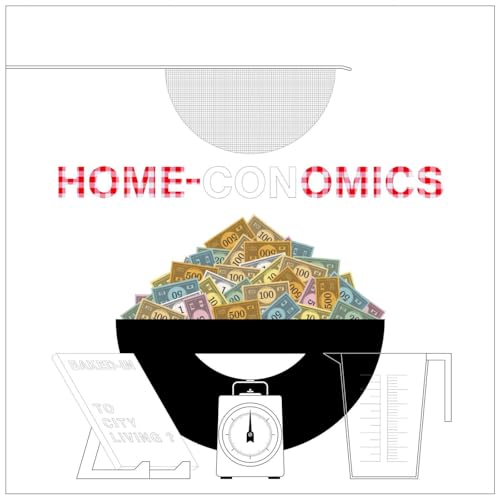
  • Negroni Talks #54 - HOME ECONOMICS: Short Term Gain or Longer Term Pain?
    Aug 28 2025


    HOME ECONOMICS: Short Term Gain or Longer Term Pain?

    The City has always maintained a duality as a permanent place of impermanence, with the perpetual comings and goings of buildings, people and concerns. Yet within this state of flux individuals of all backgrounds have consistently managed to find for themselves a sense of rootedness and community, despite the anonymity of strangers or how temporal the environment may be.

    However, there is an increasing sense that the modern city is failing to provide for many of its residents and that in the competitive global marketplace, it has concentrated more on making itself attractive for the foreign investor and the tourist dollar. With regulation and restriction seen for decades as detrimental to economic prosperity, has civic governance around the world ignored the costs of living in the city for its own citizens?

    We’re witnessing a profound shift in how urban housing is conceived, valued and occupied, which is raising urgent questions about equity, belonging and the future of neighbourhood. Airbnb exemplifies how much homes have been turned into a highly profitable commodity, whereby the urban realm is being reshaped to suit the needs of the temporary occupier on a permanent vacation. As landlords, investors and developers chase commitment free and easier made profits, the traditional notion of the home as a stable, secure and private sanctuary is giving way to something far more precarious. This model of housing is no longer seen as good for business, so build to rent, short-term tenancy’s, co-living and student housing abound.

    Recently, in reaction to these trends, cities such as Barcelona have begun to fight back, phasing out short-term lets by 2028 in a bid to rescue housing from the grip of tourism. In New York, a de facto ban on most Airbnb’s has led to a dramatic drop in listings, but with little sign that general housing affordability has improved, prompting a deeper reckoning with the structural forces at play. Meanwhile, in the UK and beyond, housing benefit claimants and asylum seekers are expensively warehoused in hotels and B&B’s – the extreme end of a system built around temporary occupation.

    What does it mean when our built environment is designed as an asset that needs to extract as much money from people as possible? Can we create neighbourhoods that are affordable and truly lived-in when homes are treated first and foremost as revenue streams? And how has this shift altered the role of the architect, planner and policymaker; forced to design for churn rather than community?

    The lifeblood of a city relies on all demographics of society and those millions of day-to-day transactions that people make through organisations, professions, services, institutions and the arts, in which everyone offers their contribution toward the culture of a place. So where is the offer of ‘the fairly-priced’ in today’s housing system? And what kind of city are we really building when no one can afford to stay?

    Featuring:

    Rob Fiehn & Huw Williams (chair)
    Yolande Barnes, University College London
    Riëtte Oosthuizen, HTA Desig
    David Perez, Ackroyd Lowrie
    Stephen Porter, Here Residential
    Chris Bailey, Action on Empty Homes
    and all others who want to contribute…..

    Mostra di più Mostra meno
    1 ora e 40 min
Ancora nessuna recensione