Episodi

  • S2E12: AI-Powered Prior Auth Live On All EHRs | HealthTech2Care Podcast With Bert Fernandez
    May 27 2026

    HealthTech2Care (HT2C) Podcast featuring Nicolas ("Nico") Kernick, Head of Growth and Operations at Develop Health

    Nico Kernick (Guest):
    🔗 LinkedIn: https://www.linkedin.com/in/nicolas-kernick-56733445

    🌐 Website: https://www.develophealth.ai

    📺 YouTube: http://www.youtube.com/@Develop-Health

    Bert Fernandez (Host):
    🔗 LinkedIn: https://www.linkedin.com/in/bert-fernandez

    🌐 Website: https://www.healthtech2care.com
    📺 YouTube: https://www.youtube.com/@healthtech2care

    🎙️ In this episode, Nico Kernick shares how Develop Health is reducing the friction around prior authorization through AI-powered workflows embedded directly into provider workflows across modern EHR systems.

    We unpack why prior auth remains such a painful operational burden across healthcare, how AI workflows are now automating much of the back-and-forth between providers, pharmacies, PBMs, and payers, and why Develop Health believes the biggest challenge is no longer the AI itself, but the integrations and workflows surrounding it.

    Nico also explains how Develop Health grew from serving digital health companies to supporting provider groups, specialty clinics, FQHCs, and large health systems, while integrating across all EHRs through APIs and RPA workflows.

    This conversation explores what practical, embedded healthcare AI adoption actually looks like today.

    ⏱️ Timestamps:

    00:00 Intro

    00:33 Intro

    0:47 Nico's background and what pulled him into healthcare/prior auth

    3:30 How Develop Health is solving prior auth friction differently

    7:35 How Develop handles different EHR workflows and integrations

    10:22 Why now? What's driving market demand and urgency

    15:13 Success with Athenahealth and Oracle/Cerner + lessons learned

    17:46 How digital health shaped their EHR integration strategy

    21:08 Expansion into the Epic ecosystem and why it matters

    25:17 What Epic health systems can expect working with Develop Health

    28:41 How providers and health systems can engage with Develop Health

    🔑 Highlights:

    • Why prior auth friction creates major operational burden
    • How AI workflows automate forms, lab parsing, and PBM routing

    • The importance of embedding AI directly into provider workflows

    • How Develop Health integrates across modern EHR workflows

    • How providers can adopt AI without changing existing workflows

    👉 Learn more about Develop Health's AI-powered prior authorization product for healthcare: https://www.develophealth.ai

    🔔 Subscribe to the HealthTech2Care YouTube channel for more in-depth conversations with healthcare innovators: https://www.youtube.com/@healthtech2care

    #HealthcareAI #PriorAuthorization #HealthTech #DigitalHealth #athenahealth #Epic #OracleHealth

    Mostra di più Mostra meno
    31 min
  • S2E11: Flip's Voice AI Growth From Retail to Healthcare | HT2C Podcast With Bert Fernandez
    Apr 29 2026

    HealthTech2Care (HT2C) Podcast featuring Brian Schiff, Co-Founder & CEO of Flip.

    Brian Schiff (Guest):

    🔗 LinkedIn: https://www.linkedin.com/in/bschiff

    🌐 Website: https://flipcx.com

    📺 YouTube: http://www.youtube.com/@goflipcx

    Bert Fernandez (Host):

    🔗 LinkedIn: https://www.linkedin.com/in/bert-fernandez

    🌐 Website: https://www.healthtech2care.com

    📺 YouTube: https://www.youtube.com/@healthtech2care

    🎙️ In this episode, Brian Schiff shares how Flip evolved from early voice AI experiments in retail to a scaled platform serving 250+ brands and hundreds of millions of phone calls, including household names like Tory Burch and Under Armour.

    We unpack what triggered Flip's move into healthcare, why urgent care became the ideal entry point, and how the team scaled from a small pilot to thousands of clinics in under two years.

    Brian also breaks down the "phone problem" in healthcare, where 30–40% of calls go unanswered, and explains how replacing traditional IVRs with AI can improve patient experience, reduce missed visits, and ease pressure on front desk staff.

    This conversation highlights why voice AI is one of the fastest, lowest-friction ways for healthcare organizations to start adopting AI and drive immediate, measurable impact.

    ⏱️ Timestamps:

    00:00 Intro

    00:52 Brian's background and how Flip evolved from early voice AI to today

    03:02 Move from retail to healthcare and what triggered the shift

    07:33 What Flip saw in healthcare that others were missing

    13:58 The phone problem in healthcare and what actually changes when replacing IVRs with AI

    18:00 Why urgent care was the right entry point and why adoption happened quickly

    22:02 Implementation vs reality and why Flip is easier to deploy (including integrations)

    26:06 Expanding beyond urgent care and what makes a specialty a good fit

    28:41 Inbound and outbound communication across the patient journey

    32:04 How to engage with Flip and what to have prepared

    🔑 Highlights:

    - Why voice AI adoption is accelerating in healthcare

    - The 30–40% missed call problem in urgent care

    - How call-to-visit conversion impacts revenue and access

    - Why Flip's industry-specific approach drives faster adoption

    - The opportunity to automate both inbound and outbound patient communication

    👉 Learn more about Flip's voice AI product for Retail eCommerce, Transportation, and Healthcare Brands: https://flipcx.com

    🔔 Subscribe to the HealthTech2Care YouTube channel for more in-depth conversations with healthcare innovators: https://www.youtube.com/@healthtech2care

    #VoiceAI #HealthTech #PatientExperience #DigitalHealth #HealthcareInnovation #AI

    Mostra di più Mostra meno
    34 min
  • S2E10: AI Adoption + Governance in Regulated Industries | HT2C Podcast With Bert Fernandez
    Apr 1 2026

    HealthTech2Care (HT2C) Podcast featuring Marco Smit, Chief Commercial Officer (CCO) & COO of DomeLabs AI, which includes the ClearPath platform.

    Marco Smit (Guest):

    🔗 LinkedIn: https://www.linkedin.com/in/marco-smit-ai

    🌐 Website: http://domelabs.ai

    Bert Fernandez (Host):

    🔗 LinkedIn: https://www.linkedin.com/in/bert-fernandez

    🌐 Website: https://www.healthtech2care.com

    📺 YouTube: https://www.youtube.com/@healthtech2care

    🎙️ In this episode, Marco Smit shares how organizations in healthcare, pharma, and other regulated industries are approaching AI adoption, and why treating AI as an IT problem is one of the biggest mistakes being made today.

    We unpack what's driving bottlenecks in AI implementation, including real-world examples where evaluating and deploying a new AI use case can take up to 8 months, and how that delay leads to shadow AI and increased risk.

    Marco also explains how DomeLabs AI's ClearPath platform helps organizations move from slow, fragmented approval cycles to more structured, scalable AI governance, while balancing speed, compliance, and risk.

    This conversation explores what it actually takes to turn AI potential into real-world impact in regulated environments.

    ⏱️ Timestamps:

    00:00 Intro

    01:18 What drew Marco to DomeLabs, and why this was the right moment to make the move

    05:07 Biggest misconceptions about GenAI and agentic AI in healthcare and life sciences

    08:52 What ClearPath actually does and what problems it solves

    15:47 What it takes to turn AI potential into results from a governance perspective

    23:41 How real the job displacement threat is and what employees should do

    30:06 Whether open-source AI is a legitimate concern and how to handle it

    36:02 Where people can learn more about DomeLabs and connect

    🔑 Highlights:

    - Why AI should be treated as a business transformation, not an IT project

    - How long AI approval cycles create bottlenecks and risk

    - The rise of shadow AI in regulated organizations

    - How governance and control layers accelerate adoption

    - What organizations need to do now to stay competitive with AI

    👉 Learn more about Domelabs AI (http://domelabs.ai)

    🔔 Subscribe to the HealthTech2Care YouTube channel for more in-depth conversations with healthcare innovators: https://www.youtube.com/@healthtech2care

    #HealthTech #HealthcareAI #AIGovernance #AgenticAI #LifeSciences #DigitalTransformation

    Mostra di più Mostra meno
    40 min
  • S2E9: Fixing Contracting Upstream in Healthcare | HealthTech2Care Podcast With Bert Fernandez
    Mar 23 2026

    HealthTech2Care (HT2C) Podcast featuring Danielle Haugland, Sr. Director of Global Alliances at Agiloft

    Danielle Haugland (Guest):
    🔗 LinkedIn: https://www.linkedin.com/in/danielle-haugland-67473a39
    🌐 Website: https://www.agiloft.com
    📺 YouTube: www.youtube.com/@Agiloft

    Bert Fernandez (Host):
    🔗 LinkedIn: https://www.linkedin.com/in/bert-fernandez
    🌐 Website: https://www.healthtech2care.com
    📺 YouTube: https://www.youtube.com/@healthtech2care

    🎙️ In this episode, Danielle Haugland shares how her background in commercial litigation shaped her perspective on contracts, and why by the time a contract becomes a legal issue, the operational damage has already been done.

    We discuss why healthcare systems are rethinking contract lifecycle management as a core operational lever, especially amid reimbursement pressure, rising costs, and financial strain across provider organizations.

    Danielle also walks through real-world examples, including Agiloft's work with Rush University Medical Center, where fragmented workflows, long approval timelines, and process workarounds were replaced with centralized, structured contracting that improved speed, visibility, and control.

    This conversation highlights how fixing contracting upstream can reduce risk, improve financial discipline, and create more resilient healthcare operations.

    ⏱️ Timestamps:

    00:00 Intro

    01:09 What Danielle's litigation background taught her about what goes wrong with contracts

    04:45 What pressures are driving provider organizations to get a better handle on CLM

    09:47 What happened in the Rush University Medical Center case study and what outcomes came from fixing CLM upstream

    14:43 Why it is so difficult for health systems to fix this with their existing stack

    17:36 Why centralization matters in disruptions and how it helped organizations like Children's National respond

    22:03 Why configurability matters in CLM and how Agiloft addresses the nuance across provider organizations

    26:00 What common sticking points keep coming up and how Agiloft helps address them in the platform

    30:26 What other provider use cases come up beyond payer contracting and where CLM fits operationally

    33:47 How providers should engage Agiloft and what they should have prepared before starting the conversation

    35:43 Whether Agiloft itself provides audits or works through partners

    🔑 Highlights:

    -Why most contract issues start as operational problems, not legal ones

    -How healthcare systems can use contracting as a financial lever

    -The impact of fragmented workflows and long approval timelines

    -Results from centralizing and restructuring contracting processes

    -Why centralization is about resilience, not bureaucracy

    👉 Learn more about Agiloft (https://www.agiloft.com)

    🔔 Subscribe to the HealthTech2Care YouTube channel for more in‐depth conversations with healthcare innovators: https://www.youtube.com/@healthtech2care

    #CLM #HealthcareAI #HealthcareOperations #Procurement #RevenueCycle #DigitalTransformation

    Mostra di più Mostra meno
    38 min
  • S2E8: Closed-Loop Platform for Research + Conversational Agents | HT2C Podcast with Bert Fernandez
    Feb 17 2026

    HealthTech2Care (HT2C) Podcast featuring Amir M. Rahmani, Professor at UC Irvine and Co-Founder of Integrated AI Systems, which includes Centralive (Closed-Loop Platform for Clinical Research) and openCHA (Conversational Health Agents).

    In this episode, Amir M. Rahmani shares how his background in computer science, IoT, and digital health research led to building platforms designed for real-world clinical research and patient engagement. He explains why so many research teams end up reinventing the wheel with every new grant, and why platforms often disappear once funding runs out.

    We also cover how Centralive and openCHA address this problem by providing reusable, modular infrastructure for data capture, real-time sensing, analytics, and intervention. Amir breaks down the idea of "closed-loop" systems using simple analogies, like cruise control and navigation, to explain why continuous sensing, sense-making, and action are critical for personalization in healthcare.

    This conversation explores how conversational health agents fit into closed-loop workflows, why large language models alone are often overkill for healthcare problems, and how agents can orchestrate evidence-based knowledge, validated models, and real patient data. Amir also shares how these platforms are being used across academia, RPM programs, decentralized trials, and digital therapeutics, along with what kinds of partners and pilots he's looking for next.

    Timestamps:

    00:00 Intro

    01:05 What pulled Amir into healthcare tech, and how it led to Centralive and openCHA

    04:51 What problems in academic research led to productizing Centralive

    09:48 What makes Centralive different and how it simplifies sensing, EMAs, analytics, and interventions

    16:02 How study teams adopt Centralive and what the grant-driven adoption path looks like

    20:28 What inspired openCHA and how it supports workflows like RPM, research, and decentralized trials

    30:34 What partners and opportunities Amir is looking for across Centralive and openCHA

    34:12 Best way to get in touch or try Centralive and openCHA

    Highlights:

    - Why do most research platforms disappear when a grant ends

    - How closed-loop systems enable real-time personalization

    - The difference between static workflows and adaptive interventions

    - Why conversational agents need evidence, not just LLMs

    - Where closed-loop platforms and agents fit in clinical research, RPM, and DTx

    Learn more about Centralive (https://centralive.health) and openCHA (https://www.opencha.com)

    Amir M. Rahmani (Guest):

    🔗 LinkedIn: https://www.linkedin.com/in/amir-m-rahmani-26555b44

    🌐 Website: https://centralive.health

    📺 YouTube: http://www.youtube.com/@CentraliveTeam

    Bert Fernandez (Host):

    🌐 Website: https://www.healthtech2care.com

    🔗 LinkedIn: https://www.linkedin.com/in/bert-fernandez

    📺 YouTube: https://www.youtube.com/@HealthTech2Care

    Subscribe to the HealthTech2Care YouTube channel for more in‐depth conversations with healthcare innovators

    #DigitalHealth #ClinicalResearch #ClosedLoop #HealthcareAI #ConversationalAI #RemotePatientMonitoring #HealthTech

    Mostra di più Mostra meno
    38 min
  • S2E7: The First On-Device Medical LLM | HealthTech2Care Podcast With Bert Fernandez
    Jan 15 2026

    HealthTech2Care (HT2C) Podcast featuring Stephen Rouse, Co-Founder and Head of Growth at Savva.AI Stephen Rouse In this episode, Stephen Rouse shares how his experience building one of the earliest FHIR apps shaped Savva's approach to consumer health technology. We unpack why multi-year hospital buy cycles pushed the team to build directly for patients, how the ONC Cures Act unlocked large-scale access to health data, and why Savva chose to build the first on-device medical LLM to prioritize privacy and security.

    We also cover how Savva connects to nearly 300,000 care sites through 110+ EHRs, why keeping medical AI off the cloud matters, how Apple Health enables aggregation across wearables and devices, and how caregiver and clinician access could become a stepping stone toward real-world care escalation.

    This conversation explores what it truly means for patients to own their health data and why this moment feels like a turning point for consumer-driven healthcare.

    Timestamps:

    00:00 Intro

    01:17 Lessons from Protocol First and why hospital sales cycles pushed a consumer-first approach

    03:44 How Savva unlocked scale through the ONC Cures Act and FHIR access

    05:42 What it means to be an on-device medical LLM and why privacy drove that decision

    08:51 How Savva aggregates wearable and Apple Health data into one experience

    12:30 The caregiver and clinician vision for real-world care delivery

    16:41 Beta strategy, early traction, and what's next for Savva

    🔑 Highlights:

    - Why four-year hospital buy cycles pushed Savva to build for consumers

    - How the ONC Cures Act enabled third-party access to EHR data at scale

    - What makes an on-device medical LLM different from cloud-based AI

    - How Savva aggregates wearables, apps, and devices through Apple Health

    - The role of caregivers and clinicians in turning raw data into action

    (Guest):

    🔗 LinkedIn: https://www.linkedin.com/in/rousestephen

    🌐 Website: https://www.savva.ai

    📺 YouTube: http://www.youtube.com/@getSavva

    Bert Fernandez (Host):

    🌐 Website: https://www.healthtech2care.com

    🔗 LinkedIn: https://www.linkedin.com/in/bert-fernandez

    📺 YouTube: https://www.youtube.com/@HealthTech2Care

    🔔 Subscribe to the HealthTech2Care YouTube channel for more in‐depth conversations with healthcare innovators: https://www.youtube.com/@HealthTech2Care

    #HealthTech #DigitalHealth #HealthcareAI #ConsumerHealthApp #PatientData #PrivacyByDesign #FHIR #ONCCuresAct

    Mostra di più Mostra meno
    31 min
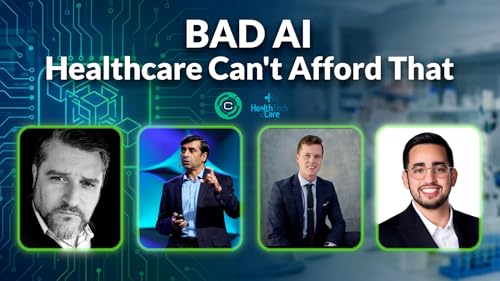
  • S2E6: Bad AI–Healthcare Can't Afford That | Around the Block With Special Guest Host Bert Fernandez
    29 min
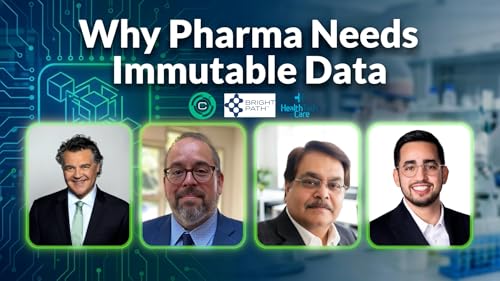
  • S2E5: Why Pharma Needs Immutable Data | Around the Block With Special Guest Host Bert Fernandez
    Jan 18 2026

    Around the Block Podcast by Circular Protocol featuring the Bright Path Laboratories Team, with Special Guest Host Bert Fernandez (Host of the HealthTech2Care Podcast).

    In this episode, the Bright Path Laboratories Team shares why the U.S. pharmaceutical supply chain remains heavily dependent on offshore manufacturing for essential medicines and generic drugs, and why data integrity matters when patients' lives depend on the medicines they take.

    We unpack how Bright Path's patented continuous-flow Spinning-Tube-in-Tube (STT) Reactor™ enables safer, more sustainable, and more cost-effective production of small-molecule drugs in the U.S., and why continuous manufacturing changes the economics of pharma.

    The conversation also explores how machine learning and blockchain are being used together to create immutable manufacturing data, providing proof of trust for regulators, partners, and ultimately patients.

    Highlights:

    - Why immutable data is critical for pharmaceutical manufacturing

    - How offshore API dependence impacts quality, cost, and resilience

    - What continuous-flow chemistry enables that batch manufacturing cannot

    - The role of ML in monitoring drug production in real time

    - Why blockchain matters for trust, traceability, and compliance

    Timestamps:

    00:00 Intro

    01:06 What does sustainable small-molecule pharma manufacturing mean at Bright Path, and what makes your approach different?

    04:03 Why focus on small-molecule generics and onshoring drug manufacturing in the US?

    06:55 What personally drew you to this mission and to working on cleaner, more responsible chemistry?

    13:14 How are you thinking about decentralized systems and proof of trust in pharma manufacturing?

    18:37 Why did you choose Circular's Layer-1 blockchain over other blockchain options?

    22:52 Where is this all headed, and what does the future of drug manufacturing look like with these technologies?

    Guests: Tony Quinones (CEO):

    🔗 LinkedIn: https://www.linkedin.com/in/tquinones

    🌐 Website: https://brightpathlabs.com

    Michael A. Gonzalez, PhD (Chief Scientific Officer):

    🔗 LinkedIn: https://www.linkedin.com/in/michael-a-gonzalez-ph-d-5398276

    Ajaz Hussain, PhD (Strategic Advisor)

    🔗 LinkedIn: https://www.linkedin.com/in/ajazshussain

    Special Guest Host:

    Bert Fernandez (Founder, HealthTech2Care)

    🔗 LinkedIn: https://www.linkedin.com/in/bert-fernandez

    🌐 Website: https://www.healthtech2care.com

    📺 YouTube: https://www.youtube.com/@HealthTech2Care

    Learn more about Bright Path Laboratories: https://brightpathlabs.com

    and Circular Protocol: https://circularlabs.io

    🔔 Subscribe to the HealthTech2Care YouTube channel for more in-depth conversations with healthcare and life sciences innovators: https://www.youtube.com/@HealthTech2Care

    #PharmaManufacturing #ImmutableData #SmallMoleculeDrugs #LifeSciences #Blockchain #SupplyChain #HealthcareInnovation

    Mostra di più Mostra meno
    27 min