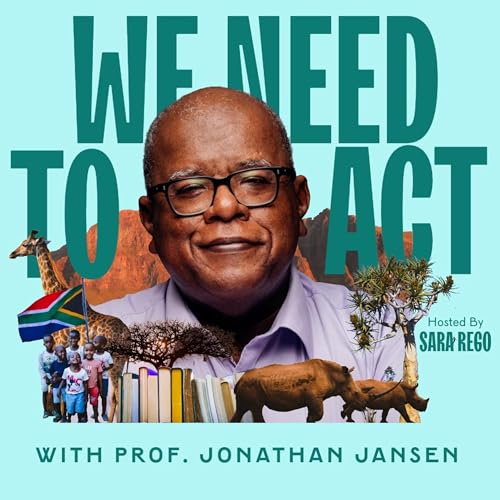
We Need to Act copertina

We Need to Act

We Need to Act

Di: Sara Rego
Ascolta gratuitamente

A proposito di questo titolo

We Need to Act, hosted by Dr. Sara Rego, dives into the biggest questions shaping our planet’s future. From climate change and biodiversity loss to social justice and environmental degradation, each episode unpacks what sustainability really means. Through candid conversations with activists, scientists, Indigenous leaders, entrepreneurs, and policymakers, we explore the roots of today’s crises—and the bold actions needed to build a just, resilient, and regenerative world.Sara Rego Scienze sociali
  • Season 2 | Ep. 43 - Voices from the Arctic: Inuit Leadership in Global Change with Dr. Sara Olsvig
    Jan 29 2026

    In this episode of the We Need to Act podcast, we are honored to welcome Sara Olsvig, Chair of the Inuit Circumpolar Council (ICC), representing around 180,000 Inuit across Alaska, Canada, Greenland, and Russia.

    Sara shares her experience leading the global Inuit voice in international forums such as the United Nations, the Arctic Council, and the International Maritime Organization. She explains why Inuit and Indigenous peoples must be at the center of decisions about the Arctic, climate change, biodiversity, and resource governance — guided by the principle “nothing about us without us.”

    The conversation explores the Inuit relationship with nature, climate change impacts in the Arctic, environmental protection versus resource extraction, and the human rights dimensions of pollution and biodiversity loss. Sara also addresses current geopolitical tensions surrounding Greenland, the legacy of colonization, self-determination, and why there is “no such thing as a better colonizer.”

    Finally, she reflects on resilience, hope, and the importance of multilateral cooperation, Indigenous knowledge, and respect for Arctic peoples in shaping a just and sustainable future.

    🎧 A powerful and eye-opening conversation on climate justice, Indigenous rights, and the future of the Arctic.


    Episode Highlights

    • Sara Olsvig, Chair of the Inuit Circumpolar Council, on representing Inuit across Alaska, Canada, Greenland, and Russia

    • The Arctic as a lived environment, not an empty ice desert

    • Why Inuit and Indigenous peoples must be part of all decisions affecting their lands and waters

    • The Arctic warming three to four times faster than the global average

    • Climate change and pollution as human rights issues

    • Tensions between environmental protection, resource extraction, and Indigenous livelihoods

    • Greenland, self-determination, and resistance to renewed colonial narratives

    • The role of international cooperation and multilateral institutions

    • Inuit resilience, adaptation, and hope for the future


      Please show us your support by...

      • Tune in and subscribe to the We Need to Act podcast via Spotify or Apple Podcasts.
      • Support our show by ⁠⁠⁠⁠⁠⁠⁠⁠⁠⁠⁠buying us a coffee⁠⁠⁠⁠⁠⁠⁠⁠⁠⁠⁠.
      • Join our page on ⁠⁠⁠⁠⁠⁠⁠⁠⁠⁠⁠⁠Instagram⁠⁠⁠⁠⁠⁠⁠⁠⁠⁠⁠⁠ and ⁠⁠⁠⁠⁠⁠⁠⁠⁠⁠⁠⁠LinkedIn⁠⁠⁠⁠⁠⁠⁠⁠⁠⁠⁠⁠
      • Subscribe to our newsletter on our ⁠⁠⁠⁠⁠⁠⁠⁠⁠⁠⁠⁠website⁠⁠⁠⁠⁠⁠⁠⁠⁠⁠⁠⁠


    Mostra di più Mostra meno
    30 min
  • Season 2 | Ep. 42 - Indigenous Agriculture: Lessons From The Hopi Tradition with Michael Kotutwa Johnson
    Jan 21 2026

    In this episode of We Need to Act, host Sara Rego sits down with Michael Kotutwa Johnson, a 250th-generation Hopi farmer and Assistant Professor at the University of Arizona, to explore how Indigenous knowledge can help address today’s climate and food crises.

    Michael explains why industrial agriculture—not climate change alone—is driving soil degradation, biodiversity loss, and water scarcity worldwide. Drawing from thousands of years of Hopi farming traditions, he shares how ancestral seeds, place-based agriculture, and reciprocal relationships with the land create resilience in even the harshest environments.

    The conversation also explores food sovereignty, the health impacts of losing traditional diets, the role of women in matrilineal food systems, and the Hopi Prophecy Rock—offering a powerful reflection on the choice humanity still has between excess and balance.

    This episode is a call to rethink how we grow food, care for the land, and shape our collective future.


    Episode Highlights

    • Indigenous agricultural knowledge offers real solutions to today’s climate and food crises
    • Why industrial agriculture — not climate change alone — is accelerating soil and ecosystem collapse
    • How Hopi ancestral seeds have adapted over generations to thrive in arid environments
    • The role of small, place-based farms in feeding the majority of the world’s population
    • The connection between the loss of traditional diets and rising health crises in Indigenous communities
    • What food sovereignty really means — and why it matters now
    • How matrilineal systems create balance in agriculture and community life
    • The Hopi Prophecy Rock and the choice humanity still has between excess and sustainability
    • Why faith, hope, and planting anyway are acts of resistance and resilience


    Please show us your support by...

    • Tune in and subscribe to the We Need to Act podcast via Spotify or Apple Podcasts.
    • Support our show by ⁠⁠⁠⁠⁠⁠⁠⁠⁠⁠buying us a coffee⁠⁠⁠⁠⁠⁠⁠⁠⁠⁠.
    • Join our page on ⁠⁠⁠⁠⁠⁠⁠⁠⁠⁠⁠Instagram⁠⁠⁠⁠⁠⁠⁠⁠⁠⁠⁠ and ⁠⁠⁠⁠⁠⁠⁠⁠⁠⁠⁠LinkedIn⁠⁠⁠⁠⁠⁠⁠⁠⁠⁠⁠
    • Subscribe to our newsletter on our ⁠⁠⁠⁠⁠⁠⁠⁠⁠⁠⁠website⁠⁠⁠⁠⁠⁠⁠⁠⁠⁠⁠


    Mostra di più Mostra meno
    42 min
  • Season 2 | Ep.41 - Empowering Minds: The Role of Education in Sustainability with Prof. Jonathan Jansen
    Jan 14 2026

    In this enlightening conversation, Professor Jansen discusses his journey from aspiring biochemist to a dedicated educator, emphasizing the importance of teaching as a vocation. He reflects on the impact of colonialism on education and the urgent need for climate change education. The discussion also covers climate justice, the role of AI in education, and the importance of empowering communities through knowledge. Jansen encourages listeners to take local action to create meaningful change in the world.


    Professor Jonathan Jansen is a distinguished professor of education at Stellenbosch University and a former president of the Academy of Science of South Africa. Educated at the University of the Western Cape, Unisa, Cornell University, and Stanford University, he is an internationally recognized scholar and leader in education. A prolific author of over 30 books, including Leading for Change and The Decolonization of Knowledge, Professor Jansen has made seminal contributions to education research, leadership, and public engagement over four decades. His work on race, leadership, and human rights has earned him major international honors, including induction into the American Academy of Arts and Sciences and multiple lifetime achievement awards.


    Takeaways

    • Education is a privilege and a calling.
    • Teaching should inspire joy and connection.
    • Climate change education is essential across all subjects.
    • Local actions can lead to global impacts.
    • Empower communities through education and knowledge sharing.
    • Colonialism still affects education systems today.
    • Climate justice requires global responsibility and action.
    • AI can enhance education if used wisely.
    • Knowledge production is a collaborative effort.
    • We must not be overwhelmed by the challenges we face.


    Please show us your support by...

    • Tune in and subscribe to the We Need to Act podcast via Spotify or Apple Podcasts.
    • Support our show by ⁠⁠⁠⁠⁠⁠⁠⁠⁠buying us a coffee⁠⁠⁠⁠⁠⁠⁠⁠⁠.
    • Join our page on ⁠⁠⁠⁠⁠⁠⁠⁠⁠⁠Instagram⁠⁠⁠⁠⁠⁠⁠⁠⁠⁠ and ⁠⁠⁠⁠⁠⁠⁠⁠⁠⁠LinkedIn⁠⁠⁠⁠⁠⁠⁠⁠⁠⁠
    • Subscribe to our newsletter on our ⁠⁠⁠⁠⁠⁠⁠⁠⁠⁠website⁠⁠⁠⁠⁠⁠⁠⁠⁠⁠


    Mostra di più Mostra meno
    33 min
Ancora nessuna recensione