Episodi

  • Season 2 | Ep. 43 - Voices from the Arctic: Inuit Leadership in Global Change with Dr. Sara Olsvig
    Jan 29 2026

    In this episode of the We Need to Act podcast, we are honored to welcome Sara Olsvig, Chair of the Inuit Circumpolar Council (ICC), representing around 180,000 Inuit across Alaska, Canada, Greenland, and Russia.

    Sara shares her experience leading the global Inuit voice in international forums such as the United Nations, the Arctic Council, and the International Maritime Organization. She explains why Inuit and Indigenous peoples must be at the center of decisions about the Arctic, climate change, biodiversity, and resource governance — guided by the principle “nothing about us without us.”

    The conversation explores the Inuit relationship with nature, climate change impacts in the Arctic, environmental protection versus resource extraction, and the human rights dimensions of pollution and biodiversity loss. Sara also addresses current geopolitical tensions surrounding Greenland, the legacy of colonization, self-determination, and why there is “no such thing as a better colonizer.”

    Finally, she reflects on resilience, hope, and the importance of multilateral cooperation, Indigenous knowledge, and respect for Arctic peoples in shaping a just and sustainable future.

    🎧 A powerful and eye-opening conversation on climate justice, Indigenous rights, and the future of the Arctic.


    Episode Highlights

    • Sara Olsvig, Chair of the Inuit Circumpolar Council, on representing Inuit across Alaska, Canada, Greenland, and Russia

    • The Arctic as a lived environment, not an empty ice desert

    • Why Inuit and Indigenous peoples must be part of all decisions affecting their lands and waters

    • The Arctic warming three to four times faster than the global average

    • Climate change and pollution as human rights issues

    • Tensions between environmental protection, resource extraction, and Indigenous livelihoods

    • Greenland, self-determination, and resistance to renewed colonial narratives

    • The role of international cooperation and multilateral institutions

    • Inuit resilience, adaptation, and hope for the future


      Please show us your support by...

      • Tune in and subscribe to the We Need to Act podcast via Spotify or Apple Podcasts.
      • Support our show by ⁠⁠⁠⁠⁠⁠⁠⁠⁠⁠⁠buying us a coffee⁠⁠⁠⁠⁠⁠⁠⁠⁠⁠⁠.
      • Join our page on ⁠⁠⁠⁠⁠⁠⁠⁠⁠⁠⁠⁠Instagram⁠⁠⁠⁠⁠⁠⁠⁠⁠⁠⁠⁠ and ⁠⁠⁠⁠⁠⁠⁠⁠⁠⁠⁠⁠LinkedIn⁠⁠⁠⁠⁠⁠⁠⁠⁠⁠⁠⁠
      • Subscribe to our newsletter on our ⁠⁠⁠⁠⁠⁠⁠⁠⁠⁠⁠⁠website⁠⁠⁠⁠⁠⁠⁠⁠⁠⁠⁠⁠


    Mostra di più Mostra meno
    30 min
  • Season 2 | Ep. 42 - Indigenous Agriculture: Lessons From The Hopi Tradition with Michael Kotutwa Johnson
    Jan 21 2026

    In this episode of We Need to Act, host Sara Rego sits down with Michael Kotutwa Johnson, a 250th-generation Hopi farmer and Assistant Professor at the University of Arizona, to explore how Indigenous knowledge can help address today’s climate and food crises.

    Michael explains why industrial agriculture—not climate change alone—is driving soil degradation, biodiversity loss, and water scarcity worldwide. Drawing from thousands of years of Hopi farming traditions, he shares how ancestral seeds, place-based agriculture, and reciprocal relationships with the land create resilience in even the harshest environments.

    The conversation also explores food sovereignty, the health impacts of losing traditional diets, the role of women in matrilineal food systems, and the Hopi Prophecy Rock—offering a powerful reflection on the choice humanity still has between excess and balance.

    This episode is a call to rethink how we grow food, care for the land, and shape our collective future.


    Episode Highlights

    • Indigenous agricultural knowledge offers real solutions to today’s climate and food crises
    • Why industrial agriculture — not climate change alone — is accelerating soil and ecosystem collapse
    • How Hopi ancestral seeds have adapted over generations to thrive in arid environments
    • The role of small, place-based farms in feeding the majority of the world’s population
    • The connection between the loss of traditional diets and rising health crises in Indigenous communities
    • What food sovereignty really means — and why it matters now
    • How matrilineal systems create balance in agriculture and community life
    • The Hopi Prophecy Rock and the choice humanity still has between excess and sustainability
    • Why faith, hope, and planting anyway are acts of resistance and resilience


    Please show us your support by...

    • Tune in and subscribe to the We Need to Act podcast via Spotify or Apple Podcasts.
    • Support our show by ⁠⁠⁠⁠⁠⁠⁠⁠⁠⁠buying us a coffee⁠⁠⁠⁠⁠⁠⁠⁠⁠⁠.
    • Join our page on ⁠⁠⁠⁠⁠⁠⁠⁠⁠⁠⁠Instagram⁠⁠⁠⁠⁠⁠⁠⁠⁠⁠⁠ and ⁠⁠⁠⁠⁠⁠⁠⁠⁠⁠⁠LinkedIn⁠⁠⁠⁠⁠⁠⁠⁠⁠⁠⁠
    • Subscribe to our newsletter on our ⁠⁠⁠⁠⁠⁠⁠⁠⁠⁠⁠website⁠⁠⁠⁠⁠⁠⁠⁠⁠⁠⁠


    Mostra di più Mostra meno
    42 min
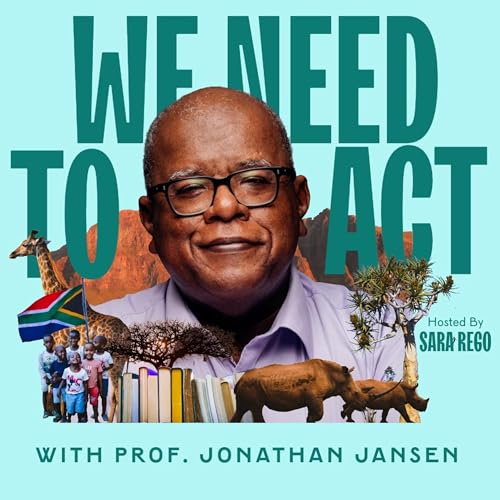
  • Season 2 | Ep.41 - Empowering Minds: The Role of Education in Sustainability with Prof. Jonathan Jansen
    Jan 14 2026

    In this enlightening conversation, Professor Jansen discusses his journey from aspiring biochemist to a dedicated educator, emphasizing the importance of teaching as a vocation. He reflects on the impact of colonialism on education and the urgent need for climate change education. The discussion also covers climate justice, the role of AI in education, and the importance of empowering communities through knowledge. Jansen encourages listeners to take local action to create meaningful change in the world.


    Professor Jonathan Jansen is a distinguished professor of education at Stellenbosch University and a former president of the Academy of Science of South Africa. Educated at the University of the Western Cape, Unisa, Cornell University, and Stanford University, he is an internationally recognized scholar and leader in education. A prolific author of over 30 books, including Leading for Change and The Decolonization of Knowledge, Professor Jansen has made seminal contributions to education research, leadership, and public engagement over four decades. His work on race, leadership, and human rights has earned him major international honors, including induction into the American Academy of Arts and Sciences and multiple lifetime achievement awards.


    Takeaways

    • Education is a privilege and a calling.
    • Teaching should inspire joy and connection.
    • Climate change education is essential across all subjects.
    • Local actions can lead to global impacts.
    • Empower communities through education and knowledge sharing.
    • Colonialism still affects education systems today.
    • Climate justice requires global responsibility and action.
    • AI can enhance education if used wisely.
    • Knowledge production is a collaborative effort.
    • We must not be overwhelmed by the challenges we face.


    Please show us your support by...

    • Tune in and subscribe to the We Need to Act podcast via Spotify or Apple Podcasts.
    • Support our show by ⁠⁠⁠⁠⁠⁠⁠⁠⁠buying us a coffee⁠⁠⁠⁠⁠⁠⁠⁠⁠.
    • Join our page on ⁠⁠⁠⁠⁠⁠⁠⁠⁠⁠Instagram⁠⁠⁠⁠⁠⁠⁠⁠⁠⁠ and ⁠⁠⁠⁠⁠⁠⁠⁠⁠⁠LinkedIn⁠⁠⁠⁠⁠⁠⁠⁠⁠⁠
    • Subscribe to our newsletter on our ⁠⁠⁠⁠⁠⁠⁠⁠⁠⁠website⁠⁠⁠⁠⁠⁠⁠⁠⁠⁠


    Mostra di più Mostra meno
    33 min
  • Season 2 | Ep. 40 - Hope Is Something We Build | Reframing Sustainability: Our 2025 Wrap-Up & the Road to 2026
    Dec 29 2025

    As we close out 2025 and step into 2026, this episode is a moment to pause, reflect, and look ahead.

    In this special year-end wrap-up of We Need to Act, host Sara reflects on the conversations, voices, and lessons that shaped our understanding of sustainability in 2025 — and why sustainability must be reframed if we are serious about creating just, regenerative futures.

    From Indigenous wisdom and ancestral knowledge to climate justice, regenerative systems, biodiversity, rewilding, and collective responsibility, this episode explores why incremental change is no longer enough. Sustainability is not a trend or a buzzword — it is about people, justice, ecosystems, and action.

    This episode asks:

    • What did 2025 teach us about sustainability and systems change?

    • Why hope is not something we wait for, but something we build through action

    • What 2026 demands of us: community-led solutions, restoration, rewilding, and technology in service of life

    • How individual choices, local action, and collective responsibility create real impact

    Featuring reflections inspired by conversations with Indigenous leaders, activists, educators, system thinkers, and culture keepers, this episode is an invitation to listen deeply, challenge assumptions, and choose courage over comfort.

    Because we don’t just need to talk about change.
    Together, we need to act.


    Please show us your support by...

    • Tune in and subscribe to the We Need to Act podcast via Spotify or Apple Podcasts.
    • Support our show by ⁠⁠⁠⁠⁠⁠⁠⁠buying us a coffee⁠⁠⁠⁠⁠⁠⁠⁠.
    • Join our page on ⁠⁠⁠⁠⁠⁠⁠⁠⁠Instagram⁠⁠⁠⁠⁠⁠⁠⁠⁠ and ⁠⁠⁠⁠⁠⁠⁠⁠⁠LinkedIn⁠⁠⁠⁠⁠⁠⁠⁠⁠
    • Subscribe to our newsletter on our ⁠⁠⁠⁠⁠⁠⁠⁠⁠website⁠⁠⁠⁠⁠⁠⁠⁠⁠
    Mostra di più Mostra meno
    11 min
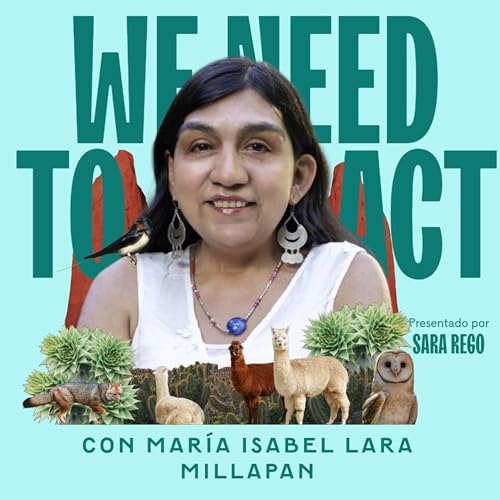
  • Season 2 | Ep. 39 (Spanish/Español) - Entre Poesía y Tierra: Manteniendo la Cultura Mapuche con María Isabel Lara Millapan
    Dec 10 2025

    Este episodio es una conversación íntima con la poeta mapuche María Isabel Lara Millapán sobre memoria, lengua y territorio en tiempos de desconexión acelerada. Hablamos de cómo el mundo se ha vuelto más rápido y orientado al “hacer” más que al “ser”, y de lo que perdemos cuando nos alejamos de la naturaleza y de nuestras raíces.

    María Isabel comparte cómo su poesía nace de la infancia, del duelo y de la espiritualidad, y cómo también se ha convertido en una voz de denuncia frente a las heridas de la colonización y las amenazas actuales que viven las comunidades mapuche. Exploramos el poder del mapuzungun como “la lengua de la tierra”, la importancia de las lenguas ancestrales para sostener una cosmovisión y el rol de las nuevas generaciones y la tecnología en los procesos de revitalización cultural.

    María Isabel Lara Millapán es poeta mapuche, hablante nativa de mapuzungun, nacida en el lof de Chihuimpilli (comuna de Freire, Región de La Araucanía, Chile), y Doctora en Didáctica de la Lengua y la Literatura por la Universidad Autónoma de Barcelona. Actualmente es académica del Campus Villarrica de la Pontificia Universidad Católica de Chile e investigadora asociada del Centro de Estudios Interculturales e Indígenas (CIIR). Es además autora de una obra poética que entrelaza espiritualidad, territorio y resistencia.

    Un episodio para quienes sienten la urgencia de frenar, escuchar a los pueblos originarios y recordar que la naturaleza, la memoria y el diálogo son claves para construir un futuro más justo y humano.


    Capítulos:


    Introducción y desconexión

    • Comienza en 0:00

    El camino de María Isabel hacia la poesía

    • Comienza en 3:00

    La importancia del mapuzungun

    • Comienza en 6:00

    Conexiones culturales y espirituales

    • Comienza en 9:00

    Desafíos y luchas contemporáneas

    • Comienza en 12:00

    Revitalización y nuevas generaciones

    • Comienza en 15:00


    Sabe más sobre el trabajo de María Isabel Lara Millapan en https://www.escritoresindigenas.cl/lara-millapan


    Apóyanos mostrando tu interés de las siguientes maneras:

    🎧 Escucha y suscríbete al podcast We Need to Act en Spotify o Apple Podcasts.

    ☕ Apoya a nuestro trabajo comprándonos un café.

    📲 Únete a nuestra comunidad en Instagram, LinkedIn, y YouTube

    📬 Suscríbete a nuestro boletín informativo en nuestra página web.

    Mostra di più Mostra meno
    34 min
  • Season 2 | Ep. 38 - From Global to Local: Redefining Progress with Helena Norberg-Hodge
    Nov 26 2025

    In this episode of We Need to Act, host Sara Rego speaks with Helena Norberg-Hodge—one of the world’s most influential voices on localization and the new economy movement.

    Helena Norberg-Hodge, linguist, author, filmmaker, and pioneer of the global localization movement, is the founder and director of Local Futures and the convenor of World Localization Day and the Planet Local Summit. She is the author of the classic Ancient Futures and Local Is Our Future, and producer of the award-winning documentaries The Economics of Happiness, Planet Local, and Closer to Home. She also founded the International Alliance for Localization and co-founded both the International Forum on Globalization and the Global Ecovillage Network. Her work has been recognized with the Alternative Nobel Prize, the Arthur Morgan Award, and the Goi Peace Prize for her contributions to cultural and biological diversity and the strengthening of local communities worldwide.

    Together, Sara and Helena explore how globalization undermines well-being, why local economies create happier and healthier societies, and what we can do to restore community, meaning, and democratic power. They discuss the importance of feminine values in healing our fractured world, the dangers of centralized technological systems, and the joy that comes from rebuilding relationships—with each other and with nature.

    A hopeful, human-centered conversation about reclaiming our future through localization and the economics of happiness.


    Please show us your support by...

    • Tune in and subscribe to the We Need to Act podcast via Spotify or Apple Podcasts.
    • Support our show by ⁠⁠⁠⁠⁠⁠⁠buying us a coffee⁠⁠⁠⁠⁠⁠⁠.
    • Join our page on ⁠⁠⁠⁠⁠⁠⁠⁠Instagram⁠⁠⁠⁠⁠⁠⁠⁠ and ⁠⁠⁠⁠⁠⁠⁠⁠LinkedIn⁠⁠⁠⁠⁠⁠⁠⁠
    • Subscribe to our newsletter on our ⁠⁠⁠⁠⁠⁠⁠⁠website⁠⁠⁠⁠⁠⁠⁠⁠


    Mostra di più Mostra meno
    55 min
  • Season 2 | Ep. 37 (Spanish/Español) - Transformando el Dinero para la Justicia Ambiental con Isabel Felandro (Cool Earth) y Carlos Adrián Pérez (Equal Right)
    Nov 12 2025

    En este episodio, nos asociamos con Cool Earth, una organización cuya misión es proporcionar dinero y datos directamente a las personas que viven en la selva tropical para que puedan hacer lo que mejor saben hacer: protegerla. También hablamos con Equal Right, la organización socia de Cool Earth en el proyecto Income for Peace with Nature en Colombia.

    Nuestros invitados, Isabel Felandro, Directora de Programas en Cool Earth, y Carlos Adrián Pérez, Director para América Latina en Equal Right, discuten el potencial transformador de la renta básica para las comunidades indígenas en el Amazonas, particularmente en Colombia y Perú. Exploran cómo el apoyo financiero puede empoderar a estas comunidades para proteger su entorno mientras se abordan las desigualdades sociales.

    La conversación destaca la importancia de la colaboración, la confianza y la educación en la implementación de estas iniciativas, así como los desafíos de navegar en contextos políticos y culturales complejos. También reflexiona sobre los resultados de la COP16 y la defensa continua de la financiación climática dirigida a los pueblos indígenas.


    Puntos clave

    • El problema no es el dinero en sí, sino su redistribución.

    • La renta básica puede ayudar a reducir la dependencia de las industrias extractivas.

    • Las alianzas con organizaciones indígenas son cruciales para el éxito.

    • El monitoreo es esencial para garantizar un impacto positivo en la comunidad.

    • La renta básica puede mejorar el bienestar y la felicidad de las comunidades.

    • La educación es clave para fomentar la conciencia social y la responsabilidad.

    • La renta básica debe verse como un derecho, no como un subsidio.

    • La defensa de la financiación climática debe priorizar a las comunidades indígenas.

    • La interconexión de las comunidades es vital para el progreso.

    • La COP16 proporcionó una plataforma para la colaboración y futuras iniciativas.


    Capítulos

    00:00 Transformando el dinero para la justicia ambiental
    03:02 Lecciones desde Perú: ampliando la renta básica a Colombia
    05:55 Construyendo confianza y colaboración con comunidades indígenas
    08:28 Renta básica: una herramienta para el impacto ambiental y social
    10:52 Desafíos y oportunidades en la implementación de la renta básica
    12:55 Monitoreo del impacto y asegurando el bienestar comunitario
    15:53 El papel de la educación en la formación de la conciencia
    18:05 Navegando desafíos políticos y culturales
    19:40 Defensa de la financiación climática y derechos indígenas
    21:57 Reflexiones sobre la COP16 y direcciones futuras


    Apóyanos mostrando tu interés de las siguientes maneras:

    🎧 Escucha y suscríbete al podcast We Need to Act en Spotify o Apple Podcasts.

    ☕ Apoya a nuestro trabajo comprándonos un café.

    📲 Únete a nuestra comunidad en Instagram, LinkedIn, y YouTube

    📬 Suscríbete a nuestro boletín informativo en nuestra página web.

    Mostra di più Mostra meno
    47 min
  • Season 2 | Ep.36 - Transforming Money for Environmental Justice with Isabel Felandro (Cool Earth) and Carlos Adrián Perez (Equal Right)
    Nov 12 2025

    In this episode, we partner with Cool Earth, an organization whose mission is to provide cash and data directly to people living in the rainforest so they can do what they do best — protect it. We also speak with Equal Right, Cool Earth’s partner organization in the Income for Peace with Nature project in Colombia.


    Our guests, Isabel Felandro, Head of Programmes at Cool Earth, and Carlos Adrián Pérez, Director for Latin America at Equal Right, discuss the transformative potential of basic income for Indigenous communities in the Amazon, particularly in Colombia and Peru. They explore how financial support can empower these communities to safeguard their environment while addressing social inequalities.


    The conversation highlights the importance of collaboration, trust, and education in implementing such initiatives, as well as the challenges of navigating complex political and cultural landscapes. It also reflects on the outcomes of COP16 and the ongoing advocacy for climate finance directed towards Indigenous peoples.


    Takeaways

    • Money itself is not the problem; it's the redistribution.

    • Basic income can help reduce dependency on extractive industries.

    • Partnerships with indigenous organizations are crucial for success.

    • Monitoring is essential to ensure positive community impact.

    • Basic income can improve well-being and happiness in communities.

    • Education is key to fostering social consciousness and responsibility.

    • Basic income should be viewed as a right, not a subsidy.

    • Advocacy for climate finance must prioritize indigenous communities.

    • The interconnectedness of communities is vital for progress.

    • COP16 provided a platform for collaboration and future initiatives.


    Chapters


    00:00 Transforming Money for Environmental Justice

    03:02 Lessons from Peru: Expanding Basic Income to Colombia

    05:55 Building Trust and Collaboration with Indigenous Communities

    08:28 Basic Income: A Tool for Environmental and Social Impact

    10:52 Challenges and Opportunities in Implementing Basic Income

    12:55 Monitoring Impact and Ensuring Community Well-being

    15:53 The Role of Education in Shaping Consciousness

    18:05 Navigating Political and Cultural Challenges

    19:40 Advocacy for Climate Finance and Indigenous Rights

    21:57 Reflections on COP16 and Future Directions


    Please show us your support by...

    • Tune in and subscribe to the We Need to Act podcast via Spotify or Apple Podcasts.
    • Support our show by ⁠⁠⁠⁠⁠⁠buying us a coffee⁠⁠⁠⁠⁠⁠.
    • Join our page on ⁠⁠⁠⁠⁠⁠⁠Instagram⁠⁠⁠⁠⁠⁠⁠ and ⁠⁠⁠⁠⁠⁠⁠LinkedIn⁠⁠⁠⁠⁠⁠⁠
    • Subscribe to our newsletter on our ⁠⁠⁠⁠⁠⁠⁠website⁠⁠⁠⁠⁠⁠⁠


    Mostra di più Mostra meno
    40 min