Vices and Volumes | Navigate Irish and British History's Absurdities from 1800s Books copertina

Vices and Volumes | Navigate Irish and British History's Absurdities from 1800s Books

Vices and Volumes | Navigate Irish and British History's Absurdities from 1800s Books

Di: Avril Clinton-Forde
Ascolta gratuitamente

A proposito di questo titolo

Victorians had opinions about EVERYTHING. Jaw shapes. Correct use of coil horns. Servant's gloves. All treated with the kind of earnest detail usually reserved for matters of real importance. Avril Clinton-Forde selects the delightfully absurd from her collection of Irish and British 1800s books—where privileged people wrote volumes about life's minutiae. Social catastrophes, Irish banshee etiquette, Georgian marriage disasters, bizarre upper-class hobbies, and enjoys wonderfully overcomplicated language of the 19th Century. For history lovers, heritage enthusiasts, and curious insomniacs!Avril Clinton-Forde Mondiale
  • Victorian Perfection Standards | Lady Colin Campbell's Scandal & Etiquette (1884)
    Jan 20 2026

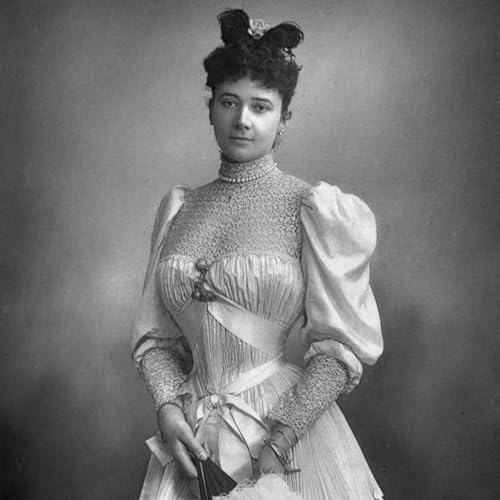
    In 1884, Lady Colin Campbell published articles in Cassell's Family Magazine teaching young women how to become "the perfect lady." Two years later, she'd be in court defending herself in the divorce scandal of the century—her intimate life dissected in newspapers across Britain.

    This episode explores the impossible standards Lady Colin Campbell outlined for Victorian women: white-headed pins must never project from black dresses, collars must be changed daily, sitting with crossed legs was unforgivable, and women must suppress all natural reactions to absurdity. When a page slips and falls surrounded by dinner rolls, or a cake bowls up the room, a perfect lady neither speaks nor smiles. Even at home, exhausted with children clinging to their skirts, women were expected to maintain "freshness and attractiveness" at all times.

    But who was the woman behind these rigid rules? Gertrude Elizabeth Blood was born in County Clare, Ireland in 1857. At 23, she met Lord Colin Campbell and became engaged within three days. What seemed like a fairy tale became a nightmare when her husband infected her with syphilis—a disease he'd concealed before their marriage. In 1886, both parties filed for divorce in a trial so explicit that "intercourse" appeared in newspapers and multiscopes became known as "what the butler saw machines" after the butler's keyhole testimony.

    The episode contrasts Lady Colin Campbell's advice with the even more demanding standards of Isabella Beeton, whose ideal dinner party featured rented hothouse pineapples, out-of-season fruit, and servants in white kid gloves. The gap between these aspirations and reality trapped women in impossible positions—unable to acknowledge their struggles without admitting social failure.

    Yet Lady Colin Campbell survived. After social ostracism, she became the first female editor of a London newspaper not exclusively for women, succeeding George Bernard Shaw as art editor of The World. She wrote over 200 articles, became an expert in fencing and fly fishing, exhibited landscape paintings, and earned genuine respect from the brilliant minds of her era. Shaw called her wit "lightning" and her journalism unmatched. She famously called Oscar Wilde "the great white slug."

    From Cassell's Family Magazine (1884), this episode examines what the pursuit of perfection actually cost Victorian women—and the remarkable resilience required to survive it.


    Mostra di più Mostra meno
    37 min
  • A Dublin Cabman's Tour | Irish Hospitality and Creative Storytelling in 1852
    Jan 6 2026

    In August 1852, Sir Francis Bond Head arrived in post-Famine Dublin and hired a local cabman as his guide. What followed was a tour where historical accuracy took a backseat to the ancient Irish tradition of entertaining visitors—a cultural practice rooted in Brehon Law's requirement to provide travelers with oigidecht: hospitality that included food, shelter, and importantly, entertainment.

    The cabman's version of history was undeniably creative. Nelson had lost his left arm rather than his right, the statue in College Green depicted "William the Conqueror" rather than William III (six centuries apart), and Dublin's name supposedly derived from "Double-Inn—two houses stuck into one" rather than the Irish Dubh Linn (black pool). Yet his enthusiasm was genuine, his delivery engaging, and his purpose clear: to provide his passenger with an entertaining experience while earning his fare.

    Head had arrived after a storm-tossed midnight Channel crossing, navigating Morrison's Hotel by single candlelight. By morning, mounted on horseback for observation, he was immediately approached by barefoot boys seeking work—a reminder that Dublin in 1852 was still recovering from the Great Famine. The phrase "I'm wake with the hunger," spoken by an elderly beggar woman, would have carried particular weight just months after the famine's official end.

    This episode explores Head's observations of Dublin at a transitional moment: the city's exceptional air quality (Phoenix Park's 1,750 acres and Georgian squares provided what Head called "magnificent lungs" compared to coal-choked British industrial cities), the melancholy sight of Daniel O'Connell's empty Merrion Square house still bearing his brass nameplate five years after his death, and the democratic mixing of classes on jaunting cars heading to Donnybrook Fair—soldiers, gentlemen, and working people all sharing the same twopenny ride.

    Head, a former Royal Engineer who'd fought at Waterloo and served disastrously as Lieutenant-Governor of Upper Canada, brought an engineer's eye to Dublin's architecture and infrastructure. His account captures both the Georgian grandeur and the visible poverty, the political monuments and the human stories, the formal Vice-Regal visits and the street-level encounters that revealed a city's character.

    What he may not have fully understood was that the cabman's performance wasn't ignorance—it was a cultural tradition of hospitality through storytelling, where entertaining the visitor served both social custom and economic necessity.

    Features readings from A Fortnight in Ireland (1852) by Sir Francis Bond Head, a source frequently cited by historians studying post-Famine Ireland.

    Mostra di più Mostra meno
    37 min
  • Survival Guide to Winter in 1823 | How Victorian Beds Could Kill You!
    Dec 16 2025

    Ever wondered how people survived winter before central heating? Spoiler: they didn't always.

    This episode takes you inside the Georgian and Victorian bedchamber, where staying warm could literally cost you your life. We're talking about warming pans filled with poisonous fumes, feather beds crawling with insects, and bed curtains so tightly drawn you could suffocate before morning. One household manual even suggested testing this theory with a caged bird at your bedside—which, unsurprisingly, nearly died by dawn.

    But the Victorians weren't just sitting around freezing. They were innovating. We'll explore the remarkable air-pump mattress of 1823—a proto-waterbed with valves, stop-cocks, and convenient tassels you could pull from your pillow to adjust firmness in the night. Imagine Victorian couples arguing at 3 a.m.: "Stop pulling the tassel, you're making it too firm!"

    Once you survived the night, you had to get dressed. Victorian winter fashion wasn't just about looking elegant—it was thermal engineering wrapped in seal-skin and given exotic names. We're talking about creations like The Diplomatt (with enormous sleeves and seal-skin trim), The Mexican (black cloth with embroidered white silk), and The Semiramis (named after an Assyrian queen because why not?). These weren't just fashion statements; they were survival gear with marketing departments.

    And then there's food. Winter soup was serious business, and we'll dive into a heated debate from 1880 about charity soup kitchens. Should soup for the poor contain actual meat, or would that spoil them? One writer insisted that if "starving poor" refused meatless pea soup, they should be "improved morally and physically by being kept without meat." His solution? Pig's head soup so greasy it would "quite equal to mock turtle." Delicious.

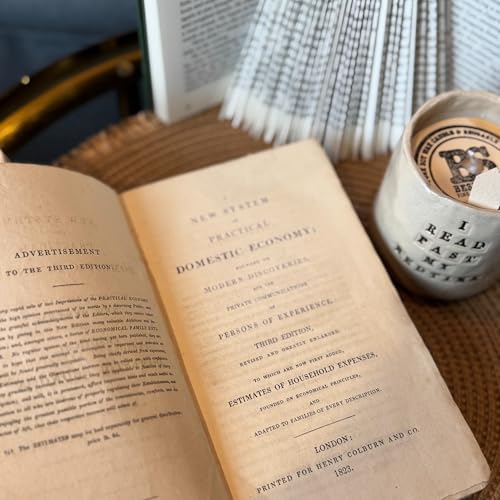
    Through readings from rare books—including my own battered, spineless copy of "A New System of Practical Domestic Economy" (1823)—we'll discover the elaborate rituals, surprising innovations, and occasionally questionable attitudes that defined Victorian winter survival.

    Features readings from:

    • "A New System of Practical Domestic Economy" (1823, anonymous author)
    • "The Englishwoman's Domestic Magazine" (1861)
    • Cassell's Family Magazine: "Winter Soups: How to Make Them" by A.G. Payne (1880)

    Modern life is easy. We complain about winter from heated homes while wearing fleece and microwaving soup. The Victorians had to earn their warmth through constant vigilance, specialized knowledge, and frankly, a shocking amount of work. This episode is a reminder to appreciate your electric blanket, your North Face jacket, and the fact that your mattress doesn't require a pump with decorative tassels.

    🎧 New episodes every second week | Follow @vicesandvolumes for daily historical discoveries

    Keywords: Victorian history, Georgian era, 19th century, 18th century, vintage books, historical books, winter survival, domestic history, social history, rare books, history podcast, Victorian era, British history, Irish history, period history, household management, historical innovation

    Mostra di più Mostra meno
    34 min
Ancora nessuna recensione