

Victorian Perfection Standards | Lady Colin Campbell's Scandal & Etiquette (1884)
Impossibile aggiungere al carrello
Rimozione dalla Lista desideri non riuscita.
Non è stato possibile aggiungere il titolo alla Libreria
Non è stato possibile seguire il Podcast
Esecuzione del comando Non seguire più non riuscita

Victorian Perfection Standards | Lady Colin Campbell's Scandal & Etiquette (1884)
-
Letto da:
-
Di:
A proposito di questo titolo
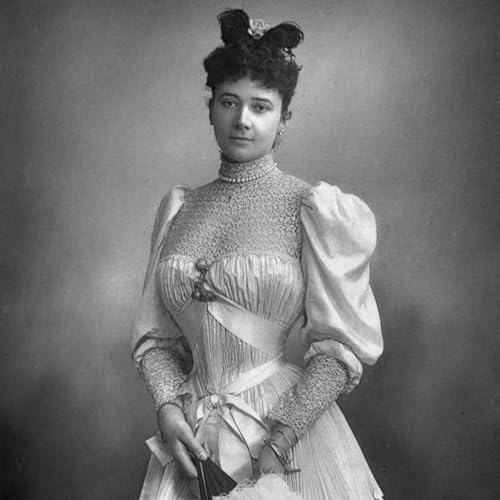
In 1884, Lady Colin Campbell published articles in Cassell's Family Magazine teaching young women how to become "the perfect lady." Two years later, she'd be in court defending herself in the divorce scandal of the century—her intimate life dissected in newspapers across Britain.
This episode explores the impossible standards Lady Colin Campbell outlined for Victorian women: white-headed pins must never project from black dresses, collars must be changed daily, sitting with crossed legs was unforgivable, and women must suppress all natural reactions to absurdity. When a page slips and falls surrounded by dinner rolls, or a cake bowls up the room, a perfect lady neither speaks nor smiles. Even at home, exhausted with children clinging to their skirts, women were expected to maintain "freshness and attractiveness" at all times.
But who was the woman behind these rigid rules? Gertrude Elizabeth Blood was born in County Clare, Ireland in 1857. At 23, she met Lord Colin Campbell and became engaged within three days. What seemed like a fairy tale became a nightmare when her husband infected her with syphilis—a disease he'd concealed before their marriage. In 1886, both parties filed for divorce in a trial so explicit that "intercourse" appeared in newspapers and multiscopes became known as "what the butler saw machines" after the butler's keyhole testimony.
The episode contrasts Lady Colin Campbell's advice with the even more demanding standards of Isabella Beeton, whose ideal dinner party featured rented hothouse pineapples, out-of-season fruit, and servants in white kid gloves. The gap between these aspirations and reality trapped women in impossible positions—unable to acknowledge their struggles without admitting social failure.
Yet Lady Colin Campbell survived. After social ostracism, she became the first female editor of a London newspaper not exclusively for women, succeeding George Bernard Shaw as art editor of The World. She wrote over 200 articles, became an expert in fencing and fly fishing, exhibited landscape paintings, and earned genuine respect from the brilliant minds of her era. Shaw called her wit "lightning" and her journalism unmatched. She famously called Oscar Wilde "the great white slug."
From Cassell's Family Magazine (1884), this episode examines what the pursuit of perfection actually cost Victorian women—and the remarkable resilience required to survive it.