Episodi

  • Public Out Cry
    Oct 5 2026
    Trey Knowles’ “Public Out Cry” is a heartfelt call for reflection, repentance, and a return to God. In a world where people spend their lives working, chasing success, seeking approval, and pursuing temporary desires, the song asks an important question: What does all of our labor truly mean if we live apart from the Lord?

    Public Out Cry challenges listeners to examine the direction of their lives and recognize that a path may appear right in the eyes of the world while ultimately leading toward destruction. Drawing inspiration from scriptures such as Psalm 34:17, Hebrews 3:15, 1 John 2:15, and 2 Chronicles 7:14, Trey Knowles warns against placing complete trust in man, worldly systems, and the desires of the flesh.

    Instead, he encourages people to humble themselves, pray, seek God’s face, and turn away from the things that separate them from Him. Hebrews reminds us not to harden our hearts when we hear God's voice, while Psalm 34 declares that the Lord hears the cry of the righteous and delivers them from their troubles. The title Public Out Cry represents more than frustration with the condition of the world. It is a spiritual cry for people to wake up, recognize their need for God, and seek deliverance from the bondage of sin and deception.

    The song reminds listeners that money, possessions, popularity, and human approval cannot provide the peace and purpose that the soul truly needs. At its heart, “Public Out Cry” is both a warning and an invitation. It warns against following a world that can make darkness appear desirable, but it also offers hope to anyone willing to turn back to God.

    Trey Knowles calls listeners to come out of spiritual darkness, break free from bondage, humble themselves before the Lord, and discover true purpose through obedience to Him. “Public Out Cry” is a cry for repentance, a cry for healing, a cry for deliverance, and a call for people everywhere to return to God.
    Mostra di più Mostra meno
    3 min
  • America Cancel the Culture
    Oct 3 2026

    Trey Knowles’ “America Cancel the Culture” is a powerful and thought-provoking song that confronts what Knowles portrays as the toxic and destructive elements embedded within American culture. Through direct and uncompromising lyrics, the song examines how systems of exploitation, materialism, division, deception, and social conditioning can negatively affect Black, Brown, and White communities while also influencing societies far beyond America’s borders.

    In the song, America is portrayed symbolically as a “beast”—a destructive cultural force that feeds on human weakness, encourages division, and manipulates people through money, status, entertainment, fear, temptation, and the pursuit of power. Rather than limiting the message to one race or community, Trey Knowles presents the problem as something capable of damaging anyone who becomes consumed by a culture that places worldly desires above truth, morality, love, and respect for human life.

    “America Cancel the Culture” also focuses on the psychological consequences of living within such an environment. Generations of people can inherit harmful ideas about race, success, identity, wealth, beauty, power, and self-worth. When destructive values are repeatedly promoted as normal, people may begin measuring themselves and others according to standards that produce resentment, insecurity, hatred, competition, and division. The song challenges listeners to consider how deeply these messages can shape the mind and how difficult it can be to recognize manipulation when it has become part of everyday life.

    For Black and Brown communities, the song draws attention to histories and experiences of exploitation, marginalization, cultural appropriation, and economic inequality. At the same time, Knowles broadens his criticism by arguing that destructive cultural values can also psychologically and spiritually damage White Americans. In this sense, the song is not simply an accusation against one racial group. It is a challenge to examine a larger system of values and behaviors that can turn people against one another while benefiting from their division.

    The song’s message also reaches beyond the borders of the United States. American entertainment, consumer culture, technology, business, politics, and social trends have enormous international influence. Ideas created and promoted in America can travel around the world, shaping how people understand success, relationships, race, identity, morality, and personal worth. Knowles uses this global reach to ask an important question: What happens when a powerful culture exports not only its achievements, but also its dysfunction?

    Ultimately, “America Cancel the Culture” is presented as a call for examination, accountability, and transformation. Trey Knowles challenges listeners to recognize destructive patterns rather than blindly accepting them simply because they have become culturally normal. The title itself turns the modern idea of “cancel culture” in another direction: instead of canceling individuals, the song calls for rejecting the harmful attitudes, systems, behaviors, and values that divide people and diminish human dignity.

    Through provocative imagery and an urgent message, Trey Knowles invites Black, Brown, and White people alike to question what they have been taught, examine what they participate in, and consider what kind of culture they are helping create for the next generation. “America Cancel the Culture” is ultimately a challenge to stop feeding what the song calls the “beast” and begin replacing destructive cultural patterns with truth, responsibility, unity, morality, and genuine respect for one another.

    Mostra di più Mostra meno
    4 min
  • I Forgive You
    Oct 1 2026
    In “I Forgive You,” Trey Knowles delivers a powerful confession wrapped in the language of restoration and grace. The song becomes a living example of how forgiveness—real, painful, transformative forgiveness—reflects the truth that love covers a multitude of sins. Trey stands transparent before God and before others, offering a public apology born from humility: “I’m sorry.” He doesn’t just want forgiveness; he invites purification, crying out, “Burn me with fire—burn every corrupt thing in me,” symbolizing a desire for God to cleanse the deepest parts of his heart. The chorus, “I forgive you, do you forgive me?” becomes a bridge between wounded people, between past and present, and between humanity and God. The song ultimately teaches that forgiveness isn’t weakness—it is the fire that refines, restores, and makes reconciliation possible.
    Mostra di più Mostra meno
    3 min
  • You A Fool
    Sep 28 2026

    Trey Knowles’ “You A Fool” is a confrontational song about examining yourself and recognizing how easily the world can shape your choices. The song begins with a personal confession: “You don’t know what my mind is going through.” Knowles describes looking at his own life and questioning the things he once accepted simply because society told him they were normal. From tattoos and piercings to sex, marriage, alcohol, cigarettes, violence, materialism, and the influence of Hollywood, the song challenges listeners to ask a difficult question: Am I following God, or am I following the world?


    Throughout the song, the repeated words “You a fool” are not only directed at other people—they also become a confession. Knowles calls himself a fool for doing things he believes God instructed him not to do. That self-examination gives the song its central message: recognizing foolishness should lead to repentance and change rather than pride or excuses.


    “You A Fool” presents Knowles’ Christian interpretation of biblical teachings on marriage, sexual behavior, honoring parents, killing, stealing, and obedience to God. He also expresses traditional Christian beliefs about homosexuality and sex outside marriage. These subjects are presented as part of the song’s religious message and its warning against allowing popular culture to determine a person’s morality.


    At its core, “You A Fool” is about breaking free from what Knowles sees as the deceptive influence of the world. The imagery of being trapped in a system, controlled by the wind, and captivated by television represents a person who has surrendered their judgment to society. The song calls listeners to seek wisdom, turn away from sin, trust God, and reconsider what they have been taught to call normal. Its final challenge is simple but demanding: lose the worldly life in order to gain the life God intended for you.

    Mostra di più Mostra meno
    3 min
  • Killing The Flesh
    Sep 23 2026
    Trey Knowles’ “Killing the Flesh” is a powerful and spiritually driven song about the daily battle between the desires of the flesh and the life of the Spirit. It speaks to the transformation that takes place when a person chooses to surrender their old ways, resist temptation, and follow Yeshua. Rather than allowing sinful desires, worldly influences, and temporary pleasures to dictate how we live, “Killing the Flesh” calls believers to walk according to the Spirit and allow God to transform their hearts, minds, and actions.
    The flesh constantly desires things that can pull us away from God. Pride, lust, greed, anger, jealousy, selfish ambition, hatred, and the pursuit of worldly satisfaction can become chains when they are allowed to control our lives. Trey Knowles uses “Killing the Flesh” to confront that struggle directly. The message is not simply about recognizing sin—it is about refusing to let sin remain in control. Following Yeshua means that the old way of living must lose its authority so that a new spiritual life can emerge.
    At the center of the song is the victory found in Yeshua. Through Yeshua, believers are no longer required to be slaves to the desires that once controlled them. His death and resurrection represent victory over sin and death and offer the believer a new way of living. “Killing the Flesh” emphasizes that spiritual freedom does not come from satisfying every desire but from surrendering those desires to God. What the flesh demands does not have to determine what a person becomes.
    The song also reflects the biblical call to walk by the Spirit. Galatians 5:16 teaches, “Walk by the Spirit, and you will not gratify the desires of the flesh.” This truth lies at the heart of “Killing the Flesh.” The battle is not won by feeding temptation but by strengthening our relationship with God. Prayer, obedience, faith, self-control, repentance, and a renewed mind become weapons against the desires that attempt to pull us backward.
    “Killing the Flesh” is ultimately about dying to the old self so that the life of Yeshua can be revealed through us. It challenges listeners to examine what controls their decisions. Are we being led by temporary feelings and desires, or are we allowing the Spirit of God to direct our steps? The song reminds us that following Yeshua requires more than words. It requires a transformation in how we think, what we desire, what we reject, and how we live.

    Trey Knowles delivers a message of spiritual warfare, discipline, renewal, and victory. The flesh may tempt, but it does not have to rule. Sin may call, but we do not have to answer. The world may offer temporary pleasures, but Yeshua offers something greater—freedom, righteousness, peace, and eternal life.
    Killing the Flesh” is therefore more than a song about resisting temptation. It is a declaration that the old life no longer has authority. Through Yeshua, believers can put sinful desires to death, walk in the Spirit, and become renewed from the inside out. When the flesh loses its control, spiritual life can flourish. When Yeshua becomes the center, sin no longer has the final word.
    Trey Knowles’ “Killing the Flesh” reminds listeners that true victory is found not in giving the flesh everything it wants, but in surrendering ourselves completely to Yeshua. Kill the flesh. Walk in the Spirit. Live in the freedom and new life that Yeshua provides.
    Mostra di più Mostra meno
    2 min
  • Self-Control
    Sep 20 2026

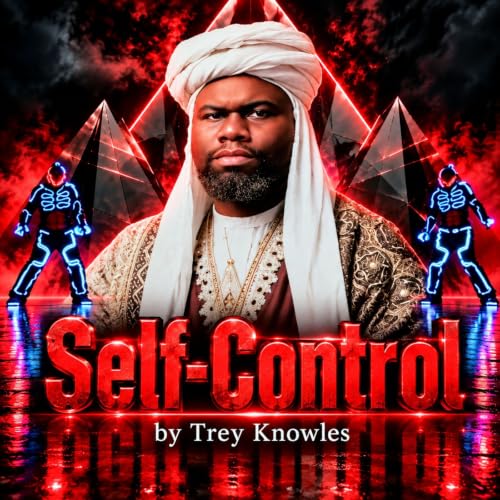
    Trey Knowles’ song “Self-Control” reflects on the life-changing experience of being born again and becoming a new creation in Christ. The song presents self-control not simply as human willpower, but as a spiritual gift that helps believers turn away from ungodly desires and choose a life that honors God. Through praise and thanksgiving, Knowles celebrates the transformation that comes when a person leaves behind the ways of the old self and begins walking in a renewed life through Christ.


    At its heart, “Self-Control” is about spiritual growth, discipline, and freedom from the desires that once controlled us. It encourages believers to recognize that transformation involves changing not only what we believe, but also how we think, speak, respond, and live. By relying on God and practicing self-control, believers can resist temptation, reject ungodliness, and make choices that reflect their new identity in Christ. Trey Knowles uses the song as a declaration of gratitude—thanking God for the strength to live differently and celebrating the freedom that comes with becoming spiritually renewed.

    Mostra di più Mostra meno
    3 min
  • Want Change In My Life
    Sep 18 2026
    Want Change In My Life is an allegory song about a man who is drunk, disturbed, violent, and abusive against his wife and family. Deep down the drunken man wants to change, but change sometimes is too late.

    Trey Knowles brings the mirror stoppage to domestic violence offenders in his song Want Change In My Life. Domestic violence can be physical, sexual, emotional, economic, psychological, or technological actions threats of actions, or other patterns of coercive behavior that influence another person within an intimate partner relationship. This includes any behaviors that intimidate, manipulate, humiliate, isolate, frighten, terrorize, coerce, threaten, blame, hurt, injure, or wound someone.

    This type of behavior must stop. Apologize to your victim and repent from this behavior. This type of action is not love and God is not pleased with this type of behavior.

    Colossians 3:19: says "Husbands, love your wives and do not be bitter toward them" Ephesians 5:28-29 In this same way, husbands ought to love their wives as their bodies. He who loves his wife loves himself. After all, no one ever hated their own body, but they feed and care for their body, just as Christ does the church.

    Whoever does domestic violence doesn't love themself because husbands and wife are one with one another.

    Want Change In My Life calls on men to love their wives as they love themselves. If alcohol causes you to sin and do domestic violence throw it out. It is written in Proverbs 31:6 Let beer be for those who are perishing, wine for those who are in anguish! There is no excuse for domestic violence.
    Mostra di più Mostra meno
    4 min
  • Woke
    Sep 10 2026

    Trey Knowles' song “Woke” brings light to the true meaning of being awake. It challenges listeners to look beyond popular definitions of “woke” and examine themselves according to the Word and Spirit of God. The message is urgent: if you reject the truth and refuse to welcome these words, judgment remains. As Scripture warns, it will be more bearable for Sodom and Gomorrah on the day of judgment than for those who hear the truth and refuse to receive it.

    Being woke is not simply claiming awareness. It is obeying God's Word and living by the Spirit of God. If you are not walking by His Spirit, how can you claim to be awake? A blind person cannot lead another blind person into the light. As Jesus teaches, if your eyes are bad, your whole body will be filled with darkness—and if the light within you is darkness, how great is that darkness?

    To be woke, you must have light. Light exposes what darkness attempts to hide. It reveals the difference between righteousness and sin, truth and deception, good and evil. There is only one true Light: Jesus Christ, the Son of God. Those who follow Him will not walk in darkness but will have the light of life.

    True spiritual awakening also causes us to recognize our own sinful nature. Being woke means becoming aware of sin, turning from it through repentance, and choosing to live according to God's Spirit. It is not about pointing at everyone else's darkness while refusing to confront the darkness within ourselves.

    The destruction of Sodom and Gomorrah stands as a warning of what happens when people reject righteousness and continue in wickedness. So if someone continues practicing and approving what God calls evil, what makes that person woke? Spiritual awareness cannot be separated from obedience to God.

    Romans 1:18–32 describes humanity suppressing God's truth through wickedness. Although God's power and divine nature are evident through creation, people refused to glorify Him. Their thinking became futile, and their hearts became darkened. Claiming wisdom, they became foolish, exchanging God's truth for lies and worshiping created things rather than the Creator. Paul continues by describing sexual immorality, greed, envy, murder, deceit, arrogance, disobedience, lack of mercy, and many other forms of wickedness as consequences of humanity turning away from God.

    “Woke” by Trey Knowles is therefore a call to come out of darkness and into the Light. It is a call to repentance, spiritual discernment, obedience, and transformation. You cannot truly be woke while remaining spiritually asleep. You cannot claim to see while rejecting the One who gives sight

    Mostra di più Mostra meno
    3 min