Episodi

  • Judge the Poet on living the artists way and why creatives shouldn't fear AI
    Jan 15 2026

    To stay updated on future episodes, follow us on:

    TikTok

    Instagram

    YouTube

    If you have any comments about the podcast or are a performer who wants advice please do email info@thevarietyshowpodcast.co.uk

    Artist bio

    Judge the Poet is a London-born spontaneous improvised poet who has been creating rhyming poems on the spot for over three decades. A performer and writer with a background in English literature, he has taken his act around the world, appearing on TV, performing at private and public events, and writing his own book of poetry. His work blends quick-thinking craft with audience-reading empathy, turning live moments into tailored poems that tell real stories.

    For more on Judge the Poet visit:

    https://www.instagram.com/judgethepoet/

    Episode summary

    In episode 2, Adam Sternberg welcomes Judge the Poet for a deep dive into the unusual art and business of improvised poetry. Judge opens by demonstrating his spontaneous poet skill, asking Adam for three random prompts, Christmas, entertainment, and pink, then instantly shaping them into a coherent rhyming poem.

    From there, Judge shares how he has been making up poems since primary school, how he trained his craft like a musician or athlete, and how he built a career the hard way by knocking on doors, taking low-paid early gigs, and growing through word of mouth. They explore the two sides of performance, technical skill and stagecraft, plus the reality of resilience, instability, and why live entertainment matters, especially post-COVID.

    The conversation also tackles poetry’s image problem in schools, why poetry should be felt like music rather than solved, and how rhyme and rhythm pull language into the heart. They also discuss AI, why it can imitate poems but cannot truly read the room. Judge closes by improvising a final poem that sums up the episode’s themes, poetry, variety, and AI.


    10 YouTube chapters (timestamps)

    00:00 Cold open poem and quick intro

    00:45 Who Judge is and what a spontaneous poet does

    01:50 Live demo setup and how the game works

    02:12 Demo poem using Christmas, entertainment, and pink

    03:32 What makes it more than a party trick, story and meaning

    04:11 Judge’s background, London to Devon to English Lit in Yorkshire

    06:00 Origins and practice, childhood poems and building the craft

    09:00 Making a living, knocking on doors, sales, and word of mouth growth

    11:40 Performing styles, close-up tables vs stage, tailoring to the room

    13:28 Poetry, arts value, education, rhyme, and accessibility

    30:31 Adam tries improv poetry, then AI vs human creativity, and closing poem

    Mostra di più Mostra meno
    40 min
  • Punching Up in Harmony with Bounder & Cad
    Jan 8 2026

    To stay updated on future episodes, follow us on:

    TikTok

    Instagram

    YouTube

    If you have any comments about the podcast or are a performer who wants advice please do email info@thevarietyshowpodcast.co.uk

    Artist bio

    Bounder & Cad are a London-based musical comedy duo known for sharp, lyrical satire set to classic crooner, jazz, and operatic styles. Formed at the University of Cambridge, the pair blend close harmony singing with original parody songs that skewer politics, power, culture, and modern absurdities—always punching up. Regular performers at venues including Crazy Coqs, they draw inspiration from Noël Coward, Flanders & Swann, Dudley Moore, and Kit & The Widow, combining musical virtuosity with wit, warmth, and theatrical flair.

    Episode summary

    In this episode of Variety, host Adam Sternberg welcomes musical comedy duo Bounder & Cad for a wide-ranging conversation following a bold opening performance skewering Vladimir Putin. The pair trace their origins from university choirboys and jazz crooners to becoming a fully-fledged satirical act, sharing stories of May Balls, their first original parody song about Prince Harry, and a last-minute, near-missed debut gig at 10 Downing Street.

    They unpack their approach to satire—why they prefer timeless absurdity over partisan politics, how they balance provocation with kindness, and why comedy works best when it releases tension rather than fuels anger. The episode also dives into creative partnership, disagreement, privilege, performance mishaps, and the importance of humor as a coping mechanism. It wraps with a playful operatic finale: a comic English-language take on La donna è mobile, featuring Adam joining them on stage.

    Don’t miss out on how we plan to bring this podcast to life with Variety Live shows.

    🎵 Original title music written by Peter O'Donnell and produced by Chris Burgess.

    Join Adam Sternberg next time for another captivating glimpse into the world of live entertainment.

    Mostra di più Mostra meno
    28 min
  • Andrew Robley - the pantomime dame with unlimited sass
    Dec 18 2025

    To stay updated on future episodes, follow us on:

    TikTok

    Instagram

    YouTube

    If you have any comments about the podcast or are a performer who wants advice please do email info@thevarietyshowpodcast.co.uk

    Artist bio

    Andrew Robley is a British musical-theatre performer and singer from Carlisle who began his career as a cathedral chorister, later winning a BBC “Search for a Star” competition and going on to play leading-man roles in shows like Grease (Danny Zuko) and classic musicals including Carousel and Oklahoma!. He’s now a regular performer at London’s Brick Lane Music Hall, where he’s become best known for his work as a pantomime dame—an unexpectedly demanding, fast-paced role he grew into after years as a principal boy/leading man.

    For more on Andrew Robley visit:

    👉https://www.instagram.com/andrew.robley

    Episode summary

    In this Christmas special of Variety, host Adam Sternberg chats with Andrew about his unusual route into panto: from choirboy beginnings and a brief detour as a chef, to musical theatre leading roles, and finally being thrust into dame duties at the last minute when another performer was injured. Andrew breaks down what makes pantomime unique—ad-libbing, timing, audience interaction, and relentless quick-changes—plus the character work, voice choices, slapstick, and how panto traditions are evolving (and enduring). The episode also features a playful spoken “duet” of Sonny Boy and wraps with details of Andrew’s upcoming run at Brick Lane Music Hall in Jack and His Giant Stalk (over-16s), followed by a family version later.


    Don’t miss out on how we plan to bring this podcast to life with Variety Live shows.

    🎵 Original title music written by Peter O'Donnell and produced by Chris Burgess.

    Join Adam Sternberg next time for another captivating glimpse into the world of live entertainment.

    Mostra di più Mostra meno
    43 min
  • The Rolling Clones on Rock N' Roll without fame and if the Beatles have better songs
    Dec 11 2025

    To stay updated on future episodes, follow us on:

    TikTok

    Instagram

    YouTube

    If you have any comments about the podcast or are a performer who wants advice please do email info@thevarietyshowpodcast.co.uk

    Artist Bio

    Aaron Clark (“Keith Ripoff”) and Alex Larke (“Mock Jagger”) are the long-time twin engines of premier Rolling Stones tribute act The Rolling Clones. Growing up in neighboring Hertfordshire towns, both were shaped by early musical influences: Aaron gigging from age 11 with a Stones riff book smuggled into lessons, Alex trading a teenage go-kart racing career (he once raced Jenson Button) for frontman life after being dubbed a “modern-day Mick Jagger” in the local press. United by a deep love of the Stones’ catalogue, obsessive attention to detail, and a shared refusal to live the actual Stones’ lifestyle (these days it’s post-gig tea, not Jack Daniel’s), they’ve spent well over a decade touring the world, from French town squares to theatres and Middle Eastern stages, bringing Mick-and-Keith swagger to audiences of every age.

    For more on The Rolling Clones visit:

    👉https://www.instagram.com/rollingclones

    Episode Summary

    In this episode, they talk about how they fell in love with the Rolling Stones, why they think the Stones out-rock the Beatles, and what it really takes to “become” Mick and Keith on stage night after night. They share stories of massive gigs, weird audiences, fire alarms killing the PA mid-show, and one particularly drunk early gig where “Mick” fell off the stage and was rescued by the man who played Bungle from Rainbow. We hear how the Rolling Clones evolved from cabaret act to a high-energy modern live-Stones experience, why Aaron convinced Alex to stop drinking on stage, and why tribute work turned out to be a “golden ticket” to make a living in music without fame.

    Don’t miss out on how we plan to bring this podcast to life with Variety Live shows.

    🎵 Original title music written by Peter O'Donnell and produced by Chris Burgess.

    Join Adam Sternberg next time for another captivating glimpse into the world of live entertainment.

    Mostra di più Mostra meno
    40 min
  • Joe Stilgoe on campaigning for the future of British jazz
    Dec 4 2025

    To stay updated on future episodes, follow us on:

    TikTok

    Instagram

    YouTube

    If you have any comments about the podcast or are a performer who wants advice please do email info@thevarietyshowpodcast.co.uk

    Artist Bio

    Joe Stilgoe is an acclaimed British pianist, singer, composer and all-round musical entertainer, known equally for his virtuosic musicianship and his theatrical flair. With five UK jazz chart-topping albums, Joe moves effortlessly between jazz, cabaret, theatre and improvisation, whether performing at Ronnie Scott’s, collaborating with orchestras, or creating bespoke shows that blend humour, spontaneity and dazzling musicality. A gifted improviser, he’s renowned for transforming audience suggestions into brilliantly inventive medleys, as well as for his work as a musical theatre writer and performer. His career spans Disney cruise ships to royal performances, radio and TV appearances, and an ever-evolving presence on the UK jazz and theatre scenes.

    For more on Joe Stilgoe visit:

    👉https://www.instagram.com/thejoestilgoe

    Episode Summary

    In this rich and entertaining conversation, Joe takes us through his musical upbringing—opera-singing mother, legendary father, and a Surrey childhood filled with sound—before charting his journey from university uncertainty to Disney cruise contracts, jazz education, and eventually the London scene. He dives into the craft of improvisation, the joys and dangers of live performance, his theatre work (including High Society at the Old Vic), and some unforgettable moments—like a royal gig where no one would shout out a song request. Joe also speaks passionately about the fragile state of UK jazz clubs and his campaign to support and protect them. Full of humour, stories, musical quirks, and heartfelt advocacy, this episode is a celebration of live performance and the vibrant, unpredictable world Joe Stilgoe inhabits.

    • 35:01–37:48 — Demonstration and discussion of the mouth-trumpet solos
    • 38:48–40:17 — The parlor-trick clapping game he learned from his mum
    • 41:05–44:44 — Performing at the Queen & Prince Philip’s 70th anniversary, the awkward silence after asking for song suggestions, and King Charles requesting “Scriabin’s Third Piano”
    • 49:13–52:43 — Getting fired during intermission of Footloose because of the keyboard patches


    Don’t miss out on how we plan to bring this podcast to life with Variety Live shows.

    🎵 Original title music written by Peter O'Donnell and produced by Chris Burgess.

    Join Adam Sternberg next time for another captivating glimpse into the world of live entertainment.


    Mostra di più Mostra meno
    59 min
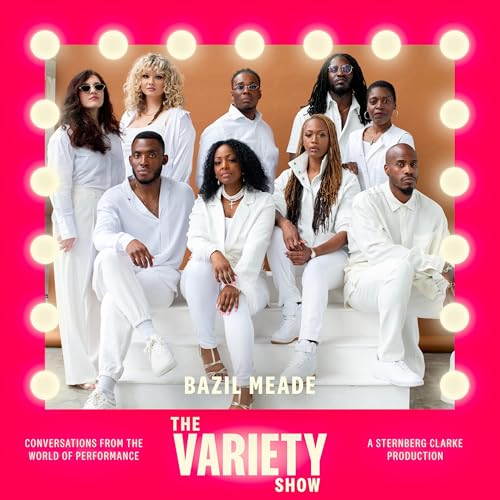
  • Reverend Bazil Meade on working with Madonna, Luther Vandross and if white people can sing gospel.
    Nov 27 2025

    Join us on this captivating journey into the fascinating world of live entertainment. Host Adam Sternberg brings you engaging conversations with remarkable entertainers, from magicians and jugglers to aerial artists and contortionists. Discover the unique stories behind their extraordinary careers, the challenges they have faced, and the motivations that drive them. If you are passionate about live entertainment or simply curious about the lives of extraordinary performers, this podcast is a must-listen.

    Episode Highlights

    In this episode, Adam welcomes Reverend Bazil Meade, founder of the London Community Gospel Choir, widely recognised as a pioneering force in British gospel music. Bazil traces his path from a childhood on the Caribbean island of Montserrat to becoming one of the most influential figures in UK choral music. He shares moving and sometimes dramatic stories about migration, racism, faith, early musical mentorship, the formation of LCGC in the early 1980s and its rapid rise to performing on global stages and collaborating with major artists including Paul McCartney, George Martin, Luther Vandross, Foreigner and Madonna. Basil also breaks down the sound, history and emotional heart of gospel, the distinction between spirituals and modern gospel music, and how improvisation, movement and community inform the choir’s world-renowned style. We hear candid reflections on creativity, the transition to handing leadership to his children, unforgettable stage moments and a live lesson in singing that leads Adam to his first gospel duet.

    Key Discussion Points

    • Origins and Early Life in Montserrat: Born in Montserrat in the Caribbean, raised in a small wooden house and living largely off the land and the sea.
    • Migration to the UK and Culture Shock: Travelled alone at age nine on a two week boat journey to Southampton, experiencing seasickness, unfamiliar food and the tight communal conditions typical of early Windrush-era ships.
    • Early Musical Influences and Church Community: Grew into music through church life in Hackney and Dalston Lane.
    • A Dramatic Escape and New Beginnings: Recounted a frightening confrontation with his stepfather that led him to flee the house, land in Leicester Square and impulsively leave for Germany with a group selling encyclopedias to US bases.
    • Founding the London Community Gospel Choir: Co founded LCGC in 1982 with Lawrence Johnson, John Francis and Delroy Powell.
    • Weekly Rehearsals and National Influence: Wednesday rehearsals began in the early years and continue to this day.
    • Gospel: History, Sound and Soul: Explains the origins of Negro spirituals in slavery, the emotional weight of songs reflecting suffering, longing and coded expressions of hope.
    • Improvisation, Movement and Choir Culture: Contrasts gospel with classical choral traditions, emphasising freedom, spontaneity and connection.
    • Collaborations with Major Artists: Shares vivid stories from working with Paul McCartney on Give My Regards to Broad Street and with producer George Martin who had Montserrat ties.
    • Recounts multiple recording and rehearsal sessions with Madonna, describing her intense focus, high standards and direct creative involvement.
    • Reflects on an unforgettable collaboration with Luther Vandross, praising his warmth, respect and genuine connection with the choir.
    • Passing the Baton to the Next Generation: Bazil’s children, Leon and Venetta, now lead LCGC. He speaks honestly about the challenge of stepping back after four decades, learning to let go and trusting a new creative vision.
    • New Music and British Gospel Identity: Previews tracks from the upcoming LCGC album written by Leon and...
    Mostra di più Mostra meno
    52 min
  • Katharine Arnold on choosing art over the 9-5, handling heights and advice for future circus performers.
    Nov 20 2025

    Join us on this captivating journey into the fascinating world of live entertainment. Host Adam Sternberg brings you engaging conversations with remarkable entertainers, from magicians and jugglers to aerial artists and contortionists. Discover the unique stories behind their extraordinary careers, the challenges they’ve faced, and the motivations that drive them. If you’re passionate about live entertainment or simply curious about the lives of these extraordinary performers, this podcast is a must-listen.

    Episode Highlights

    In this episode, Adam welcomes circus artist, director and producer Katharine Arnold, an aerialist with two decades of experience who has performed with La Clique and Cirque du Soleil and appeared as Mary Poppins in the Olympic opening ceremony. Katharine traces her path from a Brixton childhood and early ballet training to discovering trapeze at university. She explains the decision to leave a sensible office job at Bloomberg for life on tour, the variety of company experiences from collaborative outdoor shows to large scale revue productions, and the creative process behind her own company show Sophie’s Surprise 29th Birthday Party. Katharine shares candid stories about major surgery, recovery and returning to performance, the thrill of live risk, a hilarious rigging mishap involving a cable tie and her hair, and her views on sexualisation, costume and creative freedom. We also hear about training routines, the practical differences between small cabaret shows and huge productions like Cirque du Soleil, the challenges facing the London cabaret scene, and why she believes showmanship, narrative and audience interaction matter.

    Key Discussion Points

    • Origins and Early Training: Born and raised in Brixton; ballet from age three; school plays and early love of music and movement.
    • Discovering Circus at University: Performing arts degree at Middlesex University with a physical theatre focus; Fevered Sleep visit brought circus equipment and a first taste of trapeze.
    • Adult Classes and Formal Training: Evening trapeze classes at Circus Space, now the National Centre for Circus Arts; the choice to pursue circus alongside a degree.
    • Career Turning Point: Working at Bloomberg briefly for financial security then auditioning for Giffords Circus and choosing the touring, performative life.
    • First Companies and Variety of Work: From Giffords to an outdoor rock and roll flying trapeze show with live music, to Berlin’s Friedrichstadt Palast revue show, illustrating the spectrum from collaborative creation to highly directed large-scale productions.
    • Working with Major Companies: Reflections on Cirque du Soleil as aspirational and legitimising; differences between being in original creative casts and joining established productions.
    • Creating Sophie’s Surprise 29th Birthday Party: The concept of an immersive, comedic ensemble show where one audience member becomes Sophie; influences from Punchdrunk and late 90s, early 2000s pop culture; audience games, karaoke and direct interaction.
    • Choreography and Music First Process: Katharine describes how music often drives her choreographic choices and how she builds acts around musicality.
    • Act Construction and Subversion: Examples include the plastic surgery parody act that unexpectedly morphs into a moving hoop piece set to a Postmodern Jukebox cover of Creep.
    • Injury and Recovery: Open account of major abdominal surgery during the pandemic to remove a tumour and the long rehabilitation that followed, plus the emotional impact of thinking performance might be over.
    • Training and Maintenance: The difference between building strength as a beginner and...
    Mostra di più Mostra meno
    35 min
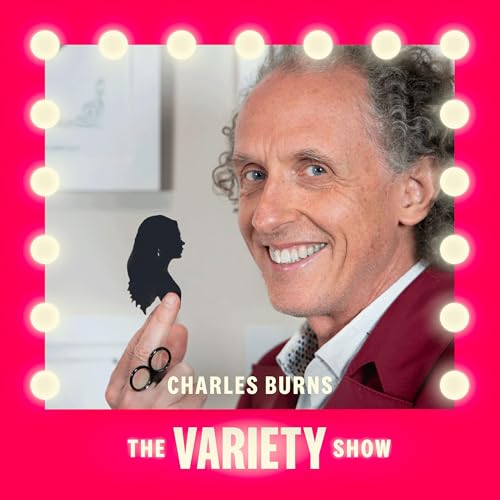
  • Charles Burns on royal silhouettes, Covent Garden origins, and the art of performing with scissors
    Nov 13 2025

    Join us on this captivating journey into the fascinating world of live entertainment. Host Adam Sternberg brings you engaging conversations with remarkable entertainers, from magicians and jugglers to aerial artists and contortionists. Discover the unique stories behind their extraordinary careers, the challenges they've faced, and the motivations that drive them. If you're passionate about live entertainment or simply curious about the lives of these extraordinary performers, this podcast is a must-listen.

    Episode Highlights

    In this episode, Adam welcomes silhouette artist Charles Burns a performer–artist whose entire show fits into a pocket: paper and scissors. From a bruising boarding-school experience to art college and the Covent Garden piazza, Charles charts how drawing led him to live silhouette cutting, why imperfection makes entertainment memorable, and what it felt like to interrupt Queen Elizabeth II (successfully!) to cut Her Majesty’s profile. He explains his mirror-free, one-line cutting technique, the psychology of likeness, why some people “don’t look like themselves” in profile, and how lockdown sparked his global Zoom silhouette studio. We also hear about AI silhouettes, Disney’s influence on the American style, and an 18th-century automaton “artist” with a human under the table.

    Key Discussion Points

    • Origins & Early Training: Growing up in Somerset; boarding at Ampleforth; bullying; sanctuary in the art room with sculptor-teacher John Bunting; discovering that drawing was the foundation.
    • Art Education: Foundation at Exeter; time at the École des Beaux-Arts (Lyon); degree at Wolverhampton; art as communication vs. art-therapy.
    • Artist vs Performer: Why most artists perform (and most performers create art); Charles sits “on the cusp,” literally performing portraits in front of an audience.
    • Covent Garden Beginnings: Late-1980s street portraitist; a visiting Spanish cutter inspires the switch to silhouettes.
    • Technique & Tools: Pocketed papers, white backing sheet, cutting largely in one continuous line; right-profile preference for a right-handed cutter; rotating the paper, not the scissors.
    • Work & Temperament: “One of nature’s self-employed”; office life felt like returning to school politics.
    • Neurodiversity: Son’s diagnosis led to Charles’s own autism-spectrum diagnosis in his 40s; reframing meticulous preparation as a strength.
    • Everyone Can Draw: Fear often comes from bad early teaching; skill = motivation + hard work; drawing as the base of all visual art.
    • Royal Encounter: Cutting Queen Elizabeth II at a Ritz Golden Jubilee party—nerves, etiquette, and simply stepping in; other high-profile sitters mentioned by Adam include Nelson Mandela and President Clinton.
    • Capturing Likeness: Children who won’t sit still; poor lighting at events; self-image vs. profile reality; audiences often “rescue” a likeness because they see you as others do.
    • Entertainment Over Perfection: Some silhouettes are better than others—human variability is part of the show; the joy of imperfection and the retelling (magicians’ lesson).
    • Live Demonstration: Charles cuts Adam’s silhouette on-air—narrating chest→chin→nose→glasses→hair; occasional “back-cutting” fixes; speed builds with warm-up.
    • Human vs. Machine: Low-tech authenticity matters; guests often expect equipment and are astonished it’s “just scissors.”
    • AI & Automation: Experiments with AI-generated silhouettes; yes, a laser could cut them—but the human...
    Mostra di più Mostra meno
    48 min