Episodi

  • From Territory Manager to CCO of a $400M Cardiovascular Powerhouse with Tarik Pacuka
    May 1 2026

    In this episode of the Crux of Cardio, Jordan Burgin sits down with Tarik Pacuka, former Chief Commercial Officer of Terumo Aortic, who scaled the business from a niche textile graft company into a $400M+ global cardiovascular player.


    Tarik shares the commercial playbook behind his 15-year rise from territory manager to CCO, the mentorship that shaped his leadership, what product recalls really do to a brand, and why he believes aortic disease is the most suppressed opportunity in cardiovascular.

    Key Topics:

    Tarik’s career trajectory from pharma to Vascutek to Terumo Aortic CCO

    Building and retaining high-performing commercial teams across three time zones

    The commercial playbook behind Terumo Aortic’s growth

    Managing product recalls and protecting brand confidence

    Direct vs. indirect vs. OEM commercial models and where execution falls short

    What Tarik looks for in his next move and the red flags he’s watching for


    Related Insights:

    Why reliability, not innovation, is the real differentiator in Class III medical devices

    The role of mentorship in fast-tracking executive careers in medtech

    How pharma training gives commercial leaders a competitive edge in medtech

    The generational shift from radical invasive surgery to digitally supported, minimally invasive care


    Core Challenges:

    Aortic disease remains suppressed in terms of the urgency and investment needed. Despite the aorta being formally recognised as an organ, innovation is not moving fast enough to address the full spectrum of aortic conditions with minimally invasive, digitally supported solutions.

    Scaling commercial culture across global teams while maintaining trust, purpose and execution discipline is one of the hardest leadership challenges in cardiovascular medtech, particularly when competing against significantly larger incumbents like Medtronic, W.L. Gore and Getinge.

    Tune in now to hear how Tarik Pacuka built one of cardiovascular’s most formidable commercial engines, and what he thinks the industry needs next.

    Mostra di più Mostra meno
    59 min
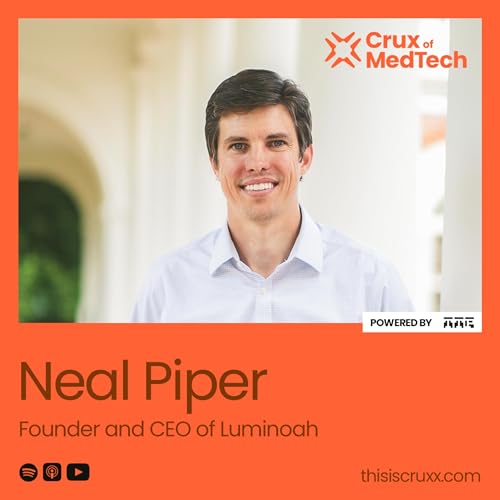
  • Building the World’s Smallest Feeding Pump with Neal Piper
    Apr 28 2026

    In this episode, Henry Norton is joined by Neal Piper, Founder and CEO of Luminoah, the company behind the world’s smallest wearable enteral feeding pump. Neal shares the deeply personal story of how his son Noah’s cancer diagnosis exposed just how outdated tube feeding technology really is, and what he’s doing to change it.Key TopicsThe founding story behind Luminoah and Neal’s son Noah’s cancer journeyWhy enteral nutrition technology has barely changed in 20 yearsDesigning the Luminoah Flow: credit-card-sized, wearable, gravity-independentBuilding a full data ecosystem for real-time feed tracking and remote patient monitoringRaising capital and staying capital-efficient as a mission-driven medtech startupRelated InsightsHow malnourishment in chronic illness drives a 5x increase in mortalityThe role of personalised nutrition in improving drug therapy outcomesWhy early regulatory and reimbursement mapping de-risks medtech venturesHow children’s hospitals collaborate across institutions to improve paediatric careCore ChallengesCurrent enteral feeding pumps are bulky, IV-pole-based devices with six feet of tubing, no data tracking, and no mobility. Patients, including young children, are tethered for 8–10+ hours a day, impacting quality of life, socialisation, and nutritional compliance.Luminoah has built a wearable, credit-card-sized pump with a pouch-based feeding set, 360-degree nutrition delivery, and a connected data platform. Their goal: let patients live freely while giving clinicians real-time visibility into nutritional status to intervene before hospital readmission.Tune in now to hear how one father’s personal mission is reshaping the future of enteral nutrition.

    Mostra di più Mostra meno
    49 min
  • Kidney Monitoring Hasn’t Changed Since 1936 with Todd Dunn
    Apr 21 2026

    Henry Norton sits down with Todd Dunn, CEO of Accuryn Medical, for a conversation that starts on an OR floor and ends with a question about what it really means to lead with integrity. Todd didn’t come to medtech through a lab or a VC fund, he came through a hospital in Charlotte, where a CRNA pointed under a bed and showed him that the kidney, medicine’s most sensitive organ, was still being monitored by a gravity-fed bag invented in 1936. A decade on from that moment, he’s now running the company trying to fix it.


    Key Topics

    • Why kidney monitoring hasn’t meaningfully advanced since CR Bard’s 1936 Foley catheter

    • What AKI (acute kidney injury) actually is and why CMS now classifies it as a hospital-acquired harm

    • How Accuryn’s SmartFoley detects kidney distress up to 12 hours before blood tests can

    • The ‘diagnosis before prescription’ framework Todd built at Atrium Health

    • Transitioning from health system innovator to medtech CEO


      Related Insights

    • Why hospital financing explains why the kidney was the last vital organ to be digitised

    • The real cost of AKI: 13 million cases annually, 300,000 deaths, and $10–24bn in US healthcare spend

    • Why serum creatinine is the wrong marker for kidney function and what replaces it

    • How clinical partnership rather than conventional sales tactics is breaking through hospital inertia


      Core Challenges

    • The standard of care for urinary output measurement hasn’t changed since 1936. While the heart, lungs, and brain are fully digitised in critical care settings, hospitals still rely on a gravity-dependent system prone to stagnation, back-pressure, and manual error. ICU nurses carry the cognitive burden and patients pay the price when outputs go unrecorded.

    • Creatinine blood tests only flag kidney injury once function has already dropped to 60%. By the time the lab result returns, damage is done. Urine output is the real-time vital sign — and Accuryn is the only FDA-cleared platform that automates and digitises it, giving clinicians up to a 12-hour head start.

    Tune in now to find out why the most sensitive organ in the body has been flying blind for nearly a century and what one former hospital innovator is doing to fix it.


    The Crux of MedTech podcast is brought to you by Cruxx, a specialist surgical robotics recruitment agency.


    To learn more about Cruxx,⁠⁠⁠⁠⁠⁠⁠⁠⁠⁠⁠⁠⁠⁠⁠⁠⁠⁠⁠ ⁠click here.⁠⁠⁠⁠⁠⁠⁠⁠⁠⁠⁠⁠⁠⁠⁠⁠⁠⁠⁠


    A big thank you to our sponsors on this season of the podcast;


    ⁠⁠⁠⁠⁠⁠⁠⁠⁠⁠⁠⁠⁠⁠⁠⁠⁠⁠TTP plc⁠⁠⁠⁠⁠⁠⁠⁠⁠⁠⁠⁠⁠⁠⁠⁠⁠⁠⁠⁠ With a 35-year track record, TTP excels in turning innovative ideas into market-ready solutions. Their team of 300+ experts deliver breakthrough solutions in areas ranging from endoluminal robotics and navigation systems to ultrasound imaging. Whether you're a startup or a multinational, ⁠⁠⁠⁠⁠⁠⁠⁠⁠⁠⁠⁠⁠⁠⁠⁠⁠⁠⁠⁠TTP plc⁠⁠⁠⁠⁠⁠⁠⁠⁠⁠⁠⁠⁠⁠⁠⁠⁠⁠⁠⁠ can accelerate your development with the latest technologies. Learn more at ⁠⁠⁠⁠⁠⁠⁠⁠⁠⁠⁠⁠⁠⁠⁠⁠⁠⁠⁠⁠TTP.com⁠⁠⁠⁠⁠⁠⁠⁠⁠⁠⁠⁠⁠⁠⁠⁠⁠⁠⁠⁠


    Mostra di più Mostra meno
    54 min
  • Robotic Prostatectomy Has Run Its Course with Dr. Arun Menawat
    Apr 14 2026

    In this episode of The Crux of MedTech, Henry Norton is joined by Dr. Arun Menawat, Chairman and CEO of Profound Medical, the company behind the TULSA-PRO® system, an MRI-guided, incision-free platform that’s directly challenging robotic prostatectomy with head-to-head clinical data.

    Arun shares the clinical trial results that show step-change improvements in patient outcomes, the commercial lessons from building and exiting Novadaq (acquired by Stryker), and why he believes incision-free surgery isn’t just a product, it’s the next wave.

    Key Topics:

    • Head-to-head clinical trial data: TULSA-PRO vs. robotic prostatectomy

    • How MRI-guided thermal ultrasound works and why it matters for patient outcomes

    • The Novadaq journey: from fluorescence imaging to a Stryker acquisition

    • Building a KOL strategy for a novel surgical platform

    • Why incision-free surgery is positioned to disrupt the next decade of surgical care

    Related Insights:

    • Why you can’t sell to surgeons by telling them they need to be better

    • The role of AI in standardising MR imaging for surgical planning

    • Why CMS reimbursement for TULSA now exceeds robotic surgery

    • How different KOL personas early adopters, visionaries, and conservatives each serve a commercialisation strategy

    Core Challenges:

    • Robotic prostatectomy, despite being the current standard, carries a 75% risk of incontinence or erectile dysfunction. The robot mimics the surgeon’s hands with more reach, but it doesn’t address the precision problem the prostate sits in a highly congested area surrounded by nerve bundles and sphincter muscles.

    • Profound Medical’s TULSA-PRO uses real-time MRI guidance and thermal ultrasound to ablate tissue at 57°C the lowest lethal temperature with AI-driven boundary mapping. The result: dramatically reduced side effects, no incision, and patients going home the same day.

    Tune in now to hear how Profound Medical is challenging the robotic surgery status quo with clinical data, MR-guided precision, and a vision for incision-free surgery across oncology and beyond.


    The Crux of MedTech podcast is brought to you by Cruxx, a specialist surgical robotics recruitment agency.


    To learn more about Cruxx,⁠⁠⁠⁠⁠⁠⁠⁠⁠⁠⁠⁠⁠⁠⁠⁠⁠⁠⁠ ⁠click here.⁠⁠⁠⁠⁠⁠⁠⁠⁠⁠⁠⁠⁠⁠⁠⁠⁠⁠⁠


    A big thank you to our sponsors on this season of the podcast;


    ⁠⁠⁠⁠⁠⁠⁠⁠⁠⁠⁠⁠⁠⁠⁠⁠⁠⁠TTP plc⁠⁠⁠⁠⁠⁠⁠⁠⁠⁠⁠⁠⁠⁠⁠⁠⁠⁠⁠⁠ With a 35-year track record, TTP excels in turning innovative ideas into market-ready solutions. Their team of 300+ experts deliver breakthrough solutions in areas ranging from endoluminal robotics and navigation systems to ultrasound imaging. Whether you're a startup or a multinational, ⁠⁠⁠⁠⁠⁠⁠⁠⁠⁠⁠⁠⁠⁠⁠⁠⁠⁠⁠⁠TTP plc⁠⁠⁠⁠⁠⁠⁠⁠⁠⁠⁠⁠⁠⁠⁠⁠⁠⁠⁠⁠ can accelerate your development with the latest technologies. Learn more at ⁠⁠⁠⁠⁠⁠⁠⁠⁠⁠⁠⁠⁠⁠⁠⁠⁠⁠⁠⁠TTP.com⁠⁠⁠⁠⁠⁠⁠⁠⁠⁠⁠⁠⁠⁠⁠⁠⁠⁠⁠⁠


    Mostra di più Mostra meno
    49 min
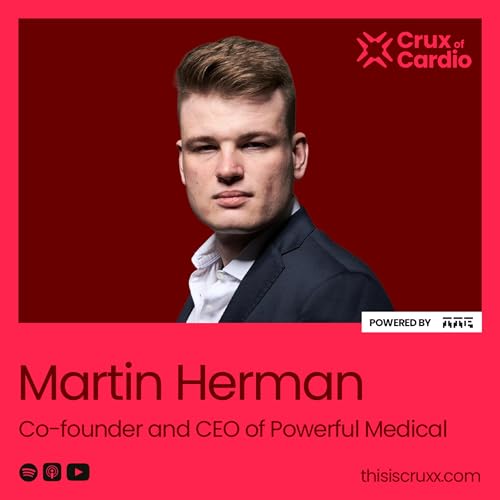
  • The AI That Reads ECGs Better Than Your Cardiologist with Martin Herman
    Apr 2 2026

    In this episode of the Crux of Cardio, host Jordan Burgin is joined by Martin Herman, co-founder and CEO of Powerful Medical the AI-powered cardiac diagnostics company behind PM Cardio.

    Martin shares how a software engineering background, a medical student brother, and a search for a truly pioneering problem led him to build an AI platform that can now diagnose 46 cardiovascular conditions from a single 12-lead ECG with over 120,000 doctors already using it in clinical practice.

    They cover the journey from early scepticism to clinical proof, the brutal reality of MedTech fundraising, and what FDA breakthrough designation means for Powerful Medical's imminent US commercial launch.

    Key Topics:

    • How Powerful Medical identified the ECG as cardiology's biggest unsolved problem

    • Building AI that outperforms experienced cardiologists on the hardest cases

    • The clinical and commercial case for PM Cardio in US heart attack centres

    • FDA breakthrough designation and the road to US approval this summer

    • Raising €46M in non-dilutive EU grant funding and what comes next

    • Winning MedTech Innovator and what it means for partnerships and validation

    Related Insights:

    • Why starting with the biggest clinical sceptics is actually a growth strategy

    • How 64 American physician-investors validated the product with $3.5M in funding

    • The difference between pre- and post-ChatGPT AI fundraising environments

    • Why young founders have a structural advantage in MedTech and how to use it

    Core Challenges:

    • Beyond the cardiologist, almost no clinician can reliably read an ECG creating a critical diagnostic gap at the first point of patient contact that PM Cardio is designed to close.

    • US hospitals chasing heart attack accreditation KPIs are generating false positive rates as high as 70–80%, costing up to $15,000 per unnecessary cath lab activation. PM Cardio reduces false positives by ~90% while maintaining diagnostic sensitivity.

    • Regulatory fragmentation across 27 EU healthcare markets and the complexity of US FDA approval has been the single biggest bottleneck to commercial scale, despite overwhelming clinical evidence.

    Tune in now to hear how Martin Herman turned a software engineering background and a medical student brother into a platform already saving thousands of lives and why the biggest breakthrough may still be ahead.


    The Crux of MedTech podcast is brought to you by Cruxx, a specialist surgical robotics recruitment agency.


    To learn more about Cruxx,⁠⁠⁠⁠⁠⁠⁠⁠⁠⁠⁠⁠⁠⁠⁠⁠⁠⁠⁠ ⁠click here.⁠⁠⁠⁠⁠⁠⁠⁠⁠⁠⁠⁠⁠⁠⁠⁠⁠⁠⁠


    A big thank you to our sponsors on this season of the podcast;


    ⁠⁠⁠⁠⁠⁠⁠⁠⁠⁠⁠⁠⁠⁠⁠⁠⁠⁠TTP plc⁠⁠⁠⁠⁠⁠⁠⁠⁠⁠⁠⁠⁠⁠⁠⁠⁠⁠⁠⁠ With a 35-year track record, TTP excels in turning innovative ideas into market-ready solutions. Their team of 300+ experts deliver breakthrough solutions in areas ranging from endoluminal robotics and navigation systems to ultrasound imaging. Whether you're a startup or a multinational, ⁠⁠⁠⁠⁠⁠⁠⁠⁠⁠⁠⁠⁠⁠⁠⁠⁠⁠⁠⁠TTP plc⁠⁠⁠⁠⁠⁠⁠⁠⁠⁠⁠⁠⁠⁠⁠⁠⁠⁠⁠⁠ can accelerate your development with the latest technologies. Learn more at ⁠⁠⁠⁠⁠⁠⁠⁠⁠⁠⁠⁠⁠⁠⁠⁠⁠⁠⁠⁠TTP.com⁠⁠⁠⁠⁠⁠⁠⁠⁠⁠⁠⁠⁠⁠⁠⁠⁠⁠⁠⁠


    Mostra di più Mostra meno
    1 ora e 4 min
  • Alzheimer's Drugs Arrived Brain Scanners Didn't with Jannis Fischer
    Mar 31 2026

    Alzheimer's treatments finally exist but patients are waiting months for the brain scans they need to access them. In this episode, Jannis Fischer, CEO and co-founder of Positrigo, explains how his team built an ultra-compact brain PET scanner that fits inside a neurologist's office and cuts diagnostic timelines from months to days. From losing an investor the day before signing to FDA clearance and triple-digit patient volumes within weeks of launch, this is a founder story with real clinical stakes.

    Key Topics

    • Why new Alzheimer's drugs have created a brain PET bottleneck

    • How Positrigo's NeuroLF scanner delivers diagnostic-quality imaging in a seated, 10–20 minute scan

    • The "land and expand" go-to-market strategy across US neurology offices

    • Navigating FDA clearance and CE mark on ~€15M in funding

    • Transitioning from R&D organisation to customer-centric commercial operation

    • Fundraising a $25–35M growth round to scale from proof of concept to exit-readiness

    Related Insights

    • Roche, Eli Lilly and Biogen are running trials on preventive Alzheimer's intervention blood tests could pre-screen patients before symptoms appear

    • The reimbursement landscape for brain PET is already settled existing codes apply, making the economics a "no-brainer" for neurology practices

    • Decentralising imaging from hospital centres to specialist offices mirrors the broader US trend in point-of-care diagnostics

    • Strategic acquirers (Siemens, GE Healthcare) and radiopharmaceutical synergies make trade sale the most likely exit path

    Core Challenges

    • Whole-body PET systems are overloaded with oncology and cardiology scans, leaving neurology patients waiting months for brain imaging a bottleneck that worsens as Alzheimer's drug adoption accelerates.

    • Positrigo's NeuroLF system addresses this by enabling in-office brain PET scans at the point of care, but scaling requires the right sales team, operational partners, and growth capital to move from 3 installations to a nationwide footprint.

    🎧 Tune in now to hear how a particle physicist turned CEO is putting brain scanners where they belong next to the patients who need them most.


    The Crux of MedTech podcast is brought to you by Cruxx, a specialist surgical robotics recruitment agency.


    To learn more about Cruxx,⁠⁠⁠⁠⁠⁠⁠⁠⁠⁠⁠⁠⁠⁠⁠⁠⁠⁠ ⁠click here.⁠⁠⁠⁠⁠⁠⁠⁠⁠⁠⁠⁠⁠⁠⁠⁠⁠⁠


    A big thank you to our sponsors on this season of the podcast;


    ⁠⁠⁠⁠⁠⁠⁠⁠⁠⁠⁠⁠⁠⁠⁠⁠⁠TTP plc⁠⁠⁠⁠⁠⁠⁠⁠⁠⁠⁠⁠⁠⁠⁠⁠⁠⁠⁠ With a 35-year track record, TTP excels in turning innovative ideas into market-ready solutions. Their team of 300+ experts deliver breakthrough solutions in areas ranging from endoluminal robotics and navigation systems to ultrasound imaging. Whether you're a startup or a multinational, ⁠⁠⁠⁠⁠⁠⁠⁠⁠⁠⁠⁠⁠⁠⁠⁠⁠⁠⁠TTP plc⁠⁠⁠⁠⁠⁠⁠⁠⁠⁠⁠⁠⁠⁠⁠⁠⁠⁠⁠ can accelerate your development with the latest technologies. Learn more at ⁠⁠⁠⁠⁠⁠⁠⁠⁠⁠⁠⁠⁠⁠⁠⁠⁠⁠⁠TTP.com⁠⁠⁠⁠⁠⁠⁠⁠⁠⁠⁠⁠⁠⁠⁠⁠⁠⁠⁠


    Mostra di più Mostra meno
    44 min
  • Nobody Can See What's Happening in Surgery with Bruno Dheedene
    Mar 24 2026

    In this episode, host Henry Norton sits down with Bruno Dheedene, CEO and Founder of Rods&Cones, a surgical streaming platform that's solving one of the most overlooked problems in the OR - nobody can actually see what the surgeon is doing.

    Bruno shares how he bootstrapped the company from a 2018 incubation project to a profitable business serving customers worldwide, all without VC funding. He explains why the pandemic became their biggest accelerator, how they're democratizing surgical knowledge with POV streaming technology, and their audacious goal to enable 1 million patients to be treated with remote surgical assistance.

    Key Topics:

    • The visibility crisis in modern operating rooms

    • Building a capital-efficient medtech company without VC funding

    • How smart glasses and streaming tech evolved from 2013 prototypes to surgical-grade solutions

    • Customer-funded growth and the pandemic acceleration story

    • Product suite evolution driven by surgeon feedback

    Related Insights:

    • Why surgical knowledge remains trapped inside operating rooms

    • The power of bootstrapping to maintain autonomy and decision-making control

    • How remote surgical assistance can address global surgeon shortages

    • Real-world use cases from military dermatology to African surgical training

    • Building a "follow the sun" customer experience team with 2-minute SLA

    Core Challenges:

    • Even in the OR, industry reps and assistants can't see what surgeons are doing during open procedures. Surgeons work in small cavities from their own point of view, leaving everyone else in the outer circle with limited visibility.

    • Rods&Cones captures the surgeon's exact POV using smart glasses and streams high-quality surgical footage to remote experts, enabling real-time case support, medical education, and remote assistance - turning a level 100 surgeon into a level 122 surgeon.

    🎧 Tune in now to hear how one founder is making surgery visible and accessible to millions who need it most.


    The Crux of MedTech podcast is brought to you by Cruxx, a specialist surgical robotics recruitment agency.


    To learn more about Cruxx,⁠⁠⁠⁠⁠⁠⁠⁠⁠⁠⁠⁠⁠⁠⁠⁠⁠⁠ ⁠click here.⁠⁠⁠⁠⁠⁠⁠⁠⁠⁠⁠⁠⁠⁠⁠⁠⁠⁠


    A big thank you to our sponsors on this season of the podcast;


    ⁠⁠⁠⁠⁠⁠⁠⁠⁠⁠⁠⁠⁠⁠⁠⁠⁠TTP plc⁠⁠⁠⁠⁠⁠⁠⁠⁠⁠⁠⁠⁠⁠⁠⁠⁠⁠⁠ With a 35-year track record, TTP excels in turning innovative ideas into market-ready solutions. Their team of 300+ experts deliver breakthrough solutions in areas ranging from endoluminal robotics and navigation systems to ultrasound imaging. Whether you're a startup or a multinational, ⁠⁠⁠⁠⁠⁠⁠⁠⁠⁠⁠⁠⁠⁠⁠⁠⁠⁠⁠TTP plc⁠⁠⁠⁠⁠⁠⁠⁠⁠⁠⁠⁠⁠⁠⁠⁠⁠⁠⁠ can accelerate your development with the latest technologies. Learn more at ⁠⁠⁠⁠⁠⁠⁠⁠⁠⁠⁠⁠⁠⁠⁠⁠⁠⁠⁠TTP.com⁠⁠⁠⁠⁠⁠⁠⁠⁠⁠⁠⁠⁠⁠⁠⁠⁠⁠⁠


    Mostra di più Mostra meno
    49 min
  • Cardiac Ablation Has A 50% Problem, Here's The Fix with Andreu Climent
    Mar 19 2026

    Jordan is joined by Andreu Climent, CEO of Corify Care, a cardiac mapping company using non-invasive, whole-heart technology to guide EP procedures in real time. Andreu brings a telecoms engineering background to a problem most cardiologists have accepted as unsolvable: that half of all AF ablations fail, because clinicians are operating without seeing the full picture.

    They cover how Corify's cardiac global mapping system works, how it has more than doubled ablation efficacy in pilot studies, and what a partnership with Mayo Clinic means for the future of predictive cardiac care. Andreu also gets into the realities of taking a seven-year research project to commercial launch and what it really takes to change clinical behaviour.

    Key Topics

    • How Corify's whole-heart mapping system works

    • The limitations of current EP ablation standards of care

    • Doubling AF ablation efficacy with guided, personalised treatment

    • The Mayo Clinic partnership and the AI for AF project

    • Scaling from academic research to commercial launch and US market entry

    Related Insights

    • Why coming from outside cardiology helped Andreu challenge assumptions baked into the standard of care

    • The case for personalised, data-guided ablation over empirical, one-size-fits-all approaches

    • How predictive mapping could identify arrhythmia risk years before symptoms appear

    • What it takes to shift VC interest as clinical and regulatory risk drops

    Core Challenges

    • Current AF ablation is largely empirical, with success rates of 50-60%. Half of patients return after a failed procedure, and clinicians have no reliable way to know in advance whether a treatment will work for a given patient.

    • Changing established clinical behaviour is slow, even when the data clearly supports a better approach. Getting buy-in requires more than proof — it requires presence in the cath lab and time.

    🎧 Tune in now to find out how Andreu Climent and Corify Care are replacing guesswork in the EP lab with real-time, whole-heart mapping.


    Mostra di più Mostra meno
    54 min