Episodi

  • Michael Kay, Invei a Winery Built on Resilience
    Oct 15 2026

    Send a Text Message to The Kosher Terroir

    A single mix-up call sends Michael Kay to a champagne facility as a last-minute kosher supervisor, and by the grace of Ha'Shem, that becomes the start of a new life in wine. I sit down with Michael, founder of Invei, to unpack how a former book editor builds a serious California kosher winery out of a garage, sources fruit from vineyards he doesn’t own, and still manages to make bottles that surprise even experienced drinkers.

    We get specific about the craft: how Michael evaluates growers, why tasting wines made from a vineyard can be the best first filter, and what he looks for when he walks rows that aren’t “his.” Then we go hour by hour through harvest day logistics, from bins and forklifts to quality checks that can force a hard decision before the must ever hits the tank. If you’ve ever wanted a clear explanation of fermentation control, we dig into cold temps, glycol chillers, lab testing delays, yeast selection, nutrient timing, and how stability problems can show up later in the bottle.

    Michael also shares how being a mashgiach shapes winemaking choices around additives, plus what he learned at massive operations like Gallo that still matters when you’re running small-batch kosher wine. We talk underrated standouts like Gewürztraminer and Petit Verdot, dream varietals he wants to make next, and the partnership dynamics with Rabbi Dovber Berkowitz that keep Invey both ambitious and grounded.

    If you enjoy smart wine talk with real-world cellar details, subscribe, share this with a wine-loving friend, and leave a review so more listeners can find Kosher Terroir.

    For More Information:
    Invei Winery: Berkeley California
    Michael Kay Winemaker Co-Founder / Rabbi Dovber Berkowitz Co-Founder
    www.invei.com
    Phone: +1 510-847-5268

    Support the show

    www.TheKosherTerroir.com
    +972-58-731-1567
    +1212-999-4444
    TheKosherTerroir@gmail.com
    Link to Join “The Kosher Terroir” WhatsApp Chat
    https://chat.whatsapp.com/EHmgm2u5lQW9VMzhnoM7C9
    Thursdays 6:30pm Eastern Time on the NSN Network and the NSN App

    Mostra di più Mostra meno
    1 ora e 8 min
  • What If Kosher Wine Had No Glass Ceiling?
    Oct 8 2026

    Send a Text Message to The Kosher Terroir

    A winemaker can spend decades learning how to shape a wine, so what happens when kosher restrictions limit which wines you taste? From Jerusalem, I sit down with Ari Gotthelf, a kosher wine producer, importer, and consultant who has made it his mission to bring the worlds terroir into the kosher market without watering down the identity of the place, the grapes, or the winery behind it.

    We talk about the hidden work behind every kosher bottle: reaching out to dozens of wineries, earning trust across cultures, and navigating the tension between marketing demands and cellar reality. Ari shares what wineries misunderstand about kosher wine, why choosing the right mashgiach team matters, and how new technology like live tank monitoring can reduce friction and cost of kosher production while protecting quality. If you care about kosher winemaking, wine importing, or the practical side of building a global kosher wine portfolio, you’ll hear the unfiltered logistics.

    Then we go straight to the fun part: which regions and styles deserve more attention from kosher wine lovers. Ari makes a case for Portugal’s depth and native grapes, why New Zealand Sauvignon Blanc is a perfect teaching wine, and what South Africa can offer when you chase the right sites. We also get honest about wine snobbery, how to read a wine label for real value, and why you should never apologize for what you enjoy.

    Subscribe and share this with a wine-loving friend, and leave a review so more curious kosher drinkers can find the show.

    For more Information

    Ari Gotthelf

    E-mail: ari@ubg.co.il

    Instagram: @got_ari

    Website: ubg.co.il

    Support the show

    www.TheKosherTerroir.com
    +972-58-731-1567
    +1212-999-4444
    TheKosherTerroir@gmail.com
    Link to Join “The Kosher Terroir” WhatsApp Chat
    https://chat.whatsapp.com/EHmgm2u5lQW9VMzhnoM7C9
    Thursdays 6:30pm Eastern Time on the NSN Network and the NSN App

    Mostra di più Mostra meno
    1 ora e 8 min
  • Israel’s First Official Wine Region Map
    Sep 17 2026

    Send a Text Message to The Kosher Terroir

    Israel is smaller than New Jersey and yet it may be one of the most quickly changing wine landscapes you can drive across in a single day. That’s why Israel’s first official wine region map matters, and why we wanted to go straight to someone who helped draw it.

    We’re joined by Noa Maoz, an agronomist and viticulturist who served on the professional committee behind the map, alongside Ministry of Agriculture experts and specialists working with soil science, climate forecasting, and GIS mapping. We dig into the core idea that finally moved the industry forward after decades of debate: stop fighting about branding, blends, and label politics, and look only at terroir geology, climate, soil, elevation, and what the land actually does to a vine. Noa explains how eight regions and 18 subregions create clearer options for wineries, and why the differences across Israel’s coastline, central mountains, and desert zones are real, measurable, and meaningful in the glass.

    We also get practical about wine labels and consumer trust: what it means when a bottle claims Golan, Galilee, Judean Hills, or Negev, how rules like an 85% threshold fit global norms, and why enforcing geographic truth helps everyone learn faster. Looking ahead, Noa shares how subregions can evolve, how sub-subregions could be proposed by growers, and why Israel’s still-young modern wine industry should stay creative rather than rushing into strict European-style appellation restrictions.

    If you care about kosher wine, Israeli terroir, and tasting with more confidence, hit subscribe, share this with a wine friend, and leave a review so more listeners can find the show.

    Support the show

    www.TheKosherTerroir.com
    +972-58-731-1567
    +1212-999-4444
    TheKosherTerroir@gmail.com
    Link to Join “The Kosher Terroir” WhatsApp Chat
    https://chat.whatsapp.com/EHmgm2u5lQW9VMzhnoM7C9
    Thursdays 6:30pm Eastern Time on the NSN Network and the NSN App

    Mostra di più Mostra meno
    36 min
  • Wrong Bottle, Right Night
    Sep 9 2026

    Send a Text Message to The Kosher Terroir

    Your Rosh Hashanah wine choice can either fight the table or join it. When the holiday is already teaching your mouth sweetness through apple and honey, a bone-dry “serious” bottle can accidentally miss the emotional and spiritual assignment. So we make a counterintuitive move: we let the wine geek lose on purpose and we learn how to choose sweet wine that feels grown up, balanced, and deeply aligned with the night’s meaning.

    We start with Nehemiah 8, where a weeping crowd hears Torah and finally understands. The leaders do not demand more grief. They send everyone toward food, “sweet drinks,” and generosity, because joy becomes strength. That is the core idea: sweetness is not denial; it is a practice of hope for a judged people. From there we translate theology into the shopping aisle, where family group chats argue, carts fill up, and someone always texts “don’t forget the sweet one.”

    Then we get specific about what separates quality sweet wine from the old kosher wine cartoon. We lay out a three-rung ladder you can use in any store: nostalgic Concord that gets honored without being the default, semi-sweet aromatic whites like Gewurztraminer for effortless hospitality, and dessert wine with real spine. We talk method, including cryo extraction and ice wine-style concentration, plus the essentials that make sweetness feel clean: acidity, aroma lift, finish length, and serving temperature.

    Finally, we bring it back to the table with practical tips: chill hard, pour smaller, pair sweet wine with starters as well as dessert, and keep the head clear for the seriousness of the day. And we don’t skip the ethical line of the verse: send portions to someone who has nothing prepared. Subscribe, share this with a friend hosting a holiday meal, and leave a review with your favorite Rosh Hashanah bottle so others can learn from your table.

    Support the show

    www.TheKosherTerroir.com
    +972-58-731-1567
    +1212-999-4444
    TheKosherTerroir@gmail.com
    Link to Join “The Kosher Terroir” WhatsApp Chat
    https://chat.whatsapp.com/EHmgm2u5lQW9VMzhnoM7C9
    Thursdays 6:30pm Eastern Time on the NSN Network and the NSN App

    Mostra di più Mostra meno
    55 min
  • The Wine Inside The Incense
    Sep 3 2026

    Send a Text Message to The Kosher Terroir

    There’s a line many of us race past every morning in Pitum Haketoret, and once you hear it, you can’t unhear it: Yain Kafrisin. Wine. Not for Kiddush, not for libations, not even to taste, but to soak a stubborn spice so the holiest incense in Judaism can rise as a cloud of fragrance on Yom Kippur. I’m Simon Jacob, and from Jerusalem I follow that one word into an ancient debate and a very modern High Holidays lesson.

    We treat the ketoret text like a winery’s production sheet: ingredients, weights, tools, and the non-negotiable “how.” We walk through the Temple’s four verbs scrub, soak, grind, burn and watch them turn into a calendar map for Elul, Rosh Hashanah, and the Ten Days of Repentance. Along the way we ask what Yain Kafrisin really was: Cyprus wine from an island export economy, or “caper wine” from the brazen bush that grows out of Jerusalem stone. We also meet the scholars and winemakers who tried to recreate a plausible ancient-style strong white wine by drying grapes in the sun, yielding a golden, high-alcohol dessert wine with serious staying power.

    Then the episode pivots from romance to chemistry. High alcohol is a solvent, the classic key to extraction in perfumery, which reframes why the Temple insists on wine at all and why it rejects a cheaper solvent “because of kavod.” That dignity theme echoes into our own season of teshuva: no shortcuts, no autopilot apologies, and no pretending the manner doesn’t matter. We end with three table takeaways for Rosh Hashanah night and two small practices you can try the next time you reach those words in prayer or lift a cup of kosher wine.

    If this helped you slow down and hear the paragraph differently, subscribe, share it with a friend, and leave a review so more listeners can find The Kosher Terroir.

    Support the show

    www.TheKosherTerroir.com
    +972-58-731-1567
    +1212-999-4444
    TheKosherTerroir@gmail.com
    Link to Join “The Kosher Terroir” WhatsApp Chat
    https://chat.whatsapp.com/EHmgm2u5lQW9VMzhnoM7C9
    Thursdays 6:30pm Eastern Time on the NSN Network and the NSN App

    Mostra di più Mostra meno
    49 min
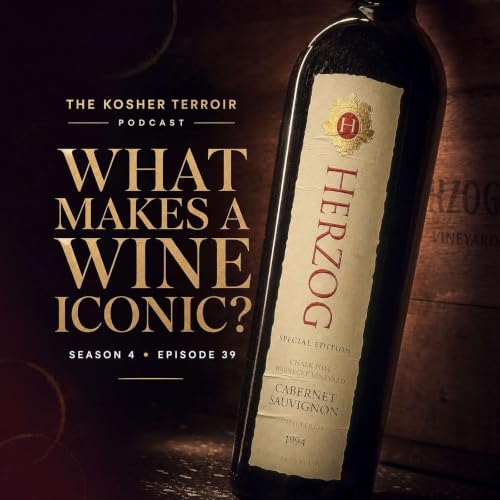
  • What Makes A Wine Iconic?
    Aug 27 2026

    Send a Text Message to The Kosher Terroir

    What makes a wine iconic? I’m not asking about the bottle that impressed a critic or the one that cost so much your kids stared at you. I mean the wine you can still describe decades later, with your hands moving, because it welded itself to a moment in your life. Tonight I open my own cellar and my family’s stories to chase the answer, starting with a case that survived a basement flood and still poured like a powerhouse.

    Along the way, I make the best case I can for wine scores and why they mattered for kosher wine, then I show you the limit: a number can be honest and still be blind. We get into what makes a wine age-worthy in real terms, from acidity and tannin to concentration, clean winemaking, and proper storage, plus the strange miracle of botrytis and kosher Sauternes that can outlive the people who buy them. From there, the lens widens to the Jewish table, where wine marks time from Kiddush to Havdalah and carries one generation into the next.

    Then come the bottles that refuse to stay “just wine”: a 1986 Rothschild kosher Bordeaux that quietly walks into its own anniversary dinner, a Sancerre Sauvignon Blanc that tastes like lychee and redraws my map in ten seconds, and an Israeli red from Recanati with a clear nana mint signature that gets crushed by one major score and crowned best in Israel by a Bordeaux jury. The conclusion I can’t unsee is simple: a wine becomes iconic when it stops being separable from the people you drank it with.

    If you’ve got a bottle like that, I want to hear it. Subscribe, share this with someone who saves bottles on purpose, and leave a review so more listeners find the stories that keep time by the bottle.

    Support the show

    www.TheKosherTerroir.com
    +972-58-731-1567
    +1212-999-4444
    TheKosherTerroir@gmail.com
    Link to Join “The Kosher Terroir” WhatsApp Chat
    https://chat.whatsapp.com/EHmgm2u5lQW9VMzhnoM7C9
    Thursdays 6:30pm Eastern Time on the NSN Network and the NSN App

    Mostra di più Mostra meno
    1 ora e 29 min
  • The Wine on Trial
    Aug 20 2026

    Send a Text Message to The Kosher Terroir

    I did something to a bottle of red wine that would horrify a marketing department: I took away its name. No grape. No country. No vintage. Just a covered bottle and an honest glass, because I want to see what happens when we stop tasting labels and start tasting wine.

    We move through five structured wine tasting frameworks, each one sharper than the last. First comes the three-step table method you can do quietly at a Shabbat meal: look, smell, taste. Then we get serious about the mechanics of swirl, sniff, sip, and savor, including what swirling actually changes in the glass, why “legs” are mostly alcohol and physics, and why a quick slurp can turn vague fruit into clear red cherry. From there, we open a notebook and use the WSET Systematic Approach to Tasting to translate impressions into consistent tasting notes that your future self can trust. Then we go full detective, treating acidity, color, tannin, and oak like courtroom testimony that can point to climate, age, and grape.

    Finally, we put sentiment on the bench with the UC Davis 20 point scale, hunting for faults and scoring what the wine is worth in cold points. Only after that do we pay the entrance fee to the last box and commit to an identity, followed by a reveal that lands with real weight. And a deeper idea I keep coming back to: kavod, giving full attention before you let status speak.

    Taste along, then share this with a friend who loves wine talk, and please subscribe and leave a review so more listeners can find the show. What’s one bottle you want to taste blind next?

    Support the show

    www.TheKosherTerroir.com
    +972-58-731-1567
    +1212-999-4444
    TheKosherTerroir@gmail.com
    Link to Join “The Kosher Terroir” WhatsApp Chat
    https://chat.whatsapp.com/EHmgm2u5lQW9VMzhnoM7C9
    Thursdays 6:30pm Eastern Time on the NSN Network and the NSN App

    Mostra di più Mostra meno
    1 ora e 16 min
  • Whose Wine Was the Holy Land's?
    Aug 13 2026

    Send a Text Message to The Kosher Terroir

    A bulldozer pauses outside Tel Aviv, and the ground opens up into a buried industrial city of wine. Under a soccer field in Yavne, archaeologists uncover five massive wine presses, warehouses, kilns, and tens of thousands of amphorae, pointing to an output of two to three million liters a year around 500 CE. It’s the kind of scale we associate with modern wineries, except it ran on sandaled feet, gravity, and an export machine that reached across the Mediterranean.

    From there we follow the most famous wine you’ve never tasted: Gaza wine, a luxury white that functioned like an early appellation, branded by the ports of Gaza and Ashkelon and shipped as far as France and Britain. We talk about how pilgrims and churches made “Wine of the Holy Land” a devotional product, how the Negev Desert terraces turned runoff into vineyards, and why a place like Yavne sat perfectly between grape country and the harbors.

    Then we ask the question that gets buried in the retellings: where are the Jews? Archaeology often can’t identify an owner when stone and plaster bear no cross, menorah, or inscription, but Halakha is clear on this point. Kiddush, Havdalah, weddings, brit milah, festivals, and the Passover four cups make wine non-optional, and the detailed laws of Stam Yeanam read like the fossil record of a working Jewish wine industry. The clincher comes at Mayumas, Gaza’s port district, where a stunning synagogue mosaic of King David and a dated donor inscription place Jewish merchants at the export gate during the boom years.

    Subscribe, share this with a friend who loves history or wine, and leave a review with your take: when the labels disappear, who gets written out of the story?

    Support the show

    www.TheKosherTerroir.com
    +972-58-731-1567
    +1212-999-4444
    TheKosherTerroir@gmail.com
    Link to Join “The Kosher Terroir” WhatsApp Chat
    https://chat.whatsapp.com/EHmgm2u5lQW9VMzhnoM7C9
    Thursdays 6:30pm Eastern Time on the NSN Network and the NSN App

    Mostra di più Mostra meno
    44 min