• From Chronic Pain Recovery Coach To Patient – Navigating A Rare Autoimmune Disease
    Oct 22 2026
    Scroll to the bottom of the page to listen to the Audio version of this blog post. Foreword: A heartfelt thank you to the wise and wonderful Alesia Briggs for generously sharing her time and for the thoughtful, meaningful conversation about my health journey. Alesia is an incredible coach, and I’m so grateful for her curiosity, compassion, and the opportunity to share my story through her eyes. What happens when the tools you teach others meet a serious illness of your own? You find out that knowing the science does not make you immune to being human. I help people understand persistent pain, work with their nervous systems, and find a way forward. Then I was diagnosed with granulomatosis with polyangiitis, or GPA, a rare form of vasculitis, and suddenly I needed to draw on that knowledge myself. There was fear. There was uncertainty. There were moments when I could not take in what doctors were telling me. Being a coach did not mean I should somehow handle all of that perfectly. The tools helped, absolutely. But they did not give me every answer. They helped me take the next step while I was still frightened, still learning, and still very much a person going through something she had never chosen. Understanding Pain Beyond the Physical Symptoms What gap were you trying to fill through your work and the Chronic Pain Experience Podcast? There is so much information emerging about pain, and it does not always reach the people who need it. Some people have never been introduced to the newer science of pain. Their doctors may not have had much training in it either. That is not about blaming anyone. It is about recognizing a gap. During lockdown in 2020, I spent more time learning alongside other pain providers, and that deepened my work enormously. I love a good conversation, so a podcast felt like a natural way to share what I was learning. Reaching fifty episodes was a happy accident. I had not pictured that milestone when I started, and I have learned a tremendous amount along the way. How did you come to work with people living with chronic pain? My interest started well before this diagnosis. I am also a Pilates instructor, and people often came to movement looking for something that felt safe and accommodating. One woman, Michelle, taught me so much. She had lived through fibromyalgia, cancer, and a long list of other health challenges. Getting to know her helped me recognize how many parts of the illness experience were not being addressed. I had also experienced migraines and headaches, and my mother lived with migraines. So pain was not unfamiliar to me, even though I was not living with constant pain myself. What fascinated me was everything beyond the biological piece: the psychological experience, the nervous system, and the impact of difficult life experiences. Getting sick made that wider picture even more real. Where do chronic pain and chronic illness overlap, and where are they different? They are not interchangeable. Someone can have debilitating persistent pain without imaging providing a clear explanation. With an illness like mine, doctors eventually identified a disease process affecting my body. But there is overlap in the uncertainty, the fear of a flare, the changes in daily life, and the way we relate to our bodies. Living with either can affect how alert we feel to symptoms and how confident we feel about doing ordinary things. So far, I have not been living with persistent pain from vasculitis, although there was certainly pain during my illness. What has helped is recognizing that pain education and nervous system tools can support my experience without replacing the medical treatment I need. From an Ordinary Illness to a Long Hospital Stay How did your illness begin? At first, I thought I had the same cold or flu-like bug my family had. My husband and children got through it. I seemed to be getting through it too, until I was not. I travelled to Winnipeg with my daughter and kept going downhill. I lost about ten pounds, could not keep food or fluids down, was coughing terribly, and became so exhausted I could barely get off the couch. That was definitely not me. When I went to hospital, lung cancer was raised as a possibility almost immediately. Hearing that was frightening, especially before we had a clear explanation. Then more problems appeared: my lungs, my kidneys, a major digestive tract bleed, fluid buildup, and concern about my heart. It was a cascade of things, rather than one straightforward symptom. How long did it take to get a diagnosis? I was hospitalized for about six and a half weeks. It took roughly four weeks before there was a clearer understanding of what was happening, and even then there were competing possibilities. I had care across two hospitals, with different teams contributing. I am grateful for that. The benefit is that you have people bringing different perspectives. The difficult part is that you also have a lot of information and opinions to...
    Mostra di più Mostra meno
    33 min
  • Beyond Medication: Exploring Evidence-Based Alternatives for Chronic Pain
    Aug 14 2026
    Scroll down to the bottom of the page to listen to the audio If you have lived with persistent pain for months or years, you may know this cycle far too well: a diagnosis, a prescription, perhaps a specialist referral, and then back into daily life still hurting and still wondering whether this is really all there is. It is not all there is. That does not mean conventional medicine has no place in pain care. It absolutely does. But far too many people are never told about the wider landscape of treatments that may help them. The goal is not to reject medicine. It is to expand the conversation so you can make informed decisions about your own healing. ​Why Many Doctors Do Not Discuss Alternative Pain Treatments One of the most common beliefs in chronic pain is this: If an alternative therapy really worked, my doctor would have mentioned it. Unfortunately, that assumption does not hold up well. Many doctors receive remarkably little education about pain during medical school. Their continuing education may be shaped by pharmaceutical-funded journals, conferences, and representatives. Meanwhile, the major medical publications often give limited attention to integrative and alternative pain therapies. That does not make doctors uncaring. Most are busy, overwhelmed, and doing their best within a system that has not equipped them to address chronic pain comprehensively. In one survey of primary care physicians at academic medical centers, a majority reported that they did not feel competent treating pain. So when a doctor does not mention acupuncture, biofeedback, mindbody approaches, chiropractic care, movement therapy, energy psychology, or other options, it may simply mean they do not know enough about them. It does not mean those approaches have no value. Alternative Therapies Are Not Just Placebos There is a deeply ingrained belief that natural or integrative therapies are somehow less legitimate because they do not work like a drug. But chronic pain is not just a chemical problem. It is a complex experience involving the brain, nervous system, immune system, muscles, tissues, memories, stress levels, movement patterns, and more. Research support for pain treatments can be surprising. When comparing broad categories of chronic pain treatment, mindbody therapies have substantial research support. In one review of peer-reviewed research using an AI research tool, 73% of studies found mindbody therapies effective for chronic pain, while the remainder found they were possibly effective. None concluded they were ineffective. Opioids, by comparison, had much more mixed findings. That does not mean opioids never have a role. It means they are not the simple, evidence-backed answer many people were led to believe they were. Mindbody approaches do not mean pain is imaginary or “all in your head.” Pain is real. But your nervous system is always part of the pain experience. When the body is stuck in fear, stress, vigilance, and overwhelm, pain can intensify. Learning to calm that system can make a meaningful difference. Stress Changes the Body This is not blame. It is physiology. Stress and fear can create muscle tension, reduce circulation, interfere with digestion, disrupt sleep, and make healing more difficult. Relaxation and nervous system regulation can help reverse some of those patterns. That is why tools such as biofeedback, guided relaxation, trauma-informed therapy, and gentle mindbody practices can be so valuable. For some people, simply realizing they have some influence over their pain experience is a turning point. Feeling completely helpless can make pain even more frightening. Regaining even a small sense of control can begin to change the whole picture. Pain Can Be Structural, Nervous System Driven, or Both It is important not to swing too far in the other direction. Not every pain problem is caused by stress, trauma, or nervous system sensitization alone. Sometimes pain has a structural component that needs to be identified and addressed. Sometimes tissues are injured, shortened, overloaded, inflamed, or functioning poorly after surgery or an accident. Sometimes a treatment aimed only at nervous system regulation will not resolve the underlying physical issue. But even when pain is structural, the nervous system still matters. Long-lasting pain often brings fear, avoidance, deconditioning, frustration, grief, and hypervigilance. Those reactions are understandable, and they can compound suffering. The most helpful question is not, “Is my pain physical or psychological?” The better question is: What pieces are contributing to my pain, and which ones can I address now? For many people, the answer involves more than one piece: Medical evaluation for injuries, disease, and structural concernsGentle movement to rebuild strength and confidenceNervous system regulation and stress reductionSupport for trauma, anxiety, sleep problems, or depressionHands-on therapies, devices, or other ...
    Mostra di più Mostra meno
    15 min
  • Why Chronic Pain Persists & How To Retrain The Brain For Relief
    10 min
  • When Your Body Says No: Chronic Pain, Stress & the Pressure to Keep Going
    Jun 18 2026

    If you're tired of feeling like you have to keep it all together while silently struggling with chronic pain or illness, this episode is for you. Join us as we explore a different way forward—one built on self-trust, boundaries, and redefining what strength really means.

    Mostra di più Mostra meno
    21 min
  • Chronic Pain And Sex: Why Desire Changes—and How to Rebuild Connection
    Apr 6 2026
    39 min
  • "What Kind Of Pain Do I Have?"
    9 min
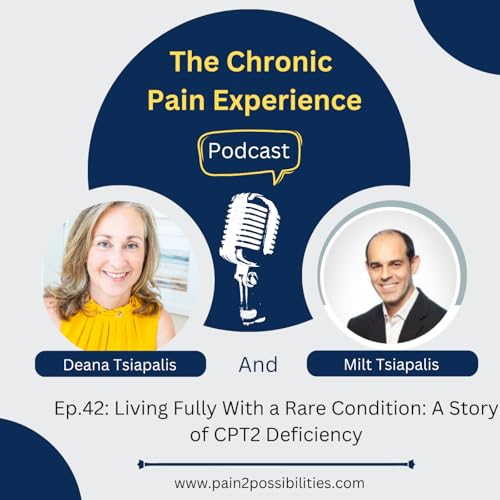
  • Living Fully With a Rare Condition: A Story of CPT2 Deficiency
    35 min
  • Part 3 – How to Reduce Stubborn Chronic Pain: A Practical, Science-Backed Roadmap
    Aug 20 2025
    ​​If you’ve been searching for ways to reduce chronic pain and feel like you’ve tried everything—medication, procedures, therapies—but the relief never lasts, this guide is for you. In the final episode of a three-part series from Pain 2 Possibilities, I will walk through why pain becomes stubborn and, more importantly, what you can do about it. Below I’ll summarize and expand on this evidence-based approach so you have a clear, practical plan to reduce chronic pain and reclaim more of your life. 1) Why this matters: chronic pain is not just about tissue Many people assume ongoing pain equals ongoing tissue damage. That’s not always true. To reduce chronic pain we need to understand that pain can be a multi-system problem: structural/mechanical, nervous system sensitization, and psychological/social factors. When treatments only address one area, especially just the structural side, pain often persists. I see many treatments help briefly but not change the long-term trajectory. This is common and points toward nervous system sensitization as a major contributor to stubborn pain. 2) What changes when pain becomes chronic Decades of research show living with chronic pain changes the body in measurable ways. These are not “in your head” in a dismissive sense; they are changes in neurobiology, perception, and regulation. Here are some examples to watch for if you want to reduce chronic pain: Altered brain maps: People with chronic pain often struggle to rapidly identify left vs. right side or to draw a limb accurately (common in complex regional pain syndrome).Sensory perception shifts: Body parts can feel “different” to the brain—bigger, smaller, fuzzier—because the brain’s representation has shifted.Regulatory dysfunction: Immune, autonomic, and pain systems become overactive producing unpredictable symptoms.Changed movement patterns: Pain and pain anticipation change how you move. The brain learns protective patterns that can reinforce pain long-term.Recognizing these patterns helps you and your clinician decide if the focus should be on retraining the nervous system to reduce chronic pain—not just fixing tissue or reducing immediate intensity. 3) Why many treatments don’t give lasting relief To reduce chronic pain you must understand which part of the problem a given treatment actually addresses. I break these into four categories: treatments that change pain intensity, treatments that address structure/mechanics, mind-body approaches, and nervous-system-specific interventions. Pain intensity tools: Analgesics, injections, nerve blocks, TENS. These can lower the immediate volume of pain—like turning down a stereo—but often don’t fix the faulty wiring causing the noise to return.Structural/mechanical treatments: Physiotherapy for joint stability, chiropractic alignment, surgery, weight loss. Essential when the problem is structural—but not sufficient when sensitization drives pain.Mind-body methods: CBT, meditation, journaling, apps like Curable. Useful for addressing thinking, fear, and stress, but alone can fall short when pain pathways are overactive.Nervous system retraining: Education + graded, neuroscience-based drills that directly target the altered neurobiology of chronic pain. 4) Evidence-backed treatments that target the nervous system When the nervous system is involved, evidence-based interventions focus on changing how the brain processes body signals. These methods are designed to rewire and desensitize the nervous system progressively and safely: Pain education: Understanding pain reduces threat and fear. Knowledge changes perception; when you know what is happening and why, your brain can reduce defensive responses.Graded motor imagery (GMI): A sequence of interventions (left-right discrimination, motor imagery, mirror therapy) proven useful in conditions like complex regional pain syndrome and other sensitized states.Sensory discrimination training: Peripheral “bottom-up” work that refines sensory maps—touch labelling, texture recognition, and precise sensory tasks.Motor retraining: Gentle graded exposure to feared movements, broken down into micro-steps to rebuild confidence.Mirror therapy: Visual feedback to re-align brain representation with actual movement and reduce perceived threat.Top-down approaches: Imagery, visualization, and cognitive tasks that change brain expectation and cortical processing. Combining bottom-up and top-down approaches is more powerful than either alone. The nervous system learns from both peripheral input and central expectation—so to reduce chronic pain we must retrain both directions. 5) What recovery actually looks like Recovery is individual. To reduce chronic pain successfully you should plan for a process, not a quick fix. Outcomes vary—some people become pain-free, others find pain becomes background noise, and many regain function and confidence even while some symptoms persist. Common ...
    Mostra di più Mostra meno
    40 min