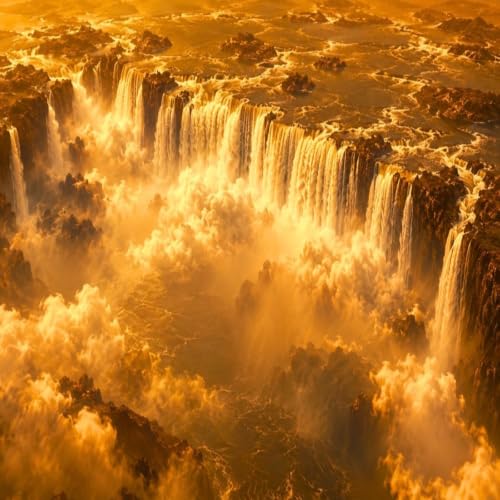
Snoozy Space copertina

Snoozy Space

Snoozy Space

Di: Mr Snoozy
Ascolta gratuitamente

Offerte di stagione | 0,99 €/mese per i primi 3 mesi

A seguire 9,99 €/mese – si applicano condizioni. Puoi disdire mensilmente.
A proposito di questo titolo
Welcome to Snoozy Space

We make Space documentaries. We explore black holes, distant galaxies, dark matter, neutron stars, the James Webb Space Telescope, and the deepest mysteries of the universe in calm, slow-paced narration designed to help you relax and drift off.

Every video is carefully researched, never fiction. From the edge of the solar system to the structure of the cosmos, each documentary walks you through real science told in a voice that won't keep you up. We cover topics like exoplanets, the Milky Way, stellar evolution, cosmic expansion, gravity, quantum physics, the Big Bang, and the search for life beyond Earth.

Whether you're winding down at night, studying, or just curious about what's out there, Snoozy Space is built for you. Calm narration, deep science, no rush. If you enjoy space documentary content, sleep documentaries, astronomy documentaries, or relaxing science content, you'll feel right at home here. Subscribe and explore the universe with us.

Become a supporter of this podcast: https://www.spreaker.com/podcast/snoozy-space--7447041/support.Copyright Mr Snoozy
Astronomia Astronomia e scienze spaziali Scienza
  • The Largest Waterfall in the Solar System Isnt on Earth
    Nov 24 2026
    Mars once had something almost impossible to imagine today: enormous rivers, ancient seas, and catastrophic floods powerful enough to reshape entire regions of the planet.

    In this Snoozy Space documentary, we explore the largest waterfall in the Solar System, a colossal waterfall that once existed on Mars at the edge of Echus Chasma. The drop may have reached roughly 4 kilometers, or about 2.5 miles, while the resulting floods carved the immense channels of Kasei Valles across the Martian surface.

    🌌 But where did all that water come from?

    We travel back billions of years to a wetter and more dynamic Mars, exploring the ancient Eridania Basin, enormous bodies of water, volcanic activity, hydrothermal environments, and the catastrophic floods that transformed the planet.

    We also examine how Mars changed from a potentially habitable world into the frozen desert we see today. The loss of its global magnetic field, atmospheric erosion, declining internal heat, and the disappearance of stable surface water all played important roles in that transformation.

    🔭 Modern missions have allowed scientists to reconstruct parts of this lost world. Mars Reconnaissance Orbiter has photographed ancient channels from orbit, while Curiosity and Perseverance have investigated ancient lakebeds, river deltas, sediments, and organic molecules on the surface.

    One of the most fascinating locations is the Eridania Basin, where spacecraft observations have revealed thick mineral deposits associated with ancient hydrothermal activity. These environments are particularly interesting because hydrothermal systems on Earth are considered possible settings for the emergence of early life.

    The waterfall is gone.
    The water is gone.
    But the geological evidence remains.

    Ancient channels, mineral deposits, sedimentary rocks, and enormous scars across the Martian landscape preserve a record of a planet that once looked remarkably different.

    🌙 Tonight, join Snoozy Space for a calm journey through ancient Mars and discover how a world that once moved oceans of water eventually became the cold, dry planet we know today.

    If you enjoy relaxing, factual space documentaries about planets, moons, ancient worlds, and the mysteries of our Solar System, consider leaving a like and subscribing to Snoozy Space. It helps support more late-night journeys into the universe.


    Become a supporter of this podcast: https://www.spreaker.com/podcast/snoozy-space--7447041/support.

    This episode includes AI-generated content.
    Mostra di più Mostra meno
    1 ora e 55 min
  • The Broken Moon of Uranus Where a Night Lasts 42 Years: Titania
    Nov 23 2026
    Titania is one of the most mysterious moons orbiting Uranus, a frozen world shaped by ancient impacts, enormous fractures, and a geological history that may extend deep beneath its icy surface. 🌌

    In this Snoozy Space documentary, we journey to Titania, a moon roughly 980 miles wide whose surface contains the immense 927-mile-long Messina Chasma and the enormous 203-mile-wide Gertrude crater. Voyager 2 photographed only about 40% of Titania during its brief 1986 encounter, leaving much of this distant world unexplored.

    Beneath the ice, scientists have considered the possibility of a subsurface ocean reaching up to 30 miles deep, potentially sustained by heat from radioactive elements inside the moon. If such an ocean exists today, Titania could belong to the growing family of icy worlds where liquid water may persist far beyond the warmth of the Sun. 💧

    Titania also experiences one of the most extraordinary seasonal cycles in the Solar System. Because Uranus is tilted almost completely onto its side, each pole can spend approximately 42 years in continuous darkness before returning to sunlight.
    From William Herschel's discovery of Titania in 1787 to Voyager 2's fleeting encounter in 1986, our understanding of this distant moon has been built from remarkably limited observations. A future Uranus mission could finally reveal what remains hidden.
    Join Snoozy Space as we explore Titania as it truly is: ancient, fractured, distant, and still largely unknown. 🌙

    If you enjoyed this journey, consider leaving a like and subscribing to Snoozy Space for more calm, factual explorations of the most fascinating worlds in our Solar System.


    Become a supporter of this podcast: https://www.spreaker.com/podcast/snoozy-space--7447041/support.

    This episode includes AI-generated content.
    Mostra di più Mostra meno
    1 ora e 50 min
  • We Found a New Earth Right Next to Us (Why We Can Never Visit)
    Nov 22 2026
    What if one of the most promising Earth-sized worlds we have discovered is only 100 light-years away? 🌌

    TOI 700 d is a rocky exoplanet orbiting within the habitable zone of a nearby red dwarf star. About the size of Earth, this distant world completes an orbit every 37 days and may have conditions capable of supporting liquid water. But its environment could be profoundly different from anything we experience on Earth.
    In this Snoozy Space documentary, we journey across 100 light-years to explore what scientists actually know about TOI 700 d. We examine its discovery by NASA’s Transiting Exoplanet Survey Satellite, its unusual orbit, possible atmosphere, climate simulations, potential oceans, tidal locking, and the strange weather that could develop across a world with permanent day and night. 🔭

    We also explore a deeper question behind the search for habitable exoplanets: what does “Earth-like” really mean? TOI 700 d shows that a potentially habitable planet does not need to resemble Earth in every detail. Around red dwarf stars, entirely different planetary environments may still provide conditions where life could emerge.

    Yet there is one enormous barrier. At roughly 100 light-years away, TOI 700 d remains far beyond the reach of present-day spacecraft. The light reaching our telescopes today began traveling toward Earth about a century ago, meaning we always observe this planet as it existed in the past.

    Settle in for a calm late-night journey through exoplanet science, astronomy, planetary climates, and humanity’s search for another Earth. 🌙
    If you enjoy relaxing space documentaries and thoughtful journeys through the universe, consider liking the video and subscribing to Snoozy Space for more.

    Sleep well, and keep looking up. ✨


    Become a supporter of this podcast: https://www.spreaker.com/podcast/snoozy-space--7447041/support.

    This episode includes AI-generated content.
    Mostra di più Mostra meno
    1 ora e 52 min
adbl_web_anon_alc_button_suppression_t1
Ancora nessuna recensione