Shaken Not Burned copertina

Shaken Not Burned

Shaken Not Burned

Di: Felicia Jackson and Giulia Bottaro
Ascolta gratuitamente

A proposito di questo titolo

Shaken Not Burned is the podcast that helps you make sense of sustainability. We unpack the big debates shaping climate, business, food, and society: debunking myths, clarifying trade-offs, and sharing ideas you can actually use to think, decide, and act in a changing world.

© 2026 Shaken Not Burned
Economia Politica e governo
  • AI is powerful, but why is transformation so hard? With University of Exeter
    Apr 30 2026

    AI is becoming one of those topics where the scale of the claims can make it surprisingly difficult to work out what is actually happening.

    We are told it will transform business, unlock extraordinary productivity gains, reshape jobs, and even help solve major global challenges like climate change. At the same time, there are growing concerns about energy demand, governance failures, bias, job losses, and the sheer speed at which these systems are developing.

    The dominant narrative tends to swing between utopian optimism and existential fear, often without spending enough time on a more practical question: what actually happens when AI is introduced into real organisations, real systems, and real decision-making? This is the focus of this week’s episode, which is the first in our AI series.

    Rather than debating whether AI is inherently good or bad, Felicia Jackson speaks with Professor Saeema Ahmed-Kristensen, Associate Pro Vice Chancellor for Research and Impact at the University of Exeter and Director of DIGIT Lab, about something much more grounded: why so many digital and AI transformation efforts struggle in practice and what that reveals about the limits of technology alone.

    One of the most useful distinctions in the conversation was between problems that are well-defined and those that are not. AI is particularly powerful when objectives are clear, data is available, and success can be measured relatively easily. In those contexts - pattern recognition, diagnostics, optimisation - it can offer extraordinary value. But many of the most important challenges organisations face are different.

    Sustainability, climate strategy, major organisational change, and social systems are messy, politically embedded and filled with trade-offs. They are often what researchers describe as wicked problems: issues where there is no single right answer, where choices create consequences elsewhere, and where uncertainty is part of the challenge itself.

    That distinction matters because it shifts the conversation. It suggests that AI may be extremely useful in supporting parts of decision-making, but it does not remove the need for human judgment. In fact, in many cases, it may make governance, accountability, and strategic clarity even more important.

    AI is powerful, but power is not wisdom. Better tools do not automatically create better outcomes. What they do do is make it even more important to understand what kind of organisations, systems and governance structures are capable of using them responsibly. As this new Shaken Not Burned AI arc begins, that feels like the right place to start.

    If you enjoyed this episode, subscribe to our newsletter and follow us on LinkedIn, TikTok and Instagram – and why not spread the word with your friends and colleagues?

    Mostra di più Mostra meno
    40 min
  • The mining paradox: a clean future built on a dirty industry
    Apr 23 2026

    This is the final episode in our mining arc. Rather than revisiting what we’ve already covered, we step back to ask a different question: what does mining actually teach us about how change happens in complex systems?

    Across the series, one tension kept coming up. The transition to a cleaner economy depends on scaling one of the most environmentally intensive industries on earth. We need more minerals, but we are deeply uncomfortable with how they are extracted. In practice, that tension shows up in whether projects can actually be built.

    In this episode, we pull those threads together and explore five recurring gaps shaping the sector, from industrial dependence and supply chain constraints, to misplaced faith in quick technological fixes and, ultimately, whether our systems are even set up to deliver the transition we say we want.

    One insight stands out in particular: trust is not a "soft" issue. In mining, projects that involve communities early and give them a real stake in the outcome are getting approved faster, facing fewer delays and attracting more consistent capital. In other words, legitimacy changes the economics of delivery.

    Mining makes this dynamic unusually visible because its impacts are immediate and contested - but the lesson for industry is much broader. Whether it’s infrastructure, energy or data centres, more industries are running into the same constraint: formal approval is no longer enough if the people affected don’t believe in what’s being built.

    This episode is an attempt to make sense of those tensions. Not just in mining, but in how we think about sustainability, trade-offs and what it really takes to deliver change.

    Key takeaways:

    • Why the energy transition depends on scaling a contested industry
    • The five systemic gaps shaping mining today
    • How trust and community involvement affect speed, risk, and access to capital
    • Why social licence to operate is becoming a constraint across multiple sectors

    If you enjoyed this episode, subscribe to our newsletter and follow us on LinkedIn, TikTok and Instagram – and why not spread the word with your friends and colleagues?

    Mostra di più Mostra meno
    37 min
  • How modern mining must start with trust, with Mokwateh
    Apr 16 2026

    Welcome to the latest episode in our mining arc! In the previous two episodes, we covered the geopolitics of critical minerals and whether deep sea mining is the innovation we need to meet growing demand for critical clean tech raw materials.

    This week, we turn to one of the most important lessons emerging from the mining sector: modern projects succeed when trust is built before the digging begins. How mines affect and benefit people, especially those isolated communities that live on resource-rich land, is becoming an essential part of mining operations.

    Around half of the world’s untapped energy transition minerals are located on or near land inhabited by Indigenous and peasant communities, according to a 2022 study by the University of the Free State and the University of Queensland.

    As demand for these resources grows, developers are learning that access to minerals alone is not enough. Communities expect to be part of the process, and in many jurisdictions they now have the power to delay or stop projects altogether. That means success depends not just on access to land, capital or permits, but on whether communities believe they have been properly heard, respected and included.

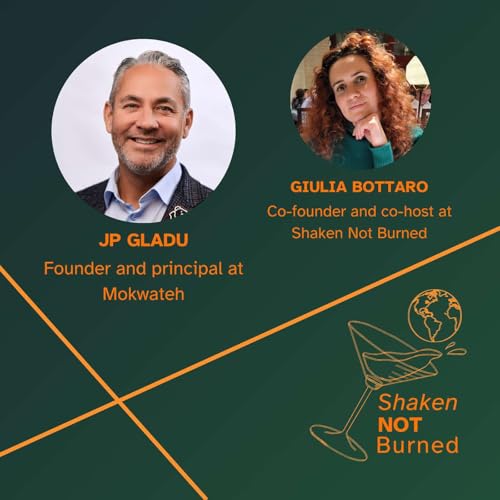
    In this week’s episode, Giulia interviews JP Gladu, founder and principal at Indigenous-led consulting firm Mokwateh, about what it really means to gain the social licence to operate.

    JP explains his “involve and support” mantra: involve communities from the earliest stages of project design, not after decisions have already been made, and support them with the resources they need to participate properly.

    That might mean providing clear information about the project, funding access to advisers and technical experts, or creating intermediaries who can bridge communication gaps and ensure everyone understands what is being proposed. JP argues that this approach not only produces fairer outcomes, but can reduce opposition, improve project design, and ultimately speed up development by addressing conflict before it begins.

    Key takeaways:

    • Early community engagement is crucial for project success.
    • Supporting indigenous ownership benefits all stakeholders
    • Why partnership improves outcomes for companies and communities alike
    • What other industries can learn from mining’s evolving approach

    If you enjoyed this episode, subscribe to our newsletter and follow us on LinkedIn, TikTok and Instagram – and why not spread the word with your friends and colleagues?

    Mostra di più Mostra meno
    39 min
Ancora nessuna recensione