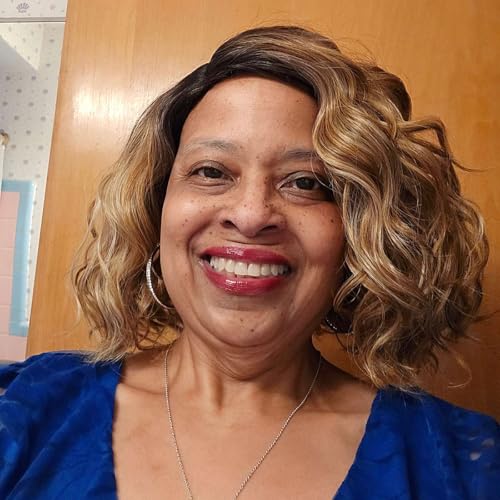
• Strength on Hard Days: Sheri's Melody’s
    Jan 8 2026

    Send us a text

    Today’s conversation is important because it reminds us that not every struggle is visible, and not every hard day has a clear explanation.

    I’m joined by Sheri Melody. Sheri is not a stroke survivor, but her story matters deeply here because mental and emotional health plays a huge role in how we cope, how we support others, and how we survive difficult seasons.

    Sheri, thank you for being here.

    Sheri:

    Thank you for having me. I’m glad to be here — and a little nervous.

    Bill:

    Nervous is more than okay here.

    Sheri, you’ve been open about living with depression, anxiety, and ADHD. Can you talk a little about what hard days look like for you?

    Sheri:

    Hard days are the ones where everything feels heavier than it should.

    Even simple things take effort — decisions, focus, motivation. Sometimes my mind just won’t slow down, and other times it feels like it’s shut off completely.

    From the outside, people might not notice anything is wrong. But inside, it can feel overwhelming.

    Bill:

    That invisible part is so important. A lot of people listening — especially caregivers, survivors, and family members — know what it’s like to carry something others can’t see.


    There’s often pressure to “push through” or “stay positive,” but that’s not always realistic.


    Sheri:

    Exactly. And that pressure can make things worse.

    Some days, just getting through the day is the accomplishment. And learning to accept that took time.


    I had to learn that rest isn’t failure, and needing support doesn’t mean I’m weak.


    Bill:

    That’s such an important message.


    On this show, we talk a lot about resilience — not the Instagram version, but the real kind. The kind that shows up quietly, on days when no one’s clapping.


    What helps you get through those days?


    Sheri:

    Being honest with myself.

    Letting myself say, “Today is hard,” without judging it.


    And leaning on people I trust. Even just one person who understands can make a difference.


    Bill:

    That honesty is powerful.

    And it connects directly to what so many people listening are dealing with — whether they’re recovering from a stroke, supporting someone who is, or managing their own mental health.


    Sheri, what would you want someone listening — someone having a really hard day — to hear right now?


    Sheri:

    I’d want them to know they’re not broken.

    Struggling doesn’t mean you’re failing. It means you’re human.


    And tomorrow doesn’t have to be solved today.


    Bill:

    That’s beautifully said.


    Sheri, thank you for sharing your story and your honesty. Conversations like this remind us that strength doesn’t always look like progress — sometimes it just looks like staying.


    Support the show


    Lifeline Crisis Chat (Online live messaging):https://988lifeline.org/chat


    Mostra di più Mostra meno
    34 min
  • Still Here: A New Year Message
    Jan 3 2026

    Send us a text

    Still Here: A New Year Message


    A new year doesn’t erase what we’ve been through — it reminds us that the story continues.


    This message is for every survivor, caregiver, and listener who kept going when the path wasn’t clear. For those learning to live in a changed body, a changed rhythm, or a changed life. Strength doesn’t always look loud. Sometimes it just looks like staying.


    At ScrambledEggs&Ham, we enter this new year with gratitude for your stories, your honesty, and your presence. Recovery isn’t linear. Healing isn’t rushed. And hope doesn’t require perfection.


    If you’re still here — you’re doing enough.


    Thank you for walking this road with us.

    Here’s to a brave new year.


    — Bill Clarke

    ScrambledEggs&Ham

    Survival • Recovery • Hope


    Support the show


    Lifeline Crisis Chat (Online live messaging):https://988lifeline.org/chat


    Mostra di più Mostra meno
    1 min
  • Pushing through Pain Osborne is more than a bike rider — he’s a cancer survivor
    Dec 22 2025

    Send us a text

    Osborne is more than a bike rider — he’s a survivor, a motivator, and a man who carries history with every mile he pedals. After facing down cancer, Osborne turned to cycling not only as a way to rebuild his strength, but also as a way to inspire others to reclaim their health and discover freedom on two wheels.

    He has spent years encouraging friends, family, and community members to ride, showing that the road can heal as much as it challenges. But this ride — from Tulsa’s Black Wall Street to New York’s Wall Street — was different. This wasn’t just about endurance or distance. It was a journey that connected survival with legacy, resilience with history, and personal recovery with the collective story of Black America.


    In the 1920s, there was more land held by black people than all of the states combined, according to Celestain, who stated that Oklahoma is the owner of the Black town story.

    According to the Oklahoma Historical Society, there is no other place in the world where such a large number of African-American men and women came together to establish, occupy, and be in charge of their own town


    Osborne rides not just for himself, but for everyone who’s ever been told they couldn’t make it. His story is one of strength, faith, and the power of movement.

    Bill: That’s powerful. Can you talk about the experience of the ride itself?

    Osborne: I was covered on the bike. Everybody else had a beautiful glance climbing that mountain.

    The crew was at the top cheering. For them, it was the best moment. For me, it was the worst — physically I was drained. But it was also my best moment because I saw my teammates do so well. Everyone came together, everyone owned that climb.

    It wasn’t my best day on the bike, but it was right up there. I’ll never forget it.

    Bill: And your riders, this was a multicultural group?

    Osborne: Yes. We had Richard Kaiser out of Detroit, he’s Jewish. Beth Livingston out of Detroit, also Jewish. Pam from California, she’s Black. In total, probably six Jewish riders and six Black riders.

    As we rolled out of Tulsa, people joined and left the group each day. Beth rode for three weeks, went home, then came back to finish. We met amazing people, made amazing friends.

    The oldest rider was Richard at 70. I was 67 — the two strongest riders. The youngest was Junior, a 28-year-old mechanic. The six who made it all the way to New York were Richard (72), me (67), Linda (57), and Marcus (60). So yes, age is just a number.

    Bill: That’s inspiring. Tell us about the people you rode with.

    Osborne: Richard is a cancer surgeon. He built an earthquake-proof home in Nepal at the base of Mount Everest. He’s also the executive advisor for the Black Leaders of Detroit. Beth Livingston runs the Make-A-Wish ride in Michigan — they raised $4 million this year.

    We were in the company of some real heavy hitters, people doing amazing things. And we all rode together, ate together, and became family.

    Bill: Survivor to survivor — what role does cycling play in your recovery, physically, mentally, and spiritually?

    Osborne: I’ve been cycling since 2006. But my biggest recovery wasn’t from the bike — it was from building a new life.

    Cancer is God’s way of saying: make changes. I didn’t just change my diet, I changed my lifestyle. The way I live, the way I think, the way I appreciate life. I slowed down. I realized I couldn’t keep poisoning myself. I had to take care of the children God gave me.

    So yes, c

    Support the show


    Lifeline Crisis Chat (Online live messaging):https://988lifeline.org/chat


    Mostra di più Mostra meno
    47 min
  • Life After Stroke by The Sea "Kelli"
    Dec 19 2025

    Send us a text

    Kelli tells her story about the event that changed her life.

    ScrambledEggs&Ham is more than a podcast — it’s a movement for stroke survivors, caregivers, and anyone rebuilding their life after loss or change.Each episode shares real stories of recovery, strength, and hope.

    Stroke survivor stories, brain injury recovery, post-stroke confidence, neurorehab inspiration, Scrambled Eggs & Ham Podcast, DreamEffortTenacity, Bill Clarke

    https://www.buymeacoffee.com/bill1

    https://www.sgi-usa.org/basics-of-buddhism/


    contact Bill@dreamefforttenacity.com

    Support the show


    Lifeline Crisis Chat (Online live messaging):https://988lifeline.org/chat


    Mostra di più Mostra meno
    1 ora e 2 min
  • “Chanting Saved My Life: Irene & George on TBI Recovery”
    Nov 21 2025

    Bill (Host):

    Because a lot of people do not survive TBIs, I want to start here. Irene, can you tell the audience how this event happened in your life? How did it occur?


    Irene:

    I’m very glad to be on your podcast and to be able to talk about it, because you’re right—many people don’t understand what a traumatic brain injury really looks like. It’s one of those invisible injuries, and most people are honestly perplexed by it.


    For me, it happened seven years ago to the day—November 19th. I had a catastrophic fall in the parking lot on my way to work. I slipped on black ice, fell face-first, and hit my head on the ground. I didn’t know it at the time, but I was unconscious for a while. When I finally woke up, I went inside thinking, “That was a nasty fall,” but assuming I was still okay. I wasn’t.


    Bill:

    You said you quickly realized you were not okay. What was happening that made you notice something was different—about your thinking, your perception, your life?


    Irene:

    It was a difficult time already. I was struggling at work, dealing with health issues. I had an appointment that very afternoon to start the process for bariatric surgery. And we were moving to a new office building.


    And that new building… honestly, I believe that’s how this happened. At the old building, they salted the parking lot well. At the new one—they didn’t. I stepped onto a patch of ice and fell. If we were still at our old building, someone would have seen me. But at this new site, no one saw a thing.


    When I got inside, my boss thought I was late just because I overslept or something. Meanwhile, I had been lying unconscious in the parking lot.


    Bill:

    So you were outside on the ground, alone? No one came out to help?


    Irene:

    No one. Not a single person saw me fall or helped me. That was terrifying in hindsight.


    Bill:

    And this was in Detroit?


    Irene:

    In Southfield, our neighboring city. And it was cold. We had something unusual that day—freezing fog. The roads and the parking lots were coated. I had ice on my windshield when I left home. But I didn’t expect the ground itself to be a sheet of black ice.


    Bill:

    So you go inside, trying to function, trying to push through. What happened next?


    Irene:

    I went to the ladies’ room to regroup and ended up just crying. Everything hurt. My head hurt. My body hurt. Something inside me said, “This is not normal.” But I kept thinking, “I’ve got to get to work.” You don’t expect that one step—one fall—can change your life instantly. But it did.


    Bill:

    The symptoms—when did they start showing up fully?


    Irene:

    The next day. That’s when it hit me—this is serious. My entire body was in pain. My mind felt off. I couldn’t think straight.


    Bill:

    And you were in IT, right? A systems and business analyst?


    Irene:

    Yes, I was. But I never went back to work. Not once. The TBI took me out of the workforce completely. After the ER visit, I started seeing doctors, and eventually I saw a neurologist. Everything changed after that fall.

    #TBI #TraumaticBrainInjury #StrokeAndTBI #BrainInjuryAwareness #HealingJourney #Buddhism #NamMyohoRengeKyo #Chanting

    We love to here from you

    Support the show


    Lifeline Crisis Chat (Online live messaging):https://988lifeline.org/chat


    Mostra di più Mostra meno
    59 min
  • "Breaking the Silence: A Survivor's Journey from Pain to Power" by Jennifer Kee
    Jan 4 2025

    Reference to any specific product or entity during any episode of the Scrambled Eggs and Ham Podcast {the "Podcast") does not constitute an endorsement or recommendation by DreamEfforttenacity.LLC or its affiliates.

    With abuse, you suffer the loss of soul, loss of self, and loss of meaning"
    "In the system, you must fight every day, every minute, to keep from feeling
    worthless - to keep your spirit alive" K.W. (Survivor)

    One of the healing therapies that Jennifer has done, is called ART which stands for
    Accelerated Resolution Therapy

    Child Abuse

    Childhelp®
    Phone: 800.4.A.CHILD (800.422.4453)
    People They Help: Child abuse victims, parents, concerned i Sexual Abuse

    Darkness to Light
    Phone: 866.FOR.LIGHT (866.367.5444)
    People They Help: Children and adults needing local information or resources about sexual abuse

    “There is no greater agony than bearing an untold story inside you.”

    ― Maya Angelou


    Hello, good morning. Good morning ladies and gentlemen. Good morning. My name is Bill Clark. Today is August 10, 2023. And I am the host of the Scrambled Eggs and ham podcast. So the Scrambled Eggs and Ham podcast is weekly, and sometimes monthly it's summer. So it's monthly interview show focused upon the reinvention of the lives of each interviewee, as a result of or inspired by the life-changing illnesses or events that have now become part of their daily existence. And this morning, we my special special guests. Is Jen Jennifer key.

    Thank you for having me.

    Yep, yep. Yep. It's a pleasure. It's always a pleasure. So this morning, I am the scrambled egg. And you are the ham, Jennifer. So Jennifer, tell us a little bit about your background. Tell the audience about you know, Jennifer.

    Sure.

    Fantastic question. Not quite sure where you'd like me to start. But I am a daughter from a family of four. I grew up in the lovely state of New Jersey. And I am an athlete. I am a fan fanatic. Not quite sure what words you want to use regarding mother nature and the outdoors. I guess a modern-day hippie, I've been told. And I presently am exploring so many new and adventurous journeys, which has now brought me to you.

    Wow, that's great. So you love the outdoors? You are. You call yourself a modern-day hippie. So. So, Jennifer, today's podcast is about trauma.

    Good one. Okay. Yeah. Great.

    Can you tell me a little bit about how it has affected your life? When it does start? You know, was it when you were playing sports in high school, or college? Or when part of your relationships? How did it start? Like how did this thing start? Like, you know, no one just, you know, just glides, glides on the top of the of the water? There's always something underneath the water. Right? So what lately what happened?

    Great question, Bill. I really thank you for the opportunity to talk about this as it is one that I think doesn't necessarily get enough attention in this particular country and something that's very near and dear to me, regarding the healing process, from trauma. So for me, it's really centered around sexual trauma. At a very young age I was groomed is the term I've been told by a family member, which the percentage is say that's usually the place where sexual trauma happens. And it happens within my home. And from the age of what I can remember, seven to about 11 years old, there was a nice grooming process. And I say nice, and I'll explain shortly, grooming process of at first, just reading stories, right be

    We love to here from you

    Support the show


    Lifeline Crisis Chat (Online live messaging):https://988lifeline.org/chat


    Mostra di più Mostra meno
    1 ora e 3 min
  • "Life Story" by the late Richard Pierson
    Nov 10 2025

    After losing his wife, creating art and playing jazz served as powerful coping mechanisms for Richard Pierson.
    These outlets offered a sense of purpose and provided an anchor during their darkest moments. Moreover, his creations touched the lives of others, acting as a source of inspiration, healing, and a reminder that beauty can emerge from pain.

    We lost Richard Last year 11/24 I got a chance to see him a few weeks before he passed. I Matt and my self chanted with him in the hospital. at that time Richard was in a coma when he herd us chanting he opened his eyes. you will be missed Richard.


    We love to here from you

    Support the show


    Lifeline Crisis Chat (Online live messaging):https://988lifeline.org/chat


    Mostra di più Mostra meno
    28 min
  • Kelli by the Sea – Rebuilding Confidence After Stroke Host: Bill Clarke Guest: Kelli Smith
    Nov 1 2025

    In this powerful episode of Scrambled Eggs & Ham, host Bill Clarke talks with Kelly Smith, affectionately known as Kelly by the Sea. Both stroke survivors share how 2009 changed their lives and how they rebuilt their confidence, identity, and hope through therapy, community, and purpose.


    Kelly opens up about memory loss, self-doubt, and rediscovering her voice. Bill reflects on his own journey and the question every survivor faces — Can this pain become purpose?


    🎙️ Host: Bill Clarke

    🌊 Guest: Kelly Smith

    🏢 Presented by: DreamEffortTenacity LLC

    💬 “Resilience, Recovery, Hope.”


    Stroke survivor stories, brain injury recovery, post-stroke confidence, neurorehab inspiration, Scrambled Eggs & Ham Podcast, DreamEffortTenacity, Bill Clarke

    We love to here from you

    Support the show


    Lifeline Crisis Chat (Online live messaging):https://988lifeline.org/chat


    Mostra di più Mostra meno
    36 min