Episodi

  • Beyond “Eat Healthier”: How Pediatricians Can Translate Nutritional Evidence Into Real Family Life with Dr. Reshmeh Shaw
    Feb 23 2026

    Nourish as a Clinical Intervention: Plant-Forward Feeding, Family Systems, and the Pediatric Long Game

    Show Notes

    In this episode of Routes of Healing, Dr. Siri Chand Khalsa sits down with pediatrician, parent coach, and award-winning author Dr. Reshma Shah to explore what it actually takes to translate nutrition science into family life without ideology, shame, or unrealistic expectations.

    Dr. Shah shares her full-circle path into plant-forward pediatrics, why most physicians receive minimal nutrition training, and what she learned working with families in under-resourced settings: patients want these conversations when they’re approached with practicality and respect.

    Together, they discuss how coaching can restore what modern clinical care often cannot fund time, context, and implementation support, especially when families are navigating new diagnoses, feeding challenges, and the emotional tone of the dinner table.

    If you’re a clinician, parent, or health leader looking for evidence-based, psychologically realistic strategies that work in real households, this conversation is for you.

    If you’re inspired by our exploration on Routes of Healing, subscribe to receive new episodes weekly.

    🔑 Key Topics & Takeaways
    1. Why most physicians finish training with little nutrition education
    2. The “big tent” approach to plant-based eating for children
    3. Nutrient deficiencies happen in omnivorous kids too—why all diets require attention
    4. “Add-in before take-away”: the behavior change strategy that lasts
    5. Writing a book as a discipline in nuance, evidence, and trust-building
    6. Coaching vs. clinical care: restoring time, narrative, and implementation support
    7. The dinner table intervention that comes before changing the food
    8. “Caring without catering”: a boundary-based feeding philosophy
    9. Farmers markets as a practical system (not an aesthetic)

    ⏱ Chapters

    00:00 — Welcome + introduction to Dr. Reshma Shah

    02:01 — How Dr. Shah came to plant-forward pediatrics

    04:20 — Bringing nutrition into patient care in under-resourced communities

    07:10 — Why residents and students are deeply hungry for nutrition training

    10:12 — How Dr. Shah built nutrition expertise without a formal pathway

    13:22 — Why the book is titled Nourish

    14:34 — The collaborative process of writing the book

    20:30 — Trust, nuance, and resisting clickbait certainty

    21:39 — Can kids thrive on plant-based diets? The “big tent” answer

    25:32 — Why Dr. Shah shifted into coaching

    30:54 — The “last patient before lunch” and what time makes possible

    36:38 — Empathy, access, and the limits of the clinical model

    40:41 — Where to access Dr. Shah’s resources and education

    46:31 — Making dinner a place kids want to come to

    51:58 — Farmers markets and how they shape real cooking habits

    53:52 — Conferences, community, and why ACLM matters

    56:10 — Live virtual soup workshop overview

    57:21 — Closing + how to stay connected

    About Today’s Guest

    Dr. Reshma Shah

    Pediatrician • Parent Coach •...

    Mostra di più Mostra meno
    1 ora e 2 min
  • Training for Life, Not Just a Finish Line with Certified Run Coach, Dr. Michelle Quirk
    Feb 9 2026

    In this week’s episode of Routes of Healing, Dr. Siri Chand Khalsa sits down with Dr. Michelle Quirk, a board certified pediatrician and certified run coach through the Roadrunners Club of America. Dr. Quirk is the founder of Mindful Marathon, where she helps busy professionals make running feel approachable, enjoyable, and sustainable through practical coaching and a mindset rooted in recovery, flexibility, and self trust.

    Together, they explore how burnout can quietly shape a clinician’s life long before we name it, and how a simple decision to run five minutes around the block can become a turning point. Dr. Quirk shares how grief after the loss of her father deepened her relationship with movement, and how marathon training opened a new kind of inner quiet that felt both restorative and creative. They also discuss recovery as a daily practice, the myth that running is bad for knees, the power of easy pace and zone two training, and why you do not need a race on the calendar to train for life.

    If you are a clinician rebuilding your relationship with movement, a former athlete trying to start again without shame, or a human who wants a healthier nervous system and a steadier mind, this episode offers a grounded path forward.

    If you’re inspired by our exploration on Routes of Healing, a physician-led podcast uplifting the wisdom and lived experience of integrative and lifestyle medicine doctors, subscribe to receive new episodes weekly. Subscribe and follow along!

    🔑 Key Topics & Takeaways

    Burnout before burnout had a name, noticing the moment when your advice does not match your life.

    Starting low and going slow, why five minutes around the block is enough to begin.

    Grief and movement, how running can hold sorrow without forcing it to resolve.

    Recovery as a daily practice, shifting from reward coping to true restoration.

    Flexibility over perfection, why missing a run does not mean you cannot reach your goal.

    The knee myth, why sedentary living can be harder on joints than an appropriately paced run routine.

    Easy pace and zone two, building aerobic fitness without living in huff and puff.

    Letting go of numbers, how effort based training can reduce intimidation and increase consistency.

    Mindfulness in motion, the reset that happens when the mind goes quiet on the trail.

    Training for life, why a race is optional and the routine can evolve over years.

    ⏱ Chapters

    00:30 — Welcome and Introduction to Dr. Michelle Quirk

    01:54 — Burnout in 2012, A Wake Up Call in the Emergency Department

    04:40 — Loss, Grief, and the Role of Movement in Healing

    06:51 — Being a Pediatrician With a Hybrid Coaching Business

    10:32 — What Recovery Really Means for Clinicians

    13:00 — Marathon Training, Perfectionism, and Learning Flexibility

    16:08 — Not an Athlete, Starting Again With Grace

    19:27 — The Coaching Spark That Became Mindful Marathon

    22:01 — Training Plans vs Building a Business as a Physician

    24:37 — The Knee Myth and the Benefits of Small Doses of Running

    28:11 — Heart Rate Zones, Brisk Walking, and Aerobic Threshold

    31:15 — What Kids and Non Athletes Need to Learn About Running

    35:03 — The First Marathon Story, Disney, Doubt, and Mile 25

    40:24 — Running as Spiritual Time and Deep Relationship Building

    42:18 — Mindfulness, Zoning Out, and the Creative Mind in Motion

    47:24 — Returning After Illness or Life Disruption Without Shame

    52:29 — Beginner, Intermediate, Advanced, How Training Frameworks Differ

    54:03 — Season of Life Changes, Adapting Goals and Capacity

    55:14 — Simple Fueling, A Plant Forward Smoothie, and Practical Recovery

    58:17 — Favorite Places to Run, Monterey and Maui

    59:07 — Favorite Races and Why Disney Still Matters

    1:00:09 — Music, Bruce Springsteen, and Running...

    Mostra di più Mostra meno
    1 ora e 4 min
  • Emotions as the Full Spectrum: Parenting, Play, and Whole-Family Health With Dr. Wendy Schofer
    Feb 2 2026

    In this week’s episode of Routes of Healing, Dr. Siri Chand Khalsa sits down with Dr. Wendy Schofer, a pediatrician, lifestyle medicine physician, and founder of Family in Focus. Dr. Schofer helps parents recapture joy, strengthen relationships, and build healthier family systems at any size by centering emotional health as the foundation of lifelong wellbeing.

    Together, they explore how many clinicians and parents were trained to minimize feelings, even though emotions shape behavior, habits, and connection. Dr. Schofer shares how repeated burnout, identity strain, and “not fitting the mold” became a turning point that led her toward coaching, community-based work, and a broader definition of what family care can be. They also talk about social emotional learning in schools, supporting educators and parents, addressing weight stigma, and why humor and play are not extras, they are tools that create safety and trust.

    If you are a clinician navigating burnout, a parent trying to support a child without power struggles, or a human who wants better relationships with food, movement, and feelings, this episode offers practical insight and permission to be more fully yourself.

    If you’re inspired by our exploration on Routes of Healing, a physician-led podcast uplifting the wisdom and lived experience of integrative and lifestyle medicine doctors, subscribe to receive new episodes weekly.

    🔑 Key Topics & Takeaways

    Emotions as the full spectrum, why you cannot “remove one color” from the rainbow.

    Burnout and shame, how “I’m the problem” thinking keeps people stuck.

    Creating a non-linear career, experimenting, learning what settings fit your strengths.

    Family as a system, expanding the definition beyond titles and traditional roles.

    Emotional health as the missing link in lifestyle change, why scripts do not translate at home.

    Social emotional learning in schools, supporting teachers and parents so kids are not carrying it alone.

    Connection before correction, reducing friction with food, movement, and health habits.

    Changing relationships without requiring the other person to change, the power of shifting your part.

    Family in Focus, building a space for parents to speak honestly without “little ears listening.”

    Weight concerns vs weight stigma, creating safer conversations for teens and families.

    Humor as regulation, how play reduces threat and opens communication in clinical care.

    Urgent care realities, using warmth, curiosity, and pattern recognition to build trust quickly.

    Naming what feels “thick” in the room, giving emotions language so they can soften.

    Chapters

    00:00 — Emotions as a Rainbow, Why You Cannot Remove One Color

    00:35 — Welcome and Introduction to Dr. Wendy Schofer

    01:17 — The Tapestry, Joy, and “Teach Feelings”

    04:15 — Training Path, Pediatrics, Lifestyle Medicine, and Navy Medicine

    06:12 — Defining Family as Connection, Not Titles

    08:08 — “How Is This Possible for Me”, Burnout, Shame, and Finding Fit

    13:57 — Expansive Questions That Create New Paths

    15:02 — Medical Training Era, Role Models, and What Was Missing

    16:25 — Gen X Mentorship, Vulnerability, and “Be More You”

    20:08 — Emotional Intelligence in Pediatrics and Clinician Burnout

    21:29 — Social Emotional Learning in Schools, Teachers and Parents Need Support Too

    26:04 — Why Plans Fail, What Was Missing in Lifestyle Counseling

    32:16 — How Family in Focus Was Born

    37:30 — The Mother-in-Law Story, Proof That Relationships Can Change

    40:52 — Building Offers Beyond the Office Visit

    46:57 — Schools, Improv for Healthcare, and Weight Stigma Work

    52:34 — Humor, Contradictions, and Recapturing Joy

    56:54 — Pediatric Urgent Care, Connection in High-Stress Visits

    1:00:32 — Naming the Elephant, Making Space for What Is...

    Mostra di più Mostra meno
    1 ora e 5 min
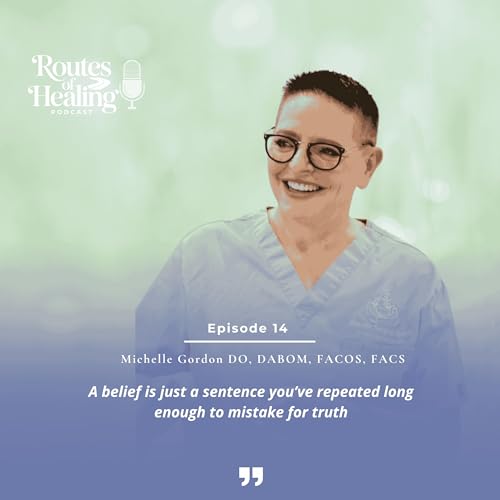
  • Rewriting the Midlife Script: Menopause, Metabolism & Identity with Dr. Michelle Gordon
    Jan 26 2026
    Show Notes

    In this week’s episode of Routes of Healing, Dr. Siri Chand Khalsa sits down with Dr. Michelle Gordon, a triple board-certified physician (Surgery, Obesity Medicine, Lifestyle Medicine) and menopause expert who helps high-performing midlife women feel like themselves again.

    Together, they explore what happens when women hit the “second act” collision course: menopause, body changes that don’t respond to old rules, aging parents, identity shifts, and the quiet (or not-so-quiet) realization that serving everyone else has come at a cost. Dr. Gordon shares her own pivot from a 15-year surgical career to telehealth-based, physiology-forward medicine rooted in behavior change, hormones, metabolism, sleep, brain health, and compassionate truth-telling.

    This conversation moves through the cultural fallout of the Women’s Health Initiative, why many clinicians stopped prescribing hormones (and why the science has evolved), the promise and pitfalls of GLP-1 medications, and why individualized dosing, follow-up, and “dose vs. volume” literacy matter—especially in a world of fast, protocol-driven telehealth.

    If you’re navigating midlife, questioning “why nothing works anymore,” or you’re a clinician hungry for a more honest model of care, this episode offers clarity, permission, and a powerful reframe: a belief is just a sentence repeated and you can rewrite it.

    If you’re inspired by our exploration on Routes of Healing, a physician-led podcast uplifting the wisdom and lived experience of integrative & lifestyle medicine doctors, subscribe to receive new episodes weekly.

    🔑 Key Topics & Takeaways
    1. Midlife reinvention: menopause, empty nest, aging parents, and purpose
    2. “Beliefs are sentences”: how early programming shapes destiny—and can be changed
    3. From surgeon to prevention: why Dr. Gordon left surgery and rebuilt her identity
    4. Menopause symptoms that get dismissed: flushing, weight gain, brain fog, sleep disruption
    5. The Women’s Health Initiative fallout: what many clinicians were taught, and what’s changed
    6. Hormones today: transdermal estrogen, progesterone for sleep, testosterone, vaginal estrogen
    7. GLP-1s in real life: benefits, side effects, titration, and why individualized dosing matters
    8. Obesity as a disease: inflammation, insulin resistance, leptin resistance, “food noise”
    9. Why “eat less, move more” fails for many: energy balance without shame
    10. Nutrition anchors: protein targets and practical breakfast strategies
    11. Compounding pharmacy caution: understanding dose vs. volume and doing the math
    12. Board certification in Obesity Medicine: why expertise matters (and how rigorous it is)
    13. Executive health model: care outside insurance, built for continuity and outcomes
    14. Confidence as a clinical...
    Mostra di più Mostra meno
    1 ora
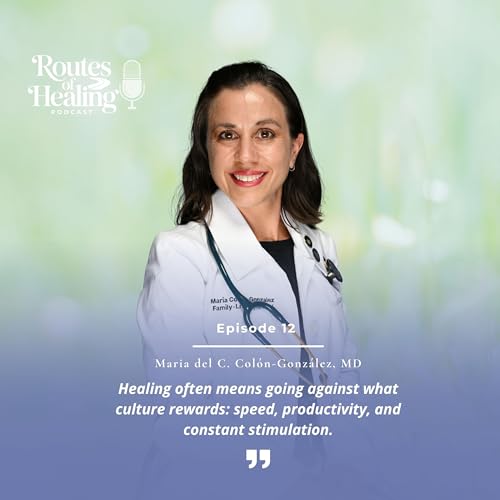
  • Healing Against the Culture: Trauma, Time & Whole-Person Medicine with Dr. María Colón-González
    Jan 19 2026
    Healing Takes Time: Trauma-Informed Medicine, Cultural Identity & Rewriting the Health Story with Dr. María Colón-GonzálezShow Notes

    In this week’s episode of Routes of Healing, Dr. Siri Chand Khalsa sits down with Dr. María Colón-González, founder of saludRevisited, an Integrative and Lifestyle Medicine practice in Texas. Dr. María shares the personal and professional turning points that shaped her approach to care, including growing up in Puerto Rico with complex childhood health challenges, witnessing the legacy of medical service in her family, and confronting the limitations of conventional, volume-driven healthcare.

    Together, they explore why many patients do not change simply because they have information, and how healing often requires a deeper sense of safety, agency, and nervous system regulation. Dr. María describes how trauma-informed therapy, somatic work, yoga training, and lifestyle medicine helped her understand the body’s “story,” and how identity and culture can subtly shift under the pressure to “fit in” within medical training.

    This conversation is for clinicians and patients alike who feel the gap between what medicine can measure and what it takes to truly heal. It is also for anyone questioning the pace of modern life, the burnout of medical culture, and the possibility of practicing in a way that restores dignity, time, and relationship. As Dr. María reminds us: your body is not a microwave, and healing is not meant to be rushed.

    If you’re inspired by our exploration on Routes of Healing, a physician-led podcast uplifting the wisdom and lived experience of integrative & lifestyle medicine doctors, subscribe to receive new episodes weekly.

    🔑 Key Topics & Takeaways
    1. From public health to medicine: Why Dr. María shifted from population health education into the power of the physician role.
    2. A family legacy in Puerto Rico: The story of her grandfather, the only physician in his town, and a lineage of resilience.
    3. Personal illness as initiation: How childhood asthma, allergies, type 2 diabetes, and chronic back pain shaped her healing lens.
    4. “This relationship is not healthy”: Viewing conventional medical culture as an unhealthy system clinicians may need to leave.
    5. The hidden losses of training: How identity and culture can be muted in the pursuit of “professionalism.”
    6. Trauma as physiology: Why trauma is not simply “stress,” and how it impacts behavior change, motivation, and healing capacity.
    7. Somatics + safety: How EMDR, trauma-informed yoga, journaling, and nervous system awareness support transformation.
    8. The clinician affects the patient: Why the state of the healer shapes the therapeutic relationship and the patient’s response.
    9. Healing against the culture: Why healing often requires resisting speed, convenience, and chronic overstimulation.
    10. A different model of care: What it looks like to...
    Mostra di più Mostra meno
    1 ora e 7 min
  • Life Without Burnout: Exploring Stress and Sustainable Solutions with Dr. Robyn Tiger
    Jan 12 2026

    In this episode of Roots of Healing, Dr. Siri Chand Khalsa sits down with Dr. Robyn Tiger, a double board-certified physician in Diagnostic Radiology and Lifestyle Medicine, and a trauma-informed mind-body expert. As founder of the wellness practice StressFreeMD, Dr. Tiger shares how chronic, unrecognized stress can masquerade as dozens of unrelated symptoms, even when labs and imaging are normal, and why “feeling stressed is optional” is not a slogan, but a trainable skill.

    Together, they explore the stress response beyond the traditional emergency box, including how thought-driven stress activates the same physiologic cascade as real danger, and how small, evidence-based practices can shift the nervous system in seconds. Dr. Tiger reflects on her personal turning point, the role of yoga therapy and iRest Yoga Nidra in nervous system healing, and the mindset shift that makes lifestyle medicine accessible for busy clinicians: becoming just one percent better every day.

    This episode is an invitation to stop mopping the floor and start turning the faucet off, and to remember that the most powerful medicine often fits into the minutes you already have.

    What We Cover
    1. Why the stress response is bigger than emergencies and how thoughts trigger real physiology
    2. How chronic stress can present as wide-ranging symptoms despite normal testing
    3. The “turn the faucet off” model of lifestyle medicine versus disease management
    4. Yoga therapy and iRest Yoga Nidra as gateways to nervous system regulation
    5. Coaching, cognition, and reclaiming agency through self-experimentation
    6. Myth-busting time scarcity for clinicians with practices that take seconds to minutes
    7. Integrating lifestyle medicine into diverse careers and practice models
    8. Midlife, burnout, and the inner unlearning behind lifestyle-oriented pivots
    9. Feeling Stressed Is Optional and why it was designed for real-life learning

    Chapters

    00:00 — Feeling Stressed Is Optional and Why Stress Is Trainable

    00:44 — Introducing Dr. Robyn Tiger: Lifestyle Medicine and StressFreeMD

    09:26 — Understanding the Stress Response Beyond Emergencies

    13:13 — Yoga, Meditation, and the Body as a Doorway to Healing

    19:19 — Bridging Ancient Wisdom with Modern Medical Training

    25:04 — Lifestyle Medicine as Prevention, Reversal, and Treatment

    27:21 — Turning Off the Faucet: Root Causes vs Disease Management

    29:42 — Healing Thyself: Self-Discovery Before Treating Others

    32:03 — Rethinking Medical Education Through Lifestyle Medicine

    35:28 — Integrating Lifestyle Medicine Without More Time Pressure

    39:38 — Career Transitions: Walking Toward Alignment, Not Running Away

    43:44 — The Ripple Effect: How Physician Regulation Changes Systems

    46:37 — Writing Feeling Stressed Is Optional During the Pandemic

    53:49 — Agency, Neuroplasticity, and One Percent Better Every Day

    58:10 — Closing Reflections and How to Work With Dr. Tiger

    Guest Bio

    Robyn Tiger MD, a double board-certified physician in Diagnostic Radiology and Lifestyle Medicine and a trauma informed mind-body expert. As founder of the wellness practice, StressFreeMD, she uniquely

    Mostra di più Mostra meno
    58 min
  • Beyond Labels: Whole-Child Care, Neurodivergence & Healing the Family System with Dr. Noemi Adame
    Jan 5 2026
    Episode 10

    In this episode of Roots of Healing, Dr. Siri Chand Khalsa sits down with integrative pediatrician Dr. Noemi Adame, known as the Veggies Over Pills Doctor, for a deeply grounded conversation about why healthy children cannot exist without healthy, resourced adults around them.

    Dr. Adame shares her journey from growing up in a Mexican immigrant household shaped by matrilineal “kitchen table medicine,” through hospital-based and corporate pediatrics, to building a concierge practice that restores time, trust, and continuity of care. Together, they explore how moral injury in corporate medicine affects both clinicians and families, and why relationship-based models allow for true healing, especially for neurodivergent children.

    The conversation moves beyond labels to examine how nourishment, sleep, nervous system regulation, spiritual health, community, and meaning shape children’s emotional and cognitive wellbeing. Dr. Adame also discusses her Veggies Over Pills framework, whole food plant-based nourishment, parent burnout prevention, healing from medical trauma, and why tending to parents’ inner lives is essential for children to thrive.

    This episode is an invitation to rethink pediatric care as a family-centered, whole-person, and deeply relational practice rooted in compassion, presence, and sustainable change.

    What We Cover
    1. How matrilineal and cultural healing traditions inform modern integrative pediatrics
    2. Moral injury in corporate medicine and what clinicians lose when time disappears
    3. Why neurodivergence requires personalization, not protocols
    4. Whole food plant-based nourishment as a foundation for emotional regulation and cognition
    5. The role of sleep, movement, nature, and nervous system health in children’s behavior
    6. Preventing parental burnout as a primary pediatric intervention
    7. Spiritual health: meaning, values, inner peace, and community belonging
    8. Healing from medical trauma through relationship-based, direct-care models
    9. Retreats, food education, and community spaces that restore families

    Guest Bio

    Dr. Noemi Adame, also known as the Veggies Over Pills Doctor, is a board-certified pediatrician, whole-foods, plant-based (WFPB) home cook and baker, writer, public speaker, and holistic wellness expert.

    She is the owner of Culver Pediatric Center, a pediatric clinic that transforms the mind, body, and spirit health of children by empowering and educating their families, communities, and schools in holistic nutritional wellness.

    In addition to her general pediatrics residency training, Dr. Adame has completed additional education in nutrition through the American College of Lifestyle Medicine and training in the integrative management of ADHD and autism through the Andrew Weil Institute for Integrative Medicine.

    Dr. Adame writes a bi-monthly column for The Culver Citizen titled “Get Healthy with Dr. Adame,” hosts wellness retreats for parents to prevent parental burnout, and is currently working on a cookbook focused on nourishment for neurodivergent children.

    She lived in Costa Rica from 2013–2014 in the...

    Mostra di più Mostra meno
    59 min
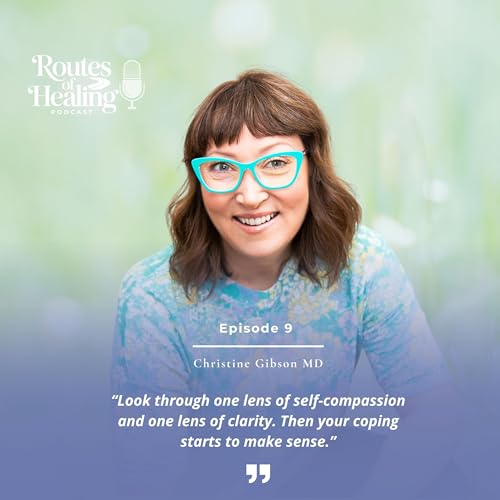
  • Trauma Is Ubiquitous: Somatics, Nervous System Science & Post-Traumatic Growth with Dr. Christine Gibson
    Dec 30 2025
    Show Notes (Episode 9) — Dr. Christine Gibson

    In this week’s episode of Routes of Healing, Dr. Siri Chand Khalsa sits down with Dr. Christine Gibson, a family physician, trauma therapist, and author of The Modern Trauma Toolkit. Known online as TikTokTraumaDoc, Dr. Gibson has built a wide-reaching educational platform grounded in nervous system science, practical somatic tools, and a strong commitment to health equity and systems change.

    Together, they explore how trauma shows up far beyond the psychiatric labels most clinicians were trained to recognize. From hospital culture and medical apprenticeship models that reward dissociation, to the ways trauma lives in the body through chronic sympathetic activation, inflammation, and functional syndromes, this conversation reframes trauma as both deeply personal and profoundly systemic.

    Dr. Gibson shares how the 2015 Nepal earthquakes catalyzed a decade-long immersion into trauma-informed care, somatic therapies, and polyvagal theory, alongside a global lens shaped through her nonprofit work in community-based family medicine training. Dr. Khalsa reflects on her own long COVID autonomic nervous system journey and the clinical implications of persistent nervous system dysregulation for metabolism, sleep, digestion, and behavior change.

    This episode is for clinicians, educators, wellness professionals, and anyone who wants a clearer, kinder framework for understanding why symptoms persist, why “compliance” is the wrong frame, and how safety, self-compassion, and practical tools can create a pathway to healing and post-traumatic growth.

    If you’re inspired by our exploration on Routes of Healing, a physician-led podcast uplifting the wisdom and lived experience of integrative & lifestyle medicine doctors, subscribe to receive new episodes weekly.

    🔑 Key Topics & Takeaways
    1. Trauma is ubiquitous: How healthcare settings can unintentionally create trauma through loss of dignity, privacy, and autonomy.
    2. Trauma beyond PTSD: Why complex, relational, developmental, and ancestral trauma often go unnamed in conventional frameworks.
    3. Trauma as physiology: Trauma as the body’s response, including epigenetic and transmitted trauma across lineages and communities.
    4. Dissociation as training: How medical culture normalizes disconnection from basic human needs and emotional processing.
    5. Somatic vs cognitive approaches: Why bottom-up tools can be more effective when the thinking brain is offline during threat states.
    6. Polyvagal theory in practice: Understanding sympathetic “motion” and parasympathetic “stillness,” and what it means for digestion, immunity, and reproduction.
    7. Refugee health and somatic symptoms: How trauma is often expressed culturally through pain, headaches, belly symptoms, and tension.
    8. Trauma therapy and chronic disease: Clinical examples of improvements in diabetes and other conditions after trauma processing.
    9. Self-compassion + clarity: A practical lens for reducing shame around coping strategies like scrolling, irritability, or stress
    Mostra di più Mostra meno
    1 ora e 5 min