Episodi

  • The Garden
    May 14 2026

    Ruth Adler's will left her granddaughter three things: a white clapboard house in Millbrook, eleven thousand dollars, and a garden that wraps three sides of the property. The handwritten note attached to the deed said: "The garden is not optional. It is the house." And below that: "Nora will kill everything at first. That's fine. Tell her to keep going."

    Ruth was right. The poppies died by May. The lavender faded by June. The roses dropped their blooms in a single week. By August, more than half the garden was dead. Beth Nowak from the nursery on Route 9 tested the soil, checked the drainage, and found nothing wrong.

    In September, Nora found the journal. A composition notebook in the bedroom closet, first entry dated 1965. Every plant in the garden was planted for a specific memory of Thomas Adler. Red poppies for the day Ruth met him at a bus stop, corner of Maple and Third. Lavender for his mother's kitchen in Vermont. The dogwood for his proposal on Prospect Hill. Roses for the forty-three letters he wrote from overseas.

    Thomas died in Vietnam in 1967. He was twenty-three. They were married eleven months.

    Ruth tended his memory in that garden for sixty years.

    When Nora replanted following the journal, something changed. She dug deeper, added bone meal, and did the one thing the gardening books never mentioned. She talked to each plant. Told it the story of why it was there. A green shoot appeared the next morning. In November. In frozen ground.

    The smell of dried lavender arrived with it. And a warmth on her shoulders, like familiar hands, and a voice she heard not in her ears but in the hollow space below her ribs.

    Ruth has one more thing to teach her granddaughter. Not how to keep a garden alive. How to plant a life worth tending.

    Mostra di più Mostra meno
    32 min
  • The Frequency
    May 12 2026

    Walt Pfeiffer is seventy-nine years old, a retired antenna design engineer with thirty-two years at Raytheon and a ham radio habit that started when he was fourteen. Call sign W1AEP. His wife June died three years ago. Pancreatic cancer. Diagnosed in April, gone by August, after forty-six years of marriage.

    The radio shack sat dark for two years. He couldn't walk into the room she'd let him take over in 1994 without hearing her absence in the silence between frequencies.

    One sleepless October night, he went back in. Turned on the Kenwood. Scanned the bands. And on 14.227 megahertz, he picked up a signal that shouldn't exist. Impossibly clean. No static. A woman's voice, warm and immediate, unlike anything that propagates on twenty meters at night.

    Her name is Delia Marsh. Edgewood, Cranston, Rhode Island. Call sign WA1FXL. She built a Heathkit DX-60 transmitter from a kit to prove a man at a ham fest wrong when he said women lacked the patience for it. She is fifty-two years old.

    She is also speaking from October 1983.

    They talked every night for weeks. Two lonely people on opposite sides of a forty-two-year gap, falling into the kind of intimacy that only exists at two in the morning when no one else is listening. Walt fell in love with her voice before he understood what was happening.

    Then he went to the library. Found the microfilm. Cranston Herald, page four, six column inches. "LOCAL WOMAN DIES IN HOUSE FIRE." March 1984. Faulty electrical wiring. No survivors.

    Walt has five months. He knows how she dies. He knows what's wrong with her house. And he's terrified that telling her will break the only connection he has left.

    Mostra di più Mostra meno
    39 min
  • The Dance
    May 8 2026

    Victor Petrov died mid-quickstep on a competition floor at the Grand Regency in downtown Portland. One minute and forty seconds into the routine, his hand locked onto hers and he dropped. Dead before the paramedics arrived. The DJ kept playing the song.

    His wife was his dance partner. Thirty-one years. Two national titles in quickstep. Twenty-six years of teaching together. She closed the studio for fourteen months. Paid the lease. Didn't teach.

    Beatrice Okonkwo's third voicemail is what brought her back. A twenty-four-year-old office manager from Beaverton who wanted lessons for her cousin's wedding. "I think people need people who know how to make something beautiful."

    By lesson two, Victor was in the mirrors.

    Not all of them. Just the east wall. Wearing his black practice shirt with the frayed cuffs, the one he'd worn every day for twenty years. Dancing alongside Bea's movements, silently correcting her frame, teaching her from the other side of the glass. Bea couldn't see him. But her body responded. She progressed in three weeks what should have taken eight. She picked up his signature musicality, the half-breath pause at phrase breaks that was Victor's alone.

    By lesson eighteen, Bea pushed for the quickstep. The dance he died during. She'd found the video online.

    Victor appeared in every mirror in the studio for the first time. Then he looked at his wife, palm up, fingers extended. The opening lead for any dance. Not asking her to follow.

    Releasing her.ballroom dance ghost

    Mostra di più Mostra meno
    34 min
  • The Bridge
    May 6 2026

    He's talked nine people off the Carquinez Bridge.

    Forty-six years old, night shift, a thermos of gas station coffee and a portable radio tuned to AM talk. One kid who calls on holidays and one who doesn't. A divorced toll booth operator who made a career out of the dead hours between eleven at night and seven in the morning. His ex-wife Donna said he had a gift for other people's darkness and a blind spot the size of Texas for his own. She wasn't wrong.

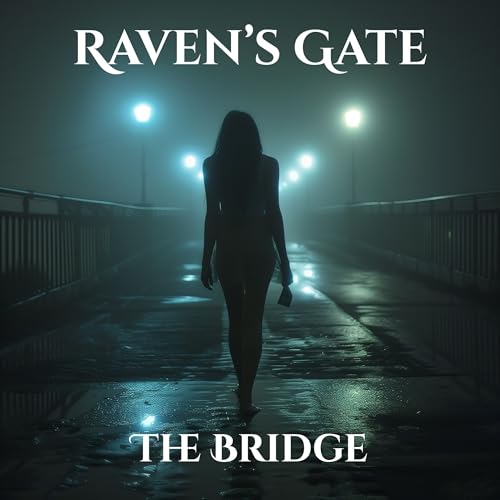
    Then the woman walked out of the fog.

    Two-thirty in the morning. November. No car, no headlights. Soaking wet, barefoot, blue-lipped, water running off her fingertips and pooling on the asphalt. She held up a wet five-dollar bill and asked for change for the toll. Her skin was ice. No pulse underneath.

    He made change. She dropped the coins in the basket, walked through the gate, and disappeared into the fog on the far side.

    She came back the next night. Same time. Same fog. Same five-dollar bill, still wet. Twenty-seven nights in a row. The conversations grew longer. She told him she'd been a third-grade teacher at Lincoln Elementary. Thirty-one students made her construction-paper cards when she was sick. He brought her gas station carnations and watched the loop stutter when she saw them.

    She told him why she haunts the toll booth. "Because someone should have stopped me."

    On the twenty-eighth night, she didn't come. She never came again.

    He's fifty-one now. Still works the night shift. He stays in the booth for the next one. But the count of nine people saved should be ten, and the woman with the wet five-dollar bill is the reason he's still here.

    Mostra di più Mostra meno
    28 min
  • Letting Go
    May 4 2026

    Ellie has been dead for two years, and Walter still sets two places at the dinner table.

    He talks to her empty chair. Tells her about the weather, the neighbor's dog, the crossword clue he couldn't get. Forty-one years of marriage built a language between them, and Walter refuses to believe the conversation is over just because one of them stopped breathing.

    He's right. Ellie is still here.

    She's been trying to make him leave.

    She puts his keys in the car ignition. Opens every window. Knocks his coat off the hook three times a day. Pushes open the front door until the hinges creak. Every act costs her energy she can't replace, leaves her faded and thin in a way that has nothing to do with light.

    Walter closes the windows. Hangs the coat. Shuts the door. Calls it drafts. Old latches. The house settling.

    Their daughter Maggie drives three hours to confront him. You're wasting away, Dad. You need to get out of this house.

    "Your mother's here, Maggie. I'm not leaving her alone."

    Ellie pushes her own photograph face-down on the mantle. Walter rights it, touches the glass, and whispers: "I miss you too."

    She wrote him a letter before she died. Hid it in her desk because she knew exactly what he would do. Sit in the house. Wait. Convince himself that staying was loyalty.

    The letter says: "I need you to live. Not for me. The dead don't need anything."

    Ellie has enough strength left for a few words in the fog on the window. She has to make them count.

    Mostra di più Mostra meno
    21 min
  • The Seance
    May 1 2026

    Jasper Creed is the most famous psychic medium in America. Twelve bestselling books. A Netflix special. Sold-out venues where grieving parents pay hundreds of dollars to hear him channel their dead children.

    Jennifer Stone grew up in foster care reading every one of those books. She believed Jasper was like her. That the whispers she'd heard since childhood, the shadows that moved wrong, the feeling of being watched by something vast and patient, meant she wasn't alone. That someone else could feel it too.

    She won a contest for the final seat at "An Evening Beyond the Veil," a live-broadcast seance at the Colby Memorial Temple in Cassadaga, Florida. Ten celebrities at fifty thousand dollars a seat. And Jennifer, the charity case, given one question and told to be seen and not heard.

    It takes her less than a minute to realize Jasper Creed is a fraud. Earpiece in the left ear. Assistant feeding information from backstage. Cold reading techniques she could spot from the cheap seats.

    Jennifer is not a fraud.

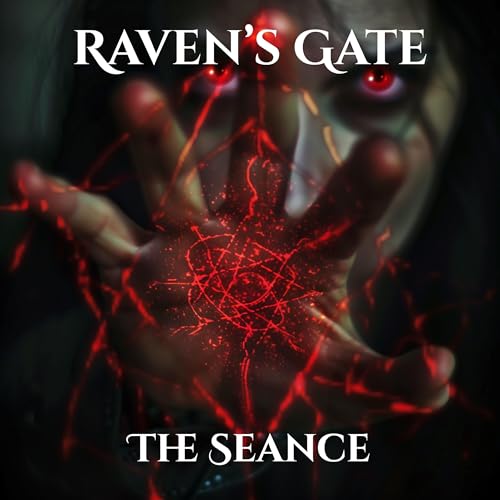
    She draws a symbol on her notepad that she learned from a book no library has ever catalogued. She presses the pen into her palm until it breaks the skin. She speaks a word that is not in any language the living have ever learned.

    What comes through the table is old and amused and very real. And it has questions for every celebrity in the room. Questions about the NDAs. The buried bodies. The minors. The fraud. The suicide they caused.

    Jasper Creed asked the dead to speak. He should have been more careful about who was listening.

    Mostra di più Mostra meno
    29 min
  • The Return
    Apr 29 2026

    Justin Deets has driven past this farmhouse three times in twenty-nine years. Once for Thanksgiving. Once for his mother's hip surgery. Once because his sister guilted him into it. Each time, he parked in the drive, walked through the door, and felt something in his chest clamp shut.

    Now both parents are dead, three weeks apart, and the estate needs inventorying.

    The house hasn't changed. Same furniture. Same positions. A clock on the mantle stopped at 3:47. His mother never wound it. "Time doesn't matter in this house," she said, and he was too young to hear the warning in it.

    The first night, the walls breathe.

    Justin had nightmares as a child. Bad ones. A doctor prescribed medication that stopped the dreams and took the memories with them. He's spent forty years not remembering what happened in this house.

    Now the memories come back. The kitchen. His mother frozen at the sink. Something standing in the corner behind her, something angular and wrong, something with edges where a person should have curves. When she turned around, her face was a mask and her voice came from somewhere hollow.

    He finds the photographs his mother hid in a shoebox under the stairs. Family portraits, dozens of them, where she had carefully cut a shape out of the background. The same shape. Every photo.

    She could see it. She knew what lived here. She and his father stayed anyway, because the house needed someone inside it, and if they left, it would have followed their son.

    Justin has been home for ten days now. He's stopped checking his phone. He sits in his father's chair and stares out the window for hours he can't account for.

    The thing with edges has been very patient.

    Mostra di più Mostra meno
    22 min
  • The Silver Button Inn
    Apr 27 2026

    The Red Garter operated from 1872 to 1923. Four women worked there: Constance, the madam who ran the books. Clara, murdered by a client at twenty-five. Evangeline, taken by smallpox at thirty-four. Riley, dead of childbed fever and angry about it for over a century.

    The building is the Silver Button Inn now. A hotel in Georgia with exposed brick and local charm and four ghosts who have opinions about the guests.

    Forty-three members of Women of Virtue and Universal Truth have booked their annual convention. WVUT fights against marriage equality, defunded a women's shelter for serving "the wrong kind of women," and is led by Greta Bloomspoon, a woman who built her reputation on moral authority.

    The ghosts are initially content to watch. Then Clara finds Greta's diary.

    The entry is from 1962. Greta was fifteen. She stole a ruby ring from her mother's jewelry box and blamed Delilah Morrison, a fourteen-year-old Black girl who worked in the kitchen. Delilah spent eighteen months in juvenile detention. Her life never recovered. She died at forty-two.

    The diary also contains every corrupt deal, every diverted donation, every lie WVUT has told for decades.

    Constance hasn't killed anyone in a long time. She takes no pleasure in it. But she was an honest woman who did honest work, and there are sins that a century of death doesn't make her willing to forgive.

    The WVUT convention is about to experience some unscheduled programming.

    Mostra di più Mostra meno
    32 min