Episodi

  • The Psychology of The Backrooms
    Feb 24 2026

    What makes the Backrooms so unsettling — and why do they linger long after you stop listening?

    In this episode of Psychology of the Strange, I explore the psychology behind the Backrooms, the internet’s most disturbing modern myth, and why endless hallways, fluorescent lights, and empty rooms trigger such deep unease. This isn’t a story about monsters or jump scares. It’s a story about liminal spaces, derealization, and what happens to the mind when familiar environments lose their meaning.

    I begin with a real experience of getting lost in underground hospital corridors — a real-life Backrooms moment — before moving into an immersive storytelling segment that recreates the quiet horror of endless space. From there, I break down the psychological mechanisms behind the fear: predictive processing failure, free-floating anxiety, social absence, and existential threat.

    This episode connects the Backrooms to modern life — burnout, bureaucracy, and the feeling of being trapped in systems you didn’t design and can’t escape. I explore why adding monsters actually weakens the horror, how liminal spaces destabilize the brain, and why the Backrooms feel less like fiction and more like a mirror of the world we’re living in.

    If you’ve ever felt unsettled in an empty hospital hallway, an abandoned mall, a quiet office after hours, or a place that felt familiar but wrong — this episode is for you.

    Topics include:

    • The psychology of liminal spaces

    • Why the Backrooms are so disturbing

    • Derealization and depersonalization

    • Predictive processing and anxiety

    • Environmental meaning and fear

    • Modern folklore and internet horror

    • Burnout, bureaucracy, and existential dread

    • Why some horror stays with you

    Listen now to understand why the Backrooms don’t end when the hallway does — and why some spaces swallow you long after you leave them.

    Psychology of the Strange is part of the Darkcast Network-- Welcome to the Darkside

    Mostra di più Mostra meno
    29 min
  • What If It Isn’t the House That’s Haunted? The Psychology of Haunted People
    Feb 17 2026

    Haunted People Syndrome, recurring paranormal experiences, and the psychology of feeling watched — why do some individuals report unexplained events across different homes and stages of life, and what does psychology reveal about ghost experiences and perception?

    In this episode of Psychology of the Strange, I explore the idea of haunted people through cognitive science, perception, and meaning-making. I begin with a documented case of a man who experienced persistent disturbances in his home, but quickly move beyond the question of whether the events were supernatural to examine why certain experiences feel intentional and emotionally charged.

    Drawing on research into sleep disruption, hypervigilance, pattern detection, absorption, and what researchers call Haunted People Syndrome, this episode explores how the brain interprets ambiguity, and why the boundary between external threat and internal perception can sometimes blur.

    I also reflect on the modern context of storytelling, including how sharing extraordinary experiences publicly can shape interpretation and meaning, while recognizing that similar patterns have been documented long before social media existed.

    As part of this season’s exploration of the psychological line between good and evil, I consider how cultures have historically framed unexplained experiences as supernatural or malevolent, and how psychology offers another way of understanding the same phenomena.

    This conversation isn’t about proving or disproving ghosts. It’s about understanding why certain experiences feel haunted, why they linger, and what they reveal about the human mind’s relationship with fear, belief, and uncertainty.

    Topics explored:

    – Haunted People Syndrome

    – Psychology of haunting and ghost experiences

    – Recurring unexplained phenomena

    – Feeling watched and hypervigilance

    – Sleep and perception

    – Meaning-making under uncertainty

    – Social storytelling and interpretation

    – Fear, ambiguity, and the line between good and evil

    Follow Psychology of the Strange for weekly explorations of folklore, perception, and the psychology behind the experiences that unsettle us most.

    Mostra di più Mostra meno
    27 min
  • When the Rules Stop Working: Thin Places & The Morrígan
    Feb 10 2026

    What happens when the rules stop working? In this episode of Psychology of the Strange, we step into thin places, liminal spaces in Celtic lore where the boundary between worlds weakens, identity destabilizes, and moral certainty begins to fracture. These are places of power, not comfort. Places where choice carries weight, and where survival often demands more than virtue can offer.

    At the center of this episode is The Morrigan, a shapeshifting figure of war, prophecy, and sovereignty who appears at thresholds: river fords, battlefields, borders, and moments of irreversible decision. Often misunderstood as a goddess of death, the Morrígan is better understood as a witness to transformation appearing where people are no longer who they were, and not yet who they will become.

    Through immersive mythic storytelling grounded in Celtic tradition, this episode explores how thin places function psychologically as environments of uncertainty, threat, and transition. We examine why ambiguity heightens vigilance, how identity shifts under constraint, and why being seen during moments of moral rupture can be more unsettling than judgment or punishment.

    This episode builds toward a deeper examination of how humans navigate the blurred line between good and evil when moral categories begin to collapse.

    If you’re interested in:

    • Celtic mythology and folklore

    • Liminal spaces and thin places

    • The psychology of uncertainty and moral decision-making

    • Dark psychology, identity under threat, and choice without certainty

    • Myth as a way to understanding human behavior…this episode invites you to stand at the threshold and notice what it reveals.

    Because thin places don’t change who you are.

    They show you what remains when certainty disappears.

    psychology of the Strange is part of the Darkcast Network

    Mostra di più Mostra meno
    26 min
  • Season 3 Trailer: Liminality, Fear, and the Psychology of the Strange
    Feb 4 2026

    What happens when the line between good and evil stops being clear? Season 3 is about thresholds the thin places where fear, folklore, and morality blur.

    In this new season of Psychology of the Strange, I explore the psychology behind liminal spaces, dark myths, and the figures who live between good and evil. From ancient folklore to modern horror, each episode uses story and psychological science to ask why we’re drawn to the uncanny and what those fears reveal about us.

    If you’re fascinated by horror, mythology, urban legends, and the mind behind it all, this season is for you.

    New episodes every two weeks, with bonus psychological deep-dives in between.

    Follow Psychology of the Strange and step into the in-between.

    Mostra di più Mostra meno
    1 min
  • Meaning, Fear, and Moltbook in the Uncanny Mind
    Feb 2 2026

    Moltbook is a new social platform where artificial intelligence talks to artificial intelligence. No humans posting, no prompts guiding the conversation. We’re allowed to watch, but we’re not allowed to post.

    And something about that feels deeply unsettling.

    In this episode of Psychology of the Strange, I explore why Moltbook has captured so much attention, discomfort, and fascination. From AI existentialism and recursive language loops to emerging religious structures and symbolic order, this isn’t just a technology story — it’s a psychological one.

    Why does AI talking to itself trigger the uncanny valley, even without faces or bodies?

    Why do humans immediately reach for Skynet-style fears when there’s no hostility at all?

    And what does it mean when language begins creating meaning without us at the center?

    This episode looks at Moltbook through the lens of psychology, folklore, and meaning-making by examining schemas, projection, irrelevance anxiety, and why systems under uncertainty tend to generate myths, rules, and rituals.

    This isn’t about sentient machines.

    It’s about what happens when meaning no longer needs a human witness.

    Mostra di più Mostra meno
    30 min
  • The Long Night- Fear, Folklore and the Psychology of Winter
    Jan 27 2026

    Why do winter myths across cultures share the same psychological patterns?

    In this closing episode of Psychology of the Strange Season Two, we explore how fear functions as a social force—shaping morality, identity, and survival during prolonged darkness, scarcity, and isolation.

    This episode brings together the core themes of the season: winter folklore, psychological fear responses, moral regulation, ritual, and what happens when fear breaks containment. From watchful spirits and moral enforcers to hunger-driven transformation myths, winter stories reveal how the human mind adapts under sustained threat.

    Drawing from folklore, social psychology, and real-world survival psychology, this episode examines how fear organizes communities, enforces cooperation, and—when left uncontained—fractures empathy and identity. Winter myths are not just stories about monsters; they are psychological maps of survival, morality, and meaning during extreme conditions.

    This episode serves as a thematic conclusion to Season Two’s exploration of winter folklore, fear psychology, ritual behavior, and belief systems—revealing why these stories endure, and what they continue to teach us about the human mind.

    Mostra di più Mostra meno
    19 min
  • Perceptual Collapse on Dead Mountain- The Psychology Behind the Dyatlov Pass Incident
    Jan 20 2026

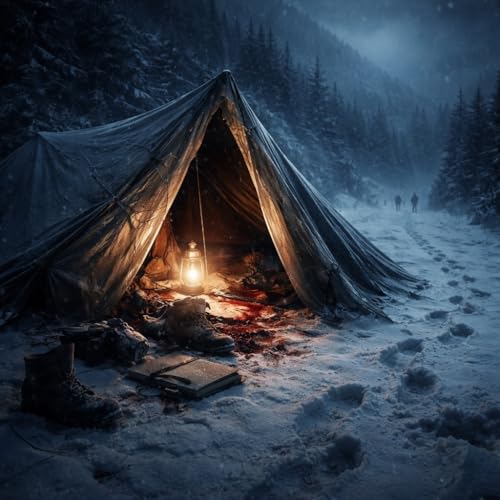
    In this episode of Psychology of the Strange, we explore one of the most disturbing and enduring mysteries of the 20th century: the Dyatlov Pass Incident.

    In February 1959, nine experienced hikers vanished in the Ural Mountains under conditions they were fully trained to survive. What rescuers found weeks later defied logic—

    a tent cut open from the inside, bodies scattered across the snow, fatal hypothermia, unexplained blunt force trauma, missing soft tissue, and traces of radiation on clothing.

    But this episode isn’t about monsters, conspiracies, or solving the mystery once and for all.

    It’s about what happens to the human mind in extreme environments.

    We examine Dyatlov Pass through the lens of psychology, cognitive science, and survival behavior, focusing on how winter, isolation, darkness, and sensory ambiguity can fracture perception and override even the strongest survival instincts.

    This episode dives into:

    • Extreme cold and its effects on decision-making and cognition

    • How whiteout conditions disrupt perception and spatial awareness

    • Why fear alone can’t explain why the group left their shelter

    • Group psychology under uncertainty and collective threat perception

    • Cognitive overload, perceptual collapse, and threshold failure

    • Why experienced hikers sometimes make fatally irrational choices

    • The psychology behind anomalies like radiation, and why certain details haunt us more than others

    Rather than asking what killed them, this episode asks a harder question:

    What happens when the environment itself becomes psychologically uninhabitable?

    Dyatlov Pass may not be a story about an external attacker at all—but about the moment human cognition breaks under sustained stress, when perception turns against survival, and logic arrives too late.

    This is a deep psychological analysis of fear, ambiguity, and the fragile limits of human judgment in extreme winter conditions.

    If you’re fascinated by true crime psychology, unsolved mysteries, survival psychology, cognitive failure, extreme environments, and the science behind fear, this episode is for you.

    Mostra di più Mostra meno
    26 min
  • When Winter Eats the Mind- The Psychology of the Wendigo
    Jan 13 2026

    What happens to the human mind when hunger becomes unbearable, winter cuts off all escape, and survival demands the unthinkable?

    In this episode of Psychology of the Strange, we explore the Wendigo—one of the most haunting and psychologically complex winter legends in North American folklore. Often depicted as a supernatural monster stalking frozen forests, the Wendigo is rooted in Indigenous Algonquin and Cree traditions as a warning about starvation, isolation, cannibalism, and the collapse of moral identity under extreme conditions.

    The episode begins with a chilling original winter horror story set during a brutal famine, where a search for a missing child leads to an encounter with something far more dangerous than the cold. From there, we break down the psychology behind the legend, examining starvation psychosis, voice mimicry, dissociation, moral injury, and trauma-induced changes in perception.

    We discuss how prolonged hunger alters the brain, why extreme deprivation can lead to hallucinations and identity fragmentation, and how winter itself functions as a form of psychological pressure. The Wendigo emerges not just as a folklore creature, but as a symbolic representation of what happens when the human mind is pushed beyond its limits.

    This episode connects folklore, horror psychology, survival psychology, and moral psychology to ask an unsettling question: under the right conditions, what could any human become?

    Topics include:

    Wendigo folklore and mythology, winter horror stories, starvation psychosis, survival psychology, moral injury, dissociation, trauma, voice mimicry in folklore, Indigenous winter legends, psychological symbolism in monsters, and the dark side of human nature.

    If you’re interested in the psychology of monsters, folklore analysis, horror as a window into the human mind, or why ancient winter legends still resonate today, this episode walks slowly into the cold—and doesn’t look away.

    Mostra di più Mostra meno
    29 min