

Perceptual Collapse on Dead Mountain- The Psychology Behind the Dyatlov Pass Incident
Impossibile aggiungere al carrello
Rimozione dalla Lista desideri non riuscita.
Non è stato possibile aggiungere il titolo alla Libreria
Non è stato possibile seguire il Podcast
Esecuzione del comando Non seguire più non riuscita

Perceptual Collapse on Dead Mountain- The Psychology Behind the Dyatlov Pass Incident
-
Letto da:
-
Di:
A proposito di questo titolo
In this episode of Psychology of the Strange, we explore one of the most disturbing and enduring mysteries of the 20th century: the Dyatlov Pass Incident.
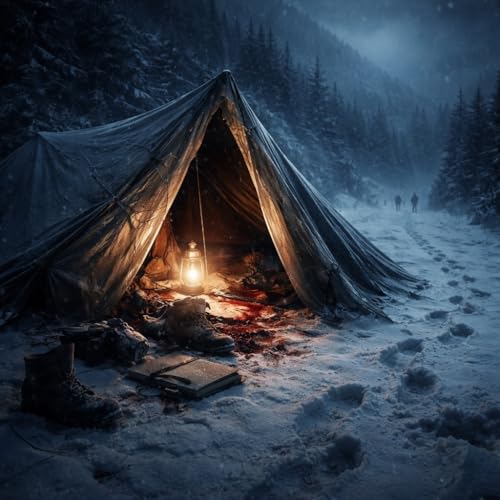
In February 1959, nine experienced hikers vanished in the Ural Mountains under conditions they were fully trained to survive. What rescuers found weeks later defied logic—
a tent cut open from the inside, bodies scattered across the snow, fatal hypothermia, unexplained blunt force trauma, missing soft tissue, and traces of radiation on clothing.
But this episode isn’t about monsters, conspiracies, or solving the mystery once and for all.
It’s about what happens to the human mind in extreme environments.
We examine Dyatlov Pass through the lens of psychology, cognitive science, and survival behavior, focusing on how winter, isolation, darkness, and sensory ambiguity can fracture perception and override even the strongest survival instincts.
This episode dives into:
-
Extreme cold and its effects on decision-making and cognition
-
How whiteout conditions disrupt perception and spatial awareness
-
Why fear alone can’t explain why the group left their shelter
-
Group psychology under uncertainty and collective threat perception
-
Cognitive overload, perceptual collapse, and threshold failure
-
Why experienced hikers sometimes make fatally irrational choices
-
The psychology behind anomalies like radiation, and why certain details haunt us more than others
Rather than asking what killed them, this episode asks a harder question:
What happens when the environment itself becomes psychologically uninhabitable?
Dyatlov Pass may not be a story about an external attacker at all—but about the moment human cognition breaks under sustained stress, when perception turns against survival, and logic arrives too late.
This is a deep psychological analysis of fear, ambiguity, and the fragile limits of human judgment in extreme winter conditions.
If you’re fascinated by true crime psychology, unsolved mysteries, survival psychology, cognitive failure, extreme environments, and the science behind fear, this episode is for you.