Mouthy Money: Building wealth with long term investing and saving strategies copertina

Mouthy Money: Building wealth with long term investing and saving strategies

Mouthy Money: Building wealth with long term investing and saving strategies

Di: Mouthy Money | UK finance podcast on building wealth
Ascolta gratuitamente

A proposito di questo titolo

Edmund Greaves and Chris Tuite host Mouthy Money - a UK finance podcast on building wealth with long term investing and saving strategies. From the stock market for beginners, to mortgage rates, fears of economic recession, whether to invest in gold and silver or what the consumer price index is, we look at complicated financial topics through a personal lens. With regular financial expert guests to unpick knotty issues, we've got you covered with weekly episodes.Mouthy Money | UK finance podcast on building wealth Economia Finanza personale
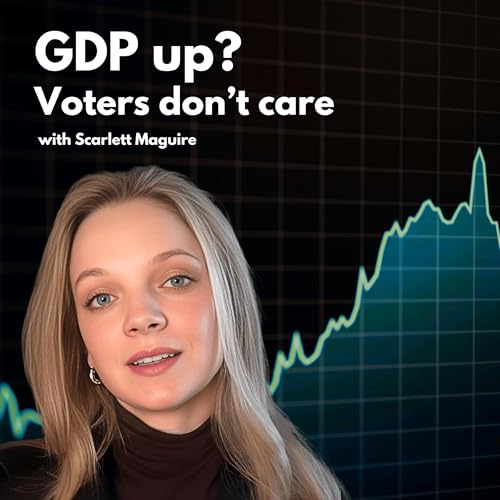
  • Voters don't care about GDP. They just want lower bills.
    Feb 19 2026

    Politicians keep telling us the economy is improving. GDP is growing. Inflation is falling. So why does it still feel like we’re getting poorer?

    In this episode of Mouthy Money, we dig into the widening gap between headline economic data and everyday reality. Polling expert Scarlett Maguire, founder of Merlin Strategy, explains why voters don’t associate economic growth with improvements in their own lives - and why energy bills, housing costs, food prices and tax matter far more than GDP figures.

    We explore why anger at regulators and utility companies is rising, why demands for direct Government intervention are growing and how this disconnect is fuelling political instability on both the left and the right.

    Even if growth returns, will people actually feel better off?

    *Chapters*

    00:00 GDP Growth vs Cost of Living Crisis (UK Economy Explained)

    01:15 Who Is Scarlett Maguire? Political Polling & Economic Research

    02:10 Why UK Voters Don’t Care About GDP Growth

    04:30 What “Cost of Living” Really Means (Housing, Energy, Food, Tax)

    07:20 Inflation Falling – Why Prices Still Feel High

    09:05 Has the Pandemic Made Britain Poorer?12:40 Economic Anxiety and the Rise of Populism

    15:10 The Misery Index: Inflation + Unemployment Explained

    17:45 Why UK Energy Bills Are So High

    20:50 Ofgem, Price Caps and Energy Market Regulation

    23:35 Should the Government Cut Energy Bills?

    25:15 Why Brits Don’t Invest (Savings, Pensions, Risk)

    28:05 Are We Heading for UK Economic Recovery?

    31:00 Youth Unemployment and the Housing Crisis

    33:30 What Happens If Growth Returns – Will Voters Feel It?

    MOUTHY MONEY

    *Our substack* mouthymoney.substack.co.uk

    *Get in touch* ⁠⁠editors@mouthymoney.co.uk ⁠⁠

    DISCLAIMER

    This video is produced for general informational purposes only. It should not be construed as investment, legal, tax, mortgage or other forms of financial advice. If in any doubt about the themes expressed, consider consulting with a regulated financial professional for your own personal situation. Past performance is no guarantee of future results. Investments can go down as well as up and you may get back less than you started with. Investments are speculative and can be affected by volatility. Never invest more than you can afford to lose. For more information visit ⁠⁠⁠www.fca.org.uk/investsmart⁠. Please note, video captions are auto-generated and may not be 100% accurate.

    Mostra di più Mostra meno
    33 min
  • Dragon’s Den £50K Deal: Can This App Help You Pay Off Your Mortgage Faster?
    Feb 16 2026

    After securing £50,000 on BBC Dragon’s Den, fintech founder Jinesh Vohra joins us to discuss a question facing millions of homeowners: should you be paying off your mortgage early?

    In this episode, we explore the fundamentals of mortgage overpayments, how interest is front-loaded in the early years of a loan, and whether it makes more sense to reduce debt or focus on long-term investing — particularly in today’s UK interest rate environment.

    Jinesh explains how his app, Sprive, helps homeowners chip away at their mortgage using cashback, spare cash automation and smarter refinancing. We also go behind the scenes of Dragon’s Den — what the Dragons look for in a fintech business, and why trust is critical in UK finance.

    If you’re thinking about building wealth, managing debt strategically, or balancing mortgage overpayments with long-term investing, this episode will help you think more clearly about your options.

    We cover:

    • The case for (and against) paying off your mortgage early
    • How amortisation works and why early overpayments matter
    • Mortgage freedom vs long-term investing
    • Financial trust in fintech
    • What really happens on Dragon’s Den

    MOUTHY MONEY

    *Our substack* mouthymoney.substack.co.uk

    *Get in touch* ⁠⁠editors@mouthymoney.co.uk ⁠⁠

    DISCLAIMER

    _This video is produced for general informational purposes only. It should not be construed as investment, legal, tax, mortgage or other forms of financial advice. If in any doubt about the themes expressed, consider consulting with a regulated financial professional for your own personal situation. Past performance is no guarantee of future results. Investments can go down as well as up and you may get back less than you started with. Investments are speculative and can be affected by volatility. Never invest more than you can afford to lose. For more information visit ⁠⁠⁠www.fca.org.uk/investsmart⁠. Please note, video captions are auto-generated and may not be 100% accurate._

    Mostra di più Mostra meno
    32 min
  • The Hidden Financial Penalty of Being Single
    Feb 6 2026

    Solo living leaves people with far less disposable income, lower investing rates and weaker financial safety nets.

    But why does being single cost so much more? In this episode of Mouthy Money, we count the costs of the “single person financial penalty”.

    With insights from Hargreaves Lansdown’s Helen Morrissey, we look at what singles (and couples) can do to protect their financial futures.

    *On this episode*

    ▉ Singles have far less disposable income because costs can’t be shared.

    ▉ Thin monthly margins make saving and investing feel risky.

    ▉ Lower savings mean less protection against redundancy or illness.

    ▉ Talking about money improves financial resilience — even if you’re single.

    ▉ Divorce, separation, and bereavement can suddenly trigger the same penalty.

    ▉ Relying on a partner’s pension is risky if circumstances change.

    ▉ Cohabiting without legal protections can lead to major financial losses.

    ▉ Everyone should plan for retirement as an individual first.

    *Let us know what you think?* Does the single person financial penalty affect you?

    *Chapters*

    00:00 – The single person financial penalty explained

    01:40 – Why living alone costs so much more

    03:15 – Disposable income gap: £23 vs £280

    05:20 – Safety nets, job loss, and financial vulnerability

    07:20 – Why singles invest less (and fear risk more)

    10:20 – UK savers vs investors: pensions and misconceptions

    13:55 – Breakups, divorce, and becoming single later in life

    16:05 – Pension complacency and cohabitation risks

    18:15 – How to plan like a financially independent adult

    MOUTHY MONEY

    *Our substack* mouthymoney.substack.co.uk

    *Get in touch* ⁠⁠editors@mouthymoney.co.uk ⁠⁠

    DISCLAIMER

    This video is produced for general informational purposes only. It should not be construed as investment, legal, tax, mortgage or other forms of financial advice. If in any doubt about the themes expressed, consider consulting with a regulated financial professional for your own personal situation. Past performance is no guarantee of future results. Investments can go down as well as up and you may get back less than you started with. Investments are speculative and can be affected by volatility. Never invest more than you can afford to lose. For more information visit ⁠⁠⁠www.fca.org.uk/investsmart⁠. Please note, video captions are auto-generated and may not be 100% accurate.

    Mostra di più Mostra meno
    20 min
Ancora nessuna recensione