Episodi

  • Why Resolutions Don’t Stick
    Jan 7 2026
    Why Resolutions Don’t Stick

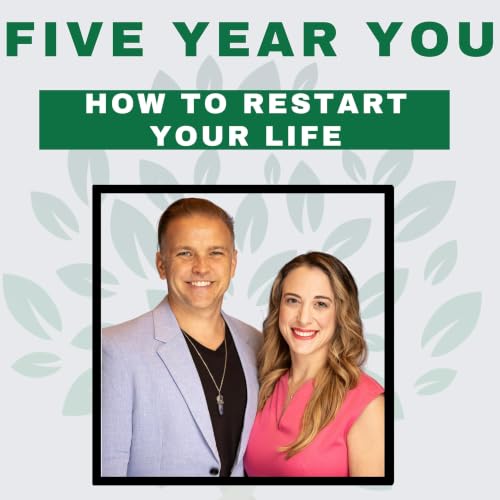
    Every year, millions of people set New Year’s resolutions — and by mid-January, most of them feel frustrated, discouraged, or convinced they’ve failed. In this episode, Andrew and Cat break down why resolutions so often fall apart, why it’s not a personal flaw, and what actually works if you want real, lasting change.

    This conversation is about releasing shame, understanding how your brain and nervous system work, and building habits that support who you’re becoming — not punishing yourself into change.

    In this episode, we talk about:
    1. Why most resolutions fail by design
    2. How going “too big, too fast” overwhelms your nervous system
    3. The difference between goals driven by shame vs. excitement
    4. Why motivation doesn’t come first — action does
    5. How identity-based habits outperform willpower
    6. Why systems matter more than motivation
    7. How overwhelm leads to avoidance and freeze mode
    8. Why rest and flexibility are part of consistency

    Why resolutions usually don’t work:
    1. They’re too vague (“get healthy,” “be better,” “lose weight”)
    2. They’re rooted in self-criticism instead of care
    3. They rely on motivation instead of systems
    4. They ignore real life stress, illness, and bad days
    5. They don’t account for who you actually are

    What actually works instead:

    Start smaller than feels necessary

    Tiny, achievable actions build momentum. Big goals still matter — but they must be broken into bite-sized steps your brain can handle.

    Create systems, not rules

    Motivation fades. Systems stay. Decide how you’ll show up on hard days, not just what you’ll do on perfect ones.

    Build identity-based habits

    Instead of “I need to work out,” try:

    1. “I’m someone who moves every day”
    2. “I’m someone who shows up, even imperfectly”

    Know yourself honestly

    Some people need accountability. Others don’t. There’s no shame — just strategy.

    Plan for real life

    Have a Plan B for sick days, stressful weeks, and low-energy moments. Missing one day doesn’t break a habit — quitting does.

    Action creates motivation

    Don’t wait to feel inspired. Do the smallest version of the habit — motivation will follow.

    Helpful reframes we love:
    1. Change driven by shame rarely survives stress
    2. Overwhelm triggers avoidance
    3. Pausing does not erase progress
    Mostra di più Mostra meno
    23 min
  • How to Stop Taking Rejection Personally
    Dec 31 2025

    Rejection can feel deeply personal — whether it’s not getting the job, not hearing back, being left out, or feeling unwanted in relationships. In this episode, Andrew and Cat unpack why rejection hurts so much, what’s actually happening in your brain when it happens, and how to move through it without letting it define your self-worth.

    This conversation is for anyone who tends to replay rejection over and over, spiral into self-blame, or wonder what’s “wrong” with them after hearing no.

    In this episode, we talk about:
    1. Why rejection activates the brain’s pain centers
    2. How rejection threatens belonging, not your value
    3. The difference between what happened and the story you tell yourself
    4. Why rejection often feels like an identity attack
    5. How timing, fit, and context matter more than personal failure
    6. Why being rejected doesn’t mean you were evaluated fairly
    7. How to stop internalizing rejection and move forward with confidence

    Helpful mindset shifts:
    1. Rejection is an event, not a verdict
    2. Not being chosen doesn’t mean you’re unworthy
    3. You don’t need universal approval to belong
    4. Rejection often protects you from misalignment
    5. One “no” does not define your future

    Practical ways to handle rejection:
    1. Let yourself feel disappointed without shaming yourself
    2. Name the emotion instead of becoming it
    3. Separate facts from assumptions
    4. Reconnect with moments where you have been chosen
    5. Keep your identity bigger than one outcome

    A reminder we hope you take with you:

    You are not your last rejection. You are allowed to grieve it — and you are allowed to move on without carrying it as proof of anything about you.

    Glimmers:

    Andrew shares a moment of calm and presence before a busy season, while Cat reflects on the joy of a slow, grounding day spent resetting her space and energy.

    Mostra di più Mostra meno
    26 min
  • How to Reset After a Bad Day
    Dec 24 2025

    Bad days happen to everyone — the spilled coffee, the rude driver, the overwhelming to-do list, the kid meltdown, or the spiraling thoughts that won’t quit. But a bad day doesn’t have to turn into a bad week or a bad season. In this episode, Andrew and Cat break down exactly what’s happening in your body and mind during a tough day and share practical, science-backed steps to interrupt the spiral and truly reset.

    This is your guide to calming your nervous system, grounding in the present, and giving yourself the compassion you actually need.

    Key Topics Covered
    1. Why your brain goes into “fight, flight, or freeze” during a bad day
    2. How overstimulation + emotional flooding make everything feel worse
    3. The Window of Tolerance and why you pop out of it
    4. Why powering through backfires
    5. What not to do after a bad day
    6. Simple grounding techniques that work in minutes
    7. How to shift your environment and regulate your nervous system
    8. How to stop the negative momentum before it becomes a bad week

    Actionable Steps to Reset1. Acknowledge You’re Having a Bad Day

    Normalize it: “This is a bad day. It’s temporary.”

    Awareness interrupts the mental tumble.

    2. Ground Yourself in Your Body

    When your mind spins, your body’s in survival mode. Try:

    1. Box breathing (4–4–4–4)
    2. Double inhale + long exhale
    3. Rubbing your arms
    4. Feet planted firmly on the ground
    5. Repeating: “I am safe right now.”

    3. Move the Stuck Energy Out

    Bad days create physical tension. Release it with:

    1. A fast walk
    2. Gentle stretching
    3. Shaking out your limbs
    4. A moment of dancing
    5. Stomping your feet (great for kids and adults)

    Movement shifts your physiology faster than thoughts ever will.

    4. Change Your Environment

    Your nervous system needs a scene shift:

    1. Step outside for fresh air and sunlight
    2. Splash cold water on your face
    3. Take a warm shower (Cat’s dad’s universal cure!)

    A new environment interrupts the emotional loop.

    5. Regulate & Co-Regulate

    Once calmer, try:

    1. Tea or cool water
    Mostra di più Mostra meno
    25 min
  • How to Enjoy Christmas This Year
    Dec 17 2025

    Christmas is often described as the most wonderful time of the year — but for many people, it’s one of the hardest. In this episode, Andrew and Cat talk honestly about holiday burnout, grief, pressure, and unrealistic expectations, and offer compassionate, practical ways to experience Christmas in a way that actually feels good for you.

    This episode is especially for anyone who feels overwhelmed, disconnected, grieving, resentful, or simply “not into it” this year. You’re not broken — you’re human.

    In This Episode, We Talk About:

    • Why Christmas can feel emotionally heavy instead of joyful

    • The unrealistic pressure placed on parents (especially moms) during the holidays

    • How social media amplifies comparison, guilt, and expectations

    • Why it’s okay to feel joy and sadness at the same time

    • How grief shows up during the holidays — and why there’s no “right” way to do Christmas

    • The difference between meaningful moments and overdoing gifts and traditions

    • How to stop people-pleasing and start honoring your own emotional needs

    Key Takeaways

    You’re not broken if you’re not feeling festive

    If Christmas feels hard this year, that doesn’t mean something is wrong with you. Stress, grief, loss, illness, burnout, and family dynamics all get amplified during the holidays.

    Christmas is an amplifier

    Whatever you’re already feeling — joy, exhaustion, grief, loneliness — tends to feel bigger this time of year. That doesn’t make those feelings bad or wrong.

    More effort doesn’t equal more joy

    Doing more traditions, buying more gifts, or spending more money doesn’t guarantee happiness. Often, it just leads to more stress and resentment.

    Kids remember how you felt, not what you bought

    Children are far more likely to remember experiences, presence, and emotional safety than the number of presents under the tree.

    Grief and gratitude can coexist

    You can miss someone deeply and still appreciate the people or moments you have now. Smiling doesn’t mean you’ve “moved on,” and sadness doesn’t mean you’re ungrateful.

    Practical Ways to Enjoy Christmas (Your Way)

    Design Christmas around your emotional needs

    Ask yourself:

    – Do I need calm or excitement this year?

    – Do I want togetherness or more quiet?

    – What would actually help me feel rested or supported?

    There is no correct answer — only your answer.

    Simplify traditions

    Traditions don’t have to be expensive or elaborate. Small, repeatable comforts can be just as meaningful:

    – One favorite movie

    – A quiet morning

    – Driving around to look at lights

    – A simple meal

    – One meaningful gift

    You’re allowed to start new traditions or pause old ones.

    Set boundaries without guilt

    You’re allowed to:

    – Say no to travel

    – Leave early

    – Stay home

    – Skip events

    – Change plans

    Disappointing others doesn’t mean you’ve failed — it means you’re honoring yourself.

    If you’re grieving, do what feels safest

    Recreating old traditions might hurt — or it might help. Either choice is valid. Staying home is not “giving up.” It’s creating space to heal.

    Stop forcing cheer

    You don’t need to fix the mood, perform happiness, or make everyone feel joyful. Let emotions come and go naturally.

    What Not to Do This Christmas

    • Don’t force happiness or cheer

    • Don’t compare your holiday to social media

    • Don’t shame yourself for how you’re feeling

    • Don’t override your needs to meet expectations

    • Don’t assume this year defines every future Christmas

    Glimmers from This Episode

    Cat’s...

    Mostra di più Mostra meno
    25 min
  • How To Feel Less Lonely
    Dec 10 2025

    You can be surrounded by people and still feel lonely — and that’s something almost everyone experiences. In this episode, Andrew and Cat unpack the difference between being alone and feeling lonely, explore where that emptiness comes from, and share practical, compassionate ways to rebuild connection — both with others and yourself.

    Big ideas
    • Loneliness ≠ isolation. You can feel lonely in a crowded room because connection is about being understood, not just being around others.
    • Your brain lies. The stories you tell yourself — “I’m a burden,” “no one cares,” “I wasn’t invited because I’m not liked” — aren’t facts.
    • It’s often rooted in old wounds. Many of us learned as kids to minimize our needs, which makes adult connection harder.
    • You can rewire the story. Self-compassion and awareness can help you separate what happened from what you made it mean.
    • Connection takes courage. Reaching out feels scary, but it’s the antidote to loneliness.

    Key takeaways

    1️⃣ Name the lie. When your brain says, “nobody cares,” replace it with: “No one knows I need them right now.”

    2️⃣ Reach out first. Send a text, share a funny video, or ask for a coffee. Don’t wait for an invitation — give one.

    3️⃣ Borrow hope. When you see others connecting, use it as proof that connection is possible for you too.

    4️⃣ Say what you need. “Can we talk?” or “I’ve been feeling disconnected” is honest — not needy.

    5️⃣ Get around people. Go for a walk, smile at strangers, sit in a café — you’ll feel energy shift just by being among others.

    6️⃣ Rebuild inner connection. Remind yourself of your worth: write down moments when you’ve been a good friend, helper, or listener.

    7️⃣ Shift focus outward. Helping others — even small acts — often dissolves your own loneliness.

    Gentle scripts to try
    • “Hey, I’ve been thinking of you. How have you been?”
    • “I could use a chat today — do you have time to catch up?”
    • “Want to grab a quick coffee this week?”
    • “I saw this and it made me think of you.”

    Every message doesn’t have to be deep — just real.


    Quotes & reflections“Your brain lies — you’re not a burden, you’re a blessing.”“Loneliness is the space between your heart reaching out and your fear holding back.”“Every time you smile at someone, you remind them — and yourself — that we’re all in this together.”Glimmers
    • Cat: Trader Joe’s ready-made dinners — giving herself grace and ease in a busy week. 🍝
    • Andrew: Binge-watching Stranger Things guilt-free — sometimes comfort and escape are self-care. 📺

    If you’re struggling deeply

    You are not alone. If you’re in crisis or feeling hopeless, reach out for help right now:

    • 988 Suicide and Crisis Lifeline (U.S.) — call or text 988
    • Canada Suicide Prevention Service — call or text 988
    • U.K. Samaritans — call 116 123
    • Australia Lifeline — call 13 11 14
    • Or visit findahelpline.com for international...
    Mostra di più Mostra meno
    25 min
  • Why Your Life Feels Boring All of a Sudden
    Dec 3 2025

    Do you ever wake up and think, “Is this it?” You’ve checked all the boxes — career, home, family — but something still feels flat. In this episode, Andrew and Cat unpack why life can suddenly feel boring even when everything looks good on paper. They share insights on midlife lulls, lost curiosity, and how to bring energy, novelty, and purpose back into your everyday routine.

    Big ideas
    • Boredom isn’t bad. It’s a signal — not a failure. It’s your brain’s way of saying, “We’ve mastered this level. Time to evolve.”
    • Comfort kills curiosity. The more predictable your life becomes, the less stimulation your brain gets.
    • There are two kinds of boredom:
    • Situational boredom — nothing to do.
    • Existential boredom — plenty to do, but nothing excites you.
    • Tiny novelties matter. You don’t need to blow up your life; even small changes reignite joy.

    Key takeaways

    1️⃣ Add micro-novelties. Try a new coffee shop, walk a different route, or rearrange a room — fresh experiences reawaken your senses.

    2️⃣ Stay curious. Learn something new just for the fun of it — a language, an instrument, or even a random hobby.

    3️⃣ Reconnect with purpose. If your kids, job, or routines no longer “need” you the same way, find new outlets for meaning.

    4️⃣ Let boredom guide you. Sometimes it’s not about doing more — it’s about resting deeply.

    5️⃣ Reach out. Loneliness often hides behind “busy.” Text the friend you’ve been missing — they’ll probably be relieved you did.

    Small shifts to spark excitement
    • Replace scrolling with doing. Ten minutes of learning beats an hour of endless swiping.
    • Start a “Done List.” Track what you accomplished today instead of what’s missing.
    • Take curiosity breaks. Watch a documentary, visit a farmer’s market, or read about something new.
    • Try the Groundhog Day reframe: Instead of escaping monotony, add playfulness to it — like Bill Murray learning piano and French.
    • Practice boredom without guilt. Rest is not laziness; it’s restoration.

    Quotes & reflections“Boredom is your brain’s way of inviting you to grow again.”“The plateau isn’t punishment — it’s a charging station.”“You don’t have to burn it all down to feel alive again.”Glimmers
    • Cat: Recording in person with Andrew in their Canada home — first time in ages and totally glimmery. 🇨🇦
    • Andrew: Finally solving the technical setup to make it happen — and proving that collaboration always feels better than perfection.

    Connect
    • Website: fiveyearyou.com
    • Instagram & TikTok: @fiveyearyou
    • Email: hello@fiveyearyou.com

    Affiliate note: As Amazon Associates, we earn from qualifying purchases (Store ID: amp09-20 | Tracking ID: 5yy-20).

    Mostra di più Mostra meno
    24 min
  • How to Make People Like You
    Nov 26 2025

    Everyone wants to be liked — but trying too hard can make the opposite happen. In this episode, Andrew and Cat unpack the psychology of likability and share practical, science-backed (and heart-backed) ways to connect more deeply with others. Whether you’re navigating work events, friendships, or dating, these tips will help you become the kind of person people remember — for all the right reasons.

    Big ideas
    • People want to feel seen. Listening and showing genuine interest makes you instantly more likable.
    • Authenticity beats performance. Pretending to be someone you’re not always backfires — real connection comes from honesty.
    • Kindness counts. The way you treat others (servers, coworkers, strangers) reveals your character more than anything you say.
    • The “likeability loop.” When you care about people, they feel good — and associate that feeling with you.

    The Likability Blueprint

    1️⃣ Show genuine curiosity. Ask thoughtful questions about people’s lives, interests, and stories.

    2️⃣ Listen more than you talk. Don’t wait for your turn — truly hear them.

    3️⃣ Remember details. Use your phone notes if needed. Mention their kids, trips, or hobbies later — people feel valued.

    4️⃣ Smile and use names. A person’s name is their favorite sound; it builds warmth instantly.

    5️⃣ Talk in their terms. Discuss what they enjoy — sports, travel, hobbies — even if it’s new to you.

    6️⃣ Be kind to everyone. Your behavior toward strangers says more than words ever will.

    7️⃣ Don’t gossip. If you talk about others negatively, people assume you’ll do the same to them.

    8️⃣ Initiate connection. Don’t wait to be approached — say hello, make eye contact, and be the one who starts the conversation.

    Quick wins
    • Use the “two-question rule.” After someone answers your first question, ask one follow-up that shows you were listening.
    • Practice micro-connections. Compliment a stranger’s outfit, greet your barista, or check in with a coworker.
    • Note their world. “How was your beach trip?” hits differently than “How are you?”
    • Mirror energy. Match people’s tone and pace naturally — it creates subconscious comfort.

    Quotes & reminders“People don’t remember what you said — they remember how you made them feel.”“Kindness and curiosity never go out of style.”“You don’t need everyone to like you — just the right ones.”Glimmers
    • Cat: Domino’s gluten-free pepperoni and pineapple pizza — the ultimate cozy reward after recording. 🍕
    • Andrew: Dinner with his daughter and her boyfriend — a milestone moment and reminder that connection starts with listening.

    Connect
    • Website: fiveyearyou.com
    • Instagram & TikTok: @fiveyearyou
    • Email: hello@fiveyearyou.com

    Affiliate note: As Amazon Associates, we earn from qualifying purchases (Store ID: amp09-20 | Tracking ID: 5yy-20).

    Mostra di più Mostra meno
    23 min
  • How to Protect Your Peace
    Nov 19 2025

    When was the last time you felt truly peaceful? In this episode, Andrew and Cat unpack what peace actually means — and how to protect it when life, family, work, and the holidays all compete for your calm. You’ll learn how to draw healthy boundaries, avoid people-pleasing, and keep your inner world steady even when the outer world isn’t.

    Big ideas
    • Peace is an inside job. Calm isn’t the absence of chaos — it’s your ability to stay centered within it.
    • Boundaries = self-respect. Setting and keeping boundaries may upset others, but it’s how you teach people how to treat you.
    • You can’t please everyone. Someone will always be disappointed — make sure it’s not you.
    • Guilt isn’t a compass. Feeling guilty after saying no doesn’t mean you’re wrong; it means you’re growing.
    • External calm starts with internal clarity. What drains your peace most — your schedule, your phone, or your thoughts?

    Key takeaways

    1️⃣ Define peace for yourself. Is it quiet time, emotional balance, or simply less chaos? You can’t protect what you can’t define.

    2️⃣ Stop overcommitting. Every “yes” to others is a “no” to your own calm.

    3️⃣ Set clear, kind boundaries. “I’m not available that day” is a complete sentence.

    4️⃣ Handle guilt with compassion. You’re not being selfish — you’re creating a more peaceful version of you.

    5️⃣ Don’t absorb other people’s storms. Be supportive without taking on their chaos.

    6️⃣ Create peace rituals. Start mornings quietly, take digital breaks, and end the day tech-free.

    7️⃣ Limit news intake. You can be informed without being overwhelmed.

    Practice these peace-protecting habits
    • Take a “no explanation” day: decline plans without justifying it.
    • Zip up your energy: visualize a protective bubble before entering stressful environments.
    • Replace doomscrolling with sunlight and movement.
    • Offer an alternative plan when saying no (“Can we meet for lunch next month instead?”).
    • Mute notifications — your peace doesn’t need a ping.

    Mindset shifts
    • “Rest isn’t lazy — it’s leadership.”
    • “Clarity is kind.”
    • “I can love people and still say no.”
    • “My peace is my responsibility.”

    Glimmers
    • Cat: Their Instagram video of Andrew playing guitar went viral — proof that consistency and creativity pay off. 🎸
    • Andrew: His post-surgery checkup showed major healing progress — a powerful reminder that slow recovery isprogress.

    Connect
    • Website: fiveyearyou.com
    • Instagram & TikTok: @fiveyearyou
    • Email: hello@fiveyearyou.com

    Affiliate note: As Amazon Associates, we earn from qualifying purchases (Store ID: amp09-20 | Tracking ID: 5yy-20).

    Mostra di più Mostra meno
    30 min