• Missing Periods and Fertility: How Under-Eating and Over-Exercising Affect Your Hormones
    Nov 17 2026
    What if the habits you consider "healthy" are actually working against your hormones and fertility? In this episode of the Empowered Nutrition Podcast, Erin Skinner, DCN, RD, IFNCP, FAND, sits down with Victoria Myers, RDN of Nourished Fertility to explore hypothalamic amenorrhea (HA), missing periods, under-eating, over-exercising, disordered eating, and fertility. Victoria shares her personal experience with restrictive eating, orthorexia, hormonal birth control, and losing her period, as well as how that journey led her to specialize in helping women restore their menstrual cycles and support fertility. Together, Erin and Victoria discuss why period loss can be overlooked, how HA may sometimes be confused with PCOS, and why supplements alone can't compensate for inadequate nourishment. In This Episode, You'll Learn: What hypothalamic amenorrhea (HA) is and how it can affect your menstrual cycle How under-eating and over-exercising may contribute to missing or irregular periods Why low energy availability can occur at different body sizes How HA and PCOS can sometimes have overlapping features Why adequate carbohydrates, fats, and total energy intake matter for reproductive health How exercise frequency and intensity may need to change during HA recovery Eating More and Exercising Less For women whose period loss is related to inadequate energy availability, recovery may require something that can feel surprisingly difficult: eating more and exercising less. Victoria explains why the body needs adequate energy to support reproductive function and why simply adding supplements, healthy fats, or a few extra calories may not be enough when someone remains significantly under-fueled. The conversation also explores the emotional side of recovery. For someone who has spent years restricting food, pursuing a certain body size, or using exercise as a primary coping mechanism, changing these behaviors can bring up fear, guilt, and anxiety. That's why period recovery may involve more than nutrition alone. Rebuilding trust with food, developing a more flexible relationship with exercise, addressing stress, and learning to pursue health without obsession can all be important pieces of the process. Hypothalamic Amenorrhea vs. PCOS Missing or irregular periods can have many causes, which makes appropriate evaluation important. Victoria and Erin discuss why hypothalamic amenorrhea and PCOS can sometimes be confused and how health history, eating patterns, exercise, symptoms, and appropriate laboratory testing can help clinicians understand the bigger picture. Rather than relying on one laboratory value or symptom, this episode highlights the importance of asking a fundamental question: Why did the period become irregular or disappear in the first place? Fertility Is About More Than Getting Pregnant Restoring ovulation may be especially important for women trying to conceive, but adequate nourishment matters beyond achieving pregnancy. Erin and Victoria discuss the importance of supporting the body before and during pregnancy, as well as during postpartum recovery and breastfeeding. They also discuss assisted reproductive technologies such as IVF and why foundational nutrition remains important whether someone conceives spontaneously or uses fertility treatment. The goal isn't simply getting a positive pregnancy test. It's supporting a well-nourished body through fertility, pregnancy, postpartum life, and beyond. About Victoria Victoria Myers, RDN is the founder of Nourished Fertility and specializes in helping women experiencing period loss restore their cycles and support fertility. Her work is informed by her own experience with disordered eating, orthorexia, and hypothalamic amenorrhea. Today, she helps women pursue nourishment, fertility, and long-term health while developing a healthier relationship with food, exercise, and their bodies. Her approach includes the concept of "wellness without obsession," helping women pursue a healthy lifestyle without becoming rigid, restrictive, or consumed by it. Victoria also offers Premier Period Recovery for Fertility and a free training focused on period recovery and fertility. Visit Nourishing Minds Nutrition for current program and resource information. Learn more about Thrive's nutrition-centered primary care and functional nutrition services: thrive-clinics.com Have a health journey or area of expertise that could help others? Apply to be a guest on the Empowered Nutrition Podcast. Selected guests receive a complimentary consultation with Erin Skinner: Apply to be a guest Follow Thrive: Instagram: @thrive_clinics Facebook: Thrive Clinics Take the Next Step Share Your Story and Receive a Free Consultation with Erin Have you overcome a health challenge or developed professional expertise that could help our listeners? Apply to be a guest on the Empowered Nutrition Podcast. Selected guests receive a complimentary consultation with Erin Skinner. Apply to Be a ...
    Mostra di più Mostra meno
    47 min
  • Sober Curious: Rethinking Alcohol, Stress, and the Life You Want to Live
    Nov 3 2026

    What if you don't have to "hit rock bottom" to reconsider your relationship with alcohol?

    In this episode of the Empowered Nutrition Podcast, Erin Skinner, DCN, RD, IFNCP, FAND, sits down with Katie Campbell MS-HNFM, NBC-HWC of Mindful Constitution to explore sober curiosity, gray-area drinking, and the role alcohol can play in stress, socializing, coping, and everyday life.

    Katie shares her personal journey from binge drinking to taking a break from alcohol in 2020. What began as an experiment ultimately changed her relationship with alcohol and inspired her work helping other women explore what life can look like with less alcohol or without it.

    Together, Erin and Katie discuss why drinking can become an automatic response to stress, overwhelm, social discomfort, and the pressures of modern life. They also unpack "mommy wine culture," the fear of socializing without alcohol, and why questioning your drinking doesn't require labeling yourself or making a lifelong commitment to sobriety.

    In This Episode, You'll Learn:
    • What it means to be "sober curious"
    • What gray-area drinking can look like
    • How stress and overwhelm can influence the desire to drink
    • Why alcohol can become a normalized coping mechanism
    • What you can learn from taking an intentional break from drinking
    • How connection, creativity, boundaries, and healthier coping strategies can help
    Creating a Life You Don't Want to Escape

    One of Katie's central messages is that changing your relationship with alcohol isn't only about removing something from your life.

    It's also about asking what you want to add.

    More connection. More creativity. More rest. More presence. More meaningful relationships. More alignment with the life you actually want to live.

    Instead of focusing exclusively on "don't drink," Katie encourages women to get curious about why they're reaching for alcohol in the first place and what those moments may reveal about their stress, relationships, environment, and unmet needs.

    Sober curiosity can simply begin with awareness.

    About Katie

    Katie is the creator of Mindful Constitution. Her work focuses on sober curiosity, holistic health, emotional awareness, meaningful connection, and helping women create lives that feel aligned with who they are.

    She works one-on-one with clients and facilitates sober-curious communities designed to help women explore life and connection without relying on alcohol.

    Connect With Katie

    Instagram: @mindful.constitution
    Website: mindfulconstitution.com

    Learn more about Thrive's nutrition-centered primary care and functional nutrition services:

    thrive-clinics.com

    Have a health journey or area of expertise that could help others? Apply to be a guest on the Empowered Nutrition Podcast. Selected guests receive a complimentary consultation with Erin Skinner:

    Apply to be a guest

    Follow Thrive:

    Instagram: @thrive_clinics
    Facebook: Thrive Clinics

    Medical Disclaimer

    This episode is for general educational purposes and is not a substitute for individualized medical advice, diagnosis, or treatment.

    If you drink heavily or regularly, experience withdrawal symptoms, or believe you may be physically dependent on alcohol, seek guidance from a qualified healthcare professional before abruptly stopping. Alcohol withdrawal can be serious and may require medical supervision.

    Mostra di più Mostra meno
    51 min
  • Fertility Foundations: Nutrition, Thyroid Health, and Sustainable Lifestyle Changes
    Oct 20 2026
    Episode Description

    Trying to conceive can come with an overwhelming list of recommendations. Supporting your health does not require doing everything perfectly.

    In this episode of the Empowered Nutrition Podcast, Erin Skinner, DCN, RD, IFNCP, FAND, welcomes Caitria Thiele, L.Ac., licensed acupuncturist and founder of Connected Healing, to explore her whole-person approach to fertility support.

    They discuss adequate nutrition, exercise and recovery, thyroid and metabolic health, sleep, and everyday environmental exposures. Erin also shares how under-eating, over-exercising, and missing periods in her twenties shaped her concerns about fertility and influenced major life decisions.

    Their conversation offers a compassionate starting point for building sustainable habits and seeking individualized care without the pressure of perfection.

    In This Episode, You'll Learn:
    • Why eating enough matters alongside food quality

    • How under-fueling and exercise habits relate to reproductive-health concerns

    • Why thyroid symptoms deserve individualized assessment

    • How sleep and recovery fit into preconception care

    • How to approach everyday product changes gradually

    • Why ingredient-rating apps and online protocols have limitations

    • How professional support can help you navigate conflicting advice

    Connect with Caitria:
    Explore her practice, fertility services, and free resources at Connected Healing.

    Learn more about Thrive's nutrition-centered primary care and functional nutrition services:

    thrive-clinics.com

    Have a health journey or area of expertise that could help others? Apply to be a guest on the Empowered Nutrition Podcast. Selected guests receive a complimentary consultation with Erin Skinner:

    Apply to be a guest

    Follow Thrive:

    Instagram: @thrive_clinics
    Facebook: Thrive Clinics

    Take the Next Step Share Your Story and Receive a Free Consultation with Erin

    Have you overcome a health challenge or developed professional expertise that could help our listeners? Apply to be a guest on the Empowered Nutrition Podcast. Selected guests receive a complimentary consultation with Erin Skinner.

    Apply to Be a Guest → HERE

    Get Root-Cause Care, Often Covered by Insurance

    Thrive combines functional nutrition and primary care to help patients address digestive symptoms, metabolic health, hormones, energy, and other chronic health concerns through personalized care.

    Complete Thrive's Get Started form to learn about available services, insurance coverage, and next steps.

    Get Started with Thrive → HERE

    Subscribe to the Empowered Nutrition Podcast and leave a review to help more people discover practical, evidence-informed approaches to nutrition and whole-person healthcare.

    Medical Disclaimer

    This episode provides general education and includes the speakers' clinical perspectives. Nutrition and lifestyle support do not guarantee pregnancy or replace medical fertility evaluation. Consult qualified healthcare professionals for individualized testing and treatment.

    Mostra di più Mostra meno
    54 min
  • The Science of Fasting: Autophagy, Metabolic Health & Healthy Aging
    Oct 6 2026

    What actually happens inside your body when you fast, and how long do you need to fast to activate meaningful cellular changes?

    In this episode of the Empowered Nutrition Podcast, Erin Skinner, DCN, RD, IFNCP, FAND, is joined by endocrinologist Dr. William Hsu, Chief Medical Officer of L-Nutra, and registered dietitian Ashley Bizzell, MS, RD, Director of Clinical Nutrition at L-Nutra Health.

    Together, they break down the science of fasting and explore how different fasting strategies may affect metabolic health, cellular repair, and healthy aging.

    You'll learn the difference between daily time-restricted eating and prolonged fasting, what happens during a five-day Fasting Mimicking Diet, and why simply eating fewer calories isn't the same as creating a fasting response at the cellular level.

    Dr. Hsu also explains autophagy, the body's cellular recycling process, using practical analogies to show how cells respond when nutrients become scarce. The conversation explores nutrient-sensing pathways, why protein is intentionally reduced during a Fasting Mimicking Diet, and how periods of fasting may complement periods of nourishment and rebuilding.

    In This Episode, You'll Learn:

    • The difference between time-restricted eating and prolonged fasting
    • What happens during a five-day Fasting Mimicking Diet
    • What autophagy is and why it matters for cellular health
    • How nutrient-sensing pathways respond during periods of fasting
    • Why fasting is about more than simply reducing calories
    • Why the Fasting Mimicking Diet is intentionally lower in protein during the five-day protocol
    • How fasting may support metabolic health and healthy aging
    • Why more fasting isn't necessarily better
    • How to balance catabolic periods of fasting with nourishment, recovery, and rebuilding
    • Why maintaining lean muscle becomes increasingly important with age
    • How food quality between fasting periods affects overall health
    • How a moderate overnight fasting window may fit into a healthy lifestyle
    • Why fasting strategies should be individualized rather than approached with a one-size-fits-all mindset

    About the Guests

    William Hsu, MD, is an endocrinologist and Chief Medical Officer of L-Nutra. His work focuses on metabolic health, nutrition technology, fasting research, and integrating nutrition-based interventions into healthcare.

    Ashley Bizzell, MS, RD, is Director of Clinical Nutrition at L-Nutra Health. She has more than 15 years of experience as a registered dietitian and works with nutrition and lifestyle strategies designed to support metabolic health.

    Resources Mentioned:

    L-Nutra Health

    Learn more about Thrive's nutrition-centered primary care and functional nutrition services:

    thrive-clinics.com

    Have a health journey or area of expertise that could help others? Apply to be a guest on the Empowered Nutrition Podcast. Selected guests receive a complimentary consultation with Erin Skinner:

    Apply to be a guest

    Follow Thrive:

    Instagram: @thrive_clinics
    Facebook: Thrive Clinics

    Medical Disclaimer

    This podcast is for educational purposes only and is not a substitute for individualized medical advice, diagnosis, or treatment. Fasting is not appropriate for everyone. If you take insulin, glucose-lowering medication, or other medications affected by changes in food intake, or if you have a medical condition, are pregnant or breastfeeding, have a history of an eating disorder, or have other nutritional concerns, consult your healthcare provider before beginning a fasting protocol.

    Brief Episode Summary

    Erin Skinner talks with Dr. Hsu about fasting, autophagy, and metabolic health. Learn how fasting-mimicking diets differ from time-restricted eating, how fasting may support cellular health, and why nutrition and adequate protein still matter for long-term health.

    Mostra di più Mostra meno
    49 min
  • Detox Deep Dive: Mold, Mycotoxins, and Supporting Cellular Healing
    Sep 22 2026

    What does it actually mean to detox, and how can you support the body without overwhelming it?

    In this episode of the Empowered Nutrition Podcast, Erin Skinner speaks with Pooja Mahtani, PharmD, MS, CNS, LDN, IFMCP, RN, Medical Science Liaison at BodyBio, about the body's natural detoxification systems and the importance of supporting cellular health.

    Dr. Pooja explains how the liver, bile, gastrointestinal tract, kidneys, lymphatic system, and cell membranes work together to process and eliminate unwanted compounds. She also discusses how mold and mycotoxin exposure may contribute to oxidative stress, mitochondrial dysfunction, digestive symptoms, fatigue, brain fog, and other nonspecific health concerns.

    You will learn how phosphatidylcholine, glutathione, TUDCA, butyrate, binders, minerals, hydration, and adequate nutrition may fit into a professionally guided detoxification protocol.

    This conversation emphasizes a foundational approach: reduce ongoing exposure, support regular bowel movements, maintain hydration and nutritional adequacy, and introduce supplements gradually rather than beginning with an aggressive cleanse.

    In this episode, you will learn:

    • What detoxification actually means inside the body
    • How the liver, bile, kidneys, gut, lymphatic system, and skin support elimination
    • Why cell membranes and mitochondria are important during recovery
    • How mold and mycotoxins may affect cellular function
    • The role of phosphatidylcholine in supporting cell membranes
    • How glutathione supports antioxidant defenses
    • Why bile flow matters for eliminating fat-soluble compounds
    • How TUDCA may support bile flow and digestion
    • How butyrate supports the intestinal lining
    • Where binders may fit into a mold-support protocol
    • Why bowel regularity, hydration, protein, minerals, and electrolytes matter
    • Why worsening symptoms are not necessarily proof that a detox protocol is working
    • How to introduce supplements gradually and monitor tolerance

    BodyBio: https://bodybio.com/

    Learn more about Thrive's nutrition-centered primary care and functional nutrition services:

    thrive-clinics.com

    Have a health journey or area of expertise that could help others? Apply to be a guest on the Empowered Nutrition Podcast. Selected guests receive a complimentary consultation with Erin Skinner:

    Apply to be a guest

    Follow Thrive:

    Instagram: @thrive_clinics
    Facebook: Thrive Clinics

    Medical Disclaimer:

    This podcast is intended for general education and does not provide individualized medical advice. Mold-related symptoms overlap with many medical conditions. Testing, diagnosis, environmental remediation, supplement use, and treatment decisions should be discussed with qualified healthcare and environmental professionals who understand your medical history, medications, symptoms, and living or working environment.

    Brief Episode Summary

    Dr. Pooja Mahtani joins Erin Skinner for a deep dive into detoxification, mold, mycotoxins, cellular health, bile flow, glutathione, phosphatidylcholine, binders, and the foundational steps that should come before an aggressive detox protocol.

    Mostra di più Mostra meno
    46 min
  • Cyclospora Symptoms, Testing, and Recovery: A Dietitian's 8-Week Search for Answers with Tina Musselman
    Sep 9 2026
    Could Your Health Story Help Someone Else? Apply to be a guest on the Empowered Nutrition Podcast and receive a complimentary consultation with Erin Skinner. Apply to Be a Guest → HERE Looking for Personalized Healthcare? Thrive provides nutrition-centered, root-cause care that may be covered by your health insurance. Get Started with Thrive → HERE Episode Summary What happens when a healthcare professional knows something is seriously wrong—but repeatedly hears that everything looks normal? In this episode of the Empowered Nutrition Podcast, Erin talks with Tina Musselman, MA, LPC, RD, CLT, a registered dietitian and licensed professional counselor who spent eight weeks searching for answers after developing severe gastrointestinal symptoms caused by Cyclospora. Tina describes the watery diarrhea, abdominal discomfort, bloating, weight loss, profound fatigue, brain fog, and emotional disconnection that disrupted nearly every part of her life. Despite multiple medical appointments, imaging studies, laboratory tests, stool tests, medications, and empiric antibiotics, she still did not have an explanation for her symptoms. After being told that she may have developed post-infectious IBS and might need to wait months to recover, Tina continued looking for answers. Additional stool testing ultimately identified Cyclospora, allowing her to return to her healthcare team and receive targeted treatment. Erin and Tina discuss why Cyclospora can be difficult to identify, how persistent gastrointestinal illness affects far more than digestion, and why appropriate testing and respectful self-advocacy matter when symptoms remain unexplained. They also explore the difference between advocating for yourself and trying to manage an illness without medical care—and why patients and practitioners benefit from approaching difficult cases collaboratively. Episode Highlights An Illness That Affected Every Part of Life Tina explains how her symptoms extended beyond diarrhea and abdominal discomfort. She experienced severe fatigue, difficulty concentrating, loss of motivation, weight loss, and a sense of being disconnected from her family, work, and daily life. Eight Weeks Without an Answer Before Cyclospora was identified, Tina underwent repeated evaluations that included primary care and gastroenterology appointments, bloodwork, abdominal imaging, multiple stool tests, medications, and several courses of antibiotics. When "Everything Is Normal" Does Not Match How You Feel Tina shares the emotional impact of having significant, life-altering symptoms while conventional evaluations failed to provide an explanation. Cyclospora Can Resemble Other Digestive Conditions The symptoms of Cyclospora may overlap with food poisoning, post-infectious IBS, and other gastrointestinal illnesses. Symptoms can also fluctuate, which may make the infection harder to recognize. The Importance of Appropriate Stool Testing Additional stool testing identified Cyclospora after Tina's earlier evaluations had been unrevealing. Erin and Tina discuss why the testing method and the organisms included on a test can influence what is—or is not—detected. Targeted Treatment Made the Difference Once Tina had a diagnosis, she was able to receive treatment directed at Cyclospora. She began noticing improvement early in the treatment process, although rebuilding her health and gut function took longer. The Gut-Brain Connection Is More Than a Concept As both a dietitian and counselor, Tina had taught patients about the relationship between digestive health, mood, cognition, and energy. Experiencing a serious gastrointestinal illness gave her a new understanding of how profoundly gut dysfunction can affect a person's mental and emotional well-being. Self-Advocacy Should Be Collaborative Advocating for yourself does not require rejecting conventional healthcare or assuming that you know more than your medical team. It can mean documenting your symptoms, asking thoughtful questions, seeking another opinion when appropriate, and continuing the evaluation when your health is not improving. Recovery May Continue After the Infection Is Gone Tina also discusses the longer process of recovering after prolonged gastrointestinal illness and repeated antibiotic exposure. Eliminating an infection and fully restoring digestion, energy, nutritional status, and microbial balance are not always the same thing. About Tina Musselman Tina Musselman, MA, LPC, RD, CLT, is a registered dietitian and licensed professional counselor with more than two decades of experience helping individuals navigate nutrition, digestive health, behavior change, and the psychological dimensions of wellness. Her personal experience with Cyclospora deepened her commitment to listening carefully to patients, validating their experiences, and helping people advocate for appropriate evaluation when persistent symptoms remain unexplained. Resources Mentioned Tina Musselman and The PointeTina's...
    Mostra di più Mostra meno
    47 min
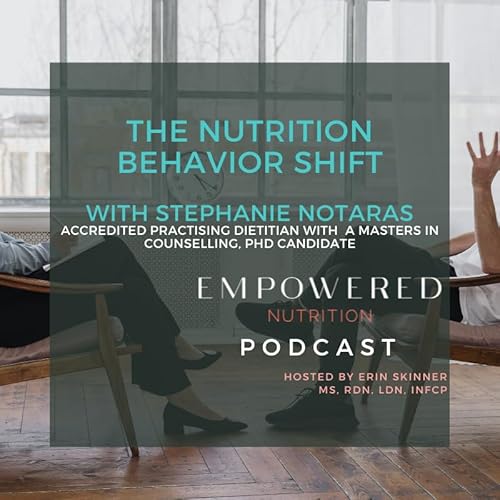
  • The Nutrition Behavior Shift with Stephanie Notaras
    Apr 16 2025

    Episode Summary

    In this insightful episode, Erin is joined by Stephanie Notaras, a seasoned dietitian, Director of the Dietician Counselling Skills Practice, and host of The Nutrition Counselling Podcast. Together, they dive into the often-overlooked emotional and psychological layers of nutrition change—what really keeps people stuck, and how both clients and practitioners can move through resistance, shame, and overwhelm toward lasting behavior change.

    Stephanie shares evidence-based strategies for building confidence, increasing tolerance for discomfort, and setting realistic expectations in a world that constantly markets "quick fixes." Whether you're a healthcare professional or someone navigating your own wellness journey, this conversation is packed with wisdom, empathy, and actionable tools.

    Episode Highlights

    • Why change feels harder than it "should": Stephanie breaks down the gap between what people expect from nutrition changes and what actually happens—especially when it's slow, nonlinear, and emotionally taxing.
    • The myth of motivation: Motivation isn't the whole story—Stephanie explains how confidence, not just motivation, is a crucial driver of sustainable change.
    • Small wins are powerful: Rather than aiming for a full "food makeover," she encourages building confidence through small, meaningful actions within your capacity.
    • What to do when clients have tried everything: Stephanie validates the experiences of chronic dieters and offers a framework for rebuilding trust in their ability to succeed.
    • How to support all-or-nothing thinkers: She shares techniques for helping clients shift from perfectionism to progress-based thinking, even when they feel discouraged.
    • Why clients stop showing up—and how to prevent it: Learn how to explicitly invite clients to return even when they feel like they've failed.
    • The importance of setting expectations early: Teaching clients what to expect—especially the struggle—can increase their tolerance for change and help them stick with the process.
    • Practitioner mindset shift: Erin and Stephanie discuss how providers can move from "fixers" to supportive guides, and why clients don't just need information—they need a therapeutic, individualized relationship.
    • Google isn't the enemy: Stephanie offers a refreshing take on how to validate clients who come in with self-researched (and sometimes confusing) information, and how to build from it instead of shutting it down.

    Resources Mentioned

    • Check out Stephanie's offerings on her website: Click here
    • Stephanie's Podcast: The Nutrition Counselling Podcast – A must-listen for dietitians and nutrition professionals focused on mindset and counseling skills.
    • Follow Stephanie on Instagram: @dietitiancounsellingskills (note: "counselling" is spelled with two Ls – she's Australian!)
    • Free Facebook Group for Professionals: Stephanie offers regular free trainings and education for dietitians and nutritionists inside her Facebook group. Join here

    Connect with Us

    • Access root-cause healthcare, covered by insurance: https://thrive-clinics.com
    • Follow us on Instagram for updates and health tips: https://www.instagram.com/thrive_clinics
    • Subscribe to our podcast and leave a review!

    Ready to dive in? Listen here.

    Mostra di più Mostra meno
    50 min
  • Food Story Coaching with Ian Rubin
    Apr 2 2025

    Episode Summary

    In this episode, we dive into a client-centered approach to nutrition and behavior change. Our guest, Ian, shares his insights on how practitioners can create sustainable change by focusing on empowerment first, education second. The conversation highlights the importance of small, realistic goal setting and understanding the emotional challenges clients face when trying to make lasting health changes. Rather than pushing for perfection or drastic overnight transformations, Ian advocates for collaborative planning and supportive coaching to help clients achieve their goals and rebuild their confidence.

    Episode Highlights

    • Empowerment First, Education Second: Ian emphasizes that practitioners should prioritize empowering their clients rather than bombarding them with education at the outset. Empowering clients helps them feel more capable and motivated to make changes.
    • The Power of Small, Achievable Goals: We discuss the importance of setting small, realistic goals that help build momentum and confidence. Rather than striving for perfection, small successes lead to long-term change and prevent discouragement.
    • Breaking the All-or-Nothing Mindset: Ian addresses the common "all or nothing" thinking that many clients fall into, which often leads to feelings of failure. He highlights how to move away from this mindset and set expectations that are more forgiving and flexible.
    • Collaborative Coaching Approach: Instead of dictating what clients "should" do, Ian stresses the importance of negotiation and working together to set a plan that meets clients where they are. This collaborative approach fosters trust and ensures that clients are truly committed to their goals.
    • Sustainable Change Through Layered Goals: The conversation also covers how practitioners can layer small goals over time to create lasting behavioral change, as opposed to overwhelming clients with large, difficult plans.
    • The Role of the Practitioner: Practitioners should view themselves as collaborators, guiding clients through manageable steps and providing support when setbacks occur. This approach fosters a sense of agency in clients and helps them stay engaged in their health journey.
    • Building Confidence Through Support: Clients often enter the process with broken confidence, and this episode discusses how practitioners can rebuild that confidence by focusing on small wins, empathy, and consistent encouragement.

    Resources Mentioned

    • Food Story Coaching Program: Ian offers an online, self-directed training program for practitioners. The course includes seven modules designed to teach the philosophy and skills necessary to empower clients and create lasting change. It also includes live mentorship calls and peer mentorship with one of Ian's master coaches. To learn more, visit https://www.foodstorycoaching.com/fundamentals
    • Contact Ian:
      • Food Story Coaching Certification: https://www.foodstorycoaching.com/contact
      • Work with Ian: https://ianrubin.com
      • Study under Ian at The National University of National Medicine: https://nunm.edu/faculty/ian-rubin-ma-cpt-chc/
      • LinkedIn: Ian Rubin

    Connect with Us
    • Access root-cause healthcare, covered by insurance: https://thrive-clinics.com
    • Follow us on Instagram for updates and health tips: https://www.instagram.com/thrive_clinics
    • Subscribe to our podcast and leave a review!

    Ready to dive in? Listen here.

    Mostra di più Mostra meno
    58 min