Episodi

  • Episode 6: Mitigation: How Do You Solve a Problem like Methane?
    Jun 18 2024

    So if methane is this big a problem, what tools do we have, and are we using, to solve it? The first global agreement that methane was a problem came in the form of the Global Methane Pledge announced at COP26 at Glasgow in 2021. What’s happened since then, especially in the industry with the easiest to abate emissions: oil and gas?

    We look at the International Methane Emissions Observatory, the Oil and Gas Methane Partnership, the new EU regulation on methane and proposals for financial instruments to help bring emissions down.

    Host:

    The show is presented by: Francesca Fazey

    Affiliation:

    The show is brought to you by: The 2Celsius Association


    Contributors:

    Raul Cazan, Founder of The 2Celsius Association, Bucharest, Romania

    Kim O’Dowd, Campaigner at The Environmental Investigation Agency, London, UK

    Dr Roland Kupers, Global Advisor to the United Nations Environment Programme’s International Methane Emissions Observatory, Amsterdam, The Netherlands

    Deborah Gordon, Senior Fellow, Watson Institute for International and Public Affairs, Brown University; Senior Principal at the Rocky Mountain Institute’s (RMI) Climate Intelligence Program, Washington DC, USA

    Dr Philippe Ciais, Associate Director, Institut Pierre-Simon Laplace (IPSL), Paris, France

    Théophile Humann-Guilleminot, Campaign Manager, Clean Air Task Force ,Athens Greece

    Dr Dave Lowry, Reader: Stable Isotope and Greenhouse Gas, Department of Earth Sciences, University of Royal Holloway, London UK

    Dr Rebecca Fisher: Reader: Atmospheric Methane, Department of Earth Sciences, University of Royal Holloway, London UK

    Dr Thoman Roeckmann, Professor of Atmospheric Physics and Chemistry, Utrecht University, The Netherlands

    Professor Jonathan Stern, Distinguished Research Fellow, The Oxford Institute for Energy Studies, Oxford, UK

    Melanie Kenderdine, Principal, Energy Futures Initiative, Washington DC, USA

    Mostra di più Mostra meno
    54 min
  • Episode 5: Is Natural Gas Clean or Are We Being Gaslit?
    Jun 11 2024

    Natural gas is the ideal bridge fuel to support the global energy transition, or so the story goes. But what about methane emissions? Environmentalists want us to throw it on the pile of the other fossil fuels and doom it to the past. The energy community says: Not so fast. Where are we on our energy transition journey when it comes to natural gas and if we’re going to invest in it going forward, what are the implications of the methane problem for our chosen direction to a renewable future?

    Contributors:

    Raul Cazan, Founder of The 2Celsius Association, Bucharest, Romania

    Kim O’Dowd, Campaigner at The Environmental Investigation Agency, London, UK

    Dr Roland Kupers, Global Advisor to the United Nations Environment Programme’s International Methane Emissions Observatory, Amsterdam, The Netherlands

    Deborah Gordon, Senior Fellow, Watson Institute for International and Public Affairs, Brown University; Senior Principal at the Rocky Mountain Institute’s (RMI) Climate Intelligence Program, Washington DC, USA

    Dr Philippe Ciais, Associate Director, Institut Pierre-Simon Laplace (IPSL), Paris, France

    Théophile Humann-Guilleminot, Campaign Manager, Clean Air Task Force ,Athens Greece

    Dr Dave Lowry, Reader: Stable Isotope and Greenhouse Gas, Department of Earth Sciences, University of Royal Holloway, London UK

    Dr Rebecca Fisher: Reader: Atmospheric Methane, Department of Earth Sciences, University of Royal Holloway, London UK

    Dr Thoman Roeckmann, Professor of Atmospheric Physics and Chemistry, Utrecht University, The Netherlands

    Professor Jonathan Stern, Distinguished Research Fellow, The Oxford Institute for Energy Studies, Oxford, UK

    Melanie Kenderdine, Principal, Energy Futures Initiative, Washington DC, USA

    Mostra di più Mostra meno
    32 min
  • Episode 4: Unravelling nature’s methane: The threat of methane climate feedbacks
    Jun 4 2024

    Manmade methane emissions pose a potent threat to the climate, but they aren’t emitted into a vacuum. They feed into the earth’s existing complex cycle of methane, and as much as half the methane that reaches the atmosphere every year comes from natural sources.

    The most crucial of these is wetlands, and in addition to generating methane, they pose a potentially bigger danger: climate change feedbacks. You may have heard of the most famous: the threat of a huge methane release from the world’s permafrost regions. But it turns out the story might be more complex than we thought, and wetlands in tropical regions may constitute the read danger to watch…

    Host:

    The show is presented by: Francesca Fazey

    Affiliation:

    The show is brought to you by: The 2Celsius Association

    Contributors:

    Raul Cazan, Founder of The 2Celsius Association, Bucharest, Romania

    Kim O’Dowd, Campaigner at The Environmental Investigation Agency, London, UK

    Dr Roland Kupers, Global Advisor to the United Nations Environment Programme’s International Methane Emissions Observatory, Amsterdam, The Netherlands

    Deborah Gordon, Senior Fellow, Watson Institute for International and Public Affairs, Brown University; Senior Principal at the Rocky Mountain Institute’s (RMI) Climate Intelligence Program, Washington DC, USA

    Dr Philippe Ciais, Associate Director, Institut Pierre-Simon Laplace (IPSL), Paris, France

    Théophile Humann-Guilleminot, Campaign Manager, Clean Air Task Force ,Athens Greece

    Dr Dave Lowry, Reader: Stable Isotope and Greenhouse Gas, Department of Earth Sciences, University of Royal Holloway, London UK

    Dr Rebecca Fisher: Reader: Atmospheric Methane, Department of Earth Sciences, University of Royal Holloway, London UK


    Mostra di più Mostra meno
    27 min
  • Episode 3: Methane Detectives: Making the Invisible Visible
    May 28 2024

    In this episode, we introduce our listeners to some of the world’s methane hunters, environmental detectives who use cutting-edge technology to detect and quantify methane emissions, making an invisible gas, visible. We embark on a methane hunting expedition of our own and talk to the coordinator of one of the world’s largest methane studies on the difference between estimated and measured emissions in the oil and gas sector.

    Host:

    The show is presented by: Francesca Fazey

    Affiliation:

    The show is brought to you by: The 2Celsius Association

    Contributors:

    Raul Cazan, Founder of The 2Celsius Association, Bucharest, Romania

    Kim O’Dowd, Campaigner at The Environmental Investigation Agency, London, UK

    Dr Roland Kupers, Global Advisor to the United Nations Environment Programme’s International Methane Emissions Observatory, Amsterdam, The Netherlands

    Deborah Gordon, Senior Fellow, Watson Institute for International and Public Affairs, Brown University; Senior Principal at the Rocky Mountain Institute’s (RMI) Climate Intelligence Program, Washington DC, USA

    Dr Philippe Ciais, Associate Director, Institut Pierre-Simon Laplace (IPSL), Paris, France

    Théophile Humann-Guilleminot, Campaign Manager, Clean Air Task Force ,Athens Greece

    Dr Dave Lowry, Reader: Stable Isotope and Greenhouse Gas, Department of Earth Sciences, University of Royal Holloway, London UK

    Dr Rebecca Fisher: Reader: Atmospheric Methane, Department of Earth Sciences, University of Royal Holloway, London UK

    Dr Thoman Roeckmann, Professor of Atmospheric Physics and Chemistry, Utrecht University, The Netherlands

    Professor Jonathan Stern, Distinguished Research Fellow, The Oxford Institute for Energy Studies, Oxford, UK

    Melanie Kenderdine, Principal, Energy Futures Initiative, Washington DC, USA

    Mostra di più Mostra meno
    31 min
  • Episode 2: So, Where’s It All Coming From?
    May 21 2024

    In this second episode of our podcast, we delve into the complex world of methane emission sources. Join us as we look at the five main sectors that emit methane, unpack how the main ingredient of natural gas is also emitted by cow burps and get a taste of how scientists tease apart the difference. We’ll also touch on why so much emphasis is placed on the emissions from oil and gas.

    Host:

    The show is presented by: Francesca Fazey

    Affiliation:

    The show is brought to you by: The 2Celsius Association

    Contributors:

    Raul Cazan, Founder of The 2Celsius Association, Bucharest, Romania

    Kim O’Dowd, Campaigner at The Environmental Investigation Agency, London, UK

    Dr Roland Kupers, Global Advisor to the United Nations Environment Programme’s International Methane Emissions Observatory, Amsterdam, The Netherlands

    Deborah Gordon, Senior Fellow, Watson Institute for International and Public Affairs, Brown University; Senior Principal at the Rocky Mountain Institute’s (RMI) Climate Intelligence Program, Washington DC, USA

    Dr Philippe Ciais, Associate Director, Institut Pierre-Simon Laplace (IPSL), Paris, France

    Théophile Humann-Guilleminot, Campaign Manager, Clean Air Task Force ,Athens Greece

    Dr Dave Lowry, Reader: Stable Isotope and Greenhouse Gas, Department of Earth Sciences, University of Royal Holloway, London UK

    Dr Rebecca Fisher: Reader: Atmospheric Methane, Department of Earth Sciences, University of Royal Holloway, London UK

    Dr Thoman Roeckmann, Professor of Atmospheric Physics and Chemistry, Utrecht University, The Netherlands

    Professor Jonathan Stern, Distinguished Research Fellow, The Oxford Institute for Energy Studies, Oxford, UK

    Melanie Kenderdine, Principal, Energy Futures Initiative, Washington DC,

    Mostra di più Mostra meno
    34 min
  • Episode 1: Let’s Face It: The World Has A Meth Problem
    Apr 23 2024

    In the premiere episode of "Methane," we embark on a journey to unravel the complexities of methane emissions, exploring why this often-overlooked greenhouse gas holds the key to combating global warming.

    Join host Francesca Fazey as she introduces the world of methane emissions, shedding light on its significance, challenges, and where we might look to start on delivering some promising solutions.


    Host:

    The show is presented by: Francesca Fazey

    Affiliation:

    The show is brought to you by: 2Celsius

    Resource List:

    • Environmental Investigation Agency (EIA)
    • International Methane Emissions Observatory (IMEO)
    • International Energy Agency (IEA)
    • Global Methane Tracker
    • United Nations Global Methane Pledge
    • Rocky Mountain Institute Climate Program
    • Oxford Institute for Energy Studies
    • Clean Air Task Force
    • Greenhouse Gas Laboratory, University of Royal Holloway
    • Romanian Methane Emissions from Oil and Gas
    • Laboratory of Climate and Environmental Sciences, Paris
    • University of Alaska Fairbanks, Fairbanks, USA
    • NASA Goddard Space Flight Centre, Washington DC, USA

    Contributors:

    Raul Cazan, Founder of The 2Celsius Association, Bucharest, Romania

    Kim O’Dowd, Campaigner at The Environmental Investigation Agency, London, UK

    Dr Roland Kupers, Global Advisor to the United Nations Environment Programme’s International Methane Emissions Observatory, Amsterdam, The Netherlands

    Deborah Gordon, Senior Fellow, Watson Institute for International and Public Affairs, Brown University; Senior Principal at the Rocky Mountain Institute’s (RMI) Climate Intelligence Program, Washington DC, USA

    Dr Philippe Ciais, Associate Director, Institut Pierre-Simon Laplace (IPSL), Paris, France

    Théophile Humann-Guilleminot, Campaign Manager, Clean Air Task Force ,Athens Greece

    Dr Dave Lowry, Reader: Stable Isotope and Greenhouse Gas, Department of Earth Sciences, University of Royal Holloway, London UK

    Dr Rebecca Fisher: Reader: Atmospheric Methane, Department of Earth Sciences, University of Royal Holloway, London UK

    Dr Thoman Roeckmann, Professor of Atmospheric Physics and Chemistry, Utrecht University, The Netherlands

    Professor Jonathan Stern, Distinguished Research Fellow, The Oxford Institute for Energy Studies, Oxford, UK

    Melanie Kenderdine, Principal, Energy Futures Initiative, Washington DC, USA

    Mostra di più Mostra meno
    22 min
  • Andris Piebalgs: Russia destroyed trust in all energy markets
    Jun 17 2022

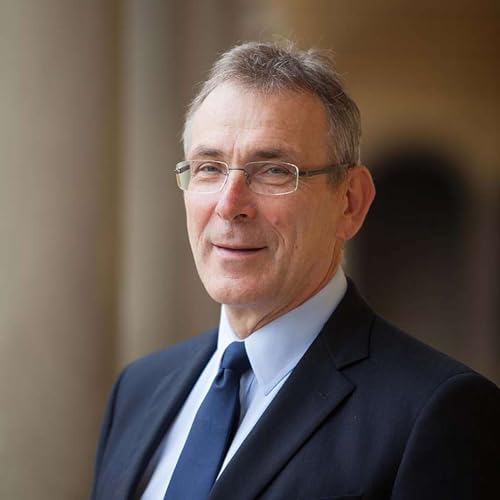
    Andris Piebalgs is a former Commissioner for Energy (Barroso I) and for Development (Barroso II), and currently with the prestigious Florence School of Regulation (European University Institute) in Fiesole, Italy. For what we were interested in this dialogue, it was noteworthy that he is Chair of the International Methane Emissions Observatory (IMEO) Implementation Committee under UNEP.

    Earlier this year Piebalgs co-authored Cost-effective decarbonisation study 2022, a work constructed before the war in Ukraine, yet very agile in catching matters of costs in the energy transition. Keeping energy affordable, secure and competitive while aggressively pursuing decarbonisation will be challenging, but now, with the necessity of weaning off Russian hydrocarbons, truly imperative.

    Raul Cazan

    Mostra di più Mostra meno
    33 min
  • New gas infrastructure: burden on public money, more fugitive emissions, and no profit
    May 27 2022

    Julian Popov, ex-minister of environment of Bulgaria is our guest today. He is an expert on low carbon economy and energy security in South East Europe. He is a European Climate Foundation (ECF) Fellow, Chairman at Buildings Performance Institute Europe (BPIE), Energy Security Adviser to the Bulgarian President. Founding Vice Chancellor of the New Bulgarian University, Founding Board Member of the Institute of Sustainable Transition and Development, Former Chairman of the Bulgarian School of Politics, just to name a few.

    Russia announced that it would stop gas supplies to Bulgaria and Poland. Recently Finland joined the group. How big a problem is that?

    It depends very much on the Bulgarian, Finnish and Polish governments. All countries can survive without Russian gas for some time. They have also options for alternative gas supplies. The announcement is also an opportunity. Indeed, the Poles replied defiantly to Russia’s move: “who cares?”

    Quick fix: reduce the overall gas consumption. Countries can do that with a combination of renewables, energy efficiency, heat pumps, replacement of appliances, demand response and other measures. All these measures could be implemented before winter.

    Russia is declaring an energy war on Europe. The right response is a decisive counterattack. It would be very unwise if that counterattack is only launched through imports of liquified gas - LNG from across the seas. It will simply not work.

    In any case, the Russian announcement is a great opportunity. And that opportunity lies in the acceleration of the EU Green Deal, that is the greening of the whole European economy.

    Raul Cazan


    Mostra di più Mostra meno
    44 min