

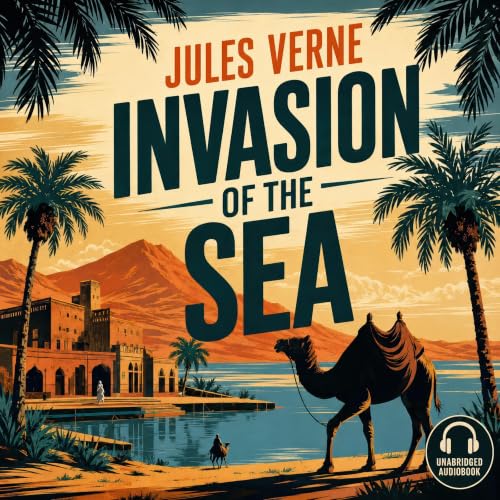
Invasion of the Sea
Impossibile aggiungere al carrello
Puoi avere soltanto 50 titoli nel carrello per il checkout.
Riprova più tardi
Riprova più tardi
Rimozione dalla Lista desideri non riuscita.
Riprova più tardi
Non è stato possibile aggiungere il titolo alla Libreria
Per favore riprova
Non è stato possibile seguire il Podcast
Per favore riprova
Esecuzione del comando Non seguire più non riuscita
0,00 € per i primi 30 giorni
Offerte di stagione
0,99 €/mese per i primi 3 mesi
L'offerta termina il 28 dicembre 2026.
Dopo 30 giorni (60 per i membri Prime), 9,99 €/mese. Puoi cancellare ogni mese
Risparmia più del 90% nei primi 3 mesi.
Ascolta quanto vuoi, scegliendo tra migliaia di audiolibri e serie originali inclusi.
Scarica il tuo audiolibro e ascolta offline, senza interruzioni
Rinnovo automatico a 9,99 €/mese dopo 3 mesi. Disdici mensilmente. L'offerta termina il 28 dicembre 2026.
Ascolta senza limiti migliaia di audiolibri, podcast e serie originali
Disponibile su ogni dispositivo, anche senza connessione
9,99 € al mese. Puoi cancellare ogni mese.

Invasion of the Sea
Letto da:
AI Voice Charles Owen
Acquista ora a 11,55 €
-
Letto da:
-
AI Voice Charles Owen
-
Di:
-
Jules Verne

Questo titolo è stato narrato da una voce virtuale
La voce virtuale è generata da un computer, e viene utilizzata per la narrazione degli audiolibri.
The plan is audacious: dig a canal from the Mediterranean to the salt depressions of Tunisia and Algeria, creating an inland sea that will transform worthless desert into fertile, navigable territory. French colonial engineers promise prosperity. Progress. Civilization.
Captain Hardigan oversees the work. But as construction advances, Tuareg tribes whose lands will be destroyed mount increasingly desperate resistance. The desert they've inhabited for centuries will vanish beneath French ambition. Their oases will flood. Their way of life will end.
Then an earthquake breaches the canal. Water rushes in catastrophically. The Sahara Sea is born—not through human decision but through nature's intervention. The French claim victory. The Tuareg lose everything. And the question of whether such transformation was ever justified disappears beneath the flood.
Jules Verne's final novel, published posthumously in 1905, anticipates modern debates about geoengineering and massive environmental projects decades before they became reality. Yet it cannot escape its colonial framework: indigenous resistance is portrayed sympathetically but dismissed as futile, and the novel's resolution conveniently sidesteps who had the right to reshape Africa.
From the author of Twenty Thousand Leagues Under the Sea—a prescient warning about playing god with geography, told from an empire's perspective.
adbl_web_anon_alc_button_suppression_t1
Ancora nessuna recensione