

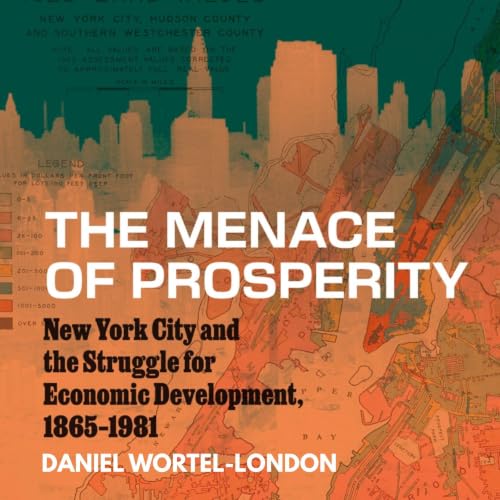
The Menace of Prosperity
New York City and the Struggle for Economic Development, 1865–1981
Impossibile aggiungere al carrello
Puoi avere soltanto 50 titoli nel carrello per il checkout.
Riprova più tardi
Riprova più tardi
Rimozione dalla Lista desideri non riuscita.
Riprova più tardi
Non è stato possibile aggiungere il titolo alla Libreria
Per favore riprova
Non è stato possibile seguire il Podcast
Per favore riprova
Esecuzione del comando Non seguire più non riuscita
Attiva il tuo abbonamento Audible con un periodo di prova gratuito per ottenere questo titolo a un prezzo esclusivo per i membri
Dopo 30 giorni (60 per i membri Prime), 9,99 €/mese. Puoi cancellare ogni mese
Dopo esserti registrato per un abbonamento, puoi acquistare questo e tutti gli altri audiolibri nel nostro catalogo esteso, ad un prezzo scontato del 30%
Ottieni accesso illimitato a una raccolta di oltre migliaia di audiolibri e podcast originali.
Nessun impegno. Cancella in qualsiasi momento e conserva tutti i titoli acquistati.

The Menace of Prosperity
Letto da:
Virtual Voice
Acquista ora a 7,95 €
-
Letto da:
-
Virtual Voice

Questo titolo è stato narrato da una voce virtuale
La voce virtuale è generata da un computer, e viene utilizzata per la narrazione degli audiolibri.
Many local policymakers make decisions based on a deep-seated belief: what's good for the rich is good for cities. Convinced that local finances depend on attracting wealthy firms and residents, municipal governments lavish public subsidies on their behalf. Whatever form this strategy takes—tax-exempt apartments, corporate incentives, debt-financed mega projects—its rationale remains consistent and assumed to be true. But this wasn't always the case. Between the 1870s and the 1970s, a wide range of activists, citizens, and intellectuals in New York City connected local fiscal crises to the greed and waste of the rich. These figures saw other routes to development, possibilities rooted in alternate ideas about what was fiscally viable.
In The Menace of Prosperity, Daniel Wortel-London argues that urban economics and politics are shaped by what he terms the "fiscal imagination" of policymakers, activists, advocates, and other figures. His survey of New York City during a period of explosive growth shows how residents went beyond the limits of redistributive liberalism to imagine how their communities could become economically viable without the largesse of the wealthy. Their strategies—which included cooperatives, public housing, land-value taxation, public utilities, and more—centered the needs and capabilities of ordinary residents as the basis for local economies that were both prosperous and just.
Overturning stale axioms about economic policy, The Menace of Prosperity shows that not all growth is productive for cities. Wortel-London's ambitious history demonstrates the range of options we've abandoned and hints at the economic frameworks we could still realize—and the more democratic cities that might result.©2025 The University of Chicago Press (P)2026 The University of Chicago Press
adbl_web_anon_alc_button_suppression_t1
Ancora nessuna recensione