Your Sales Comp Plan May Be Killing Revenue Growth copertina

Your Sales Comp Plan May Be Killing Revenue Growth

Your Sales Comp Plan May Be Killing Revenue Growth

Ascolta gratuitamente

Vedi i dettagli del titolo

Offerte di stagione | 0,99 €/mese per i primi 3 mesi

A seguire 9,99 €/mese – si applicano condizioni. Puoi disdire mensilmente.
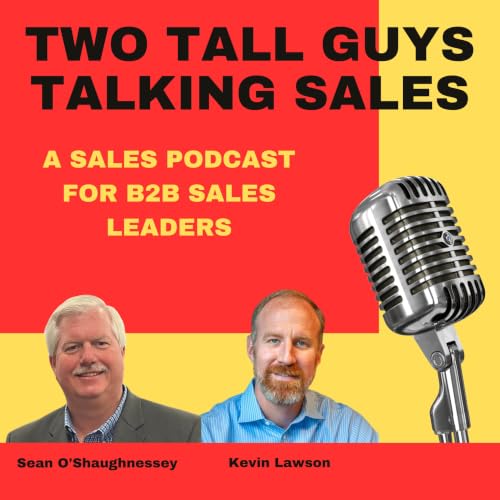
What happens when your best salesperson hits quota in October? A poorly designed compensation plan may quietly tell them to slow down. In this episode of Two Tall Guys Talking Sales, Kevin Lawson and Sean O'Shaughnessey examine why sales compensation accelerators can be one of the most profitable tools available to a sales leader. They break down the economics behind above-quota sales, explain why fixed costs make incremental revenue especially valuable, and challenge the common fear that high-performing salespeople can somehow be "paid too much." For CEOs, CFOs, sales managers, and any VP of Sales preparing next year's compensation plan, this conversation connects sales management, revenue management, sales motivation, and business valuation in a very practical way. Key Topics Discussed Why Sales Compensation Plans Need Accelerators — 00:49 Sean opens the discussion with a simple problem: once a salesperson reaches quota, what reason have you given them to keep selling? A flat commission structure can unintentionally create a ceiling. Properly designed accelerators reverse that incentive, giving salespeople a financial reason to keep pushing beyond 100% rather than protecting deals for the next compensation period. Incentivize the Outcomes the Business Actually Needs — 03:08 Kevin argues that compensation should do more than reward revenue. It should reinforce the sales strategies that matter to the business. If existing customers will continue buying with relatively little selling effort, paying disproportionately for those transactions may not produce the growth the company needs. Sales processes and compensation design can deliberately incorporate net-new logos, incremental growth, renewals, or other strategic outcomes. Why Above-Quota Revenue Can Be Exceptionally Profitable — 05:24 Sean explains the financial logic behind accelerators. By the time the company reaches its planned revenue target, much of its fixed-cost structure—base salaries, benefits, rent, and other operating expenses—has already been covered. In businesses with low incremental delivery costs, additional revenue can therefore carry significantly higher margins. Paying a salesperson a higher commission rate on that additional business can still generate substantially more profit for the company. Using Compensation Tiers to Drive Sales Success — 07:08 Salespeople tend to be competitive and goal-oriented. Sean describes how graduated accelerators at levels such as 80%, 100%, 120%, and even 140% of quota give sellers another target to pursue. Instead of compensation becoming static once quota has been achieved, the plan creates another scoreboard. That makes the compensation plan part of the company's broader Sales Enablement system, not merely an accounting mechanism. Stop Worrying That Top Salespeople Are Making "Too Much" — 08:27 Kevin challenges one of the most persistent assumptions in sales management: that a high commission check means the company is overpaying the salesperson. If the compensation structure is properly modeled, exceptional variable compensation should indicate exceptional company performance. The more important questions are whether the seller is generating profitable revenue, whether the plan rewards the right behaviors, and whether the economics work for the business. Better Sales Systems Can Increase Enterprise Value — 10:14 Compensation design does not exist in isolation. Kevin connects the comp plan to the sales playbook, marketing, company objectives, customer acquisition costs, customer lifetime value, and the larger operating model. A more intentional and predictable selling system can create a more efficient company—and potentially a more valuable one. Key Quotes Kevin Lawson — 03:08 "Incentivize the outcomes you want." That may be the episode's central principle. Compensation is not simply how a company divides up the money after a sale. It is a management system that tells sellers which results matter most. Sean O'Shaughnessey — 07:08 "You can actually afford to pay more money on your variable compensation…because it's going straight to your bottom line." Sean's point reframes accelerators as an investment in profitable incremental revenue rather than simply an additional sales expense. Kevin Lawson — 04:43 "If there's no additional trophy case winnings for going over quota, they'll stop." The language is colorful, but the management lesson is serious: once the economic incentive disappears, leaders should not be surprised when discretionary selling effort disappears with it. Sean O'Shaughnessey — 07:30 "They want to achieve the next goal. They want to make the next score." An effective compensation plan gives high performers somewhere else to go after they reach quota. Additional Resources Sean references several pieces of research supporting the use of sales accelerators and the risks associated with flat commission structures: Do Bonuses Enhance Sales Productivity? A ...
adbl_web_anon_alc_button_suppression_t1
Ancora nessuna recensione