


Wellness Simplified: Evidence-Based Health Habits for Busy Professionals
Impossibile aggiungere al carrello
Rimozione dalla Lista desideri non riuscita.
Non è stato possibile aggiungere il titolo alla Libreria
Non è stato possibile seguire il Podcast
Esecuzione del comando Non seguire più non riuscita

Wellness Simplified: Evidence-Based Health Habits for Busy Professionals
-
Letto da:
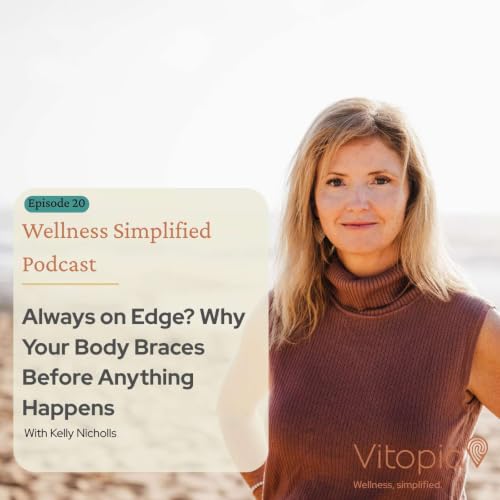
Wellness Simplified is the health podcast for busy professionals who are already doing the right things but still not feeling the way they want to feel and who need someone to cut through the noise and tell them exactly what to focus on next.
Hosted by Kelly Nicholls, wellness coach and co-founder of Vitopia AI, this show exists to take the guesswork out of your health by delivering one clear habit or experiment in every episode. Something you can implement this week, track in real life, and feel the difference. No overwhelm, protocol overhauls, or advice that only works if you have unlimited time and a personal health team. Just the 20% of habits that deliver 80% of the results, explained clearly by someone who has done the research and lived the journey.
Wellness Simplified covers the full spectrum of evidence-based health for people who want to feel better without making health a second job. From the foundational habits that move the needle on energy, sleep, and stress, to personal experiments with real data and honest results, to practical guidance on hormonal health, perimenopause, prevention and longevity. Every episode ends with one thing you can try this week. That's the promise and the design, every single time.
We'll answer questions like:
- Why am I exhausted even when I'm doing everything right — and what's actually going on?
- I'm running on stress and I can't seem to switch off. How do I actually recover — not just cope?
- What does the research say about preventing Alzheimer's, heart disease, and the conditions that run in my family?
- Is this a hormone thing? What's perimenopause actually doing to my body — and what can I do about it?
- I've tried habits before and they never stick. What am I missing?
- My GP says I'm fine. So why don't I feel fine?
- What do my wearable data and blood results actually mean — and what should I do with them?
- Which health habit should I focus on first, given my actual life right now?
- What does biohacking look like when you don't have unlimited time or money?
This show is for the busy professional who wants simple health habits that fit into a real life, the woman navigating perimenopause who deserves better answers than she's been given, and the health-conscious high achiever who wants practical wellness tips grounded in evidence rather than hype. If you're in Australia or anywhere else in the world where the wellness noise has gotten too loud, you've found your show.
If you're ready to stop second-guessing and start feeling better, one habit at a time, you're in the right place.
-
 17 min
Impossibile aggiungere al carrello
Puoi avere soltanto 50 titoli nel carrello per il checkout.Riprova più tardiRiprova più tardiRimozione dalla Lista desideri non riuscita.
Riprova più tardiNon è stato possibile aggiungere il titolo alla Libreria
Per favore riprovaNon è stato possibile seguire il Podcast
Per favore riprovaEsecuzione del comando Non seguire più non riuscita
-
 1 ora e 16 min
Impossibile aggiungere al carrello
Puoi avere soltanto 50 titoli nel carrello per il checkout.Riprova più tardiRiprova più tardiRimozione dalla Lista desideri non riuscita.
Riprova più tardiNon è stato possibile aggiungere il titolo alla Libreria
Per favore riprovaNon è stato possibile seguire il Podcast
Per favore riprovaEsecuzione del comando Non seguire più non riuscita
-
 20 min
Impossibile aggiungere al carrello
Puoi avere soltanto 50 titoli nel carrello per il checkout.Riprova più tardiRiprova più tardiRimozione dalla Lista desideri non riuscita.
Riprova più tardiNon è stato possibile aggiungere il titolo alla Libreria
Per favore riprovaNon è stato possibile seguire il Podcast
Per favore riprovaEsecuzione del comando Non seguire più non riuscita