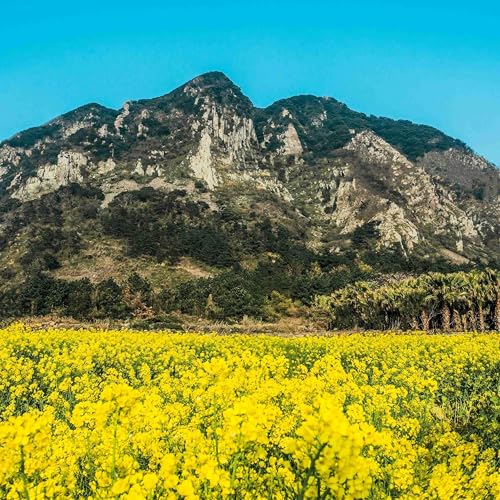
Vamos a Jeju! copertina

Vamos a Jeju!

Vamos a Jeju!

Di: The Vamos a Jeju Podcast!
Ascolta gratuitamente

A proposito di questo titolo

Vamos a Jeju is your hub to help DIY travelers discover the rich culture, serene peace, and natural beauty of Korea's Jeju Island.

It's all the magnificent vistas that Hawaii has to offer, but set in an entirely different and exciting culture, all at a fraction of the price.

Come join us and unlock:

  • the intrepid sea women who dive for seafood sans breathing aids;
  • the ancient stories still spun by the island's shamanistic practices;
  • the majestic landscape of fire and stone carved by magma;
  • the breathtaking majesty of the island's hidden places.

Welcome to our island home!

2026 The Vamos a Jeju Podcast!
Scienze sociali Scrittura e commenti di viaggio
  • Ep 03: Seongsan Sunrise Peak | Jeju Essentials
    Mar 7 2026

    Seongsan Ilchulbong is Jeju's second most iconic landmark after Hallasan—and for many visitors, the most accessible and memorable natural experience on the island.

    This episode gives you everything you need to plan your visit: what the peak actually is (a 5,000-year-old hydrovolcano with a massive crater), how long the climb takes (about 30 minutes up, 15-20 down), how to avoid crowds (early morning, late afternoon, or weekdays outside of school field trip season), and what you can do for free versus the 5,000 won paid entrance. Ed and Soraya also discuss the daily haenyeo diving demonstration at 2pm—including Ed's candid take on its authenticity—and explain why the peak earned its place among the New Seven Wonders of Nature.

    Takeaways

    • Seongsan Ilchulbong (성산일출봉) means "Castle Mountain Sunrise Peak"—named for its castle-like shape and famous sunrise views

    • The climb takes about 30 minutes up, 15-20 minutes down; it's paved with stairs and railings, manageable for most fitness levels

    • Entrance fee: 5,000 won (~$3 USD) to climb to the peak; the coastal trail and haenyeo show are free

    • Avoid crowds by going early morning (for sunrise), late afternoon, or on weekdays—especially outside May and October when school field trips flood the site

    • The free haenyeo demonstration happens daily at 2pm near the beach; you can also eat fresh seafood at the haenyeo restaurant there

    • Jeju Island (including Seongsan Ilchulbong) is one of the New Seven Wonders of Nature, alongside places like the Amazon, Ha Long Bay, and Iguazu Falls

    • At the top: a green crater (no water—volcanic rock is too porous), panoramic views of Hallasan, dozens of oreums, and Udo island; no shelter, so bring sun protection

    Handy Korean with Sora Ssaem (쌤)

    얼마예요 (eolmayeyo) — "How much is it?"

    • Structure: [thing] + 얼마예요?

    • 아메리카노 얼마예요? (amerikano eolmayeyo?) — "How much is an Americano?"

    • 오렌지 얼마예요? (orenji eolmayeyo?) — "How much is an orange?"

    • 티켓 얼마예요? (ticket eolmayeyo?) — "How much is a ticket?"

    이거 얼마예요? (igeo eolmayeyo?) — "How much is this?"

    • 이거 (igeo) means "this thing"—use it when you don't know the Korean word for something

    • Pro tip: Have a calculator app ready on your phone; shopkeepers will punch in the price if you can't understand the number

    Next Steps

    1. Sign up for the 14-part email series at vamosajeju.com/start

    2. Follow Vamos a Jeju on Instagram, TikTok, and Facebook

    3. Share the episode with friends to help the podcast grow

    4. Visit vamosajeju.com for articles, videos, and resources

    5. Sign up for dispatches at vamosajeju.com/update

    Mostra di più Mostra meno
    21 min
  • Ep 09: Which Season to go to Jeju | DIY Jeju
    Apr 6 2026

    Sora is finally back home in Jeju after heavy snow delayed flights and stranded travelers — including some who were caught having affairs when they couldn't return on time (K-drama in real life!).

    This episode breaks down what to expect in each season:

    • winter offers fewer crowds, cheaper prices, tangerine picking, and snowy Hallasan;
    • spring brings cherry blossoms, canola flowers, and better air quality than Seoul's yellow dust;
    • summer means beach time, typhoon season, and crowds from mainland Korea;
    • fall delivers the best weather, stunning autumn foliage on Hallasan, and tangerine season starting up.

    Ed and Sora also warn about Korea's "golden weeks" — Seollal (Lunar New Year), the August vacation shutdown, and Chuseok (Korean Thanksgiving) — when half of Korea is on the move and competing for tickets is impossible.

    Key Takeaways

    Winter (December - early March)

    • Fewer crowds, cheaper flights and accommodations — great for budget travelers
    • Snowy Hallasan is beautiful but requires crampons and hiking poles
    • Tangerine picking season (see Episode 5)
    • Outdoor jjimjilbang (sauna) experience available
    • Avoid: Seollal (Lunar New Year) — impossible to get tickets

    Spring (late March - May)

    • Cherry blossoms (late March - mid April) and canola flowers (Feb/March - May)
    • Much better air quality than Seoul (less yellow dust/황사 and fine dust)
    • Good hiking weather

    Summer (June - August)

    • Beach season — can start swimming from late May
    • Very hot and humid
    • Beach parasol/chair rentals: ~30,000 won ($20) for the day
    • Best time: June or July before the August rush when half of Korea heads to beaches

    Fall (late September - November)

    • Stunning autumn foliage on Hallasan
    • Tangerine season begins end-November
    Handy Korean with Sora Ssaem (쌤)

    있어요 / 없어요 (isseoyo / eopseoyo) = There is / There isn't (or: Do you have? / We don't have any)

    Useful for asking if stores have seasonal items:

    Spring

    • 마스크 있어요? (maseukeu isseoyo?) — Do you have masks? (for yellow dust)

    Summer

    • 선크림 있어요? (seонkeulim isseoyo?) — Do you have sunscreen?
    • 우산 있어요? (usan isseoyo?) — Do you have umbrellas?
    • 비옷 있어요? (bi-ot isseoyo?) — Do you have rain jackets?

    Fall

    • 셀카봉 있어요? (selkabong isseoyo?) — Do you have selfie sticks?

    Winter

    • 핫팩 있어요? (hatpaek isseoyo?) — Do you have hot packs?
    • 패딩 있어요? (paeding isseoyo?) — Do you have puffer jackets?

    If they don't have it: 없어요 (eopseoyo) = "We don't have any"

    Combine with 주세요 (juseyo): 핫팩 주세요 (hatpaek juseyo) = "Please give me a hot pack"

    Next Steps

    • Hallasan climbing guide: vamosajeju.com/climb
    • Jeju coast guide: vamosajeju.com/coast
    • 14-part DIY Jeju email series: vamosajeju.com/start
    • Follow: @vamosajeju on Instagram, TikTok, Facebook
    • Share this episode with friends planning a Korea trip!
    Mostra di più Mostra meno
    25 min
  • Ep 07: The Oreums of Jeju | Jeju Essentials
    Mar 23 2026

    Sora and Ed wrap up the "Jeju Essentials" series with an exploration of Jeju's 368 oreums — small volcanic cones scattered across the island.

    Unlike Hallasan or Seongsan Ilchulbong, most oreums are easy to climb (some just 10 minutes to the top), uncrowded, and offer spectacular views.

    Sora shares her favorites near Jeju City — Sarabong, Byeoldobong, and Dodubong — where you'll find kindergartners on picnics, elderly locals exercising, wild rabbits, and cherry blossoms in spring.

    Ed recounts his accidental discovery of Gunsan Oreum while hiking the Olle Trail, where a challenging forest climb suddenly opened up to a breathtaking southern Jeju panorama.

    For travelers who find Hallasan too challenging or Seongsan too crowded, oreums offer an authentic, peaceful alternative — and you might be the only tourist there.

    Takeaways

    • Oreums are small volcanic cones — 368 across Jeju; as of 2024, no longer called "parasitic cones" since some are older than Hallasan itself
    • Why climb oreums: Easy (10-15 minutes), quiet (walking meditation vibes), beautiful views without crowds
    • Oreums near Jeju City:
      • Sarabong: 10 min climb, views of old Jeju City/airport/ocean, cherry blossoms in spring, very local (kindergartners, exercising elders, wild rabbits)
      • Byeoldobong: Connected to Sarabong, harbor views, lighthouse with cafe
      • Dodubong: Near airport, K-drama filming location ("Welcome to Samdali"), great for plane-watching
    • Yongnuni Oreum (Sora's favorite): Sunrise views of Seongsan and Udo, horses roaming, trail through horse paddocks
    • Gunsan Oreum (Ed's favorite): Southern Jeju — discovered accidentally on Olle Trail; can drive up and walk 5 minutes, or hike through forest like Ed did ("like an idiot")
    • Government closes some oreums periodically for nature recovery — check before you go

    Even non-hikers should try one oreum — easier than Hallasan, more peaceful than Seongsan, authentic local experience

    Handy Korean with Sora Ssaem (쌤)

    천천히 (cheoncheonhi) = Slowly / Take your time

    The opposite of Korea's famous 빨리빨리 (pali pali / hurry hurry).

    천천히 하세요 (cheoncheonhi haseyo) - Please do it slowly/ Take your time
    천천히 해 주세요 (cheoncheonhi hae juseyo) - Please do this slowly

    천천히 가세요 (cheoncheonhi gaseyo) Go slowly

    천천히 오세요 (cheoncheonhi oseyo) Come slowly/Take your time coming


    Tip: Korean allows omitting words — just saying 천천히 works and people will understand from context.

    Key verbs: 하세요 (do), 가세요 (go), 오세요 (come)


    Next Steps

    • 14-part DIY Jeju email series: vamosajeju.com/start
    • Follow: @vamosajeju on Instagram, TikTok, Facebook
    • Share this episode with friends planning a Korea trip!
    Mostra di più Mostra meno
    21 min
Ancora nessuna recensione