Episodi

  • Episode 55: The History of Corn Dogs and the Stolen Virgin Mary
    Oct 22 2026

    How did a corn dog help solve the theft of a 300-pound Virgin Mary statue? And who invented the corn dog in the first place?

    In this episode of True Crime Culinary, host Leah Llach explores the surprisingly disputed history of corn dogs, from George Boyington's Pronto Pup in Oregon and the Fletcher brothers' Texas Corny Dogs to Ed Waldmire's Cozy Dog in Illinois.

    Discover why corn dogs became a state fair staple, how agricultural fairs began as educational events, and why inexpensive cornmeal made the perfect fried coating. We'll also explore the rise and fall of Hot Dog on a Stick, the popularity of Korean corn dogs, and how this American snack spread around the world.

    And, of course, we'll return to Wisconsin, where a discarded corn dog helped police track down the people responsible for stealing a church statue.

    New bite-sized episodes of True Crime Culinary every Thursday, with monthly bonus episodes exploring the unexpected stories behind the foods we eat.

    References

    • CBS58 — Caught by Corn Dog: Food Clue Catches Theft Suspects

    • Oregon Encyclopedia — Pronto Pups and George Boyington

    • Pronto Pup — Company History

    • Hot Dog on a Stick — Our Story

    • Los Angeles Times — Hot Dog on a Stick Bankruptcy

    • YouTube — Additional Episode Reference

    Mostra di più Mostra meno
    17 min
  • Episode 54: Coconut History and the Fruit That Made Bombs
    Oct 8 2026

    What do The Lion King, Amelia Earhart, World War I explosives, and a hospital IV have in common? Coconuts.

    This week on True Crime Culinary, we're cracking open the surprising history of coconuts, starting with a hospital in the Solomon Islands that ran out of IV fluids and turned to coconut water.

    From how coconuts travel across oceans to why coconut milk became a staple in cuisines around the world, we explore the fruit's remarkable survival skills. Along the way, we meet enormous coconut crabs linked to a theory about Amelia Earhart's disappearance, a German Guinness World Record holder who smashes coconuts with his bare hands, and the coconut oil industry that helped supply wartime explosives while transforming Pacific Island communities.

    Plus, why does Zazu sing about coconuts in The Lion King? And what's actually the difference between coconut water and coconut milk?

    • American Journal of Emergency Medicine — Coconut Water as an Intravenous Fluid

    • Coconut Origins, Domestication and Dispersal — Scientific Research

    • Coconut Biology and Anatomy

    • Australian National University — The Copra Trade

    • Guinness World Records — Most Coconuts Smashed with One Hand

    • National Geographic — Coconut Crabs and Amelia Earhart

    • YouTube — Additional Coconut Reference

    References

    Mostra di più Mostra meno
    15 min
  • Episode 53: Animal Crackers and the Clown Riot of 1855
    Oct 1 2026

    What do animal crackers have to do with P.T. Barnum, circus elephants, and a group of clowns who started a riot in Toronto?

    In this bonus episode of True Crime Culinary, we’re exploring how the modern circus grew from horseback performances into enormous traveling spectacles, why circuses and exotic animals became intertwined, and how that history ended up on a little box of animal crackers.

    Plus, we head to Toronto in 1855, where a fight between circus clowns and firefighters escalated into one of the strangest riots in the city’s history.


    References:
    • V&A — The Story of Circus
    • Smithsonian Magazine — Animal Crackers Freed From Their Cages
    • Spacing Toronto — The Toronto Circus Riot of 1855
    • Wikipedia — Toronto Circus Riot

    https://www.youtube.com/watch?v=4Vi0iTKtcvg

    Mostra di più Mostra meno
    14 min
  • Bonus Episode 5: Goldfish Crackers and the Man Who Survived 27 Years by Robbing Vacationers
    Sep 29 2026

    What is the history of Goldfish crackers, and how did a Swiss love story turn into one of America's most recognizable snacks?

    In this bonus episode of True Crime Culinary, Leah traces Goldfish back to Switzerland, where Oscar J. Kambly created the original Goldfischli in 1958 as a birthday gift for his Pisces wife. From there, we follow Margaret Rudkin—the remarkable founder of Pepperidge Farm—as she brings the little fish crackers to America.

    Along the way: Julia Child serves Goldfish with martinis, the crackers travel aboard the Space Shuttle Discovery, Pepperidge Farm goes to court over competing fish-shaped crackers, and Goldfish briefly become "Chilean Sea Bass" to appeal to grown-ups.

    Then we return to the Maine woods and Christopher Knight, the "North Pond Hermit," whose hidden campsite contained a 30-ounce container of cheddar Goldfish after nearly three decades of isolation.

    From Swiss birthday present to space snack to evidence of a life hidden in the woods, Goldfish have had a surprisingly strange journey.

    References:
    Kambly — History of Goldfischli
    Pepperidge Farm/Campbell Soup Company — Goldfish and Pepperidge Farm history
    Michael Finkel — The Stranger in the Woods
    U.S. Court of Appeals, Second Circuit — Nabisco, Inc. v. PF Brands, Inc.
    Canadian Breast Cancer Network — Goldfish and managing treatment-related nausea
    UCLA Health — Nutrition and familiar foods during cancer treatment
    Goldfish — Chilean Sea Bass campaign
    Michael Finkel / reporting on Christopher Knight and the North Pond Hermit

    Mostra di più Mostra meno
    11 min
  • Episode 52: Paprika’s History and the Hungarian Red Lead Scandal
    Sep 24 2026

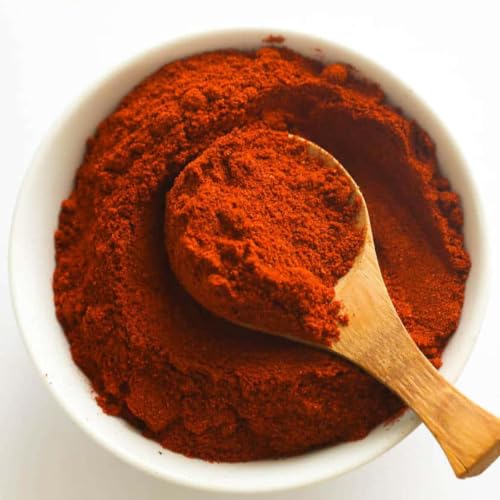
    Where does paprika come from, and how did a pepper native to the Americas become one of Hungary’s most famous spices?

    This week, True Crime Culinary follows the surprising history of paprika from Indigenous American chile peppers to Spanish pimentón, Hungarian paprika, and its eventual return to American kitchens in deviled eggs, potato salad, and BBQ. Plus, we explore the 1994 Hungarian paprika scandal, when lead-contaminated spice sickened more than 100 people.

    It’s a story of the spice trade, a culinary boomerang, and why paprika became much more than a little red powder.

    New bite-sized episodes of True Crime Culinary drop every Thursday. Follow TCC on IG and YT:

    https://www.youtube.com/@TrueCrimeCulinary

    https://www.instagram.com/truecrimeculinary

    References:

    • Los Angeles Times / Reuters — “Paprika to Go on Sale Again in Hungary” (1994): lead-contaminated paprika, minium, sales ban, new quality controls, and reported illnesses.

    • Magyar Néprajzi Lexikon (Hungarian Ethnographic Encyclopedia) — paprika’s arrival in Europe and Hungary, Balkan/Ottoman connections, and adoption into Hungarian cooking.

    • Nunn & Qian, The Columbian Exchange: A History of Disease, Food, and Ideas — origins and global spread of Capsicum peppers after European contact.

    • Oxford Companion to Food — paprika’s New World origins, development of European paprika varieties, and history of the word “paprika.”

    • Foods — research on Spanish paprika production explaining why humid autumn conditions in La Vera led to smoke-drying, in contrast with sun-drying in Murcia.

    • European Union, Pimentón de la Vera PDO specification — traditional smoke-drying, regional climate, production methods, and history of Pimentón de la Vera.

    • The Herb Society of America — Hungarian paprika production, varieties, Szeged and Kalocsa, and traditional Hungarian uses.

    • YouTube — Paprika reference/production video: https://www.youtube.com/watch?v=9WtIEZH-sqE

    • YouTube — Paprika reference/production video: https://www.youtube.com/watch?v=wuibvlcUKD0


    Mostra di più Mostra meno
    13 min
  • Episode 51: Nutmeg History Special — How a Wrong Turn Sent a Ship to Australia
    Sep 16 2026

    What does nutmeg have to do with torture, propaganda, punch, and a Dutch ship accidentally sailing to Australia?

    This week, True Crime Culinary teamed up with Info On The Go for a two-part trip into the strange, fascinating, and surprisingly bloody history of nutmeg.

    First, Info On The Go explores how a tiny spice from a handful of islands became valuable enough to send European powers sailing across the world to control it.

    Listen anywhere you get podcasts, but just in case: https://infoonthego.buzzsprout.com/

    Then, on True Crime Culinary, Leah picks up the story in 1623 with the Amboyna Massacre—a disputed conspiracy involving the Dutch East India Company (VOC), English merchants, Japanese mercenaries, torture, confessions, and executions.

    But the story doesn't end there. We follow the spice trade into a 17th-century pamphlet war, the origins of punch, the growing world of European maritime trade, and the maps that helped sailors cross the globe—and sometimes led them somewhere they never intended to go.

    Listen to both episodes for the full story of how an everyday spice became tangled up with global trade, violence, drinking culture, and the mapping of the world.

    Part 1: Info On The Go — The History of Nutmeg
    Part 2: True Crime Culinary — The Amboyna Massacre

    New bite-sized episodes of True Crime Culinary drop every Thursday. Follow TCC on IG and YT:

    https://www.youtube.com/@TrueCrimeCulinary

    https://www.instagram.com/truecrimeculinary


    References

    • YouTube — Nutmeg / spice trade video
    • YouTube — Dutch spice trade / history video
    • Wikipedia — Nutmeg
    • YouTube — Nutmeg / VOC history video
    • National Museum of Australia — Dirk Hartog Lands off Western Australia — Hartog’s 1616 VOC voyage, the navigation error that brought the Eendracht to Western Australia, and its subsequent charting of the coastline.
    Mostra di più Mostra meno
    13 min
  • Episode 50: Cinnamon Origins and the Disappearing Cinnamon Buns
    Sep 10 2026

    New bite-sized episodes of True Crime Culinary drop every Thursday. Follow TCC on IG and YT:

    https://www.youtube.com/@TrueCrimeCulinary

    https://www.instagram.com/truecrimeculinary


    Where did cinnamon rolls come from? What is cinnamon actually made from? And how did Cinnabon become a shopping mall icon?

    Cinnamon is made from the inner bark of trees in the Cinnamomum genus, and cinnamon buns developed from European traditions of sweet, spiced breads rather than from one known inventor. In this episode of True Crime Culinary, we trace that history from cinnamon bark to Scandinavian cinnamon buns and eventually the giant, frosted American cinnamon roll.

    Along the way, we explore Swedish kanelbullar, Denmark's unusual Wednesday cinnamon snail, how cinnamon sticks and ground cinnamon are made, and the surprising differences between varieties of cinnamon.

    Then we head to an American shopping mall in the 1980s for the history of Cinnabon. Founder Rich Komen set out to create an irresistible cinnamon roll, baker Jerilyn Brusseau helped develop the recipe through hundreds of tests, and a particularly aromatic cinnamon became part of Cinnabon's signature flavor. The first Cinnabon opened at SeaTac Mall in Washington in 1985, eventually growing into an international chain.

    And because this is True Crime Culinary, we begin with nearly 400 cinnamon rolls that seemingly disappeared during an Uber delivery in South Florida. Was it a $3,000 cinnamon roll heist? The real explanation was much stranger.

    True Crime Culinary explores the strange intersection of food, history, and true crime. New bite-sized episodes every Thursday.

    References

    • Axios — Border Patrol detained Uber driver during cinnamon roll delivery

    • Seattle Met — Scents from a Mall: The Sticky, Untold Story of Cinnabon

    • Visit Sweden — Cinnamon buns and where to get the best ones

    • Encyclopaedia Britannica — Cinnamon

    • Wikipedia — Cinnamon

    • Wikipedia — Cinnamon roll

    • Wikipedia — Cinnabon

    Mostra di più Mostra meno
    15 min
  • Episode 49: The History of Cheetos and the Criminal Caught with Cheese Dust
    Sep 3 2026

    New bite-sized episodes of True Crime Culinary drop every Thursday. Follow TCC on IG and YT:

    https://www.youtube.com/@TrueCrimeCulinary

    https://www.instagram.com/truecrimeculinary

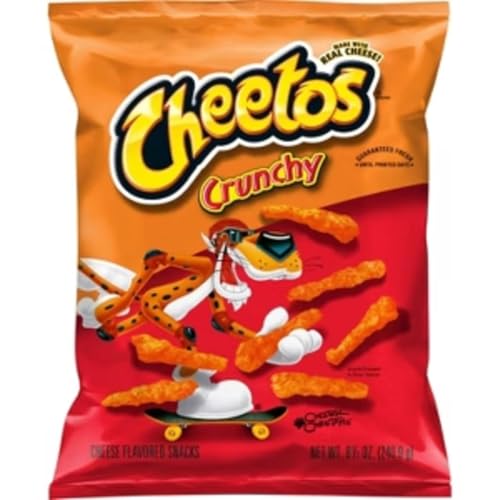
    What is the history of Cheetos—and were Cheetos actually the first cheese curls?

    The story starts in 1930s Wisconsin, where a machine designed to process corn for animal feed accidentally produced strange, airy corn puffs. Those puffs eventually became Korn Kurls, one of America’s earliest cheese curls, years before Cheetos arrived.

    In this episode of True Crime Culinary, we follow the surprisingly weird history of the cheese puff from cow feed to Korn Kurls, CheeWees, Charles Elmer Doolin’s Frito Company, and the 1948 launch of Cheetos. We’ll also look at how Herman Lay’s distribution network helped turn Cheetos into a national snack and eventually helped create Frito-Lay.

    Then things get even stranger.

    Why does spicy food actually hurt? Why can chickens eat chili peppers without seeming bothered? What happened to Cheetos’ original mouse mascot? And how did scientists use the common food dye Yellow 5 to make the skin of living mice temporarily transparent?

    Finally, we return to a 2021 attempted burglary in Tulsa, Oklahoma, where an abandoned bag of Cheetos—and some extremely difficult-to-hide orange evidence—helped link a suspect to the scene.

    From accidental cow food to transparent mice and incriminating Cheeto dust, this is the strange history of one of America’s most recognizable snacks.


    References

    • Wisconsin 101 — From Cow Feed to Korn Kurl — Flakall, the accidental corn puff, and Korn Kurls.
    • Texas State Historical Association — Frito-Lay Corporation — C.E. Doolin, Fritos, Cheetos, Herman Lay, and the creation of Frito-Lay.
    • Smithsonian — Frito-Lay Collection — Frito Company and Frito-Lay history.
    • Scientific Reports — TRPV1 and Capsaicin — Why mammals and birds respond differently to spicy peppers.
    • Science/PMC — Optical Transparency in Live Animals — Yellow 5/tartrazine and the transparent-mouse experiment.
    • KTUL — Woman Linked to Crime by Cheeto Residue on Her Teeth — The 2021 Tulsa burglary case.
    • YouTube — Cheetos/Transparent Mice Video
    Mostra di più Mostra meno
    13 min