

Tom Herring on High-Precision Geodesy
Impossibile aggiungere al carrello
Rimozione dalla Lista desideri non riuscita.
Non è stato possibile aggiungere il titolo alla Libreria
Non è stato possibile seguire il Podcast
Esecuzione del comando Non seguire più non riuscita

Tom Herring on High-Precision Geodesy
-
Letto da:
-
Di:
A proposito di questo titolo
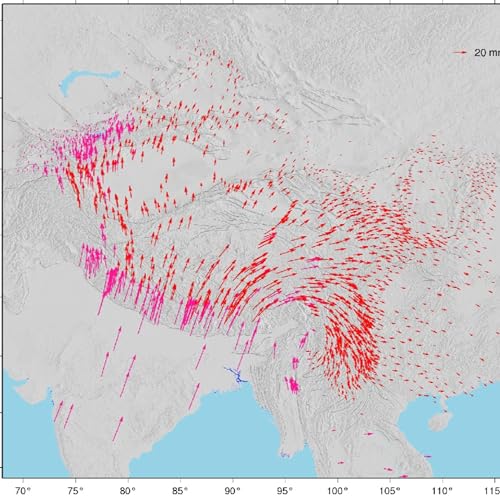
There are three main types of geodetic measurement systems — satellite-based systems such as GPS, very long baseline interferometry (VLBI), and interferometric synthetic-aperture radar (InSAR). While each type of systems has its particular strengths, the cost of satellite-based receivers has plummeted. Millimeter-level accuracy will soon be incorporated into phones. This has broadened the kinds of geological questions we can now address with such systems. In the podcast, Tom Herring describes how these systems are giving us new insight into plate motions, slow and fast deformation associated with faults and earthquakes, the Earth’s rotation, as well as applications in civil engineering, such as dams and tall buildings, and agriculture.
Herring is a pioneer in high-precision geodetic analytical methods and applications for satellite-based navigation systems to study the Earth’s surface. He is a Professor in the Earth, Atmospheric, and Planetary Sciences department at the Massachusetts Institute of Technology.