

The treason of Aaron Burr
Impossibile aggiungere al carrello
Rimozione dalla Lista desideri non riuscita.
Non è stato possibile aggiungere il titolo alla Libreria
Non è stato possibile seguire il Podcast
Esecuzione del comando Non seguire più non riuscita

The treason of Aaron Burr
-
Letto da:
-
Di:
A proposito di questo titolo
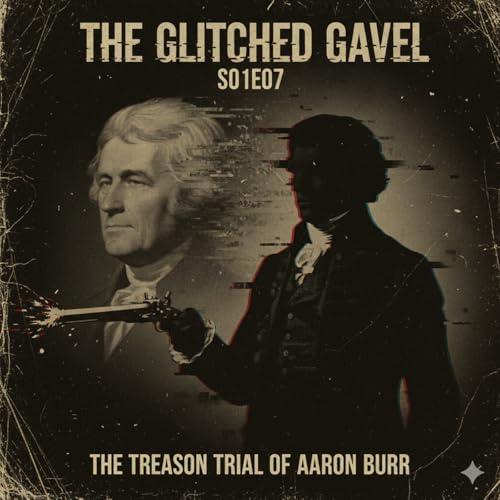
📜 The Glitched Gavel S01E07: The United States vs. The Former Vice President (The Aaron Burr Trial)
Gavel (The Narrator/Prosecutor): "Richmond, Virginia, 1807. Just three years after killing Alexander Hamilton in a duel, Aaron Burr stands accused of the gravest crime in the republic: treason. The charge, brought by his former political ally and current President, Thomas Jefferson, alleged that Burr plotted to raise an army, seize territories, and carve out a new empire in the American West. The court was less about the evidence and more about the bitter score-settling between two founding fathers." (A sharp, high-pitched whine cuts through Gavel's voice, like a modem handshake that fails.)
Static (The Analyst/Defense): "This was a trial of political theatre, presided over by Chief Justice John Marshall, who despised Jefferson. The case hinged on the Constitution’s strict definition of treason: 'levying war against them, or in adhering to their Enemies, giving them Aid and Comfort.' Jefferson, convinced of Burr's guilt, mobilized the government to secure a conviction. We detail the extraordinary moments where Marshall issued a subpoena to the President himself, forcing a showdown between the executive and judicial branches."
Gavel: "We dissect the facts—Burr's shadowy movements down the Ohio River, his questionable correspondence with foreign powers, and the contradictory testimony of his co-conspirators. Ultimately, Marshall’s interpretation of the treason clause required an 'overt act' witnessed by two people. Because Burr wasn't actually present when his men gathered, he was acquitted. The verdict was a legal victory for the defense, but a moral and political death sentence for Burr, whose name became synonymous with betrayal. This trial established a vital precedent: that a mere conspiracy to commit treason is not treason."