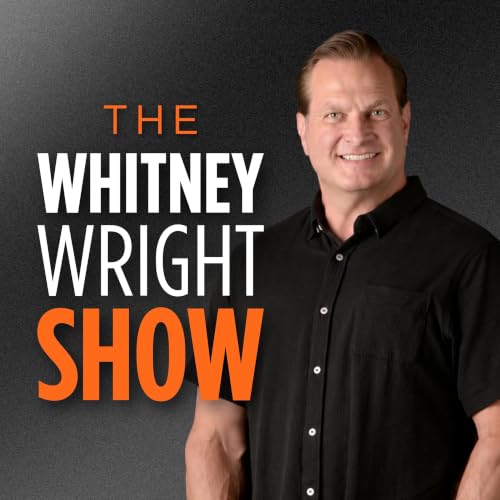
The Whitney Wright Show copertina

The Whitney Wright Show

The Whitney Wright Show

Di: Whitney Wright
Ascolta gratuitamente

Offerte di stagione | 0,99 €/mese per i primi 3 mesi

A seguire 9,99 €/mese – si applicano condizioni. Puoi disdire mensilmente.

Success does not make you immune to stress, anxiety, burnout, or breaking points. On The Whitney Wright Podcast, self-made entrepreneur Whitney Wright shares the lessons he learned after his own private struggle brought him to rock bottom. Through honest conversations, practical tools, personal stories, and interviews with successful men, Whitney explores the hidden cost of being the person everyone depends on. This is a show for men carrying the pressure of business, family, leadership, and life who need to hear one simple message: you do not have to carry it alone. Sometimes the first step is simply to Tell Someone.

2026 Whitney Wright
Economia Gestione e leadership Igiene e vita sana Leadership Psicologia Psicologia e salute mentale
  • Before You Burn It All Down with Dylan Bost | #10
    Oct 26 2026

    In this episode of The Whitney Wright Show, Whitney Wright talks with Dylan Bost about workaholism, burnout, family disconnection, addiction, financial collapse, and what it took to rebuild his life. Dylan shares how years of tying his identity to productivity and achievement slowly pulled him away from his wife, his children, and eventually from himself.

    Dylan explains that work gave him something home often did not: constant validation. The praise, money, and sense of accomplishment made it easy to keep choosing work, even when those choices were quietly damaging his relationships. Over time, his family stopped expecting him to be fully present because work had become the center of his life.

    That pattern eventually collided with the 2008 financial crisis. As his business began struggling, Dylan turned to alcohol, avoided asking for help, and kept convincing himself that tomorrow would be different. Instead, the problems compounded until the business collapsed, he declared bankruptcy, and his marriage came dangerously close to ending.

    Whitney and Dylan discuss how fear can keep men silent even when they know they are drowning. Dylan admits that he did not tell anyone what was really happening because asking for help felt like admitting he had failed as a provider. That silence only allowed the situation to become worse.

    In this episode:

    ● Why work can become a source of identity and validation

    ● Feeling more appreciated at work than at home

    ● How workaholism slowly damages relationships

    ● The danger of burying stress instead of processing it

    ● Using alcohol and distractions to avoid difficult emotions

    ● What happened when Dylan’s business collapsed

    ● Why fear kept him from asking for help

    ● Nearly losing his marriage and family

    ● Recovering after bankruptcy

    ● Replacing destructive habits with healthier ones

    ● The importance of silence and self-awareness

    ● Adding one positive habit at a time

    ● Building work around life instead of life around work

    ● Creating more space to be a present husband and father

    ● Using awareness to recognize and change old patterns

    Dylan’s story is a reminder that burnout and collapse usually do not happen all at once. They happen through hundreds of small choices repeated over time. Recovery can work the same way: one honest conversation, one healthier habit, one moment of awareness, and one better choice at a time.

    Mostra di più Mostra meno
    51 min
  • You Are Not Your Brain with Richard Waldman | #9
    Oct 19 2026

    In this episode of The Whitney Wright Show, Whitney Wright talks with Richard Waldman about negative self-talk, identity, judgment, accountability, and the idea that the thoughts created by the brain are not necessarily who we are. Richard shares how his own experiences led him to develop the Order to Life system, a framework designed to help people recognize the mental patterns that keep them stuck and make more conscious choices.

    Richard explains that much of our suffering comes from the internal chatter that tells us we are not good enough, not capable enough, or should stay where we are. He describes judgment as one of the most destructive mental patterns because it affects how we view ourselves, other people, and the situations around us.

    The conversation also explores the importance of awareness and staying in the present moment. Richard explains that the mind often pulls us into fear about the future or regret about the past, while the present moment is where we actually have the power to choose how we respond.

    Whitney and Richard then discuss the ego, accountability, and the need to be right, in control, and protected from looking inward. They talk about how avoiding accountability can keep people trapped in the same behaviors, while becoming more self-aware creates an opportunity to make different choices.

    In this episode:

    ● Why you are not your thoughts

    ● Understanding negative self-talk and mental chatter

    ● How judgment affects the way we experience life

    ● The difference between being alive and living life

    ● Becoming more aware of your internal patterns

    ● Staying present instead of living in fear or regret

    ● The role of ego and self-image

    ● Why people resist accountability

    ● How relationships and coaching can help us grow

    ● Connecting with the things we value

    ● Moving through grief without avoiding it

    ● Why practice is necessary for real change

    ● Learning to respond instead of react

    ● Building confidence through action

    Richard’s message is that change begins with awareness. We may not be able to stop every thought, emotion, or mental pattern from showing up, but we can learn to recognize what is happening, stay present, and make a conscious choice about how we respond.

    Mostra di più Mostra meno
    52 min
  • Split, Not Shattered with Lonnie Ruscito | #8
    Oct 12 2026

    In this episode of The Whitney Wright Show, Whitney Wright talks with Lonnie Ruscito about divorce, peaceful co-parenting, blended families, forgiveness, and choosing to protect children from unnecessary conflict.


    Lonnie shares his background growing up near Chicago before moving to Arizona as a teenager, where he eventually built a career in the home-building industry. He also talks about his family life, his daughters, his current wife, and the positive relationship he maintains with his ex-wife and her husband.


    A major focus of the conversation is Lonnie’s book, Split, Not Shattered, which explains how families can move through divorce without destroying the relationships around them. Lonnie shares that the book grew out of years of trial and error, small wins, personal reflection, and notes he kept while learning how to navigate co-parenting with more grace.


    Whitney highlights how rare it is for a divorced man to intentionally protect his ex-wife’s reputation, refuse to speak negatively about her, and create a safe, stable environment for his children. Lonnie explains that his main motivation was simple: his kids did not ask for the divorce, and he did not want them to grow up feeling like their parents were enemies.


    The conversation also explores guilt, emotional responsibility, prayer, forgiveness, and the choice to take the high road. Lonnie explains that healing required him to reflect without dwelling, process his emotions honestly, and continue acting with kindness, empathy, honesty, and integrity.

    Later, Lonnie shares how that foundation made it possible for his blended family to build trust, spend holidays together, go to dinners, and even take vacations as one larger family unit.


    In this episode:

    ● Why divorce does not have to shatter a family

    ● How Lonnie chose to protect his children after divorce

    ● Why he refused to villainize his ex-wife

    ● How guilt, reflection, and prayer helped him move forward

    ● Why forgiveness is necessary for healing

    ● How kindness can rebuild trust over time

    ● What peaceful co-parenting can look like in real life

    ● How blended families can create stability for children

    ● Why children should not pay the price for adult conflict

    ● Where to find Lonnie’s book, Split, Not Shattered


    This episode is a reminder that divorce is painful, but it does not have to destroy every relationship connected to it. With humility, forgiveness, responsibility, and consistent kindness, families can move forward with more peace, stability, and love.


    Link to his book Split, Not Shattered: A Practical Guide to Peaceful Co-Parenting, Blended Families, and Emotional Resilience https://a.co/d/07irR62n

    LinkedIn: https://www.linkedin.com/in/lonnie-r-ruscito/

    IG: @lonzoruscito


    Mostra di più Mostra meno
    50 min
adbl_web_anon_alc_button_suppression_t1
Ancora nessuna recensione