The Presence Lab | Executive Communication Under Pressure copertina

The Presence Lab | Executive Communication Under Pressure

The Presence Lab | Executive Communication Under Pressure

Di: Dale Dixon
Ascolta gratuitamente

Offerte di stagione | 0,99 €/mese per i primi 3 mesi

A seguire 9,99 €/mese – si applicano condizioni. Puoi disdire mensilmente.

Executive presence and communication under pressure, for leaders who know the material and still feel it slip when the stakes rise. Host Dale Dixon spent nearly 40 years in broadcast news and executive leadership and now coaches executives for the moments that matter: board meetings, tough Q&A, media interviews, keynotes, hard announcements, difficult conversations, and on camera.

Each episode takes one real pressure problem, sometimes straight from the headlines, explains what is happening underneath it with credible research, and gives you a practical tool to use before your next important moment. Episodes run about 12 to 30 minutes, with chapters and sources in the show notes.

New episodes every Tuesday. Free Field Guides, the communication assessment, and coaching are at daledixonmedia.com.

© 2026 The Presence Lab | Executive Communication Under Pressure
Economia Gestione e leadership Management Ricerca del lavoro Successo personale Sviluppo personale
  • The Cost - Who Pays, Who Decides, Who Answers
    Oct 20 2026

    Send us Fan Mail

    Description

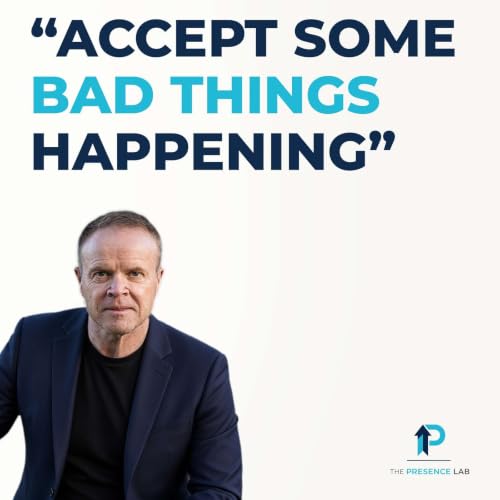
    Sam Altman said the world should accept some bad things happening for the benefits of AI. He deserves credit for naming the tradeoff out loud. The reaction raises a harder question for every leader with a difficult decision to announce: how do you push past the fear, and the advice to soften it, without asking people to carry a cost you wouldn't carry yourself? Dale Dixon breaks down the interview, the tension leaders feel before a hard message, and the one sentence that keeps the cost and the responsibility together.

    "Fear tells me they won't like hearing it, conscience tells me I wouldn't accept it, and the work is knowing which one is talking."

    Chapters

    0:00 The interview

    1:58 The advice to wait

    3:20 Pay attention to the tension

    3:59 Fear or conscience

    4:57 Who pays, who decides, who answers

    7:19 The hotel study

    9:15 The cost sentence

    11:02 Your next announcement

    Links

    • The Cost assessment: https://www.daledixonmedia.com/cost

    Sources

    • POLITICO, Decoded interview with Sam Altman (Oct 2026): https://www.politico.com/news/2026/10/04/sam-altman-decoded-interview-ai-01106217
    • Reuters coverage (Oct 4, 2026): https://www.reuters.com/business/openais-altman-says-ai-benefits-warrant-accepting-some-risks-2026-10-04/
    • Criticism from Gov. JB Pritzker and Luiza Jarovsky, as reported by Cybernews: https://cybernews.com/ai-news/altman-bad-things/
    • Andy Stanley Leadership Podcast, Managing Tension: https://omny.fm/shows/andy-stanley-leadership-podcast/from-the-vault-managing-tension
    • Simons and McLean Parks, behavioral integrity in 76 hotels (Cornell, HBR Sept 2002): https://news.cornell.edu/node/280372

    Research note (show notes only, not on air)

    Tony Simons and Judi McLean Parks surveyed more than 6,500 employees at 76 Holiday Inn hotels in the US and Canada about whether managers' words and actions lined up. A one-eighth point improvement on the five-point scale was associated with profit higher by 2.5 percent of revenues, more than $250,000 a year for an average-sized hotel. The finding is correlational.

    Support the show

    Mostra di più Mostra meno
    12 min
  • Next Move - What to Do the Night Before a High-Stakes Meeting
    Oct 6 2026

    Send us Fan Mail

    Picturing the big meeting going well can make it go worse.

    The night before a high-stakes meeting, the meeting shows up early. The CFO challenges the number, a board member asks the one question we hoped to dodge, and the scene stops right there, at the worst moment. Jaw tight, breath shallow, ceiling at 2 a.m. The usual advice is to swap in a better movie. The research says that can backfire.

    This episode starts with a scared kid, a school Shakespeare play, and a front porch aimed at the neighbor's door. From there: what astronaut Chris Hadfield did when he went blind outside the International Space Station, why reassurance made one group of high performers do worse, and the three-part NEXT MOVE practice: Notice it, Finish it, Park it.

    For executives, founders and senior leaders who know their material and still lose sleep before the meeting that matters.

    Hit play, then grab the free Field Guide: daledixonmedia.com/next

    Mentioned in this episode

    • Free Field Guide: daledixonmedia.com/next
    • The Grip and The Blank, earlier Presence Lab episodes referenced on the show

    Research and sources

    • NASA STS-100 mission, April 2001. Chris Hadfield, "What I learned from going blind in space," TED, 2014.
    • Hadfield, C. (2013). An Astronaut's Guide to Life on Earth.
    • Wong, Q. J. J., & Moulds, M. L. (2011). Impact of anticipatory processing versus distraction on multiple indices of anxiety in socially anxious individuals. Behaviour Research and Therapy, 49(10), 700-706.
    • Brown, M., & Stopa, L. (2007). Does anticipation help or hinder performance in a subsequent speech? Behavioural and Cognitive Psychotherapy, 35(2), 133-147.
    • Norem, J. K., & Cantor, N. (1986). Defensive pessimism: Harnessing anxiety as motivation. Journal of Personality and Social Psychology, 51(6), 1208-1217.
    • Jones, C. R., Fazio, R. H., & Vasey, M. W. (2012). Attentional control buffers the effect of public speaking anxiety on performance. Social Psychological and Personality Science, 3(5), 556-561.
    • Further reading: Hinrichsen & Clark (2003); Jiang et al. (2021); Webb et al. (2010). Most of this research uses lab speech tasks and student or socially anxious samples.

    It means so much if you like, subscribe and share this episode.

    Support the show

    Mostra di più Mostra meno
    13 min
  • The Fog - When Your Team Asks, "Is AI Taking My Job?"
    Sep 29 2026

    Send us Fan Mail

    The go-to answer to "Is AI taking my job?" is "embrace it and you'll be fine." The people using AI the most are the ones most worried about losing their jobs.

    It happens at the end of a one-on-one, the morning after a headline, in a joke that isn't really a joke. Someone asks the question no leader can answer with certainty. Worry about technology making jobs obsolete just hit a record high. Companies have cited AI in more than 100,000 announced job cuts this year. National news ran more than 2,000 stories on AI and jobs in three months, and almost none of them tell a leader what to say when the question comes.

    In Episode 300, Dale Dixon explores why the usual reassurance misses the fear underneath the question, what a study involving snakes and mild electric shocks reveals about uncertainty, and why the answer starts with where the leader sits. It closes with three moves for that conversation: Go First, Facts Not Forecasts, and What Do You Control?

    Plus, a tribute to the late Jason Jennings, the reason this podcast exists, including a clip from our 2020 conversation about layoffs.

    "You can't promise their future. You can promise the chair beside them."

    Free Field Guide: The three moves, the circles of control, and sample lines for the conversation. Grab it at daledixonmedia.com/aifog

    Join the free Presence Lab community for live Q&A: daledixonmedia.com/community

    Know a manager who's about to get this question? Send them this episode.

    Mentioned in this episode
    The Game Changers, Episode 234, with Jason Jennings: https://www.buzzsprout.com/11786/episodes/3592687

    Sources and further reading

    • Gallup, "More U.S. Workers Fear Losing Their Jobs to Technology" (2026)
    • Gallup, "Using AI More Does Not Reassure Workers, Managers Do" (2026)
    • Gallup on AI use and layoffs (July 2026)
    • Challenger, Gray & Christmas, Job Cut Reports, June-August 2026
    • Media Cloud, U.S. National collection, June 25-September 25, 2026
    • de Berker et al., "Computations of uncertainty mediate acute stress responses in humans," Nature Communications (2016)
    • Bordia, Hobman, Jones, Gallois & Callan, "Uncertainty During Organizational Change," Journal of Business and Psychology (2004)
    • Gibson, Harari & Marr, "When sharing hurts," Organizational Behavior and Human Decision Processes (2018)
    • Cascio, Young & Morris, "Financial consequences of employment-change decisions in major U.S. corporations" (1997)
    • Yale Budget Lab, "AI Is Probably Not (Yet) the Reason for Labor Market Weakening" (2026)
    • Bick, Blandin & Deming, "The Rapid Adoption of Generative AI," NBER (2024)
    • Stephen Covey, The 7 Habits of Highly Effective People (1989)

    Support the show

    Mostra di più Mostra meno
    24 min
adbl_web_anon_alc_button_suppression_t1
Ancora nessuna recensione