• GCSE Prep for Anxious Teens: The Roadmap That Removes the Guesswork
    Jan 29 2026
    If your teen is staring down GCSE season and you feel like you're both drowning, this episode is your lifeline. Sarahlynn, teacher-turned-tutor, breaks down the exact month-by-month roadmap she uses with overwhelmed families: From securing exam accommodations in February to navigating the final exam stretch in June. This isn't about being the perfect parent or having all the answers. It's about having a plan that actually works for neurodivergent teens, anxious learners, and families who need practical tools over motivational speeches. In this episode: How to secure SENCO accommodations before March (and what to ask for)The trial-and-error method for finding a study system your teen will actually useWhy February half-term is your game-changing momentThe 3-part revision system that replaces color-coded chaosSpring half-term strategy: ramping up without burning outApril's reality check: managing anxiety when the wheels start to fall offMay-June survival mode: sleep, food, breaks, and the "later, not now" technique Perfect for parents of teens (ages 11-18) who: Have ADHD, anxiety, or other neurodivergent diagnosesAre bright but struggle with executive functionOnly engage deeply with topics they're passionate aboutNeed scripts, tools, and systems ... not just encouragement Free resource: Download the printable GCSE roadmap checklist at https://chipper-builder-2651.kit.com/657d9f04fb This is the conversation you wish you'd had in January, but it's not too late to start now. 🔗 WATCH NEXT: 3 Science-Backed Study Methods for Anxious LearnersHow to Stop Exam Panic: Tools for ADHD Teens TAGS: GCSE revision, exam preparation for teens, neurodivergent students, ADHD study tips, parent guide GCSE, exam anxiety teens, revision timetable, mock exams, active recall methods, blurting technique, past paper practice, executive functioning teens, overwhelmed parents, SENCO accommodations, exam stress management, year 11 revision, study methods ADHD, anxious learners, GCSE roadmap, revision schedule ABOUT SARAH LYNN: I'm a teacher turned professional tutor, and I've spent 10+ years helping overwhelmed families navigate GCSE season. I specialize in neurodivergent learners, anxious teens, and parents who need practical tools not just motivational quotes. 💬 Have questions? Drop them below... I read every comment :) <3 If this helped, let me know via the thumbs up. If something's missing, send me a message.
    Mostra di più Mostra meno
    42 min
  • Ep. 17 Why January Routines Fail (And How to Reset Them the Gentle Way)
    Dec 18 2025

    Every January starts with the same promise: This term will be different. Calmer mornings. Less rushing. Fewer meltdowns.

    And yet… by week two, you’re back to shouting, negotiating, and feeling guilty for starting the year exhausted.

    If your child is anxious, ADHD, or neurodivergent, that “January reset” can feel less like a fresh start and more like cold-water shock to the nervous system.

    In this episode of the Mindful Toolbox Podcast, we unpack why January feels so hard and how to rebuild routines in a way that actually works for anxious and ADHD brains.

    You’ll learn:

    • Why “fresh starts” trigger nervous system pushback

    • How ADHD and anxious brains respond to routine changes

    • A gentle January routine for kids that actually sticks

    •What to do when mornings start with resistance or meltdowns

    • How to rebuild predictability without control or rigidity

    A Calm, Science-Backed January Reset

    Instead of pressure, perfection, or rigid schedules, this episode gives you three realistic, gentle reset tools you can start using now! Even before school returns.

    These tools are designed for real mornings, real kids, and real parents

    Perfect for parents of children aged 7–16 preparing for:
    • 11+ exams

    • ISEB / independent school exams

    • GCSEs

    • Or simply struggling with school transitions, anxiety, or emotional overwhelm

    🎁 **Free Emotional Regulation Toolbox:** Download here → https://betteringyouth.co.uk/mindful-toolbox-podcast-resources

    If January mornings feel heavy, this episode is your reminder: You’re not behind. Your child isn’t broken. They just need safety before structure and this episode shows you how.

    Mostra di più Mostra meno
    20 min
  • Ep. 16 How to Help Your Child Over the Holidays: The Science of Rest, Rhythm & Keeping Learning on Track
    Dec 4 2025
    Your child doesn’t need more revision this December, but they do need the right kind of rest.

    And here’s the shocking truth most parents don’t know:

    Too much “holiday freedom” can feel like stress, not rest…

    and actually, too much "freedom" makes learning harder in January.

    In this episode, I'll be breaking down the newest 2025 neuroscience showing that rest is not the absence of activity, but the presence of rhythm. And the right kind of recovery can boost working memory, emotional regulation, and exam readiness more than any worksheet ever could.

    👉 By the end, you’ll have 3 science-backed tools to help your child recharge their brain without losing learning momentum.

    Perfect for parents wondering: • “How do I help my child over the holidays?” • “Should we rest or revise?” • “Will they fall behind before exams?”

    This episode blends the evidence from Harvard, The Child Trauma Academy, University of York, Westminster, and the Journal of Sleep Research... all translated into practical, guilt-free strategies for families.

    In this episode you'll learn:

    ◼️ Why rhythmic rest restores children’s working memory better than doing nothing ◼️ The 2024–25 research on green exercise and nervous system regulation ◼️ Why predictive regulation (Harvard, 2025) explains holiday overwhelm ◼️ How unpredictable days (26–30 Dec) trigger the brain’s “danger” circuitry ◼️ The fastest way to restore focus ◼️ What boosts attention and working memory ◼️ The science behind flow states and why creativity counts as learning ◼️ What is the No. 1 modulator of learning readiness ◼️ How to keep rest restorative (without rigid timetables or guilt) ◼️ The 3:1 Rule for revision during holidays ◼️ The simple body-budget reset every child needs over the break

    This is your December blueprint for rest, rhythm, and calm progress. It's built especially for anxious, ADHD, SEN, or sensitive learners.

    Resources Mentioned:

    • Free Parent Toolkit - ADHD routines, EBSA supports, study systems: https://betteringyouth.co.uk/mindful-toolbox-podcast-resources
    • Coaching & Tutoring Information: https://betteringyouth.co.uk
    • Connect on Instagram: @TheMindfulToolbox_Podcast

    00:00 The Holiday Dilemma for Parents: Rest vs. Revision

    01:40 Understanding the Science of January Routines (2025 Research)

    02:55 What’s the best way to Rest, Reset and Recover?

    06:25 The Body Budget: Balancing Energy and Rest

    09:26 Creating Predictability in Holiday Routines

    11:29 Movement as Medicine: Active Restoration

    14:00 Sleep: The Ultimate Learning Reset (Schlarb, 2025)

    17:38 How to Balance Play, Structure & Gentle Revision

    20:08 Practical Tools for a Gentle January Reset for ADHD students

    Mostra di più Mostra meno
    23 min
  • Ep. 15 Why Partial Timetables won't work: The Science Behind School Refusal & How to Build a Safe Return Plan
    Nov 20 2025

    If your child is avoiding school, and you want to try a Partial Timetable... this episode explains the one thing most parents don’t get told: “A partial timetable needs systems in place to support a positive and meaningful reintegration.”

    In this episode, Sarahlynn breaks down the real neuroscience behind school refusal, persistent absence, and EBSNA. We also explore why partial timetables alone won't fix the problem and how anxious or neurodivergent students can’t learn, recall, or reason until their nervous system feels safe.

    👉 By the end, you’ll know exactly how to request an intentional and safe partial timetable and how to switch your child out of panic and back into learning mode using three evidence-based tools.

    This episode uses the latest research from Harvard (2025), The Child Trauma Academy (2025), and the UK DfE Attendance Guidance (2024–25) to help parents build an effective, protective reintegration plan without burning out.

    💛 In This Episode, You’ll Learn:

    ◼️ Why anxiety blocks learning and shuts off working memory in children ◼️ Predictive Regulation (Harvard, 2025): why anxious brains preload fear before school ◼️ The 90–120 second regulation window (Perry, 2025) — and how to use it at home ◼️ How partial timetables work legally under DfE 2024–25 guidance ◼️ How to build a safe graduated return plan step-by-step ◼️ Stealth regulation tools for teens who refuse breathing exercises ◼️ Micro-predictability scripts to reduce panic before the school gate ◼️ Parallel learning routines for non-attendance days that rebuild confidence ◼️ Exact phrases to use in school meetings so you sound clear, calm, and credible

    Perfect for parents navigating: ✓ school avoidance / school refusal ✓ persistent absence ✓ EBSA / EBSNA strategies (UK) ✓ SEN anxiety barriers ✓ overwhelmed, sensitive, or ADHD learners ✓ exam panic & working-memory shutdown

    📥 Download the Free 4-Week EBSNA Return Guide

    Scripts, structure, predictable routines & tools you can take directly into your next school meeting. 👉 https://betteringyouth.co.uk/mindful-toolbox-podcast-resources

    🧠 Mentioned Research

    • DfE Guidance 2024–25 — partnership duty & graduated return • Lisa Feldman Barrett, Harvard (2025) — Predictive Regulation & Body Budget • Dr Bruce Perry, Child Trauma Academy (2025) — Regulate → Relate → Reason timing • Reading & West Berkshire Pilot (2025) — 30% reduction in long-term absence through relational returns

    ⏱️ Timestamps (Keyword-Optimised)

    (00:00) Persistent Absence: What It REALLY Means for Parents (02:17) Partial Timetables & The Law: What DfE 2024–25 Actually Says (05:01) Anxiety Blocks Learning: Why Reasoning Doesn’t Work in Survival Mode (07:59) What a Safe Reintegration Plan MUST Include (EBSA Parent Strategies UK) (09:28) Predictive Regulation Explained (Harvard, 2025) (12:05) Case Study: The “Switch-On Window” That Stopped Morning Panic (15:28) Tool 1: Regulation First (How to Help an Anxious Child Before School) (17:08) Stealth Regulation for Teens: Nervous System Tools That Don’t Look “Babyish” (19:10) Micro-Preview Plans: Reducing Panic with Predictability (22:00) Parallel Pathways at Home: Confidence Building on Non-Attendance Days (26:23) Scripts for School Meetings (Parent-School Partnership) (29:00) How to Request a Graduated Return Plan (Step-by-Step)

    🌱 Resources for Parents

    • Free Parent Toolkit — ADHD Routines & Study Systems https://betteringyouth.co.uk/mindful-toolbox-podcast-resources • Coaching & Tuition: https://betteringyouth.co.uk • Instagram: @TheMindfulToolbox_Podcast

    Mostra di più Mostra meno
    28 min
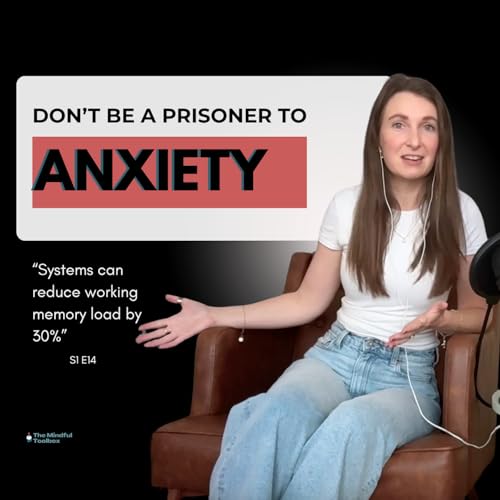
  • Ep. 14 Why Anxiety Deletes Memory: 3 Tools to Switch Your Child’s Brain Back On in 90 Seconds
    Nov 6 2025

    If your child ever blanks in an exam, forgets everything they revised, or instantly “shuts down”… this episode explains why.

    Most parents assume it's laziness. It’s not.

    --> Anxiety literally shuts off the brain responsible for memory, focus, and reasoning.

    --> But you can switch the learning brain back on in 90 seconds using new research from Harvard and The Child Trauma Academy.

    In this episode, Sarahlynn breaks down the neuroscience of exam anxiety, why stressed children lose access to working memory, and how parents can use simple regulation tools to restore calm, clarity, and recall.

    In this episode, you’ll learn:

    ◼️ The Harvard 2025 insight explaining why anxious brains “go blank” ◼️ The predictable pattern of Regulate → Relate → Reason and how to use it at home ◼️ Why predictability boosts working memory for ADHD and anxious learners ◼️ 3 rapid-reset tools parents can use before exams, revision sessions, or stressful school mornings ◼️ How to keep your child’s nervous system in the “learning zone”

    Perfect for parents of anxious, ADHD, autistic, or sensitive learners navigating revision, classroom pressure, persistent absence, or exam stress.

    Referenced Research

    • Lisa Feldman Barrett, Harvard (2025) — Predictive Regulation & Body Budget • Bruce D. Perry, ChildTrauma Academy (2025) — Regulate → Relate → Reason • Herrerías, Edupsykhé (2025) — Predictability & Working Memory

    Referenced Episodes

    • Ep 3 — What Anxiety ACTUALLY Looks Like • Ep 4 — Emotional Intelligence Tools Every Parent Should Know • Ep 9–11 — EBSA Re-Entry Series

    Resources & Links

    • Free Parent Toolkit — ADHD Routines & Study Systems: https://betteringyouth.co.uk/mindful-toolbox-podcast-resources • Learn about coaching & tutoring: https://betteringyouth.co.uk • Instagram: @TheMindfulToolbox_Podcast

    Coming Next (Nov 20, 2025)

    ✨ Ep 15. Why Anxious Brains Can’t Learn: The Science Behind School Refusal & How to Build a Safe Return Plan

    If this episode helps you, please share it with another parent who needs it. Your word of mouth supports the podcast more than anything.

    📎 Resources & Downloads: • Free Parent Toolkit: ADHD Routines & Study Systems → https://betteringyouth.co.uk/mindful-toolbox-podcast-resources • Learn more about coaching & tutoring → https://betteringyouth.co.uk • Connect on Instagram → @TheMindfulToolbox_Podcast

    Mostra di più Mostra meno
    29 min
  • Ep. 13 Morning Chaos? 3 ADHD School Day Systems That Actually Work
    Oct 23 2025

    If mornings feel like meltdown territory and homework ends in tears, this episode is your reset.

    I share three ADHD-friendly school-day experiments backed by research and real families: 1️⃣ The 3-Block Day: short bursts that keep memory online 2️⃣ Visual Transitions: take shouting out of mornings 3️⃣ Daily Check-In: the 5-minute bridge to regulation and trust

    You’ll learn how to co-create structure with your child, not for them. This helps them to feel calm, capable, and in control.

    These tools are designed for parents navigating ADHD, anxiety, and emotional regulation challenges.

    💬 What You’ll Learn:

    • Why ADHD routines fail when they’re imposed, not co-created
    • How visual prompts free up working memory
    • Ways to balance academic tasks with emotional wellbeing
    • Small wins that build independence and reduce conflict

    🧠 Referenced Episodes: • Ep 3: What Anxiety Actually Looks Like • Ep 4: Emotional Intelligence Tools Every Parent Should Know • Ep 9, 10 and 11: EBSA Re-Entry Series

    📎 Resources & Downloads: • Free Parent Toolkit — ADHD Routines & Study Systems → https://betteringyouth.co.uk/mindful-toolbox-podcast-resources • Learn more about coaching & tutoring → https://betteringyouth.co.uk • Connect on Instagram → @TheMindfulToolbox_Podcast

    If this episode helps you breathe easier on school mornings, share it with another parent who needs a calmer start.

    🔑 Keywords: ADHD routines, morning chaos, school day systems, parenting ADHD, study skills for neurodiverse learners, emotional regulation kids

    Mostra di più Mostra meno
    20 min
  • Ep. 12 GCSE Resit Roadmap: Why Rereading Doesn’t Work and What to Do Instead
    Oct 9 2025

    Your teen is working hard but the grades aren’t moving. In this episode, discover science-backed study methods (retrieval, spacing, dual coding) that actually help GCSE resit students remember and recall.

    If your teen’s facing GCSE resits this November and the revision routine feels like déjà vu: same notes, same stress, little progress, you’re not alone.

    In this episode of The Mindful Toolbox Podcast, Sarahlynn explains why rereading isn’t working, how memory science really functions, and three study systems that help information stick. Perfect for parents of neurodivergent learners, anxious revisers, or anyone ready to make revision finally count.

    🎯 What You’ll Learn

    • Why rereading and highlighting create false familiarity

    • The Ebbinghaus forgetting curve and how to beat it

    • Retrieval practice & blurting: the “test → review → test again” method

    • Spaced repetition: how to plan smarter revision weeks

    • Dual coding & mind mapping for visual and ADHD-friendly learning

    • Case studies: students who moved from Grade 3 → 5 in six weeks

    💬 Parent Takeaways

    • Your teen doesn’t need longer hours, they need better methods.

    • Model calm; retrieval feels harder because it works.

    • You don’t need to know the content, just play Quizmaster and celebrate effort.

    📚 Resources Mentioned

    • Episode 6: Memory That Sticks

    • Episode 7: Supporting ADHD & Neurodiverse Learners

    • betteringyouth.co.uk/mindful-toolbox-podcast-resources

    📩 Connect & Support

    • Coaching & Tutoring: betteringyouth.co.uk/tutors

    • Instagram: @TheMindfulToolbox_Podcast

    • Email: The Mindful Toolbox

      Keywords for Apple SEO: ADHD learning strategies, study habits for teens, GCSE resits, revision science, retrieval practice, spaced repetition, dual coding, mindful study, neurodiverse learners, parent support for exams.

    Mostra di più Mostra meno
    24 min
  • Ep. 11 Parent Advocacy & Scripts for EBSNA: School Refusal Isn’t Truancy
    Sep 25 2025

    👉 If your child is struggling with emotionally based school avoidance (EBSA), you are not alone and you are not failing. School refusal is not defiance. It’s a nervous system response.

    To find more support on ho to navigate EBSNA without the stress, download our 4-week re-entry guide and get access to more scripts and guidance.

    In this episode of The Mindful Toolbox, Sarahlynn explains the new August 2024 statutory guidance on attendance and shares how parents can:

    • support safe reintegration,

    • reduce burnout, and

    • advocate effectively with schools.

    ✨ What you’ll learn in Episode 11:

    • ✅ Why EBSA ≠ truancy (and what the new law says)

    • ✅ What schools must provide under the 2024 attendance guidance

    • ✅ Advocacy scripts you can bring into meetings

    • ✅ Local case studies from Reading, Wokingham & West Berkshire

    ⏱️ Timestamps:

    00:00 Understanding Emotional-Based School Non-Attendance

    01:37 Advocating for Your Child's Needs

    3:00 The new 2024 statutory guidance explained

    05:34 Strategies to Avoid Burnout in Advocacy

    10:22 Real-World Examples of Successful Reintegration

    13:05 Concrete Steps for Effective Advocacy

    💬 Which part of school re-entry feels hardest for your family right now? Share in the comments because your story could help another parent feel less alone.

    📌 Resources & Links (Show Notes, Ep11)

    🏛 Government Guidance & Law

    • DfE Statutory Guidance on School Attendance (Aug 2024)

    • Summary Table of Responsibilities for School Attendance (Aug 2024)

    🌍 Local Authority Guidance on EBSA
    • West Berkshire EBSA Tips for Parents & Carers

    • Bracknell Forest EBSA Guidance (2024)

    • Wokingham EBSA Parent Support Events

    • RBWM (Windsor & Maidenhead) Emotionally Related School Avoidance Info

    📊 Local SEND Strategies & Innovation
    • West Berkshire SEND Delivery Plan 2025–2026 (includes EBSA pilots)

    • Reading SEND Strategy 2022–2027 (Oct 2024 Update)

    ✨ Save this list — these are the most up-to-date resources for families navigating EBSA, school attendance law, and local SEND strategies.

    👩‍👩‍👧 If this episode helps you, please subscribe for weekly episodes and share with another parent. No family should have to face EBSA alone.

    Mostra di più Mostra meno
    18 min