The Labyrinth copertina

The Labyrinth

The Labyrinth

Di: Lisa Carley Rich Grego Ph. D.
Ascolta gratuitamente

Offerte di stagione | 0,99 €/mese per i primi 3 mesi

A seguire 9,99 €/mese – si applicano condizioni. Puoi disdire mensilmente.
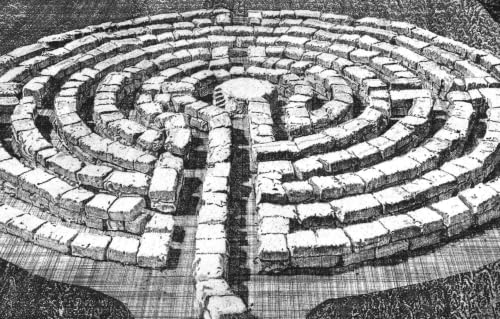
An intentional space to navigate life's paradox in the same way that an arrow is shot from the bow where our aim is true but the destination is not known. You are invited into this community as an intrepid explorer of purpose, meaning, and service regarding the open terrain of spirituality, psychology, motherhood, relationships, The Arts, human potential, awareness, education, science and technology as a springboard to societal innovation and evolution. In a cross-collaboration with both Henry Crettela's Alchemical Dialogues podcast, and Joel Lesses' Unraveling Religion podcast, The Labyrinth seeks to further and promote conversations evolving our understanding of the vital topics of spirituality, the humanities, psychology, and The Arts, and we find deepening community in our mutual support. We have begun posting 'Selected, Best of Alchemical Dialogues' and 'Selected, Best of Unraveling Religion' episodes on 'The Labyrinth.'© 2024 Arte Filosofia Scienze sociali Spiritualità
  • The Trauma of Isolation: The Male Experience In Young Adulthood; Dating, Intimacy, Isolation, and Evolution, A Panel Discussion
    Oct 10 2026

    The Labyrinth, hosted by Lisa Carley, PhD, and Rich Grego, PhD, examines the social, psychological, and cultural conditions shaping contemporary relationships and human connection. In this episode, guests Umar, a multidisciplinary artist, poet, and musician, and Tyler, a musician and poet, discuss the challenges young men experience when seeking intimacy, friendship, and belonging.

    The conversation considers the growing concern surrounding male loneliness and the difficulty of establishing meaningful relationships in a culture increasingly mediated by technology. Dating applications and social media offer opportunities to meet others, yet they may also intensify feelings of rejection, comparison, and disconnection. Participants reflect on the tension between digital access to potential partners and the vulnerability required to develop relationships through direct, in-person interaction.

    • Online Dating and Disconnection

    • Friendship, Intimacy, and Belonging

    • Social Media and Vulnerability

    • Third Spaces and Community

    • Safety, Consent, and Boundaries

    • Emotional Fatigue and Isolation

    • Rebuilding Authentic Human Connection

    The discussion explores how dating applications can encourage rapid judgments and create expectations that complicate authentic engagement. Social media further influences perceptions of relationships, often presenting idealized versions of other people’s lives while contributing to uncertainty about one's own experiences. Participants consider how these environments can discourage vulnerability and make rejection feel more immediate, frequent, and consequential.

    An important theme is the decline of accessible third spaces where people can gather outside their homes and workplaces. Such places historically supported informal interaction, friendship, and community participation. In Buffalo and elsewhere, the availability of welcoming, affordable spaces can influence whether people have opportunities to meet organically. Without these settings, social interaction may become increasingly dependent on digital platforms or established networks that are difficult for newcomers to enter.

    The conversation also addresses the importance of safety, consent, and boundaries in developing relationships. Fear of rejection, uncertainty about expectations, and concern about making others uncomfortable can discourage people from initiating contact. These concerns require consideration without dismissing the legitimate need for personal safety or mutual respect. Meaningful connection depends on recognizing vulnerability while respecting the autonomy and boundaries of others.

    The participants further examine emotional fatigue and the effort required to sustain social engagement. Repeated disappointments, competing responsibilities, and the pressure to present oneself favorably can contribute to withdrawal. The discussion raises questions about how people might approach relationships with greater patience, openness, and willingness to accept uncertainty.

    Throughout the episode, The Labyrinth considers loneliness not simply as an individual problem but as an experience shaped by social conditions, cultural expectations, and available opportunities for connection. The conversation suggests that addressing isolation requires more than technological solutions. It also requires spaces and communities that support participation, shared interests, and interpersonal trust.

    Ultimately, the episode invites listeners to reconsider how authentic human connection develops. Friendship and intimacy emerge through repeated encounters, mutual recognition, and the willingness to be present with others. By examining the barriers to connection alongside the possibilities for community, the discussion encourages a renewed commitment to creating conditions in which relationsh...

    Mostra di più Mostra meno
    1 ora e 9 min
  • 'Words From The Heart Penetrate The Heart,' Required Revolution In Education As A Response To AI
    Aug 19 2026

    In this episode of The Labyrinth, co-hosts Rich Grego and Lisa Carley welcome Joel David Lesses for a conversation about artificial intelligence, education, critical thinking, ethics, creativity, and the future of learning. At the center of the discussion is a fundamental question: what happens to education when artificial intelligence can perform many of the tasks students have traditionally been expected to learn?

    The conversation begins with the growing reality that students are already using AI, even when schools prohibit or restrict its use. Students increasingly describe themselves as overwhelmed and exhausted by academic demands. Rather than responding primarily through punishment or moral judgment, the speakers consider whether educators should first understand why students are turning to AI. While AI can certainly be used to avoid intellectual work, it can also help students manage pressure, access information, explore ideas, and develop their understanding.

    Lisa describes how AI has challenged her to make classroom learning more meaningful and intrinsically engaging. Through literary study, including an examination of Lord of the Flies using psychological concepts such as Maslow’s hierarchy of needs, students can move beyond completing an assignment and begin exploring motivation, human behavior, relationships, and the world around them.

    This leads to a deeper question about the boundary between using AI as a tool and allowing it to replace the thinking process itself. The speakers recognize that technology has always changed how people conduct intellectual work. Research that once required thousands of handwritten index cards can now be organized and explored digitally. AI dramatically expands that capacity, but the important distinction is whether technology supports human thought or substitutes for it.

    The conversation also recognizes AI’s potential to democratize access to knowledge and creative capability. Lisa describes using AI to help develop an application despite not having formal training in business, data analysis, or computer science. Through that process, AI became not simply a means of obtaining answers, but a resource through which he could learn, experiment, and transform ideas into possibilities that might otherwise have remained inaccessible.

    Ultimately, the conversation returns to the human heart.

    AI can provide information, organize knowledge, assist with writing, and generate ideas, but meaningful education involves much more: curiosity, passion, wisdom, compassion, emotional intelligence, ethical judgment, and human relationship. A teacher can make an idea come alive through enthusiasm and genuine connection in ways that technology cannot simply reproduce.

    The speakers therefore move beyond the question of whether AI is good or bad. The deeper question is how we can teach people to use AI without surrendering the human capacities that make learning meaningful. AI may generate information and perform increasingly sophisticated tasks, but education has a deeper responsibility: to help human beings understand, question, create, connect, and develop wisdom.

    The Labyrinth invites us to see AI not simply as a technological disruption, but as an opportunity to reimagine education and place the human heart back at the center of learning.

    Mostra di più Mostra meno
    43 min
  • Introducing The Labyrinth's New Co-host, Rich Grego, Ph.D.; Wading The Cosmic River Together with Lisa Carley, A Talk
    Aug 11 2026

    The Labyrinth, hosted by Lisa Carley, introduces Rich Grego, Ph.D., as Lisa’s new co-host and longtime intellectual, spiritual, and personal companion.

    Lisa first knew Rich as her philosophy professor when she was an undergraduate, and their relationship developed into a deep resonance that has continued throughout their lives.

    Lisa describes the purpose of The Labyrinth as entering a space of genuine presence with another person, allowing dialogue to unfold naturally and discovering what emerges rather than beginning with predetermined conclusions.

    Together, Lisa and Rich describe the complementary perspectives they bring to the podcast.

    • Rich approaches contemporary questions through philosophy, history, and spirituality, while Lisa begins with current cultural issues and explores their psychological, existential, and spiritual implications.
    • Their discussions may range from artificial intelligence and education to deeper questions about what it means to be human and spiritually alive.

    Lisa reflects on her intellectual development, particularly her early attraction to philosophers such as Kierkegaard and Krishnamurti. She explains that she once approached these thinkers primarily through intellectual frameworks, eventually recognizing that intellectualization could become a way of avoiding the deeper emotional experiences that initially drew her to philosophy. Her training in existential therapy helped her move away from intellectual abstraction and toward the lived experience of being present with another human being during moments of crisis, revelation, and transformation.

    The central conversation unfolds through ten chronological themes:

    • Intellectualization and emotional experience

    • Lisa’s early encounter with Kierkegaard

    • The limitations of Western philosophical traditions

    • Gender, knowledge, and lived experience

    • Love as experience rather than object

    • Naming versus directly experiencing reality

    • The emergence of the manosphere

    • Objectification, fear, and pornography

    • Masculinity, work, and the loss of identity

    • Humanity’s movement toward greater wholeness

    The discussion ultimately returns to the fundamental purpose of The Labyrinth: creating a space where Lisa and Rich can remain fully present without an agenda and allow the conversation itself to become a practice of exploration. Rather than offering definitive answers, they move through philosophy, psychology, gender, evolution, technology, economics, relationships, masculinity, and spirituality as interconnected dimensions of human experience.

    Lisa emphasizes that her intention is to 'show up' with another person and see where the dialogue leads.

    Rich’s philosophical and historical perspective complements Lisa’s experiential and existential orientation, creating a partnership grounded in curiosity, reflection, affection, and openness.

    Their discussion of gender and philosophy leads naturally into contemporary questions about young men, changing cultural expectations, economic instability, relationships, and the search for identity and purpose.

    They consider whether some contemporary behaviors are symptoms of deeper cultural disorientation and whether society is moving toward a more integrated understanding of human experience.

    Lisa and Rich invite listeners into a conversation where intellectual inquiry and lived experience meet, where difficult cultural questions can be approached without immediate judgment, and where meaning is allowed to emerge through sustained dialogue. The labyrinth is not presented as a problem to solve, but as a space to enter—with curiosity, presence, and a willingness to discover where the path leads.

    Mostra di più Mostra meno
    59 min
adbl_web_anon_alc_button_suppression_t1
Ancora nessuna recensione