Episodi

  • AI and the Fast Track to Smarter Clinical Trials
    Oct 6 2026

    Clinical research teams face growing pressure from rising costs, increasing complexity and an explosion of data. So how do organizations move from today's fragmented processes to a more connected, intelligent future?

    On this episode of The Health Pulse, Dr. Mark Lambrecht, SAS’ Global Head of Health Care and Life Sciences Advisory, explores what clinical research could look like by 2030. He paints a picture of a future where AI agents help analyze data, draft submissions and streamline workflows while humans remain firmly in control. You'll hear why organizations should focus on their biggest bottlenecks first and how overnight AI-driven workflows could improve productivity. Dr. Lambrecht also explains why successful innovation depends as much on people and change management as it does on technology.

    From practical steps organizations can take today to bold predictions about tomorrow, this conversation offers a grounded look at the role of AI in clinical research. Learn how AI can help bring treatments to patients faster while keeping people at the center of the process.

    Mostra di più Mostra meno
    24 min
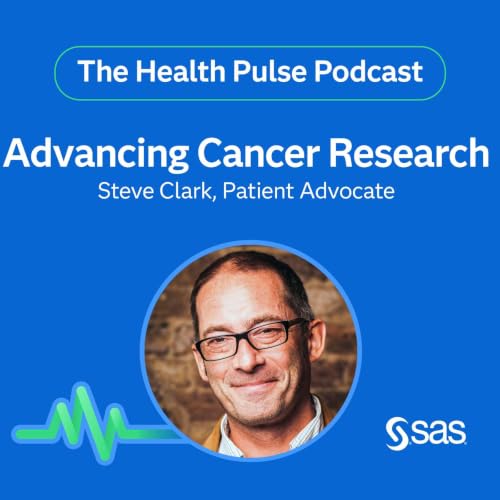
  • Patients as Partners in Cancer Research
    Sep 15 2026

    What changes when patients become true partners in cancer research?

    On this episode of The Health Pulse, health care and pharma leader Steve Clark shares his journey from being diagnosed with Stage 4 colorectal cancer 13 years ago to becoming a patient advocate and research co-investigator.

    Drawing on his experience, Steve challenges researchers to involve patients throughout the cancer research process, from study design and protocols to how findings are communicated. He explains how genuine partnership can improve study outcomes and make research more practical and meaningful.

    Steve also reflects on the importance of honest communication and realistic hope. He discusses how AI may support diagnostics and make health information easier to understand. Finally, he shares how Thrive for Five and Beyond grew from a personal survival milestone into a global platform supporting patients and advocating for improved cancer care.

    Mostra di più Mostra meno
    40 min
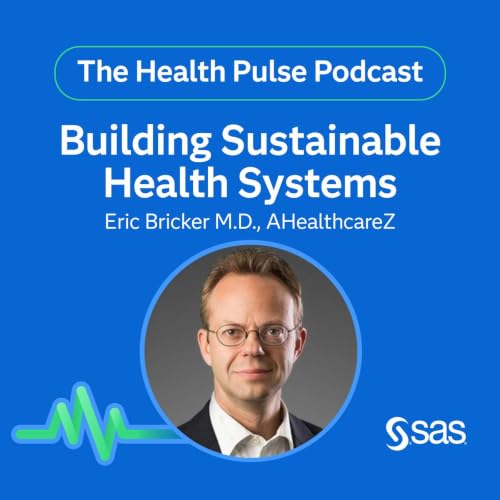
  • Can Health Systems Improve Outcomes Without Increasing Costs?
    Aug 25 2026

    How can health systems improve outcomes while remaining financially sustainable?

    Dr. Eric Bricker, physician, entrepreneur and founder of AHealthcareZ, shares his perspective on the financial, operational and leadership challenges facing health systems today. He explores what it takes to shift from reactive care to proactive, value-based care. He also explains the critical role of incentives, accountability and financial risk in improving outcomes.

    The conversation also looks at the role of AI in supporting clinical decisions, improving efficiency and giving clinicians more time to spend with patients. Learn how leadership, technology and innovative care models can support value-based care and a more sustainable future for health systems.

    Mostra di più Mostra meno
    49 min
  • From Snapshots to Continuous Evidence: How We Learn
    Aug 4 2026

    Clinical trials provide critical answers, but they're only part of the story. In this episode of The Health Pulse, Aaron Berger and Dr. Massoud Toussi, real-world evidence executives at United BioSource (UBC), explore how the life sciences and health care ecosystem is moving beyond isolated snapshots toward continuous evidence generation. They discuss how organizations are building a more complete picture of treatment effectiveness, safety and patient outcomes in the real world. Electronic health records, connected devices, patient-centered research and global evidence networks are making that possible.

    Making this vision a reality requires data quality, interoperability, regulatory alignment and trusted evidence generation. AI is playing a growing role in research and analysis. It is creating new opportunities to accelerate evidence generation and uncover insights at a scale previously impossible.

    Ultimately, they share an optimistic vision for the future: one where real-world evidence, AI and modern data ecosystems help us learn faster, answer more questions and accelerate scientific discovery for patients who need new therapies most.

    Mostra di più Mostra meno
    45 min
  • Faster, Smarter, Outcomes-Focused Clinical Trials
    Jul 14 2026

    Clinical trials are more complex than ever, but new models are emerging to improve how they’re designed and delivered. On this episode of The Health Pulse, host Alex Maiersperger sits down with Meri Beckwith, co-founder and co-CEO of Lindus Health, a company rethinking the traditional contract research organization model with a more outcome-focused approach to clinical research.

    Drawing on his experience as both a trial participant and industry innovator, Beckwith shares how aligning incentives, improving patient and physician experiences and using AI can accelerate studies and improve results. He introduces the concept of an “accountable research organization,” where success is tied to study milestones and outcomes, helping better align stakeholders across the clinical trial process.

    The conversation also explores how outcome-oriented approaches, adaptive trial designs and more efficient infrastructure can help bring treatments to patients faster while maintaining the rigor and trust that clinical research demands.

    Tune in to hear how fresh approaches to clinical trials are helping organizations improve efficiency, strengthen patient centricity and deliver meaningful impact across the health care ecosystem.

    Mostra di più Mostra meno
    36 min
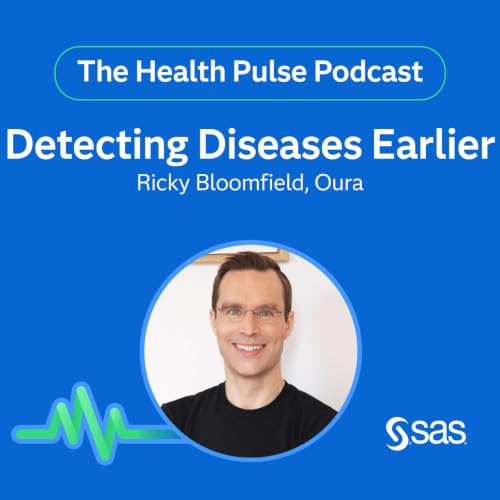
  • Using Wearables and AI to Detect Disease Earlier
    Jun 23 2026

    What if your ring knew you were getting sick before you did and could one day monitor chronic conditions around the clock? In this episode, Dr. Ricky Bloomfield, Chief Medical Officer of Oura, explores how continuous health monitoring with wearable devices is shifting health care from reactive treatment to early prevention. The Oura Ring can detect illness days before symptoms appear, from COVID to lymphoma to appendicitis, because earlier diagnosis can make all the difference.

    Rings are becoming the wearable of choice. By tracking meaningful metrics such as cardiovascular age and cumulative stress scores, people can act on what they see, adjusting diet, exercise and sleep habits and watching their health improve.

    Finally, Dr. Bloomfield unpacks what it will take for wearable data to be meaningfully integrated into clinical care. He also explores how AI is transforming the health care landscape, from Oura Advisor, an AI-powered tool that lets users query and understand their own health data, to AI-generated summaries designed to highlight the most important and actionable insights for doctors.

    Mostra di più Mostra meno
    33 min
  • Reimagining Clinical Trials Through Community Care and AI
    Jun 2 2026

    Contrary to historical processes, clinical trials do not have to be limited to large academic centers or homogeneous populations. On this episode, host Alex Maiersperger speaks with Dr. Mimi Fenton, CEO of Cedar Health Research, a community based clinical research organization using AI to bring trials into trusted local care settings.

    Drawing on her experience across academia, pharma, CROs and retail health, Dr. Fenton explains why access, education and patient support remain major barriers to participation. She discusses how Cedar embeds research into trusted community settings. The conversation also explores how AI and large language models help connect the right patients to the right trials while preserving the human relationships that drive trust and retention.

    Mostra di più Mostra meno
    34 min
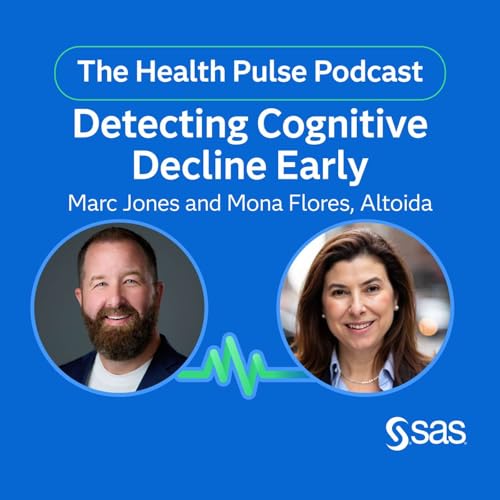
  • Detecting cognitive decline early with AI and digital biomarkers
    May 12 2026

    Up to 200 million people worldwide may be living with undiagnosed mild cognitive impairment – many unaware that early intervention could change their trajectory. In this episode, host Alex Maiersperger is joined by Marc Jones, CEO of Altoida, and Dr. Mona Flores of Altoida's Clinical Advisory Board to explore how AI and digital biomarkers are reshaping early detection of cognitive decline. Digital biomarkers register how the brain processes information, translating how brain networks function through the way we move, speak and remember. Altoida's platform tracks motor skills, speech complexity and memory recall, mapping them to data points to identify where brain function diverges from that of a healthy population. They also discuss how AI acts as a force multiplier, giving clinicians tools to spot trends, make informed decisions and spend more time with patients.

    Mostra di più Mostra meno
    40 min